

Girl in Yellow Drapery
John William Godward’s “Girl in Yellow Drapery,” sortua 1901, presents a striking depiction of classical beauty, rendered with masterful detail. Jainkoari, an artist known for his contributions to the Neoklasikoa estiloa, captured the timeless grace of the ancient world in a manner that emphasizes harmony, edertasuna, and serenity. Jainkoari’s (1861 – 1922) works often reflect his deep admiration for the art of ancient Rome and Greece, blending idealized female forms with the architectural and natural elements of the classical world. His penchant for delicate color palettes, along with his skill in creating lifelike textures, is evident in this painting.

Edukien taula
Gai nagusia: A Sleeping Figure of Serenity
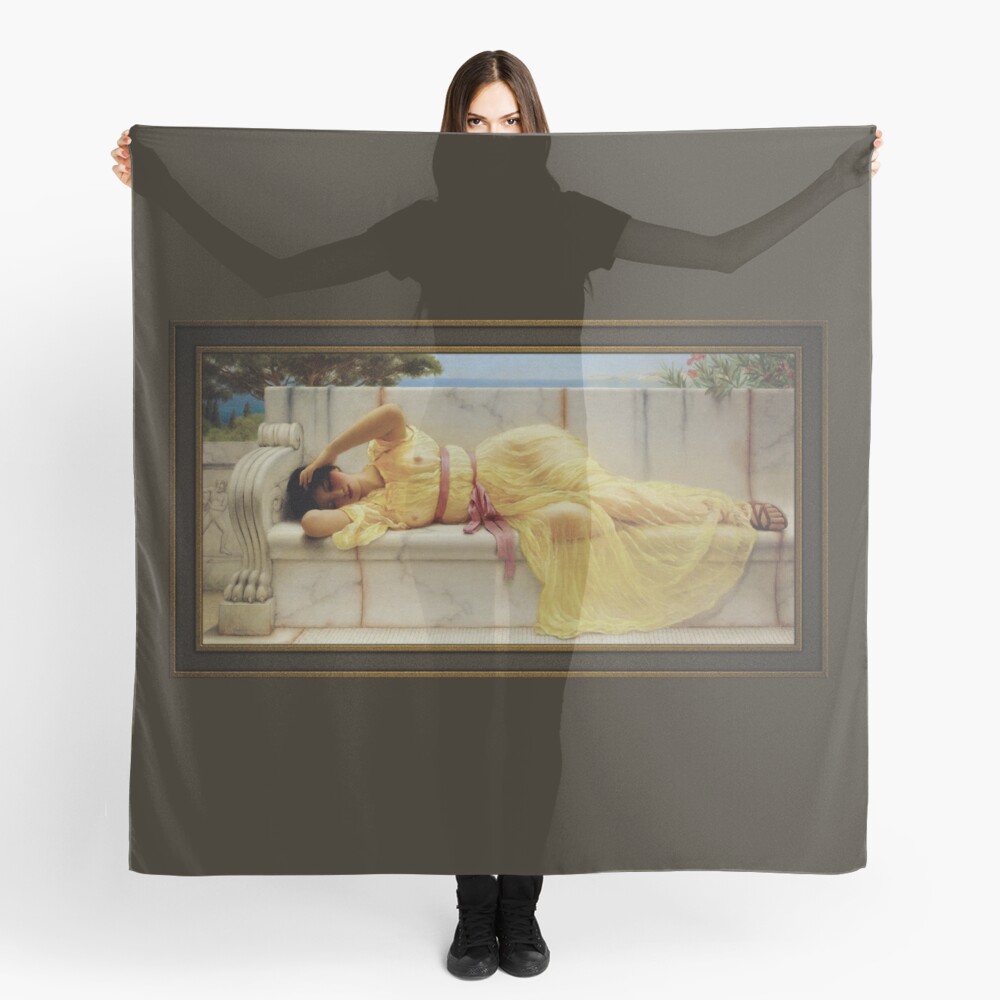
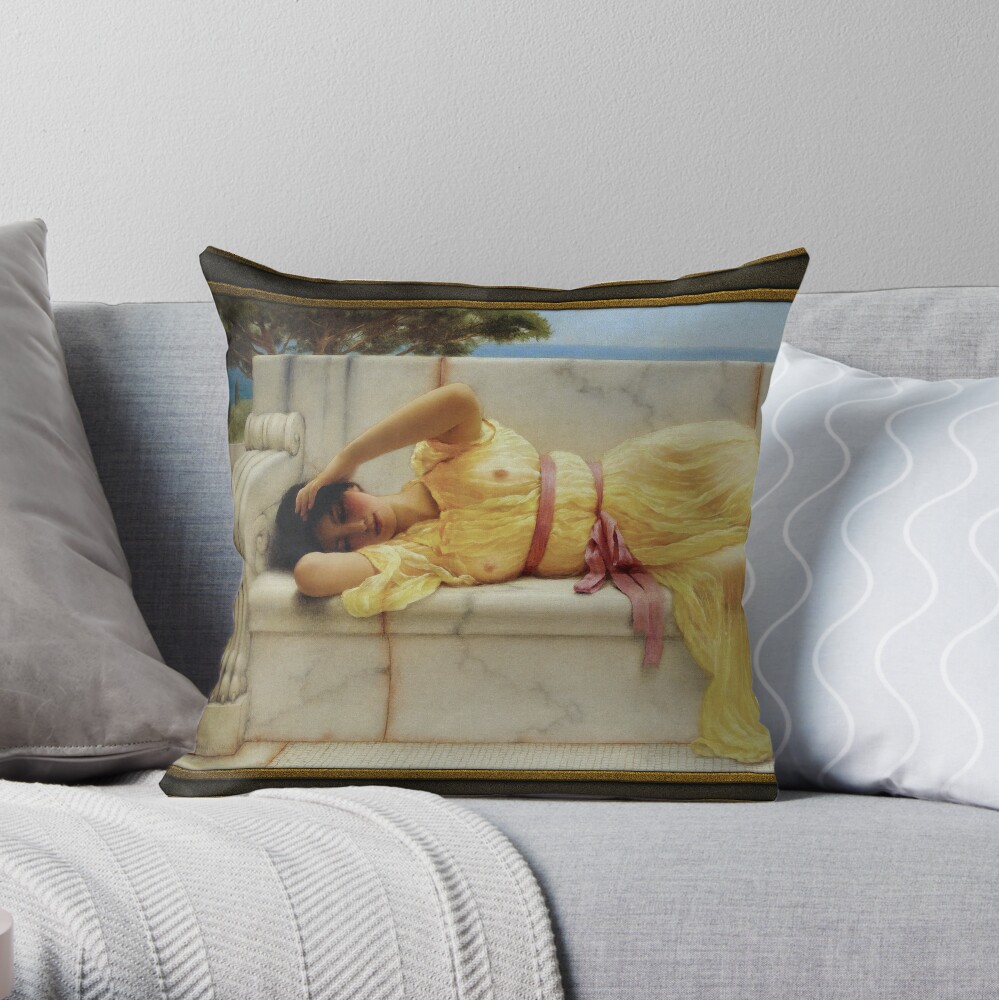
Margolanaren muinean etzandako emakume gazte bat dago leun batez jantzia, isurtzen bata horia paisaia lasaiaren kontra dotorez kontrastea. The neskarena atseden une bat iradokitzen du jarrerak, burua besoan astiro-astiro pausatzen du beste eskua bekokiaren gainean dagoen bitartean, itxuraz, begiak argi leunetik babesten zituen.
Bere forma fisikoa fintasun nabarmenarekin atzematen da, bera aurpegia lasaia eta ezin hobeto zizelkatua dago, islatuz edertasun idealizatua hori izan zen Godward-en lanaren ezaugarri bat. Janzten duen soineko hori zurbila aireztatua da, ia zeharrargitsuak, astiro-astiro astinduz bere formaren inguruan haize leun batek laztandu balu bezala. Draperia, delikatua eta kolore argia izan arren, pisu eta sakontasun sentsazioa dakar berekin, artistak ehunaren eta anatomiaren azterketa zainduaren lekuko.
Giroa: Lasai eta betikoa
Koadroaren aldartea lasaitasunarena da, denboragabetasuna, eta grazia. Irudia atseden sakonean dagoela dirudi, siesta edo ametsaren erdian beharbada, kanpoko munduaren kezkek ukitu gabe. The leuntasuna bere draperik eta bere gorputzaren jarrera leunak lozorro lasaiaren airea eragiten dute, ageriko emozio edo ekintzarik ezak, berriz, ikusleari eszena gelditzeko eta hausnartzeko gonbidapen gisa bizitzen uzten du.. Jainkoari, une hau harrapatzen, isiltasun lasaia sortzen du, non denbora etenda dirudi.
Arkitektura: Eragin Klasikoa
Irudiaren atzean, eszena klasiko batek markatzen du harrizko bankua that connects the subject to the world of ancient civilization. The marmola bench, with its slightly weathered, elegant columns and scrollwork, serves as a reminder of the classical heritage that influenced much of Godward’s work. The artist’s attention to architectural detail is remarkable, with the texture of the stone clearly articulated in the subtle shadows and light reflections. The zutabeak, designed in the Corinthian style, suggest an elevated cultural and intellectual world, adding to the painting’s timeless quality.
Paisaia Naturala: Lasai eta zabala
Atzealdean, the viewer can see a peaceful vista that stretches out beyond the stone bench. The landscape is bathed in soft light, hinting at a horizon where the sea meets the sky. Although the colors of the sky are muted, du expansive nature of the scene provides a sense of espazioa, suggesting an open, figuraren atsedenaldiaren intimitatearekin ederki kontraste egiten duen mundu lasaia. Zuhaitzak berdetasun barietate batekin lasaitasun sentsazioa gehitzen da, beren hostoak sotilki klima mediterraneo zahar baten berotasuna iradokitzen du.
Euskarria eta Teknika: Xehetasun eta ehundura fina
Godward-en trebetasun teknikoa agerikoa da bien xehetasun bikainetan irudia eta inguruko elementuak. Emakumearen soineko horiaren leuntasunak zurrunarekin kontrastatzen du, marmolezko zutabeen eta bankuaren ia ukimenezko kalitatea. Ehunean argia eta itzala erabiltzeak bere delikatua azpimarratzen du, natura isurkaria, berriz, irudiaren azala bere tonu naturalean ia benetakoa dirudi. Argia eta itzala nahasteko Godward-en teknikak errealismoaren eta sakontasunaren zentzua laguntzen du, lanari ia hiru dimentsioko kalitatea emanez. Bere testuren errendaketa zorrotza, harriaren leuntasuna den ala ez, ehunaren gardentasuna, edo azalaren distira naturalak argia eta ehundura menderatzen dituela erakusten du.
Godward-en estiloa eta gaiak: Edertasun Klasikoa Berrikusita
Estiloa “Girl in Yellow Drapery” ren oinarrizko idealak gorpuzten ditu Neoklasizismoa, antzinako Grezia eta Erromako estetika eta idealak berpiztu nahi zituen mugimendua. Estilo hau edertasun idealizatuan arreta jartzeagatik bereizten da, forma leunak, eta proportzioan eta harmonian azpimarratzea. Godward-en lana printzipio hauekin sakonki sartuta dago, batez ere, emakumearen figuraren erretratuan, askotan idealizatu eta lasai planteatzen dena, ezarpen lasaiak. Bere gaiak maiz irudikatzen dira paisaia oparoetan edo arkitektura-esparru klasikoetan, pieza honetan ikusten den bezala. Pintura hau, bereziki, Emakumeen edertasunarekiko eta antzinate klasikoarekiko Godwardek duen lilura biltzen du.
A-ren gaia etzandako figura, sarritan, bai sentsualitatearen eta bai atsedenaren sinboloa, are gehiago, artistak harmoniatsu bat sortzeko duen konpromisoa azpimarratzen du, mundu lasaia bere lanetan. Godward-en koadroko emakume gaztearen irudia ez da lo dagoen irudi batena soilik; lasaitasunaren eta perfekzioaren ikuspegia da, munduko kezketatik deskonektatua eta betiko ingurune batean kokatuta. Edertasuna eta isiltasuna nagusi diren espazio batean sartzeko gonbidapena da ikuslearentzat.
Bukaera: Godward-en lanaren ondare iraunkorra
John William Godward’s “Girl in Yellow Drapery” artistak estilo neoklasikoari egindako dedikazioaren adibide bikaina da, illustrating his skill in portraying idealized beauty and his deep admiration for classical art forms. Through the careful depiction of the figure, the architectural elements, eta mundu naturala, Godward creates a scene of serene elegance that has continued to captivate audiences long after its creation. His ability to evoke a mood of timeless peace, combined with his technical precision, ensures that this painting remains a significant work in the history of British art.
Girl in Yellow Drapery is a remastered digital art old masters reproduction of a public domain image that is available as a mihise inprimatua sarean.
Arte digitalaren sorkuntza hau, Xzendor7 webgunean aurki daitezkeen artelan guztiak bezala sarean erosteko eskuragarri dago hainbat material formatutan, mihise inprimatuak barne., estanpatu akrilikoak, metal estanpatuak, egur estanpatuak, marko estanpatuak, kartelak, eta ijetzitako mihise estanpatu gisa hainbat tamainatan 12 zentimetroetara 72 hazbeteko artelanaren eta artea erosteko aukeratzen duzun eskaeraren arabera inprimatzeko dendaren tamainaren arabera.
Artelana gizonezkoen eta emakumezkoen arropa sorta zabal batean ere eskuragarri dago, katiluak, totes, zapiak, koadernoak eta aldizkariak eta etxeko dekorazio produktu ugari.
Artistaren biografia
Beheko informazioa Wikipedia.org
John William Godward bost seme-alaben artean zaharrena zen, eta bere aita John eta William aitonaren omenez jarri zioten izena.
Errege Akademian erakutsi zuen 1887. Italiara joan zenean bere modelo batekin 1912, bere familiak harekin harreman guztiak hautsi zituen eta bere irudia familiako argazkietatik moztu ere egin zuen. Godward Ingalaterrara itzuli zen 1921, urtean hil zen 1922, and is buried in Brompton Cemetery, Londres mendebaldea.
Bere margolan ezagunenetako bat Dolce far Niente da (1904), urtean Andrew Lloyd Webber-en bildumarako erosi zena 1995. Beste hainbat koadroren kasuan bezala, Godward-ek bertsio bat baino gehiago margotu zituen; kasu honetan, bat lehenago (eta ez hain ezagunak) 1897 beste batekin bertsioa 1906 bertsioa.
He committed suicide at the age of 61 eta bere suizidio oharrean idatzi omen zuen hori “mundua ez da aski handia [biak] ni neu eta Picasso bat”.
Bere familia arrotza, artista izatea gaitzetsi zuena, bere buruaz beste egiteaz lotsatu eta paperak erre zituen. Godward-en argazki bakarra bizirik iraun duela ezagutzen da.
Godward neoklasikista viktoriarra izan zen, eta horregatik, teorian, Frederic Leightonen jarraitzailea. Alabaina, estilistikoki estuago dago Sir Lawrence Alma-Tademarekin, harekin partekatu zuen arkitektura klasikoaren erreprodukziorako zaletasuna, bereziki, marmolez eraikitako paisaia-ezaugarri estatikoak.
Godward-en dauden irudi gehienek paisaiaren ezaugarrien aurka jarritako jantzi klasikoko emakumeak ageri dira; bere obran erdi biluzi eta guztiz biluzik dauden irudi batzuk badaude ere, adibide nabarmena izanik “The Tepidarium-en c1913”.
Gai bereko Alma-Tadema koadro polemiko batekin partekatutako izenburua “Lady Lever Art Gallery”. Izenburuek Godward-en inspirazio iturria islatzen dute; zibilizazio klasikoa zena, aipagarriena Antzinako Erromakoa; Godward Alma-Tademarekin lotzen duen gaia artistikoki.
Kontuan izanik beka klasikoa bere margolanen ikusle potentzialen artean hedatuago zegoela bere bizitzan gaur egun baino, Xehetasunen ikerketa zorrotza garrantzitsua izan zen genero honetako artista gisa maila bat lortzeko.
Alma-Tadema arkeologoa eta baita margolaria ere, gune historikoetara joan eta gero bere margolanetan erabili zituen artefaktuak bildu zituena: Jainkoari, ere bai, arkitektura eta janzkera bezalako xehetasunak aztertu zituen, bere lanek benetakotasunaren zigilua zutela ziurtatzeko.
Gainera, Godward-ek arreta handiz eta zorrotz beste ezaugarri garrantzitsu batzuk eman zituen bere margolanetan, margoak dituzten animalien larruak “Eguerdiko atsedenaldia c1910” eta “A Cool Retreat c1910” interpretazio horren adibideak eta baso-loreak ditu “Nerissa c1906” eta “Udako Loreak c1903”.
Godward-en hainbeste mihisetan emakume ederren agertzeak bere lanetara etorri berri asko prerafaelita gisa sailkatzen ditu oker., batez ere, bere paleta kolore biziko koloretsua izaten baita. Gaiaren aukeraketa (antzinako zibilizazioa versus, adibidez, Arturiar kondaira) egokiagoa da neoklasizista viktoriarrarena.
Berarekin garaikide diren margolari ugarirekin komunean, Godward 'High Victorian Dreamer' bat zen, mundu idealizatu eta erromantizatu baten irudiak ekoiztea, Godward zein Alma-Tademaren kasuan, togasan Victorians mundu-ikuskera gisa kritikatu zen.
Jainkoari “azkar ezarri zuen emakume gazteen margolanengatik ospea ingurune klasiko batean eta sentsibilitate eta maisutasun teknikoarekin haragiaren ehundura kontrasteen sentipena transmititzeko gaitasunarekin., marmola, larruak eta ehunak.
Godward-ek garai klasikoan kokatutako artelanak sortzeko zuen zaletasuna, ziurrenik, jaio zen garaitik etorri zen.; mendebaldeko margolanetako eskala osoko azken berpizkunde klasikoa izan baitzen, Ingalaterran loratu zen 1860tik 1890era arte.