

Ystum Cain Art Deco
Teitl y gwaith celf Ystum Cain Art Deco ei greu gan yr artist Americanaidd enwog Billy Devorss (1908 – 1985). Mae’r darn cain hwn yn cyfleu hudoliaeth a soffistigedigrwydd y 1940au trwy bortread wedi’i gyfansoddi’n ofalus o fenyw wedi’i haddurno mewn ffasiwn gain.. Billy Devorss, adnabyddus am ei gyfraniadau i fyd celf hudoliaeth, wedi cynhyrchu darn sy'n atseinio ag arddull Art Deco, cyfnod sy'n gyfystyr â moethusrwydd, geometreg feiddgar, a cheinder symlach. Mae'r paentiad yn dwyn i gof harddwch a harddwch coeth cyfnod a ddiffinnir gan ffasiwn uchel ac estheteg oesol..
Tabl Cynnwys
Mater Pwnc
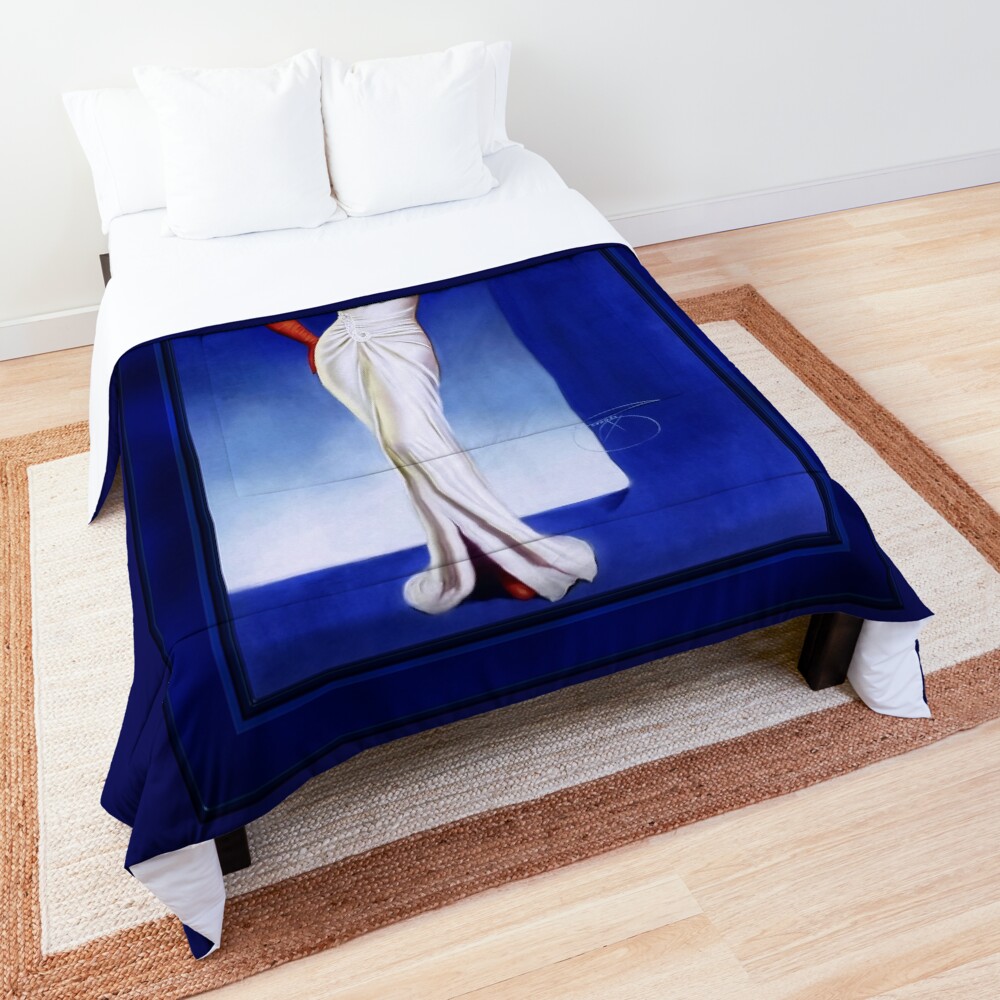
At the heart of this artwork stands a confident and graceful woman, striking a poised and elegant pose. Y pwnc, bathed in the soft glow of the artwork’s lighting, wears a form-fitting white gown that accentuates her slender figure. The gown is a masterpiece of design, with a sweetheart neckline and a shimmering decoration at the waist. The smooth fabric of the gown gently hugs her silhouette, adding to the sense of elegance and sophistication.
Her skin is depicted with a soft, porcelain-like finish, lending her an almost ethereal quality. Her vibrant red gloves, which contrast beautifully with the white gown, add a striking element of bold color to the composition. These long gloves extend up to her elbows, emphasizing her graceful posture and framing her arms as they rest delicately on her hips. Mae'r menig yn gweithredu fel ciw gweledol, tynnu sylw’r gwyliwr at gromlin gosgeiddig ei chorff a’i safiad parod.
Mae ei hwyneb wedi'i haddurno â llydan, gwen radiant, gan awgrymu hyder a swyn. Ei dywyll, mae gwallt tonnog wedi'i steilio mewn updo gwych, gwella ymhellach ei golwg gain. Mae’r don dyner yn ei gwallt a’r acenion tebyg i berlau wedi’u pinio i’r ochrau yn ennyn ymdeimlad o hudoliaeth glasurol Hollywood, yn atgoffa rhywun o sêr ffilm o oes aur y sinema.
Palet Cyfansoddiad a Lliw
Mae cyfansoddiad Ystum Cain Art Deco yn fanwl gytbwys, gyda'r pwnc wedi ei osod yn y blaendir, ei ffurf yn erbyn dramatig, cefndir glas dwfn. Mae'r cefndir nid yn unig yn golchiad lliw syml ond mae hefyd yn dwysáu presenoldeb y gwrthrych, gan amlygu ei harddwch a'i soffistigedigrwydd. Mae'r cefndir yn gynnil ei raddiant, transitioning from a lighter blue at the top to a deeper, more intense hue at the bottom. This contrast serves to draw the viewer’s eyes to the figure, emphasizing her elegance.
The color palette used in the piece is a harmonious blend of soft, neutral tones and bold, Lliwiau bywiog. The woman’s white gown stands in stark contrast to the red of her gloves, creating a visually striking pairing that underscores the chic and refined aesthetic of the time. The blue background, with its smooth gradient, complements the subject’s attire, reinforcing the sense of calm and poise. The soft sheen on the fabric of her gown is reflected with subtle highlights, creating a three-dimensional effect that makes the garment appear tactile and real.
The painting’s vividness and attention to detail reflect Devorss’ skill in capturing the delicate balance between realism and stylized beauty, which was a hallmark of his style. The artist’s meticulous technique is evident in the smoothness of the woman’s skin and the texture of her gown, as well as in the gentle interplay of light and shadow.
Arddull Art Deco
Ystum Cain Art Deco is firmly rooted in the Art Deco movement, a style that flourished in the early 20th century, especially during the 1920s and 1930s. Art Deco is characterized by its bold geometric patterns, luxurious materials, and emphasis on sleek, streamlined design. This work embodies the essence of Art Deco with its focus on symmetry, stylized forms, and an overall sense of opulence.
The woman’s gown, er enghraifft, is designed in a smooth, arddull llifo heb unrhyw addurniad gormodol, gan adlewyrchu esthetig symlach yr amser. Y manylion ar ei gwisg, yn enwedig yn y canol, lle mae addurn pefriog tebyg i dlws yn tynnu sylw, yn awgrymu diddordeb y cyfnod mewn siapiau geometrig a'r defnydd o ddeunyddiau fel crôm, gwydr, a metelau gwerthfawr. Mae defnydd yr artist o linellau glân ac arwynebau llyfn yn y cyfansoddiad yn adleisio dylanwad y mudiad Art Deco, a oedd yn ceisio uno ymarferoldeb â harddwch.
Yn ychwanegol, y ffordd y mae Devorss wedi fframio'r pwnc gyda'r cefndir, creu ymdeimlad o ddyfnder a dimensiwn trwy ddefnyddio cysgodi, yn adlewyrchu ymhellach bwyslais yr arddull ar foethusrwydd a mireinio. Darlun o'r wraig, yn ei safiad a'i gwisg berffaith, speaks to the celebration of the human form and fashion that was central to Art Deco’s visual language.
Naws a Thema
The mood of the painting is one of elegance and self-assurance. Osgo y wraig, her radiant smile, and the luxuriousness of her attire all contribute to a sense of confidence and allure. There is an air of sophistication surrounding her, evoking the glamor of Hollywood starlets and fashion icons of the 1940s. The mood is further heightened by the combination of her poised, graceful demeanor and the vivid colors of her gloves and gown, which suggest an aura of refinement and nobility.
The theme of timeless beauty is central to the painting, as Devorss captures a moment that seems to transcend time. The artist’s choice to depict the woman in a serene, almost regal fashion, coupled with the glamorous details of her attire and the careful interplay of colors, creates an image that feels both modern and classic. The use of bold red gloves and a sleek gown presents a confident, powerful image of femininity, making this work not only a celebration of beauty but also a tribute to the era in which it was created.
Deunyddiau a Thechneg
The materials used to create Ystum Cain Art Deco are traditional to the fine art field, showcasing Devorss’ expertise in creating vibrant, life-like images that evoke the glamour and charm of the era. His technique includes fine detailing and smooth, almost flawless transitions between light and shadow, capturing the sheen of fabric and the softness of the skin. His skillful use of light and shadow creates a sense of depth, allowing the subject to emerge from the backdrop, enhancing her presence.
The artist’s ability to capture textures with such precision reflects his deep understanding of his medium. Mae'r llyfn, polished look of the woman’s dress, along with the soft glow of her skin and the rich detail in her gloves, showcases his talent in translating the elegance of the 1940s into a visual representation. Devorss’ careful brushwork and use of subtle shading allow the composition to possess both dynamism and serenity, striking a balance between stillness and movement.
Mae hwn yn atgynhyrchiad hen feistri celf ddigidol wedi'i ailfeistroli o ddelwedd parth cyhoeddus sydd ar gael fel a argraffu cynfas ar-lein.
Ganwyd Billy yn William Albartus DeVorss yn St.. Joseff, Missouri yn 1908, a graddiodd o Sefydliad Celf Dinas Kansas yn 1934 (Nodyn: mae yna wybodaeth arall sy'n dweud ei fod yn gwbl hunanddysgedig!); yna symud i New York’s Greenwich Village a gweithio yno tan ddechrau'r 1950au; lle ymlaen symudodd yn ôl i'r canol orllewin gyda'i wraig.
Billy, fel Rolf Armstrong yn defnyddio pasteli i greu ei ddarluniau pinup a chreu golwg ramantus ddelfrydol ar gyfer drws nesaf o'r merched ifanc a baentiodd.
Roedd ei waith yn aml yn cael sylw ar gardiau muotscope (delweddau llonydd, yn nodweddiadol o ddeunydd pin-up, wedi'u hargraffu ar gardiau a'u gwerthu trwy beiriannau gwerthu mewn a 5 Fformat ¹⁄₄-by-3 ¹⁄₄-modfedd.), cardiau post, calendrau, a phrintiau.
Gwnaeth gelf hysbysebu hefyd, celf clawr ar gyfer y cyhoeddiadau Beauty Parade, Llygad a Flirt.