

Harddwch Aur Art Deco Gyda Thegeirian
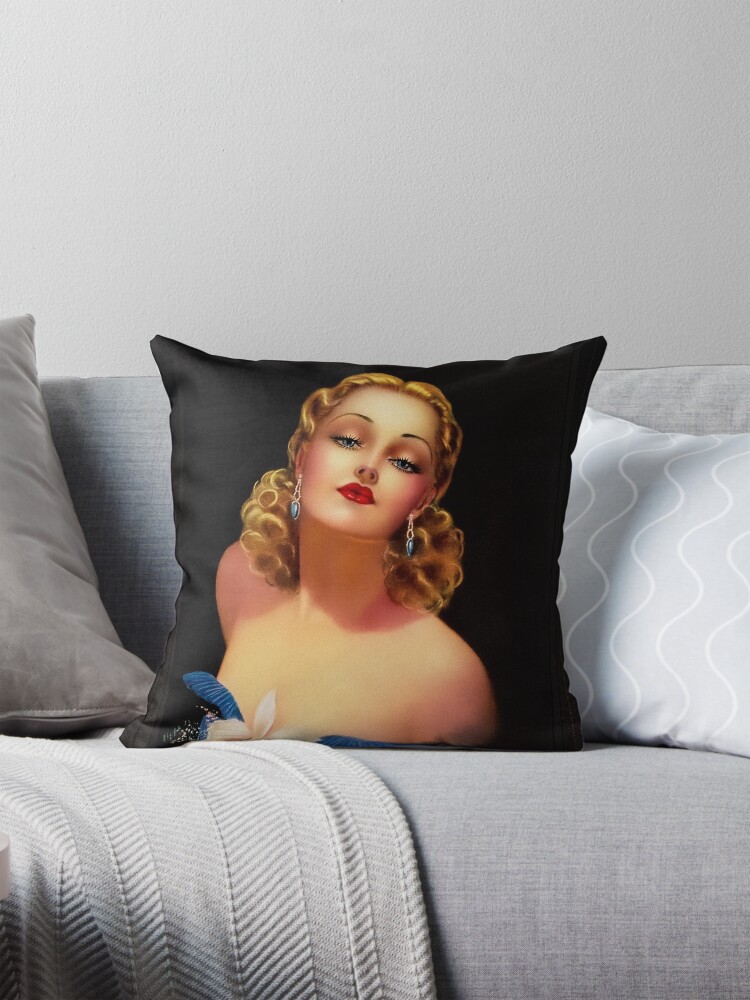
“Harddwch Aur Art Deco Gyda Thegeirian” (c. 1940s) is a stunning work by American artist Billy Devorss (1908 – 1985), an influential figure within the Art Deco style. Known for his graceful depictions of women in the early to mid-20th century, Devorss excelled in combining elegance and sophistication with a distinct flair for glamour.
This particular piece reflects the glamour and sensuality of the era, fusing the stylized depiction of the female form with luxurious and vibrant details. The painting showcases a woman at the height of elegance, wearing a delicate flower that symbolizes both femininity and exotic beauty. Through Devorss’s iconic use of color, cyfansoddiad, a gwead, the painting conveys an alluring yet refined portrayal of womanhood that fits seamlessly into the Art Deco movement.
Tabl Cynnwys
The Subject of the Artwork
The central figure of “Harddwch Aur Art Deco Gyda Thegeirian” is a woman with an undeniable allure, exuding timeless beauty. Her portrait is depicted with careful attention to detail in the way her features are rendered. Her soft blonde curls frame her face, which is tilted slightly back, allowing the viewer to focus on her piercing eyes and inviting expression.
The contrast of the red lips and blue eyes draws immediate attention to her face, highlighting the striking visual contrast between these bold features and the soft, warm tones of her skin. The woman is portrayed wearing a luxurious floral arrangement that decorates her chest, a brilliant orchid whose rich, vibrant hues of red and white provide a striking juxtaposition against her fair skin and the delicate blue details around the flower.
The elegant pose of the woman, with her neck slightly arched and her body tilted to the side, embodies the grace and sophistication of the pin-up girl Art Deco period. Ei mynegiant, serene yet confident, draws the viewer into the realm of classic beauty and timeless style. Through her posture, the artist creates a sense of both vulnerability and strength, a hallmark of the feminine mystique in Art Deco portraiture.
Objects, Symbolaeth, and Materials
The orchid in the painting serves as more than just a decorative element; it is a symbol of exoticism, harddaf, ac opulence. Orchids, often associated with rarity and beauty, enhance the image of the woman by suggesting an aura of exclusivity and sensuality. The delicate petals of the flower, contrasted against the boldness of her red lips, add layers of symbolism to the painting, reinforcing the idea of natural beauty that transcends time.
O ran deunyddiau, the artist’s technique highlights the smooth, flawless textures associated with the high-quality paints and mediums of the era. The paint application is refined, enhancing the detailed rendering of the woman’s face and the softness of her flowing curls.
The brushstrokes are careful and deliberate, giving the subject a life-like quality, while also retaining the smooth, stylized elegance characteristic of the Art Deco movement. Y cefndir, largely in shadow with deep, muted tones, helps emphasize the subject’s luminous features and the vividness of the orchid, as well as the sophisticated yet simple palette that underpins the elegance of the entire composition.
The Style and Theme of the Artwork
The Art Deco style is defined by sleek lines, geometric patterns, and the celebration of modernity, moethusrwydd, and glamour. Yn “Harddwch Aur Art Deco Gyda Thegeirian,” Devorss captures all of these elements while still maintaining an emphasis on the human form, which remains central to his work. The lines of the woman’s face and figure are sharply defined, yet softened by the rounded contours of her cheeks and shoulders. There is no excess ornamentation; yn hytrach, the composition relies on the simplicity and purity of the form to convey a sense of refinement.
The theme of beauty, femininity, and sensuality is ever-present in the painting, but it is imbued with an elegant restraint. The woman is not overly adorned, yet her figure is clothed in opulence, from the refined, bold features on her face to the magnificent orchid that crowns her chest. The absence of extraneous detail allows the viewer to focus entirely on the subject, celebrating her beauty and the simplicity of her surroundings.
In keeping with the Art Deco movement’s celebration of modernity, the woman’s portrayal transcends mere representation. She is both an object of admiration and a symbol of the era’s fascination with both the decorative arts and the idealized human form. The aesthetic, while luxurious and glamorous, also speaks to the period’s underlying tension between realism and abstraction, with the figure blending a real-world beauty with the stylized abstraction that the movement is known for.
Naws y Gwaith Celf
Mae naws cyffredinol o “Harddwch Aur Art Deco Gyda Thegeirian” is one of quiet sophistication and restrained allure. The viewer is drawn into the serene, almost dreamy atmosphere that the woman creates through her composed and graceful presence. Ei mynegiant, combined with the bold colors of her lips and eyes, conveys a confident beauty that is both alluring and dignified.
Y dyfnder, almost noir-like background of the painting heightens the sense of intimacy, as though we are witnessing a private, fleeting moment of beauty. Ar yr un pryd, the brightness and clarity of the orchid in the foreground injects a sense of vitality and energy into the piece.
Through this combination of elegance and boldness, Devorss manages to evoke the glamour and aspiration associated with the Art Deco movement while remaining focused on the classical notion of feminine beauty. Y paentiad, though simple in its composition, carries with it a profound sense of grace and timelessness.
Nghasgliad
Billy Devorss’s “Harddwch Aur Art Deco Gyda Thegeirian” (c. 1940s) captures the epitome of 20th-century glamour, blending elegance, synhwyraidd, a choethder. The artist’s mastery of color, ffurf, and symbolism brings to life a woman who represents not just an era but an ideal.
Yn y darn hwn, Devorss encapsulates the spirit of Art Deco while focusing on the timeless allure of feminine beauty. With every detail carefully crafted to enhance the woman’s form, the piece remains a stunning example of vintage portraiture that continues to inspire admiration for its artistry and elegance.
Mae hwn yn atgynhyrchiad hen feistr celf ddigidol wedi'i atgynhyrchu o ddelwedd parth cyhoeddus sydd ar gael fel a argraffu cynfas ar-lein.
Bio artist
Ganwyd Billy yn William Albartus DeVorss yn St.. Joseff, Missouri yn 1908, a graddiodd o Sefydliad Celf Dinas Kansas yn 1934 (Nodyn: mae yna wybodaeth arall sy'n dweud ei fod yn gwbl hunanddysgedig!); yna symud i New York’s Greenwich Village a gweithio yno tan ddechrau'r 1950au; lle ymlaen symudodd yn ôl i'r canol orllewin gyda'i wraig.
Billy, fel Rolf Armstrong yn defnyddio pasteli i greu ei ddarluniau pinup a chreu golwg ramantus ddelfrydol ar gyfer drws nesaf o'r merched ifanc a baentiodd.
Roedd ei waith yn aml yn cael sylw ar gardiau muotscope (delweddau llonydd, yn nodweddiadol o ddeunydd pin-up, wedi'u hargraffu ar gardiau a'u gwerthu trwy beiriannau gwerthu mewn a 5 Fformat ¹⁄₄-by-3 ¹⁄₄-modfedd.), cardiau post, calendrau, a phrintiau.
Gwnaeth gelf hysbysebu hefyd, celf clawr ar gyfer y cyhoeddiadau Beauty Parade, Llygad a Flirt.