

An Auburn Beauty
Artwork Beskriuwing
“An Auburn Beauty” troch Frânske skilder Emile Vernon (1872 – 1920) is a delicate and vibrant portrayal of a young woman, painted during the late 19th century by the renowned French artist Emile Vernon. Known for his graceful and detailed depictions of women, Vernon encapsulates the idealized beauty of femininity during the Belle Époque era in France. Dit portret, executed with remarkable finesse, captures both the elegance of the subject and the romanticism of the time. The artist’s ability to infuse life into the figure through intricate detail, soft color palette, and the careful rendering of textures makes this piece a stunning example of his work.
Ynhâldsopjefte
Haadûnderwerp en komposysje
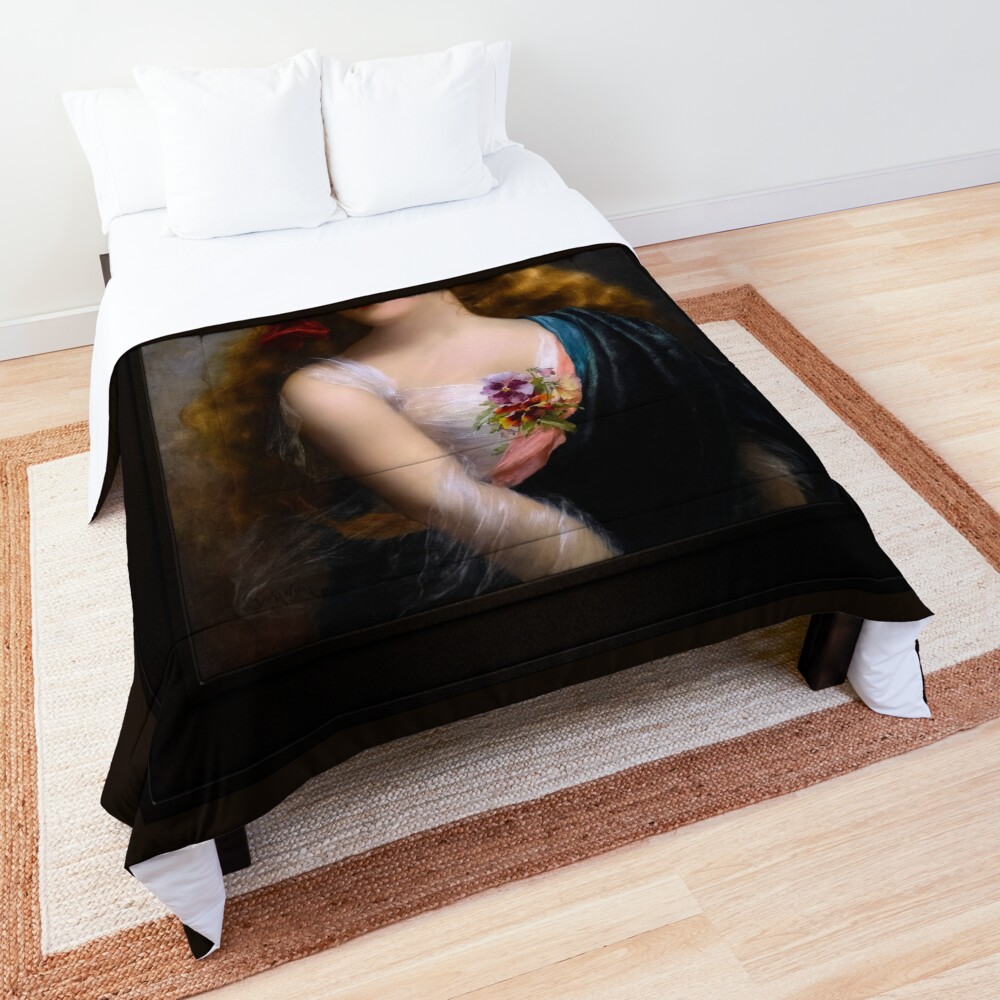
It fokuspunt fan it keunstwurk is in jonge frou mei lang, auburn hier, stylearre yn losse weagen dy't har skouders delfalle. Har gesichtsútdrukking is serene, dochs is der in stille yntinsiteit yn har blik dy't de sjogger liket te lûken. Se draait de holle wat nei de sjogger ta, har sêfte blauwe eagen glinsterje fan subtile emoasje.
De frou is klaaid yn in prachtige jurk fan kontraste stoffen, foaral in djip, ryk teal, dy't sierlik oer har skouder streamt. It materiaal fan 'e jurk liket sêft en streamend, mei delikate plooien dy't it masterskip fan 'e keunstner reflektearje yn it fangen fan ljocht en skaad.
Rêstich sêft op har skouder is in kluster fan frisse, helder kleurde blommen, pleatst mei opsetlike soarch. De bloeien, foaral fioele yn skaden fan pears en giel, binne nestele yn har jas, serving as both an accessory and a symbol of her gentle femininity.
The artist has rendered the flowers in great detail, using soft brushstrokes to convey their delicate nature and vibrant colors. This arrangement is not merely a decorative element but enhances the softness and grace of the subject.
Background and Surroundings
The background of the painting is subdued and out of focus, which further accentuates the subject’s prominence. It is painted in muted tones of grey and brown, providing a neutral backdrop that allows the woman and her attire to stand out. The hazy, almost indistinct setting creates a sense of intimacy, as if the subject is captured in a private, persoanlike momint. This choice of background allows the viewer to focus entirely on the woman, without distraction, and enhances the atmosphere of tranquility and poise.
Styl en technyk
Emile Vernon’s style is characterized by a blend of realism and romanticism, evident in his meticulous attention to detail and his ability to evoke a sense of beauty and grace. “An Auburn Beauty” is a prime example of these stylistic elements, with the artist using soft, flowing lines and delicate shading to capture the softness of the woman’s skin and hair.
The treatment of light in the portrait is masterful, with Vernon using light to emphasize the contours of the face and the texture of her gown. His application of oil paint is smooth and seamless, contributing to the dreamlike quality of the composition. Vernon also employs a subdued color palette, with warm golden hues in the woman’s hair and the deep teal of her gown creating a harmonious balance.
The artist’s technique in rendering the woman’s face is particularly notable. Each feature is finely crafted, with a gentle yet precise approach. The softness in the shadows around the eyes and cheeks, paired with the careful highlighting of her lips and brow, creates a lifelike quality that reflects the artist’s deep understanding of human anatomy and portraiture. Dizze technyk, combined with the romantic subject matter, ropt in gefoel fan tiidleaze skientme op, typical of the Belle Époque period.
Tema en stimming
The mood of the painting is one of calm elegance and introspective beauty. The subject’s tranquil expression, paired with the soft texture of the fabric and the natural elegance of her posture, conveys a sense of serene femininity. The addition of the flowers may suggest a connection to nature, as well as a timeless symbol of innocence and grace. The subject is not posed in an overtly seductive or dramatic manner, but rather exudes a quiet strength through her graceful demeanor.
The theme of idealized feminine beauty, central to the painting, is enhanced by the choice of the woman’s attire, har útdrukking, and the overall composition. Vernon’s work, like many artists of the time, reflects an era that valued beauty in its most delicate and refined form. His portrayal of women often emphasized an ethereal, almost unattainable, ideal, making the subjects of his paintings both captivating and aspirational.
Materials and Execution
Emile Vernon executed this work in oil paint, a medium well-suited for the delicate textures and soft blending of light that define the portrait. The artist’s brushwork is smooth, without visible strokes, giving the painting a flawless finish. The colors are carefully layered to create depth, particularly in the rendering of the fabrics and the skin tones. The deep contrasts between the lightness of the skin and the dark folds of the gown enhance the three-dimensional quality of the subject, making her appear as though she could step out of the canvas at any moment.
The artist’s approach to the flowers is equally detailed, with the soft petals almost appearing to come alive under the careful attention paid to their texture and colors. The flowers not only contribute to the aesthetic beauty of the piece but also add an additional layer of symbolism, tying the subject’s beauty to the natural world.
Konklúzje
“An Auburn Beauty” by Emile Vernon remains an exemplary piece of Belle Époque art, representing both the artistic mastery and the cultural ideals of the period. The portrait captures the elegance and subtlety of feminine beauty through Vernon’s skilled technique, while the soft colors, gentle lighting, and serene expression of the subject evoke a sense of tranquility and timelessness. This work stands as a testament to the artist’s ability to blend realism with romanticism, creating an image that continues to captivate viewers with its graceful portrayal of a woman at the height of idealized femininity.
Dit is in remastered digitale keunst âlde masters reproduksje fan in byld yn it iepenbier domein dat is beskikber as in canvas print online.
Artist Bio From Galery Ary Jan
Émile Vernon wie in studint oan de Skoalle foar Byldzjende Keunsten yn Tours dêr't hy de earste priis wûn foar tekenjen yn 1888; neitiid waard er doe begeliede troch William Bouguereau en Auguste Truphème.
Dan yn 1898 hy die mei oan de Tours-útstalling fan Byldzjende Keunsten en Dekorative Keunsten en letter dat jier, yn de Frânske keunstnerstentoanstelling en stelde dêr geregeld hie wurk út 1898 nei 1913; portretten presintearje, lânskippen, sênes út Bretanje, stillibbenboeketten dy't hy yn aquarel skildere, likegoed as froulike figueren, dy't letter waard is spesjaliteit.
Émile útblonk yn syn skilderijen fan sêft ferljochte, adorable figueren fan bern en elegante jonge froulju, mei wa't er faak in húsdier as in kat assosjearre, hûn of fûgel, en fersierde syn bylden mei slingers of boeketten fan blommen, syn hiele karriêre; mar hy wie ek in tige alsidige keunstner dy't mei strangens en krêft skilderje koe lykas yn syn wurken it portret fan Madame Vernon en Sous la Lampe (Under de lampe).