

Angelica and Medoro
Angelica and Medoro: A Rococo Dreamscape by François Boucher
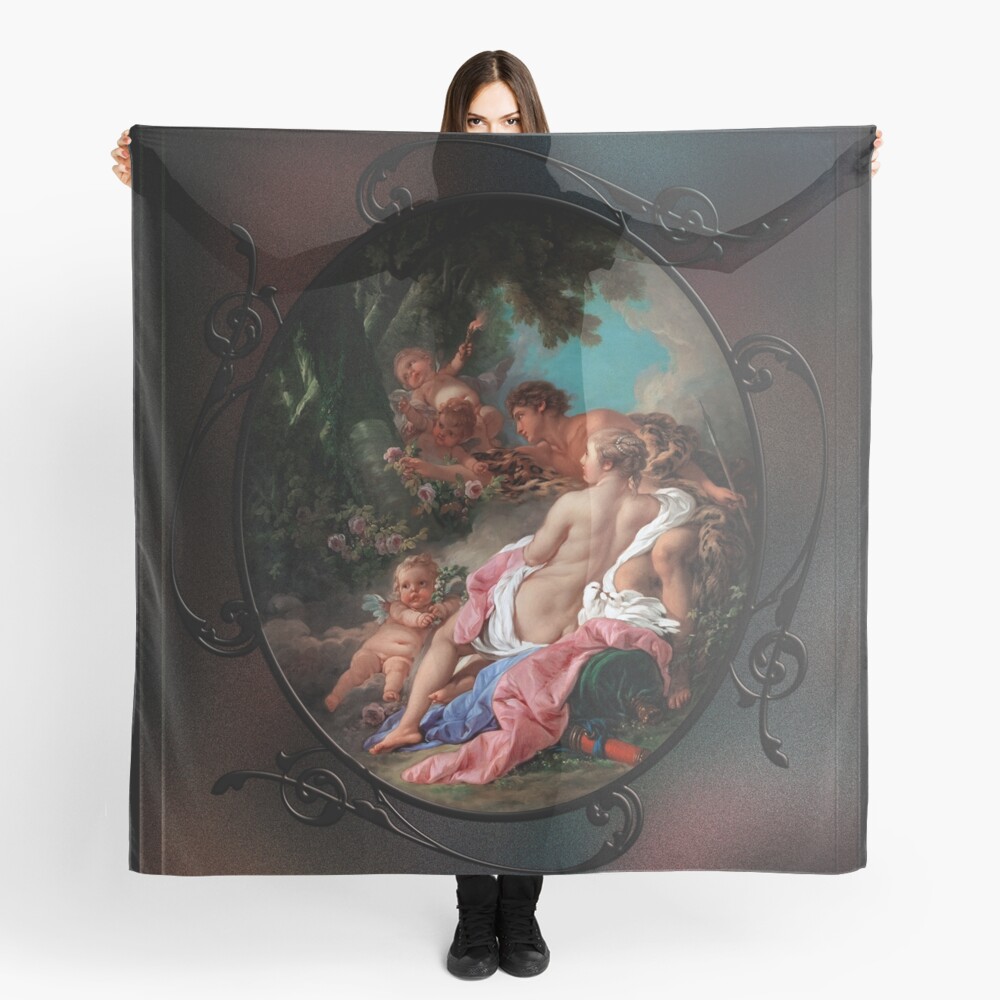
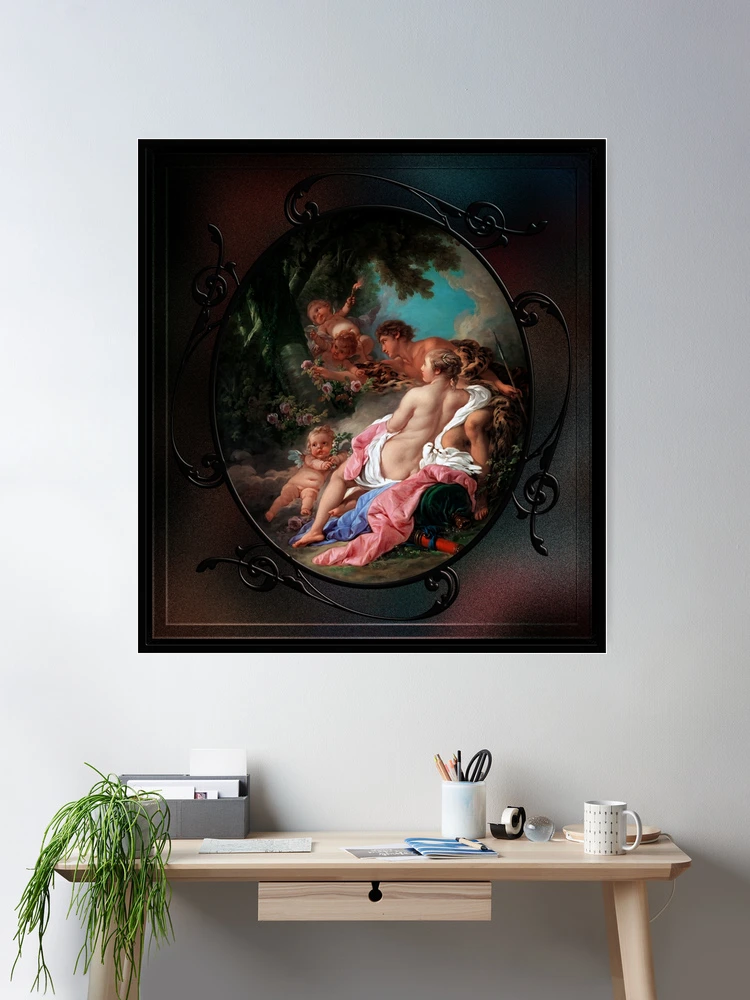
Francois Boucher’s “Angelica and Medoro,” rûnom skildere 1763, exemplifies the height of the Rococo style in French art. This captivating work, currently housed at the Musée du Louvre, transports viewers to a realm of idyllic beauty and sensual delight, characteristic of Boucher’s artistic vision. The painting depicts a scene drawn from Ariosto’s epic poem Orlando Furioso, where Angelica, a beautiful pagan princess, has fallen asleep in a woodland glade, attended by playful putti and the captive knight Medoro.
Ynhâldsopjefte
Komposysje Harmonie & Narrative kontekst
The composition is carefully orchestrated to create a sense of harmonious balance and visual pleasure. Boucher employs a pyramidal structure, with Angelica at its apex, drawing the eye immediately to her figure. The lush foliage forms a verdant backdrop, framing the central figures and enhancing the feeling of seclusion and enchantment. Medoro sits beside Angelica, his gaze fixed upon her face, conveying a sense of tender devotion. He is partially draped in armor, hinting at his former role as a warrior, now softened by his proximity to the sleeping princess. The scene unfolds within a dense forest setting; trees with vibrant green foliage create an immersive atmosphere.
Figures and Their Representation
Angelica’s portrayal embodies the Rococo ideal of feminine beauty: soft skin, streamend hier, and a languid pose that suggests both vulnerability and allure. Har jurk, werjûn yn delikat pinks en wyt, kaskade om har foarm hinne, beklamme har sierlike kontoeren. De keunstner syn masterlike gebrûk fan ljocht en skaad byldhouwen har lichem, markearje syn bochten en it kreëarjen fan in gefoel fan eteryske skientme. Medoro wurdt ôfbylde mei in mear muskulêre fysika, dochs is syn postuer ûntspannen en sêft as er nei Angelica sjocht. Syn klean kombinearret eleminten fan harnas en sêftere stoffen, reflektearret syn oergong fan strider nei leafhawwer.
The Role of the Putti
Taheakjen oan de grillige sjarme fan it toaniel binne ferskate putti - cherubyske figueren faak assosjearre mei leafde en boartlikens yn Renêssânse en barok keunst. Dizze lytse figueren froelje om Angelica en Medoro, blommen ferspriede en mei boartlike antyk dwaande hâlde. Their presence reinforces the painting’s overall atmosphere of carefree joy and sensual indulgence. One putto sits at Angelica’s feet, gently touching her hand, while others playfully toss blossoms into the air. The putti are rendered with a delicate touch, their forms soft and rounded, further contributing to the painting’s aesthetic appeal.
Boucher’s Artistic Technique & Styl
Boucher’s technique is characterized by his fluid brushstrokes, subtle gradations of color, and an emphasis on texture. He skillfully employs sfumato, a technique popularized by Leonardo da Vinci, to soften edges and create a hazy, dreamlike quality. The colors are rich and vibrant, with a particular focus on pastel hues – pinks, blues, greens, and creams – that evoke the atmosphere of a sun-drenched garden. Boucher’s style is distinctly Rococo; it prioritizes elegance, graasje, and sensual pleasure over realism or historical accuracy. He was known for his decorative paintings intended to adorn the homes of wealthy patrons, and “Angelica and Medoro” perfectly embodies this aesthetic.
Ljocht & Atmosfear
The lighting in “Angelica and Medoro” is soft and diffused, creating a gentle glow that bathes the scene in warmth. The light source appears to be coming from above, illuminating Angelica’s face and highlighting her delicate features. This creates a sense of intimacy and tranquility, drawing the viewer into the idyllic setting. The atmospheric perspective – the gradual blurring of details in the background – enhances the feeling of depth and distance, de sjogger fierder ûnderdompelje yn de wrâld fan it skilderij.
Algemiene yndruk & Legacy
“Angelica and Medoro” is mear as allinnich in byld fan in literêre sêne; it is in belichaming fan Rokoko-idealen - skientme, nocht, en eskapisme. Boucher syn masterlike technyk en evokative byldspraak hawwe makke dit skilderij ien fan syn meast ferneamde wurken, en in essinsjeel foarbyld fan 'e Rokoko-styl. It bliuwt publyk te boeien mei syn prachtige skientme en tiidleaze berop, it bieden fan in blik yn 'e wrâld fan 18e-ieuske Frânske keunst en kultuer. De oanhâldende populariteit fan it wurk komt út syn fermogen om gefoelens fan romantyk op te roppen, rêst, en sensuele wille, kwaliteiten dy't ek hjoed de dei tige wurdearre bliuwe.
Dekorative aksinten brûkt yn dit stik binne te krijen by HeritageType
Artist Bio ôflaat fan Wikipedia.org
In ynwenner fan Parys, Boucher wie de soan fan in minder bekende skilder Nicolas Boucher, dy't him syn earste artistike oplieding joech. Op de leeftyd fan santjin, in skilderij fan Boucher waard bewûndere troch de skilder François Lemoyne. Lemoyne beneamde Boucher letter as syn learling, mar nei mar trije moannen, hy gie oan it wurk by de graveur Jean-François Cars.
Yn 1720, hy wûn de elite Grand Prix de Rome foar skilderjen, mar grypte pas fiif jier letter de dêropfolgjende kâns oan om yn Itaalje te studearjen, fanwege finansjele problemen oan de Royal Academy of Painting and Sculpture.[1] Doe't er werom kaam fan syn stúdzje yn Itaalje, waard er talitten ta de opnij oprjochte Académie de peinture et de sculpture op 24 novimber 1731. Syn resepsjestik (resepsje stik) wie syn Rinaldo en Armida fan 1734.
Boucher troude mei Marie-Jeanne Buzeau yn 1733. It pear krige tegearre trije bern. Boucher waard fakulteitslid yn 1734 en syn karriêre fersnelle fan dit punt ôf doe't hy promovearre waard as professor doe rektor fan 'e Akademy, wurde ynspekteur by de Royal Gobelins Manufactory en úteinlik premier Peintre du Roi (Earste skilder fan 'e kening) yn 1765. Portret fan Marie-Louise O'Murphy c. 1752
Boucher ferstoar op 30 Meie 1770 yn syn bertelân Parys. Syn namme, tegearre mei dy fan syn beskermhear Madame de Pompadour, wie synonym wurden mei de Frânske rokokostyl, liedt de bruorren Goncourt te skriuwen: “Boucher is ien fan dy manlju dy't de smaak fan in ieu fertsjintwurdigje, dy't útdrukke, personifisearje en ferbyldzje it.”
Boucher is ferneamd om te sizzen dat de natuer is “te grien en min ferljochte” (te grien en min ferljochte).
Boucher waard ferbûn mei de edelstiennen graveur Jacques Guay, dy't hy learde te tekenjen. Hy begeliede ek de Moravysk-Eastenrykske skilder Martin Ferdinand Quadal en de neoklassisistyske skilder Jacques-Louis David yn 1767.[4] Letter, Boucher makke in searje tekeningen fan wurken fan Guay dy't Madame de Pompadour doe gravearre en ferspraat as in kreas bûn bondel oan begeunstige hovelingen