

Retrato de Anne-Marie de Mailly-Nesle
“Retrato de Anne-Marie de Mailly-Nesle (1717 – 1744), Marquesa de La Tournelle, más tarde duquesa de Châteauroux, en Point du jour” is a stunning representation of 18th-century French portraiture, created by an unknown artist from the School of French Art. The painting encapsulates the essence of French aristocracy during the reign of Louis XV, showcasing Anne-Marie de Mailly-Nesle in her youthful beauty and serene grace. Nacido en 1717, Anne-Marie was the marquise de La Tournelle and later became the duchesse de Châteauroux, the mistress of Louis XV. Este retrato, dating from the 18th century, captures her in the early morning light, a subject typically associated with the Romantic ideal of femininity and purity, commonly known as the “Point du jour.”
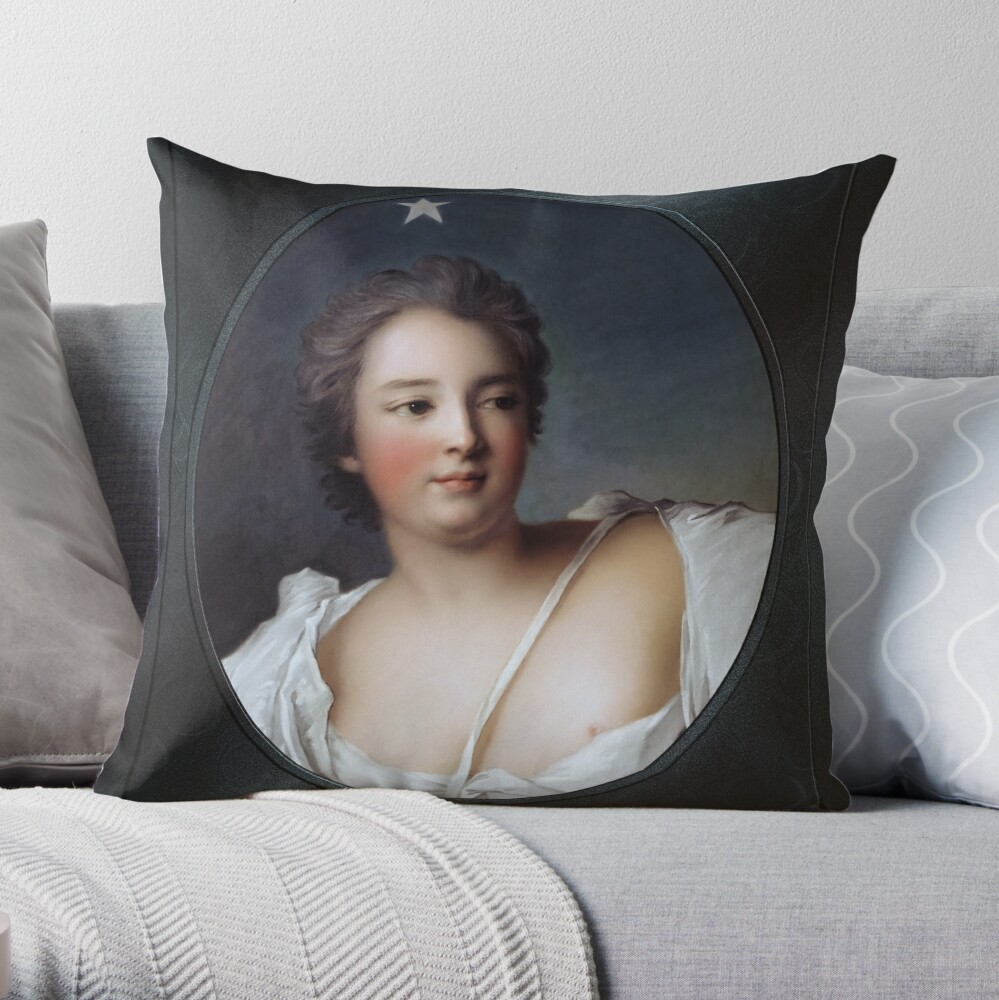
Tabla de contenido
Sujeto y expresión
The subject of the portrait is Anne-Marie de Mailly-Nesle, representado en un suave, intimate pose that suggests both regal dignity and personal allure. She is presented in a loose, vestido blanco fluido, which contrasts with the more rigid, structured attire often associated with nobility of the period. el vestido, delicate and understated, emphasizes her youthful beauty, while her tousled hair, loosely arranged around her head, further enhances this natural elegance. Her expression is calm yet somewhat introspective, conveying a serene confidence typical of royal portraiture but with an added layer of vulnerability that humanizes the figure.
The artist has chosen to highlight the subject’s face with exceptional care, focusing on her soft features: the slightly tilted head, her large eyes that seem to gaze gently out of the frame, and the smoothness of her skin, rendered in warm, delicate tones. This focus on the face captures both her beauty and the nobility she embodied in life, offering a glimpse of the softer side of court life, which often emphasized restraint and composure.
Escenario y composición
The background of the portrait is sparse and unobtrusive, Centrar la atención del espectador por completo en el tema. A faint star in the upper portion of the painting symbolizes the “Point du jour” o “moment of dawn,” a symbolic reference to Anne-Marie’s beauty, juventud, and position as an important figure in the French court. The simplicity of the background allows the viewer to focus on the intricacies of Anne-Marie’s attire and expression, as well as the subdued yet refined detailing of her features.
The composition follows the classical conventions of portraiture from the era, with Anne-Marie positioned slightly off-center, creating a sense of balanced asymmetry. This positioning invites the viewer’s eye to flow gently around the figure, ensuring that the focus remains on her while offering subtle visual interest through the soft folds of her gown, which are carefully arranged to imply both movement and structure. The artist has paid particular attention to the light in the composition, with a soft, glowing illumination that enhances the softness of the flesh tones and accentuates the delicate nature of Anne-Marie’s appearance.
Materiales y técnica
The artist has employed traditional oil paints to capture the nuances of texture and light. The brushwork is delicate and refined, with careful blending of tones to create a smooth, almost porcelain-like effect on the skin. The drapery of Anne-Marie’s gown is rendered in intricate detail, with each fold meticulously painted to suggest the weight and movement of the fabric. The artist has also used shading expertly, particularly around the subject’s face, to create a sense of depth and volume, as well as to highlight the subtle play of light and shadow.
The use of muted colors, such as soft pinks, ropa blanca, and pale blues, further enhances the overall serene and gentle atmosphere of the portrait. The background is a gradient of light, soft hues that allow Anne-Marie’s figure to stand out without distraction. The subtle use of these colors contributes to the mood of quiet elegance and understated beauty.
Estado de ánimo y tema
The mood of the painting is one of calm introspection and refined beauty, typical of French aristocratic portraits of the period. It reflects a sense of aristocratic dignity and poise but does so with a softness and delicacy that makes the subject appear approachable rather than distant. There is a serene, almost ethereal quality to the portrait, which is heightened by the use of soft lighting and the absence of a busy background. The theme of dawn or “Point du jour” is central to the work, representing not only Anne-Marie’s beauty but also the ideal of femininity as a source of light and renewal.
The theme is consistent with the Rococo style of the time, which often celebrated beauty, lightness, y refinamiento. The portrait’s atmosphere, with its emphasis on the purity of the subject and the soft play of light, speaks to the Rococo’s affinity for grace and beauty without the harshness of reality. Anne-Marie is portrayed not only as a historical figure but as a symbol of the ideals of the time: youthful beauty, aristocratic poise, and the fleeting nature of life at the French court.
Conclusión
“Retrato de Anne-Marie de Mailly-Nesle” is a striking example of 18th-century French portraiture, capturing the timeless beauty and elegance of Anne-Marie de Mailly-Nesle in the context of the French aristocracy. The artist’s skillful rendering of the subject’s delicate features, the soft illumination of her face, and the subtle symbolism of the dawn all work together to create a portrait that transcends the mere representation of an individual. It is a piece that speaks to the larger themes of beauty, feminidad, and aristocratic grace, immortalizing Anne-Marie in a moment of quiet reflection.
Acerca de la obra de arte
Retrato de Anne-Marie de Mailly-Nesle (1717 – 1744), Marquesa de La Tournelle, más tarde duquesa de Châteauroux, Punto del día Siglo XVIII por Escuela de Arte Francés.
Este es un retrato recortado que parece estar basado en el retrato de cuerpo entero creado por Jean-Marc Nattier. (1685 – 1766) en 1740 de Anne-Marie de Mailly-Nesle, Marquesa de La Tournelle, más tarde duquesa de Châteauroux, al amanecer; quien era la más joven de las cinco famosas hermanas de Nesle, cuatro de las cuales se convertirían en amantes del rey Luis XV (1715 – 1774) de Francia; y ella era su amante desde 1742 a 1744.
Ella era la hija de Louis de Mailly, Marqués de Nesle y de Mailly, Príncipe de Orange (1689 – 1767), y Armande Felice de La Porte Mazarino (1691 – 1729); y su madre era hija de Paul Jules de La Porte, Duque Mazarino y La Meilleraye (1666 – 1731), el hijo de la famosa aventurera, Hortensia Mancini, la sobrina del cardenal Mazarino.
Sus hermanas eran Louise Julie de Mailly, Señorita de Mailly, Condesa de Mailly (1710 – 1751), Pauline Félicité de Mailly, Mademoiselle de Nesle, Marquesa de Ventimiglia (1712 – 1741), Diane Adelaida de Mailly, Mademoiselle de Montcavrel, Duquesa de Lauraguais (1714 – 1769), Hortense Félicité de Mailly, Mademoiselle de Chalon, Marquesa de Flavacourt (1715 – 1799); Hortensia no era una de las Maestras de los Reyes.
Esta es una reproducción de maestros antiguos de arte digital remasterizada de una imagen de dominio público que está disponible como Esta es una elegante chica de glamour art deco vintage..
Abajo Derivado de Wikipedia.org
La Escuela de Arte Francés o, como comúnmente se la llama École des Beaux-Arts, abarca una colección de escuelas de arte influyentes en Francia., y es un término asociado con el estilo Beaux-Arts en arquitectura y planificación urbana que prosperó en Francia y otros países a fines del siglo XIX y el primer cuarto del siglo XX..
La más famosa y antigua de estas escuelas fue la École nationale supérieure des Beaux-Arts de París.; la historia de quién se extendió 350 años, y es el lugar donde se formaron muchos de los mejores artistas de Europa.
El origen de la escuela de París se remonta a 1648, cuando el cardenal Mazarino fundó la Académie des Beaux-Arts (1602 – 1661); establecer un lugar donde los estudiantes más talentosos pudieran ser educados en dibujo, cuadro, grabado, escultura, arquitectura y otros medios.
En 1863 Napoleón III (1808 – 1873) dio a la escuela la independencia del gobierno francés y cambió el nombre a L'École des Beaux-Arts; y luego comenzando en 1897, a las mujeres también se les permitió asistir a la institución.