

Architects Dream c1840
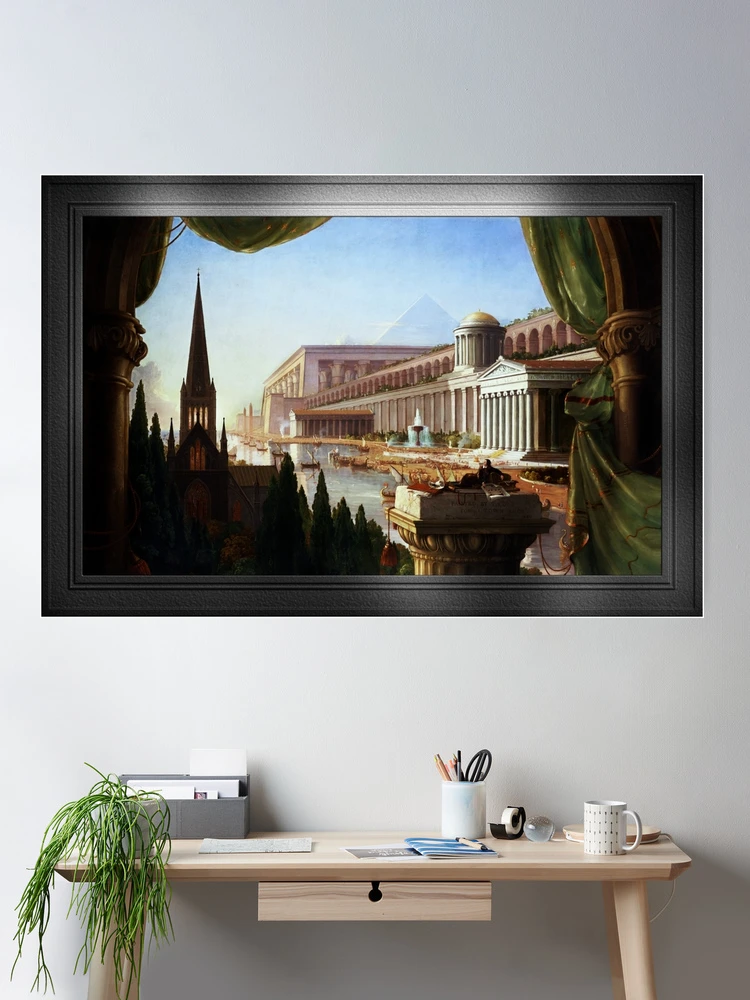
“Architect’s Dream,” oanmakke yn 1840 by American artist Thomas Cole (1801 – 1848), is an awe-inspiring oil painting that invites viewers to contemplate the grandeur of architectural ambition set against the backdrop of a vast, idealized landscape. Cole, known as the founder of the Hudson River School, often infused his works with deep philosophical and spiritual meanings, reflected here through the exploration of man’s drive to create and build monumental structures. Dit stik, yn't bysonder, addresses themes of progress, the interplay between nature and human endeavor, and the vision of what might be achieved when the natural world and human architecture collide in harmony.
Ynhâldsopjefte
Haad ûnderwerp: The Dream of Architecture
The painting depicts a scene that blurs the line between the real and the imagined, with an expansive view of a river valley showcasing a procession of classical buildings and monuments. The central focus is on the figure of an architect, positioned in the foreground. He stands on a balcony, looking out over the dreamscape of his vision. The architecture in this landscape appears to be both inspired by and homage to the great civilizations of antiquity, specifically Greek and Roman influences, with the structures taking on monumental proportions. The presence of the architect in the painting draws attention to the theme of human aspiration and the deep intellectual and artistic pursuit involved in the creation of architecture.
Objekten en terrein
It terrein yn “Architect’s Dream” is sprawling and idyllic. Nei lofts, the dark Gothic spires of a cathedral rise up, hinting at the influence of European medieval architecture. The buildings in the painting are set in a rich landscape that contrasts sharply with the grandeur of the constructed elements. Lush green trees and open fields surround the distant waterways that reflect the warm, golden light of the setting sun. The terrain transitions into mountainous areas in the distance, which suggests a perfect synthesis between nature’s beauty and human-built environments.
In the middle of the painting, the river flows gently through the land, winding between the monumental structures that seem to emerge from the earth. A series of boats dot the river’s surface, with a few visible figures navigating the water, further adding to the sense of scale and movement within the painting. The intricate details of the boats, some drawn by oars and others by sails, suggest that human industry and commerce still play a vital role in this serene but constructed world.
The architecture itself is classical in style, evoking grand temples, kolonnades, and public squares, with columns and porticos making up the central designs of the structures. Op 'e eftergrûn, an ancient pyramid looms, its purpose and construction a testament to a civilization long past, and a symbol of human achievement and ambition. The distant cityscape, bathed in the soft light of the horizon, implies that the creation of such architecture is timeless, as if the dream of civilization never ends.
Styl en technyk
Thomas Cole’s signature style is evident in the intricate detailing and emotional tone of the painting. The foreground features the crisp and realistic depiction of the figures and the architectural details. His mastery of light is also notable, particularly in the way it subtly illuminates both the architect and the buildings, creating a dynamic interplay between the shadows and light. In Cole’s paintings, light often plays a symbolic role, representing the presence of divine inspiration or the illumination of intellectual and artistic enlightenment. The colors in the painting are rich and warm, with a golden tone washing over the entire scene, lending an almost ethereal quality to the landscape and structures.
The use of perspective is masterful, as de keunstner de dimensjes fan it toaniel útrekt om in gefoel fan grutheid en belang op te roppen. De fiere hoarizon wurdt dominearre troch in himel fol sêft, fading ljocht, it ferbetterjen fan de spegeljende en dreamlike kwaliteit fan 'e komposysje. It wetter yn 'e rivier spegelet dizze delikate ferljochting, wjerspegelje de torenhoge gebouwen en himel mei in uncanny dúdlikens.
Tema: The Dream of Human Achievement
De titel, “Architect’s Dream,” suggerearret de djippe filosofyske ûnderbou fan it skilderij. It ûndersiket it idee dat de handeling fan it ûntwerpen en bouwen fan monumintale gebouwen in djip ferbyldingsrike en transzendinte stribjen is. De keunstner presintearret de arsjitekt net allinnich as bouwer, mar as in fisioenaris, dreamend fan grutte wurken dy't it natuerlike mingje mei it troch de minske makke. Cole bekritisearret subtyl it potensjeel foar minsklik besykjen om oermjittich te wurden of loskeppele fan 'e natuer, mar hy erkent ek de pracht fan minsklike kreativiteit en ambysje.
It byld kin ynterpretearre wurde as in metafoar foar de beskaving sels, symbolisearret sawol it potensjeel foar minsklike grutheid as de flechtige aard fan alle dingen. De oanwêzigens fan 'e piramide op' e eftergrûn koe wurde sjoen as in symboal fan 'e âlde beskaving, wylst de mear moderne gebouwen koe fertsjintwurdigje de takomst. De gearhing fan 'e sublyme skientme fan' e natuer mei de yngenieurde omjouwing ferwiist nei de spanning tusken foarútgong en behâld, in weromkommend tema yn Cole syn wurken. Troch dit lykwicht, de keunstner suggerearret dat wylst arsjitektoanyske dreamen meie sweve nei ongelooflijke hichten, se bliuwe oan 'e ierde keppele en úteinlik ûnderwurpen oan it foarbygean fan 'e tiid.
Stimming en emosjonele ynfloed
De stimming fan “Architect’s Dream” is kontemplatyf en awe-ynspirearjend. It gebrûk fan 'e keunstner fan sêft ljocht en sêfte kleuren soarget foar in serene sfear, sjoggers útnoegje om nei te tinken oer de ûnbeheinde mooglikheden fan minsklike prestaasjes. Dochs, dizze sereniteit wurdt fersierd mei in gefoel fan weemoed, om't de sjogger der oan herinnere wurdt dat sokke grutte fisioenen ûnmooglik wêze kinne folslein te realisearjen. De dreamlike kwaliteit fan it toaniel fersterket dit gefoel fan tiidleazens en de flechtige aard fan minsklike ambysjes fierder.
De oanwêzigens fan 'e arsjitekt op 'e foargrûn makket in fokuspunt foar dizze refleksje. Syn blik rjochte nei de hoarizon suggerearret dat er, te, is ferlern yn kontemplaasje, mooglik twifelje oan de grinzen fan minsklike ferbylding of it betinken fan de krusing fan skientme, natuer, en skepping. De arsjitektoanyske dream foar him is in fisy net allinich fan stien en speesje, mar fan wat folle grutters, an idealized world shaped by human hands, yet rooted in the natural landscape.
Konklúzje
“Architect’s Dream” is a deeply philosophical and evocative painting that explores themes of human creativity, the tension between nature and architecture, and the grandeur of human achievement. Through meticulous detail and masterful use of light and perspective, Thomas Cole creates an artwork that serves as both a reflection on the past and a visionary gaze into the future. It is a meditation on the dream of building something lasting, something transcendent, while acknowledging the impermanence of all things.
Architects Dream is a retouched digital art old masters reproduction of a public domain image.
Artist Bio ôflaat fan Wikipedia.org
Thomas was born in Bolton le Moors, Lancashire England in 1801 and at 17 years of age emigrated to the United States with his family, settling in Steubenville, Ohio in 1818.
Yn 1823 he left Ohio and moved to Philadelphia and then from there in 1825 moved to Catskill, New York, where he lived for the next 23 years with his wife and children.
Thomas started his career as an engraver and was almost completely self taught as a painter, using books to learn his craft and also studying the works of other artists.
Dan yn 1822 Thomas began working as a portrait painter and over time shifted his focus from portraiture to landscape and historical painting.
Thomas is considered to be one of the prominent 19th century American painters and the founder of the Hudson River School movement which was influenced by the Romanticism era of the late 18th century and mid 19th century.
Though Cole was primarily a landscape painter, he also produced allegorical artwork; mei syn meast ferneamde wêzen de fiif dielen rige The Course of Empire; dy't itselde lânskip oer generaasjes hinne ferbyldzje, fan in tichtby steat fan natuer oant foltôging fan it ryk, en dan ferfal en ferwoasting.