

Ariadna
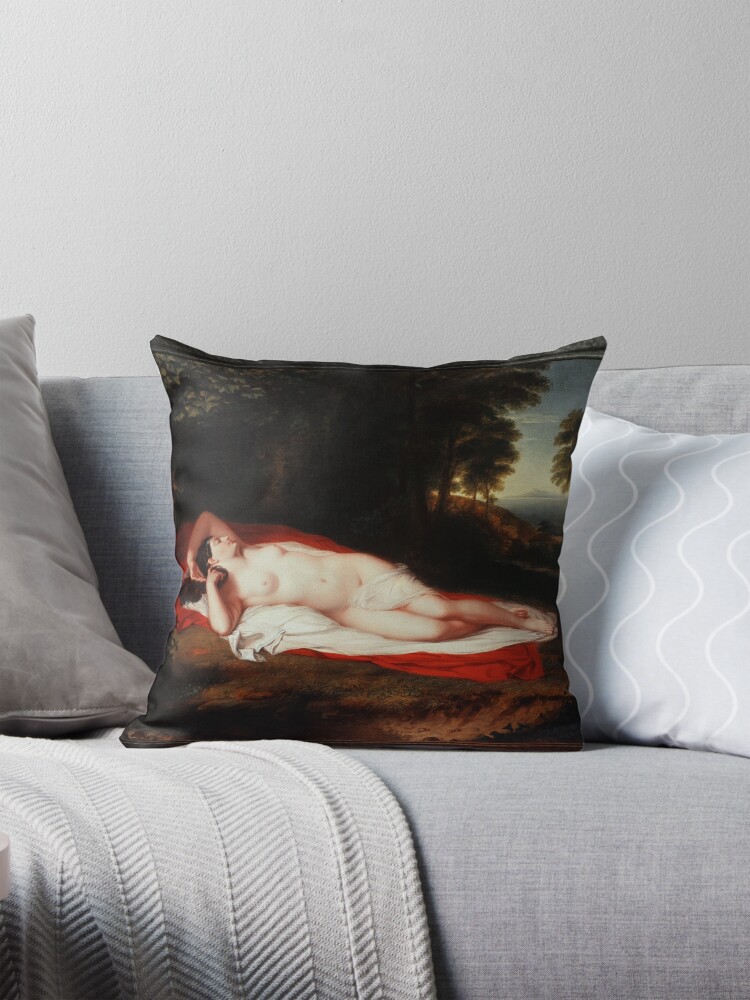
Ariadna c1831-35 per American Painter & Gravador Asher Brown Durand (1796 – 1886) va formar part del Romanticism Art Movement i es va graduar a la Hudson River School. Asher es va centrar principalment en les pintures de paisatges.
Aquesta pintura de Ariadna d'Asher prové d'una còpia d'un quadre de John Vanderlyn (1776 – 1852) cosa que va fer en preparació del gravat que va produir, com solia passar; crearia un llenç d’oli de la mida del gravat previst.
Ariadna és la princesa cretenca de la mitologia grega que va ser breument estimada per Teseu (el mític rei i fundador-heroi d’Atenes), que la va abandonar a l'illa de Naxos després d'haver-se cansat de la seva companyia.
Taula de continguts
Visió general de “Ariadna” per Asher Brown Durand
Asher Brown Durand, un pintor i gravador nord-americà, és àmpliament considerat com una de les figures centrals de l'escola de paisatge del riu Hudson, un moviment que celebrava la bellesa natural del paisatge americà. malgrat això, L'obra de Durand sovint s'estenia més enllà dels paisatges, com es veu a la seva 1831 – 1835 pintura Ariadna. Aquesta peça revela el mestratge de Durand no només a l'hora de capturar formes naturals, sinó també en la seva capacitat per dotar els seus subjectes d'una eteri eri., presència gairebé mitològica.
El tema de l'obra d'art: Ariadna
Al centre de Durand’s Ariadna es troba una dona en repòs, envoltat d'exuberant, desert imperturbat d'un antic, paisatge gairebé idíl·lic. El tema del quadre és Ariadna, una figura de la mitologia grega, coneguda per la seva connexió amb el mite de Teseu i el Minotaure. Ariadna sovint es representa com un símbol de l'amor, pèrdua, i la traïció, i Durand la capta en un moment de contemplació serena.
La postura d'Ariadna és lànguida i contemplativa, estirat en un llit de cortines vermelles que contrasta amb els suaus tons del món natural circumdant. La figura sembla relaxada, gairebé dormint, amb el cap suaument girat cap al costat. El seu cos està envoltat d'un flux, drap blanc translúcid, amb el ric teixit carmesí sota d'ella evoca una sensació de luxe i opulència. Malgrat la seva posició reclinada, els contorns del seu cos romanen elegants, amb la pintora captant les corbes naturals de la seva forma amb molta cura i sensibilitat. La seva cara, encara que parcialment enfosquit per la seva posició, sembla pacífica, suggerint una profunda calma interior o introspecció.
El paisatge i l'entorn natural
El fons de la pintura és un exuberant, paisatge verd que s'estén en la llunyania, banyat per la suau resplendor d'una llum del vespre o del matí. L'escena es caracteritza per turons suaus, arbres densos, i una massa d'aigua llunyana. L'atenció de Durand al detall en la representació de la natura reflecteix la seva dedicació als principis de l'escola del riu Hudson, where the natural world was revered and idealized. The foliage is painted in rich, deep greens, while the sky above is a delicate blend of soft blues and warm yellows, contributing to an atmosphere of tranquility and nostalgia.
The distant view across the water provides a sense of depth and space, inviting the viewer to imagine the vastness of the scene. The use of light in this painting is particularly notable; the artist’s careful rendering of shadows and highlights creates a sense of volume and texture, lending an almost three-dimensional quality to both the figure of Ariadne and the surrounding landscape. The light appears to envelop the figure, casting a soft glow on her skin and the folds of her drapery, while the shadowed areas deepen the sense of solitude and reflection.
El simbolisme de la draperia
The red drapery beneath Ariadne is not just a visual element but also a symbolic one. In classical art, drapery often served as a vehicle for expressing both the subject’s emotional state and their physical form. En aquest cas, the deep red fabric can be interpreted as a symbol of passion, amor, or even sacrifice. Ariadna, having been abandoned by Theseus after helping him escape the labyrinth, might be seen as embodying themes of loss and emotional turmoil, yet her peaceful repose and the lush, fertile landscape around her suggest a kind of quiet resolution or acceptance.
The white cloth she is draped in can be viewed as a symbol of purity or a new beginning, which is fitting given that the myth of Ariadne is often associated with transformation; both in the literal sense of her life being changed by her relationship with Theseus and in the mythological sense, where her fate takes a turn after her abandonment.
L'estil i la tècnica artística
Durand’s Ariadna is painted in a classical Romantic style, where realism and idealism merge to create a vision of beauty that transcends the ordinary. The artist employs a fine balance of realism in the portrayal of both the figure and the landscape, yet there is an underlying idealization that makes the scene feel timeless. Durand’s technical skill is evident in the delicate rendering of light and shadow, the softness of the fabric, and the naturalistic details of the landscape.
The figures and forms are modeled with great precision, and the soft transitions of color suggest the artist’s deep understanding of the human body and the play of light across different surfaces. Durand’s fine attention to detail extends beyond the human form to the natural environment, where every leaf, branch, and rock is meticulously painted, contributing to the painting’s overall sense of realism and harmony.
Estat d'ànim i atmosfera emocional
L'estat d'ànim de Ariadna és una de tranquil·litat, soledat, and quiet reflection. The soft light, gentle landscape, and languid pose of the subject all combine to create an atmosphere of serene contemplation. There is a sense of quiet beauty in the way the figure rests within the natural surroundings, suggesting both an intimate connection to nature and a contemplative escape from the tumult of the mythological world.
While the figure of Ariadne is deeply associated with themes of abandonment, betrayal, and emotional pain in the myth, Durand’s portrayal focuses on a more introspective aspect of her character. The absence of a direct narrative moment, such as her abandonment or subsequent marriage to Dionysus, allows the viewer to contemplate Ariadne in a state of quiet resolution. Her calm expression and relaxed pose suggest an emotional distance from her previous life’s trials and tribulations, allowing for a more meditative engagement with her figure.
Conclusió
En Ariadna, Asher Brown Durand merges his skill in landscape painting with his sensitivity to human emotion, producing a work that is both visually stunning and emotionally resonant. The painting is a delicate balance of idealized beauty and reflective solitude, drawing upon the classical traditions of mythology and landscape painting while imbuing the scene with a uniquely Romantic sensibility. A través d'aquesta peça, Durand invites the viewer to contemplate not only the mythical figure of Ariadne but also the eternal beauty of the natural world, which offers a quiet sanctuary from the tumult of human life.

Al fons, passats els arbres i el turó on descansa, podem veure una barca a la vora d’un llac, gent i un gos a la costa, amb el fum d’una foguera pujant a l’aire; finalment, a la llunyania, podem veure el que sembla ser una gran illa.
Aquesta és una reproducció retocada d'art digital d'antics mestres d'una imatge de domini públic que podeu comprar com a Impressió de tela enrotllada en línia.
Informació a continuació de Wikipedia.org
Durand va néixer a i finalment va morir a Maplewood, Nova Jersey (llavors anomenat Jefferson Village). Era el vuitè d’onze fills. El pare de Durand era rellotger i argenter.
Durand va ser aprenent d'un gravador de 1812 a 1817 i més endavant va establir una associació amb el propietari de l'empresa, Charles Cushing Wright (1796–1854), que li va demanar que gestionés l’oficina de Nova York de l’empresa.
Va gravar la Declaració d'Independència per a John Trumbull durant 1823, que va establir la reputació de Durand com un dels millors gravadors del país.
Durand va ajudar a organitzar la New York Drawing Association durant 1825, que es convertiria en l'Acadèmia Nacional de Disseny; exerciria l'organització com a president de 1845 a 1861.
Els gravats d’Asher en bitllets de banc es van utilitzar com a retrats dels primers segells postals d’Amèrica, el 1847 sèrie. Juntament amb el seu germà Cyrus també va gravar alguns dels successius 1851 problemes.
El seu principal interès va passar del gravat a la pintura a l'oli 1830 amb l’ànim del seu patró, Luman Reed. Durant 1837, va acompanyar el seu amic Thomas Cole en una expedició de dibuixos al llac Schroon a les muntanyes Adirondacks i poc després va començar a concentrar-se en la pintura de paisatges..
Va passar els estius fent dibuixos als Catskills, Adirondacks, i les muntanyes blanques de New Hampshire, fent centenars de dibuixos i esbossos a l'oli que més tard es van incorporar a peces acabades de l'acadèmia que van ajudar a definir l'escola del riu Hudson.
Durand és recordat especialment pels seus detallats retrats dels arbres, roques, i fullatge. Va ser un defensor de dibuixar directament de la natura amb el màxim de realisme possible. Durand va escriure, “Deixa [l'artista] acceptar escrupolosament el que sigui [natura] el presenta fins que ho farà, en un grau, s'han fet íntim amb la seva infinitat... mai el deixis profanar la seva sacralitat amb una allunyada deliberada de la veritat.”
Com altres artistes de l'escola Hudson River, Durand també creia que la natura era una manifestació inefable de Déu. Va expressar aquest sentiment i les seves opinions generals sobre l'art en el seu assaig “Cartes sobre pintura de paisatge” a The Crayon, una revista d'art novaiorquesa de mitjans del segle XIX. Va escriure en Durand, “[T]La veritable província de l'art del paisatge és la representació de l'obra de Déu en la creació visible...”
Durand és conegut per la seva 1849 pintant Kindred Spirits que mostra el seu també artista de l'escola del riu Hudson Thomas Cole i el poeta William Cullen Bryant en un paisatge de les muntanyes de Catskills. Això va ser pintat com un homenatge a Cole després de la mort de Cole durant 1848, i com a regal a Bryant.