

Grabado de Ariadna
Ariadna grabado c1835 por el pintor americano & Grabador Asher Brown Durand (1796 – 1886) formó parte del Movimiento de Arte del Romanticismo y se graduó de la Escuela del Río Hudson. El enfoque principal de Asher estaba en las pinturas de paisajes.
Descripción general
El grabado de Ariadna de Asher es de una copia de una pintura que hizo a partir de una pintura original de John Vanderlyn. (1776 – 1852). Ariadna es la princesa cretense que fue amada brevemente por Teseo. (el rey mítico y héroe fundador de Atenas), quien la abandonó en la isla de Naxos.
“Ariana” es un exquisito grabado creado por Asher Brown Durand, uno de los artistas y grabadores estadounidenses más destacados del siglo XIX.. Esta obra de arte, completado alrededor 1835, es una interpretación magistral de temas clásicos en el estilo neoclásico.
El tema de este grabado., Ariana, es una figura de la mitología griega, cuya imagen ha sido captada a través del grabado de Durand con notable sensibilidad y profundidad.. El estado de ánimo y la narrativa transmitidos en esta pieza están profundamente entrelazados con los temas del abandono., soledad, y anhelo, presentando a Ariadna como símbolo de la melancolía romántica.
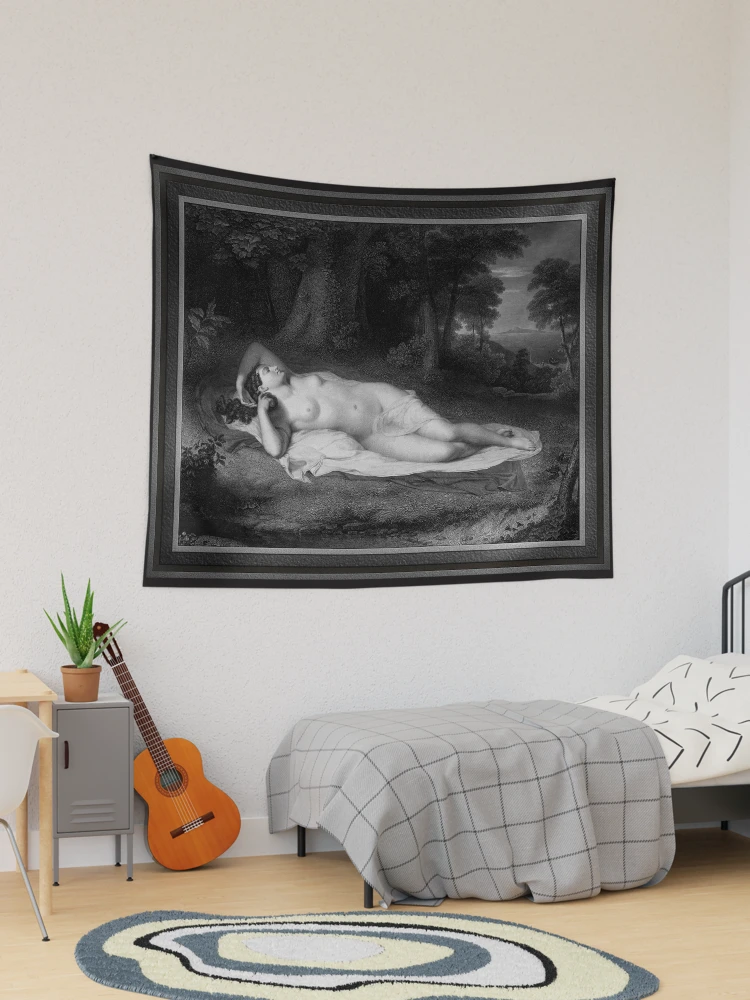
Tabla de contenido
El tema y la composición
En el corazón de la composición se encuentra Ariadna., la figura central que a menudo se representa en los mitos antiguos como el amante abandonado de Teseo. Durand la ha dejado tirada en el suelo., envuelto en suave, Telas fluidas que parecen fusionarse con el mundo natural que la rodea..
Su postura sugiere una sensación de relajación o incluso resignación., con un brazo apoyado detrás de su cabeza, mientras la otra yace graciosamente sobre su torso. Su cara, sereno pero distante, mira hacia el horizonte como perdida en sus pensamientos o tal vez anticipando el regreso de su amante, un tema que resuena con los mitos clásicos del amor perdido y el abandono.
La representación de Ariadna en este grabado dice mucho sobre la comprensión de Durand de la forma humana., especialmente en la representación del cuerpo femenino. Las curvas de sus extremidades, el delicado plegado de la tela, y los contornos naturalistas de su rostro contribuyen a la belleza eterna y la vulnerabilidad de la figura.. El uso que hace Durand de sombreados y detalles finos en el grabado realza la textura de la carne y la tela., dando un sentido de vida a la imagen a pesar de su naturaleza estática.
El entorno y el entorno
El fondo y la ambientación del grabado contribuyen significativamente a su peso temático.. Ariadna está situada en un exuberante, entorno natural idílico: probablemente un claro abierto o un bosque apartado. el terreno, suavemente inclinado y salpicado de árboles, proporciona un suave contraste con el duro, formas cinceladas de la figura.
Una vista lejana de colinas y un río sugiere una integración armoniosa de elementos humanos y naturales.. El escenario parece estar en la cúspide del día y la noche., mientras una luz nebulosa se filtra entre los árboles, ilumina sutilmente la forma de Ariadna mientras proyecta el paisaje en una suave, resplandor de ensueño.
El artista representa hábilmente los árboles y el follaje con líneas intrincadas., creando una sensación de profundidad y dimensión. Las colinas distantes añaden una sensación de escala a la composición., realzando aún más el estilo naturalista en el que Durand destacó. Las finas líneas y los delicados sombreados son característicos del medio de grabado., una técnica que requiere paciencia y precisión, Ambos fueron aplicados expertamente por Durand para lograr un equilibrio armonioso entre el paisaje y la figura de Ariadna..
El medio: Grabado
como un grabado, esta pieza está ejecutada con meticulosa atención al detalle. Durand, conocido por su habilidad en este medio, usa afilado, líneas claras y sombreados intrincados para lograr una amplia gama de valores tonales. Las finas líneas del grabado le confieren una cualidad delicada., pero el uso del contraste y la sombra proporciona una profunda, sensación de volumen casi tridimensional. La técnica de Durand es particularmente hábil para capturar texturas., desde la suavidad de la piel de Ariadne hasta la áspera corteza de los árboles que la rodean.
El uso del grabado como medio también refleja el compromiso de Durand con la tradición del arte clásico y su deseo de producir obras que pudieran difundirse ampliamente., Popularizar estos temas mitológicos entre el público estadounidense y europeo.. Grabado, siendo más accesible que las pinturas originales, permitió una mayor distribución de esta imagen, convirtiéndolo no solo en un logro artístico sino también en un vehículo para promover los ideales clásicos..
Temas y simbolismo
La figura de Ariadna en este grabado encarna temas de aislamiento., abandono, y el paso del tiempo. En la mitología griega, Ariadna ayuda a Teseo a escapar del laberinto, sólo para ser abandonado más tarde por él en la isla de Naxos.. Esta imagen la captura en un momento de tranquila reflexión., tal vez contemplando su destino o su amor perdido.
La expresión serena de su rostro se yuxtapone con la agitación emocional que conlleva su mito.. Los suaves pliegues de sus cortinas y el entorno tranquilo pueden simbolizar un fugaz momento de paz antes del inevitable dolor que conlleva quedarse solo..
Adicionalmente, el entorno natural de la pieza complementa estos temas. Los árboles y el follaje sugieren un ambiente atemporal., mundo inmutable, mientras que la figura de Ariadna contrasta con esta permanencia, insinuando la naturaleza transitoria de la vida y las emociones humanas. Su presencia en tal escenario evoca la tensión entre la humanidad y la naturaleza., Un tema profundamente arraigado en el arte y la literatura clásicos..
Estado de ánimo y ambiente
El estado de ánimo de “Ariana” es profundamente melancólico. Durand ha elegido retratar el momento de soledad de Ariadna tras su abandono, y la expresión pacífica pero sombría de su rostro realza esta atmósfera emocional.. La iluminación del grabado, con su suave contraste entre luces y sombras, impregna la pieza de un silencio, calidad casi etérea. Los árboles del fondo crean una sensación de refugio., sin embargo, su distancia y la suavidad de sus contornos evocan una sensación de aislamiento., Reforzar el trasfondo emocional de la narrativa..
Mientras la escena está bañada por la calma de la naturaleza., hay una corriente subyacente de tristeza que es palpable. La soledad de la figura., combinado con la mirada anhelante y el paisaje lejano, Crea una atmósfera que es a la vez tierna y trágica.. Habla de la experiencia humana del abandono y la silenciosa resignación que a menudo la acompaña..
Conclusión
Asher Brown Durand's “Ariana” Se presenta como un excelente ejemplo de grabado estadounidense del siglo XIX y una representación de temas clásicos a través de una lente neoclásica.. La serena pero conmovedora descripción de Ariadna., en un contexto natural, invita al espectador a contemplar la fragilidad de la emoción humana, el paso del tiempo, y el aislamiento que a menudo acompaña al amor y la pérdida. La maestría técnica y la profundidad emocional de esta obra., combinado con la delicada interacción de luces y sombras, conviértelo en una obra de arte atemporal.
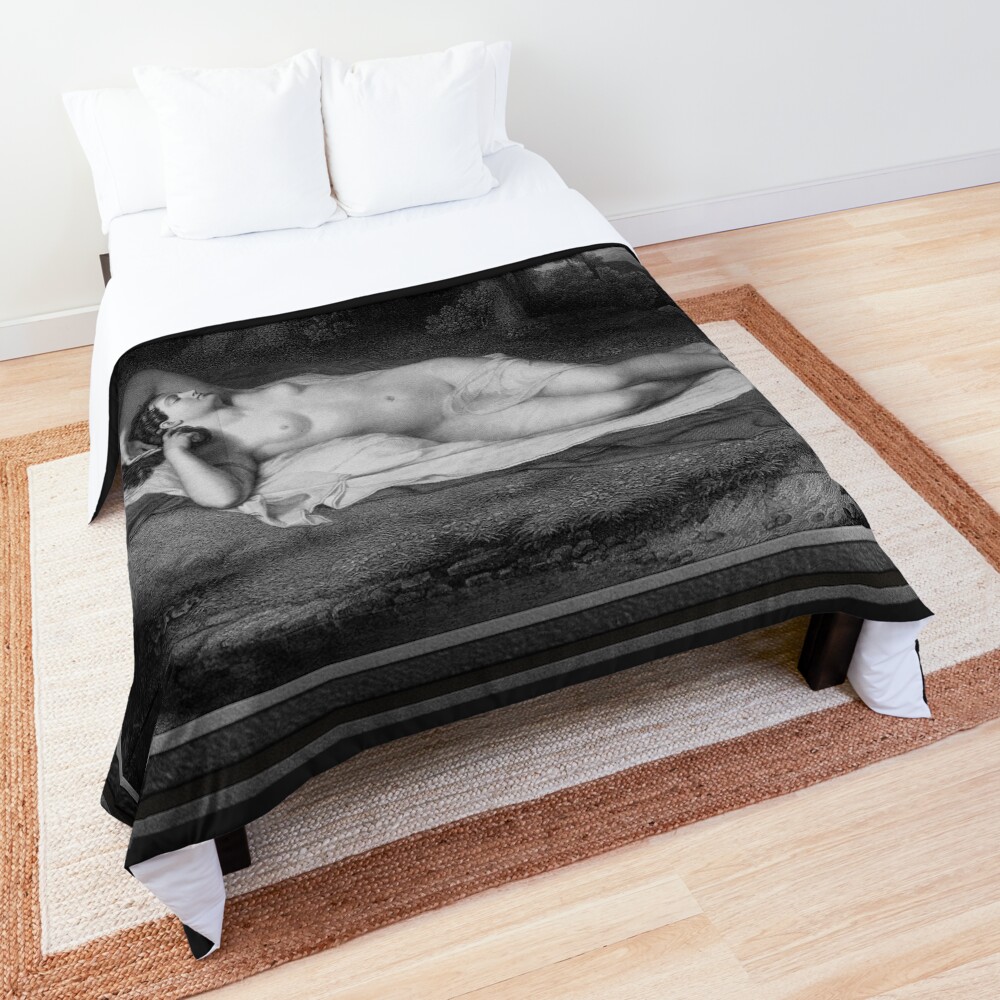
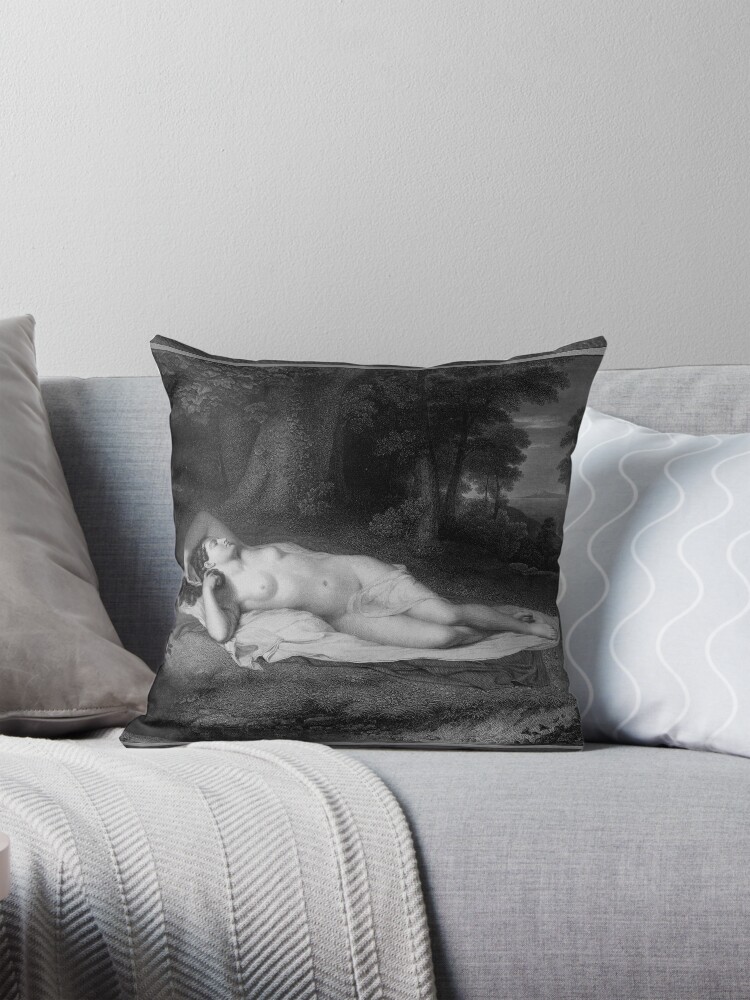
Ariadna El grabado representa a Ariadna tumbada en el bosque., encima de un paquete de ropa parcialmente desnudo por un arroyo con su brazo izquierdo colocado sobre su cabeza y su mano derecha agarrando su cabello mientras descansa en la parte posterior de su cuello.
En el fondo del grabado de Ariadna, pasando por los árboles y la colina sobre la que descansa., podemos ver un barco en la orilla de un lago, y a lo lejos podemos ver lo que parece ser una gran isla.
Este grabado de Ariadna es una reproducción retocada de viejos maestros de arte digital de una imagen de dominio público..
Información debajo de Wikipedia.org
Durand nació y finalmente murió en Maplewood., New Jersey (entonces llamado Jefferson Village). Era el octavo de once hijos.. El padre de Durand era relojero y platero..
Durand fue aprendiz de grabador de 1812 a 1817 y posteriormente se asoció con el propietario de la empresa, Charles Cushing Wright (1796–1854), quien le pidió que dirigiera la oficina de la empresa en Nueva York.
Grabó la Declaración de Independencia de John Trumbull durante 1823, que estableció la reputación de Durand como uno de los mejores grabadores del país..
Durand ayudó a organizar la Asociación de Dibujo de Nueva York durante 1825, que se convertiría en la Academia Nacional de Diseño; serviría a la organización como presidente desde 1845 a 1861.
Los grabados de Asher en billetes de banco se utilizaron como retratos para los primeros sellos postales de Estados Unidos., la 1847 serie. Junto con su hermano Ciro también grabó algunos de los siguientes 1851 asuntos.
Su principal interés pasó del grabado al óleo sobre 1830 con el apoyo de su patrón, Luman Reed. Durante 1837, acompañó a su amigo Thomas Cole en una expedición de dibujo al lago Schroon en las montañas Adirondacks y poco después comenzó a concentrarse en la pintura de paisajes..
Pasó los veranos dibujando en Catskills., Montañas Adirondack, y las Montañas Blancas de New Hampshire, haciendo cientos de dibujos y bocetos al óleo que luego se incorporaron a piezas terminadas de la academia que ayudaron a definir la Escuela del Río Hudson..
Durand es recordado particularmente por sus detalladas representaciones de árboles., rocas, y follaje. Fue un defensor de dibujar directamente de la naturaleza con el mayor realismo posible.. Durand escribió, “Dejar [el artista] aceptar escrupulosamente cualquier cosa [naturaleza] lo presenta hasta que, en un grado, se ha vuelto íntimo de su infinitud... nunca permita que él profane su carácter sagrado alejándose deliberadamente de la verdad.”
Como otros artistas de la escuela del río Hudson, Durand también creía que la naturaleza era una manifestación inefable de Dios.. Expresó este sentimiento y sus opiniones generales sobre el arte en su ensayo. “Cartas sobre pintura de paisaje.” en el crayón, una publicación periódica de arte de Nueva York de mediados del siglo XIX.. Escribió Durand., “[T]El verdadero ámbito del Arte del Paisaje es la representación de la obra de Dios en la creación visible…”
Durand se destaca por su 1849 pintura Kindred Spirits que muestra al artista de la Escuela del Río Hudson Thomas Cole y al poeta William Cullen Bryant en un paisaje de las Montañas Catskills. Esto fue pintado como un tributo a Cole tras la muerte de Cole durante 1848, y como regalo a Bryant.