

Menyw â Phen Coch
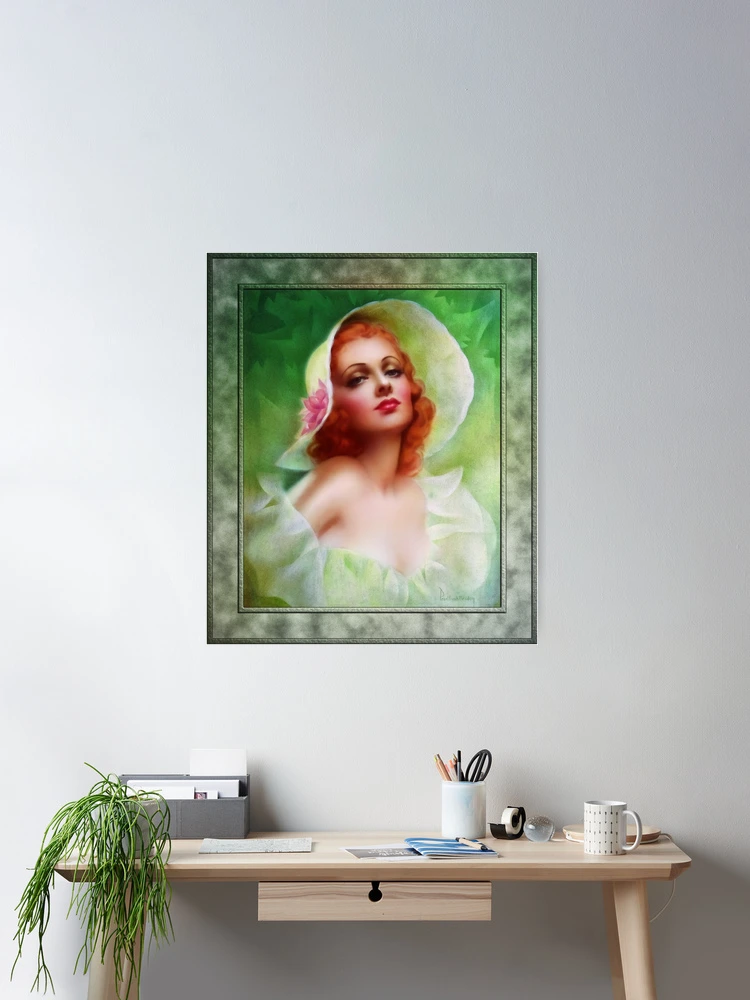
Crëwyd yn y 1930au, Menyw â Phen Coch erbyn Pearl Alice Frush Brudon (1907 – 1986) yn enghraifft drawiadol o ddefnydd cain yr artist o arlliwiau meddal a rendrad manwl o harddwch benywaidd. Yn adnabyddus am ei phortreadau sensitif o fenywod mewn lleoliadau tawel a bron yn ethereal, Mae Brudon yn dal eiliad o ras ym mywyd merch ifanc, mae'n debygol y bydd wedi'i ysbrydoli gan draddodiadau artistig dechrau'r 20fed ganrif. Y darn, gweithredu gyda brwsh llyfn a phalet lliw golau, yn deyrnged i realaeth a harddwch portreadau Americanaidd yn ystod y cyfnod.
Ar flaen y portread hwn mae'r fenyw ei hun, ei chyrlau coch meddal yn rhaeadru'n gain o amgylch ei hwyneb, wedi'i fframio gan fawr, het welw wedi'i haddurno â blodyn pinc. Yr het hon, a defining feature of the subject, gives her an air of sophistication and youthful vitality. Her facial expression is serene yet enigmatic, with a hint of a smile that evokes a sense of quiet confidence.
The soft pink of her lips contrasts subtly with the gentle tones of her complexion, accentuating the softness of her features. The eyes are a focal point of the portrait; they are wide, swynol, and appear to be gazing directly at the viewer with a gaze that feels both distant and intimate.
Cefndir y paentiad, consisting of lush, blurry greens and soft washes of color, suggests an outdoor setting, perhaps a garden or a meadow. The hazy greens surrounding her lend a sense of tranquility and isolation from the world, suggesting that the subject exists in a peaceful moment of solitude. The leaves and blurred foliage contribute to a sense of dreamlike beauty, as if the woman is part of the landscape itself.
Tabl Cynnwys
Arddull a Thechneg Artistig
Frush Brudon’s work in Menyw â Phen Coch is rooted in the fine art traditions of realism, though her approach veers towards a slightly more romantic and idealized depiction of the female form. The artist uses soft, almost pastel-like colors, particularly in the skin tones, creating a smooth and luminous effect that gives the subject a timeless quality. The rendering of the woman’s features is highly detailed, from the delicate structure of her face to the intricate texture of her hair, yet the overall tone of the painting remains soft and smooth, avoiding any harsh lines or sharp contrasts.
Yr het, with its wide brim and gentle curves, is another notable feature of the painting, contributing to the sense of softness and grace. Its white color provides a stark contrast to the warmth of the woman’s complexion and the gentle greens of the background. The flower at the side of the hat further adds to the softness of the subject, enhancing the delicacy of the image and the mood of the painting.
In terms of technique, Frush Brudon employed a careful application of color and light, giving the portrait a sense of depth despite its simplicity. Y cefndir, though blurry, creates a natural environment that enhances the subject’s ethereal presence. The use of light, yn enwedig ar wyneb y wraig a'r blodyn yn ei gwallt, yn tynnu sylw’r gwyliwr at ei nodweddion cain tra hefyd yn caniatáu i’r gwyliwr werthfawrogi’r llawn, rendrad meddal o'r paentiad.
Thema a Naws y Gwaith Celf
Mae thema Menyw â Phen Coch yn un o fenyweidd-dra bythol a harddwch tawel. Nid yw'r wraig a ddarlunnir yng nghanol unrhyw weithgaredd mawreddog; yn lle, mae hi'n cael ei dal mewn eiliad o dawelwch, gan wahodd y gwyliwr i'w gwerthfawrogi mewn modd mwy myfyrgar ac agos-atoch.
Y meddal, cefndir niwlog yn gwella'r ymdeimlad o unigedd, bron fel petai’r gwyliwr yn gweld cipolwg agos ar eiliad breifat o fywyd y gwrthrych. Mae ymdeimlad o dawelwch yn y paentiad, and the way in which the subject interacts with the natural surroundings emphasizes a deep connection between the woman and the world around her.
The choice of a red-headed woman is significant, as it highlights an unusual beauty that was not as frequently celebrated in art at the time. Ei gwallt, rich in color and volume, contrasts beautifully with the soft tones of the rest of her features and the setting, further emphasizing her individuality and uniqueness. This red hair, along with the softness of the colors, suggests both warmth and delicacy, key qualities of femininity that are captured in this portrait.
The mood of the artwork is peaceful and reflective, evoking feelings of calm and admiration for the quiet beauty of the subject. It presents the viewer with a sense of tranquility, as if the moment captured in time is one of pure contentment. There is no rush or hurry in the portrait; the subject exists in a perfect, untroubled moment of grace.
Deunyddiau a Chanolig
While the exact materials used by Frush Brudon in Menyw â Phen Coch are not definitively documented, it is likely that the artist employed oil paints, as was common during this period for portraiture. Oil paints allow for the fine blending of colors and the smooth transitions between shades that are seen in the soft rendering of the skin tones and the gentle transitions in the background. The luminous quality of the portrait, along with the delicate brushstrokes seen in the details of the woman’s face and hair, suggest that oil was the medium of choice for this piece.
Mae hwn yn atgynhyrchiad hen feistri celf ddigidol wedi'i atgynhyrchu o ddelwedd parth cyhoeddus.
Artist Bio Is Derived From Wikipedia.org
Ganed Pearl Alice Frush yn Sioux City, Woodbury, Iowa ymlaen 1907; pan oedd hi'n ifanc symudodd ei theulu i Arfordir Aur Mississippi a dechrau ei hastudiaethau artistig yn New Orleans, Philadelphia a Dinas Efrog Newydd ac yna yn Ysgol Sefydliad Celf Chicago sy'n gysylltiedig â Sefydliad Celf Chicago.
Yn ystod y 1930au hwyr a'r 1940au cynnar gwnaeth Pearl waith hysbysebu ar ei liwt ei hun yn Chicago gan gynnwys Vogue-Wright Studios, Blodyn haul, Johnson & Gwyn, a Gerlach Barklow Co.
These companies published much of her successful pinup girl calendar art, including Liberty Belles, Girls of Glamour, and Glamour Round the Clock.
Pearls was one of three top female pinup glamour artist which included Joyce Ballantyne (1918 – 2006), and Zoë Mozert (1907 – 1993) that were highly successful in the pin-up girl illustration artwork that was dominated by Alberto Vargas (1896 – 1982), George Petty (1894 – 1975), Gil Elvgren (1914 – 1980), Bill Medcalf (1920 – 2005), Rolf Armstrong (1889 – 1960) and several others.