

In der Oper
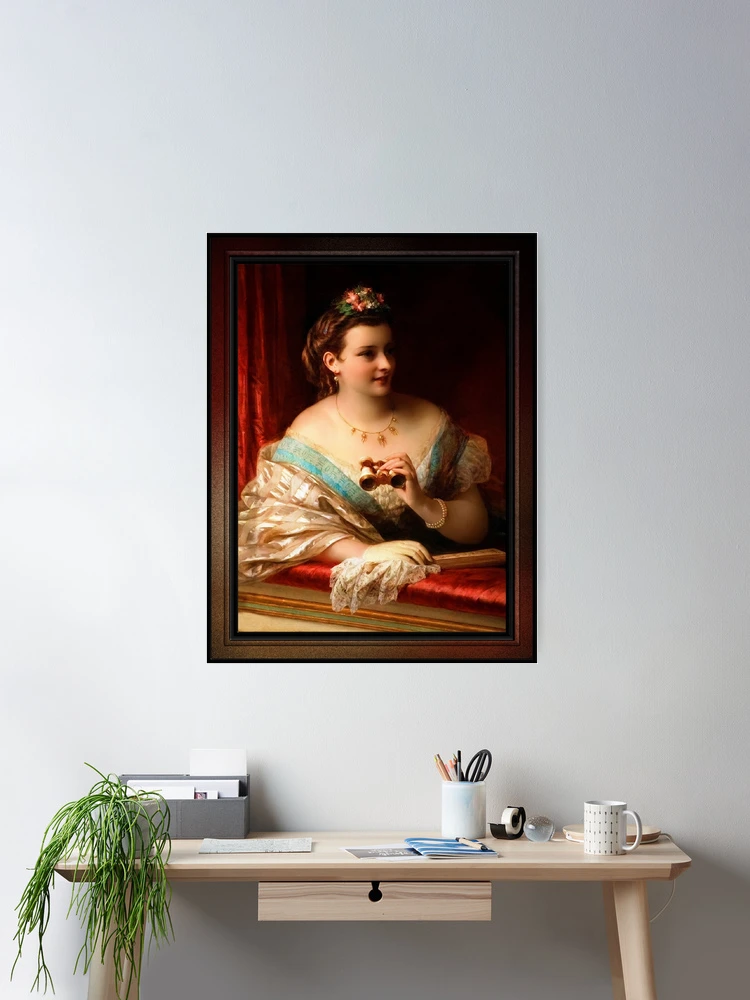
“In der Oper,” geschaffen vom britischen Künstler Thomas Francis Dicksee (1819 – 1895), ist ein anschauliches Beispiel viktorianischer Kunstfertigkeit, Einfangen eines Moments intimer Eleganz und Anmut während eines gesellschaftlichen Anlasses im 19. Jahrhundert. Das zentrale Thema des Stücks ist eine ausgeglichene und jugendliche Frau, der elegant in opulenter Kleidung gekleidet ist. Mit gelassener Miene, Die Frau blickt nachdenklich in die Ferne, hält ein Opernglas in der Hand, ein unverzichtbares Accessoire für den modischen Theaterbesucher der damaligen Zeit. Ihr Aussehen und die Atmosphäre innerhalb des Gemäldes spiegeln sowohl die kulturelle Bedeutung als auch den Luxus der High Society im viktorianischen Zeitalter wider.
Inhaltsverzeichnis
Das Hauptthema
Die zentrale Figur in diesem Gemälde ist eine raffinierte junge Frau, die das für das viktorianische Zeitalter typische Ideal weiblicher Schönheit und Anmut verkörpert. Sie trägt ein luxuriöses Kleid in Hellblau und Creme, Hergestellt aus einem Stoff, der dezent glitzert, ein Hinweis auf die hohe Qualität und den Status des Trägers. Die Haare der Frau sind ordentlich in sanften Wellen gestylt, und sie ist mit einem floralen Kopfschmuck geschmückt, ein Accessoire, das oft in Porträts der damaligen Zeit zu sehen war und sowohl Raffinesse als auch eine Verbindung zur Natur vermitteln sollte. Ihre Kleidung, Dazu gehören die zarten Spitzendetails am Oberteil und die verzierte Halskette, spricht für das Maß an Reichtum und Kultiviertheit, das von Mitgliedern der Oberschicht der viktorianischen Gesellschaft erwartet wird.
Im Mittelpunkt des Gemäldes steht ihr Blick, was die Aufmerksamkeit auf ihre Hand lenkt, which holds a pair of gold opera glasses. The glasses themselves are an exquisite touch, indicative of the setting—an opera or theater event. These glasses were popular among theatergoers of the era, not just for practical use but as a symbol of status, used by the elite to better view the performances while subtly demonstrating their wealth and refinement. This choice of accessory ties the painting’s theme to the world of theater, Kultur, and aristocratic leisure.
Das Setting und die Objekte
The scene is set in a luxurious indoor environment, likely a private viewing area or a royal box at an opera house, though the full surroundings are not immediately visible. The background features rich curtains, possibly velvet, drawn aside to allow for a glimpse of the world beyond. The heavy drapery suggests an air of privacy, an intimate space within the grandeur of the opera house where high society would observe performances in comfort and seclusion.
The furniture in the foreground, a plush red cushioned chair, emphasizes both the wealth and the refined taste of the subject. The woman is seated comfortably in the chair, with her posture conveying both grace and a sense of poised contemplation. Resting on the arm of the chair is a small book, hinting at her cultured nature and perhaps suggesting that she is awaiting the performance to begin, or she may be simply passing the time while observing the ongoing event.
Beyond the central figure, we notice the faint suggestion of other elements that complete the ambiance of an aristocratic gathering. The rich textures and subdued lighting evoke a sense of tranquility and refinement that permeates the atmosphere. The luxurious textures of the curtains, ihre Kleidung, and the surrounding decor lend a sense of opulence and grandeur typical of Victorian interiors. There is no overt display of extravagance; eher, the richness of the scene is conveyed through subtle, sophisticated details.
Die Stimmung und Atmosphäre
Die Stimmung von “In der Oper” is one of serene elegance. Das ausgeglichene Auftreten des Subjekts, coupled with the subdued tones of the background, creates a calm, contemplative atmosphere. There is a sense of quiet anticipation, as if the viewer has entered the moment just before a grand performance begins. The young woman’s gentle gaze, directed off to the side, suggests a fleeting moment of introspection, which further adds to the painting’s refined and intimate quality.
The painting is infused with a sense of luxury, but not in a manner that is ostentatious. Stattdessen, the luxurious elements—such as the fine fabric of the gown and the gleaming opera glasses—are presented in a way that emphasizes understated elegance. This characteristic is typical of Victorian portraiture, where the subject’s social status is implied through their attire, Einstellung, and the quality of materials depicted.
Künstlerischer Stil und Technik
Thomas Francis Dicksee’s painting is a brilliant example of the Victorian style, characterized by detailed realism and a refined use of color and light. Dicksee was known for his attention to detail, und dieses Gemälde ist keine Ausnahme. The fabrics of the gown and the soft glow of the woman’s skin are rendered with delicate precision, showcasing his mastery of light and texture. The subtle shading used to depict the folds of the fabric and the delicate highlights on the jewelry and opera glasses demonstrate Dicksee’s skill in creating depth and realism.
The composition itself is thoughtfully arranged, with the subject’s body turned slightly toward the viewer while her head remains in profile. This balanced approach creates a sense of harmony within the piece, guiding the viewer’s eye from the rich folds of her dress to the focus of her hand and the opera glasses she holds. Die Verwendung von Soft durch den Künstler, Warme Töne, especially in the skin tones and drapery, contrasts with the more vibrant accents of the woman’s accessories, drawing attention to the details that define her aristocratic status.
Dies ist eine retuschierte Reproduktion eines gemeinfreien Bildes durch digitale Meister alter Meister.
Biografie des Künstlers
Info unten abgeleitet von Wikipedia.org
Thomas war der Schüler von H. P. Briggs. Im 1841 er stellte an der Royal Academy aus und tat dies bis zu seinem Tod. Sein Bruder John Robert Dicksee war Maler, sowie seine Kinder, Sir Francis Dicksee und Margaret.
Thomas war Porträtist, sowie als Maler historischer Genrethemen, die oft von den Werken William Shakespeares inspiriert wurden (1564 – 1616) ein britischer dramatischer Dichter und Schauspieler, gilt als der weltweit renommierteste und größte Dramatiker aller Zeiten.
Thomas Dicksee produzierte eine Serie von Porträts von Familienmitgliedern, und malte auch idealisierte Porträts, einschließlich der Shakespeare-Figuren Julia, Ophelia, Beatrice, Miranda und Ariel.