

Eine junge Dame mit einem roten Fächer
“Eine junge Dame mit einem roten Fächer,” erstellt in 1897 by Italian painter Eugen von Blaas (1843–1931), is an exquisite example of the artist’s talent for capturing elegant scenes from daily life, steeped in the opulence of late 19th-century Europe. In diesem besonderen Gemälde, Blaas conveys the sophisticated world of aristocratic women, emphasizing grace, Schönheit, und Verfeinerung. The painting is not only a portrait of a young woman but also an embodiment of the fashion, attitudes, and natural beauty of its time.
Inhaltsverzeichnis
Das Thema und die Komposition
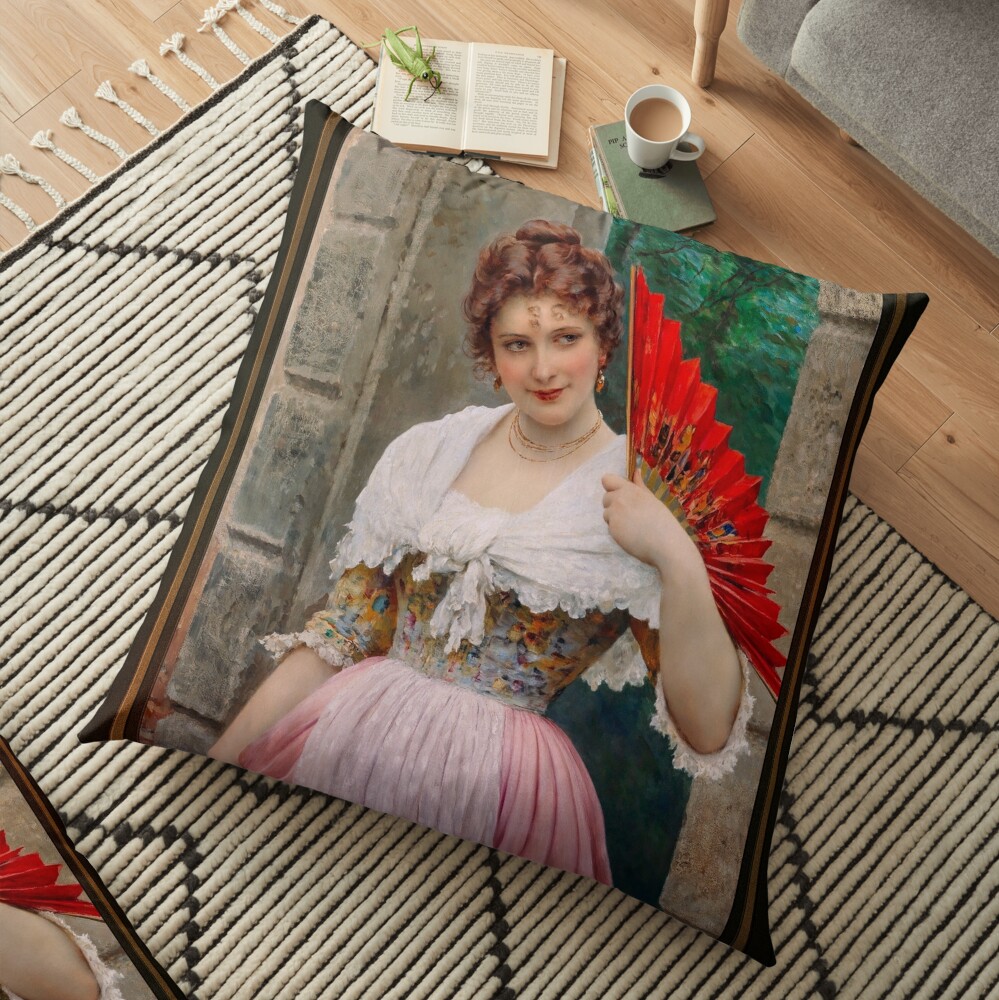
At the center of the composition is a young woman, her delicate features framed by a soft cascade of light brown curls that hint at the youthful energy and warmth of the scene. She wears a gown that speaks to the fashionable styles of the late 19th century, with its high waistline, billowing skirt, and the intricate textile work that blends pastel hues of pink, lavender, and white.
The woman’s posture is relaxed yet refined, holding a vibrant red fan that contrasts sharply with the muted tones of her attire and background. The fan serves as both an accessory and an integral visual element, drawing the viewer’s eye immediately. The vibrant red of the fan, with its delicate painted designs, contrasts beautifully with her attire, and its boldness contrasts with the soft elegance of her gown.
The artist captures the woman’s gaze with a sense of intimacy and intrigue. Ihre Augen, framed by soft curls, look to the side with a knowing expression, as if caught in a moment of daydreaming or perhaps conversing with someone off to the left of the frame. This subtle connection between the viewer and the subject draws the audience into the narrative of the scene, inviting them to imagine the woman’s thoughts or the circumstances of her moment in time.
Der Hintergrund und die Einstellung
Der Hintergrund von “Eine junge Dame mit einem roten Fächer” is a garden scene, visible through a stone archway. The earthy tones of the stonework and the lush green foliage beyond create a serene, almost idyllic atmosphere. The setting suggests an aristocratic outdoor space, perhaps a private garden or a terrace of a noble estate, offering a perfect setting for a leisurely afternoon. The contrast between the stone and the natural greenery serves as a metaphor for the blend of human sophistication and nature’s untainted beauty.
The setting enhances the sense of elegance, with the classical stonework surrounding the archway symbolizing tradition and permanence. The surrounding greenery, jedoch, offers a feeling of freshness and tranquility, reinforcing the timeless nature of the subject and her surroundings.
Materialien, Techniques, and Style
The work is painted using oil paints, a medium that allows for rich textures, Tiefe, and light play. Blaas uses a masterful technique to capture the details of the woman’s clothing, creating a lifelike quality that feels almost tangible. The texture of the fabric, especially the soft folds of the gown, is rendered with meticulous attention to light and shadow, bringing a sense of volume and movement to the fabric.
The use of color in this painting is particularly striking. The soft pastels of the woman’s gown evoke a feeling of calm and softness, while the red of the fan is a bold statement, adding vibrancy and intensity to the composition. Blaas’s attention to detail, from the soft blush of the woman’s cheeks to the intricate design of the fan, showcases his ability to transform the mundane into something beautiful and worthy of admiration.

The Mood and Theme of the Artwork
The mood of the painting is serene, elegant, and contemplative. The young lady’s posture and expression convey a sense of calm and quiet confidence. Die Einstellung, mit üppigem Grün und klassischem Mauerwerk, verstärkt die Vorstellung von zeitloser Schönheit und aristokratischer Muße. Der Ventilator, als Objekt, bringt Konnotationen von Weiblichkeit mit sich, Charme, und soziale Anmut, sowie der intimere Aspekt des persönlichen Komforts.
Das Thema des Gemäldes dreht sich um die idealisierte Darstellung der Weiblichkeit im späten 19. Jahrhundert, Eine Zeit, in der Frauen oft als Symbole für Anmut und Anstand galten. Blaas fängt die sanfte Schönheit und Ausgeglichenheit der Frau ein, was sie in einen fast ätherischen Status erhebt. Diese Art der Darstellung war in der damaligen Kunst üblich, die das Leben der Oberschicht feiern und idealisieren wollte, insbesondere Frauen. Die Präsenz der Natur im Hintergrund verstärkt auf subtile Weise die Verbindung zwischen dem Motiv und seiner Umgebung, suggesting that the young woman, while of aristocratic status, is still part of the natural world.
Abschluss
Eugen von Blaas’s “Eine junge Dame mit einem roten Fächer” encapsulates the charm and elegance of the late 19th century through both its subject and the artist’s technique. Das Zusammenspiel von Licht, Farbe, and texture transforms an everyday moment into a celebration of beauty, Mode, und Weiblichkeit. Through this piece, Blaas invites the viewer into a world of aristocratic leisure, where elegance is embodied in both the subject and her surroundings. The painting’s combination of soft, delicate details and the vibrant contrast of the fan captures the essence of an era defined by sophistication and artistic refinement.
Dies ist eine remasterte digitale Kunst-Reproduktion alter Meister eines gemeinfreien Bildes, das als verfügbar ist Leinwanddruck online.
Diese digitale Kunstschöpfung, Wie alle Kunstwerke, die auf der Xzendor7-Website zu finden sind, können sie online in einer Vielzahl von Materialformaten einschließlich Leinwanddrucken erworben werden, Acryldrucke, Metalldrucke, Holzdrucke, gerahmte Drucke, Plakate, und als gerollte Leinwanddrucke in verschiedenen Größen von 12 Zoll zu 72 Zoll, abhängig von der Größe des tatsächlichen Kunstwerks und dem Print-on-Demand-Shop, in dem Sie das Kunstwerk kaufen möchten.
Das Kunstwerk ist auch auf einer breiten Palette von Herren- und Damenbekleidung erhältlich, Tassen, Tragetaschen, Schals, Notizbücher und Tagebücher sowie viele Heimdekorationsprodukte.
Biografie des Künstlers
Info unten abgeleitet von Wikipedia.org
Er wurde in Albano geboren, in der Nähe von Rom, an einen Tiroler Vater und eine italienische Mutter. Sein Vater Karl, auch ein Maler, war sein Lehrer. Seine Mutter, Agnesina Auda, war eine wohlhabende Römerin. Die Familie zog nach Venedig, als Karl Professor an der Akademie von Venedig wurde. Er malte oft Szenen in Venedig, aber auch Porträts und religiöse Gemälde.
Zu seinen Werken gehören Die Hochzeitsform in der Sakristei; Bingo in Campielo in Venedig; Eine Puppenszene in einer Schule; und La Ninetta. Der Kunstkritiker Luigi Chirtani, als das Gemälde in der Mostra Nazionale di Venezia ausgestellt wurde, beschrieb es als schön, schmeichelhaft, hübsch, gestreichelt, gereinigt, poliert, Wäscherin in einem Gemälde von Mr. Blase, der beliebteste Porträtmaler großer venezianischer Aristokraten, in Gala-Satin gekleidet, glänzender Schmuck, Frisuren der Reichen.
Seine farbenfrohen und eher theatralischen Bilder der venezianischen Gesellschaft, z.B. Auf dem Balkon (1877; Privatsammlung), waren ganz anders als zarte Pastelle und Radierungen der Höfe, Balkon und Kanäle des modernen Venedigs.
Eugene de Blaas’ Gemälde wurden in der Royal Academy ausgestellt, Gesellschaft für bildende Kunst, Neue Galerie und Arthur Tooth and Sons Gallery in London, und auch in der Walker Art Gallery in Liverpool