

belleza bajo el naranjo
“belleza bajo el naranjo” Es una notable obra de arte creada por el pintor francés. Emile Vernon en 1910. Conocido por sus contribuciones al período Belle Époque., Vernon tenía habilidad para capturar la elegancia de la forma femenina con gran atención al detalle.. Esta pintura, al igual que muchas de sus otras obras, muestra a una mujer joven en un lugar sereno, entorno lleno de naturaleza. La belleza del modelo se ve realzada por su pose tranquila y el exuberante entorno que proporciona un complemento perfecto a su gracia natural.. Con un gran enfoque en la luz y la textura., Vernon crea una mezcla armoniosa de realismo y belleza idealizada., característico de la época.
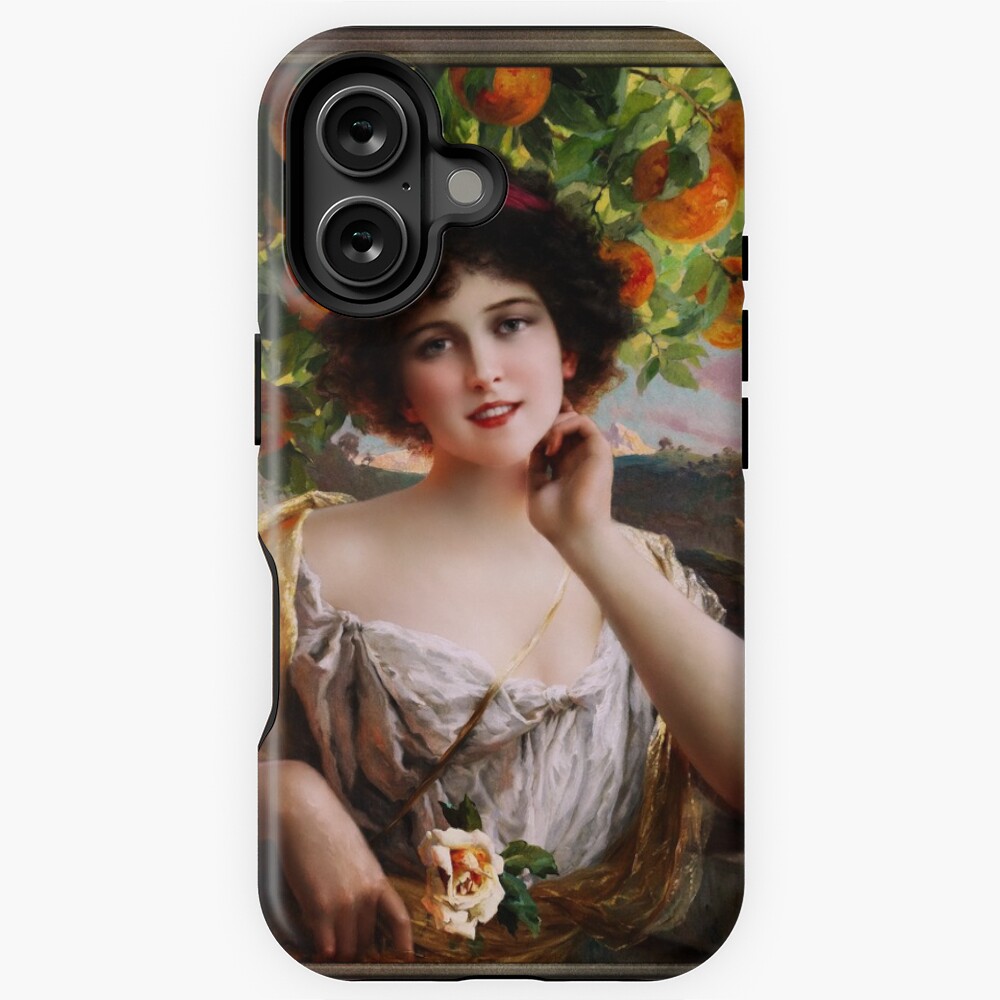
Tabla de contenido
El tema principal
En el centro de la composición se encuentra la joven, su inocencia juvenil transmitida a través de sus rasgos suaves y su expresión serena. Su tono de piel claro contrasta maravillosamente con el vívido fondo de naranjos.. Su pelo, peinado en rizos suaves, está coronado por una cinta de color rojo intenso que complementa los ricos tonos de la escena circundante.. La mirada de la mujer está ligeramente descentrada., Como si hubiera perdido en el pensamiento, Evocando una sensación de introspección tranquila y silenciosa.. Sus hombros desnudos y su piel expuesta enfatizan aún más la pureza y la belleza natural que Vernon buscó resaltar en su trabajo..
Ella está vestida con un vestido sencillo pero elegante., hecho de tela blanca fluida que capta la luz en suave, pliegues radiantes. Una faja dorada envuelta alrededor de su cintura agrega un toque de opulencia., su tono brillante hace eco del brillo de las naranjas que cuelgan del árbol sobre ella. The gown’s soft material contrasts with the vivid oranges in the background, which seem to symbolize abundance and vitality, themes often found in works of this period. The woman’s soft smile and the gentle manner in which she touches her neck contribute to her portrayal as a delicate, almost ethereal figure within this idyllic scene.
El paisaje y el entorno
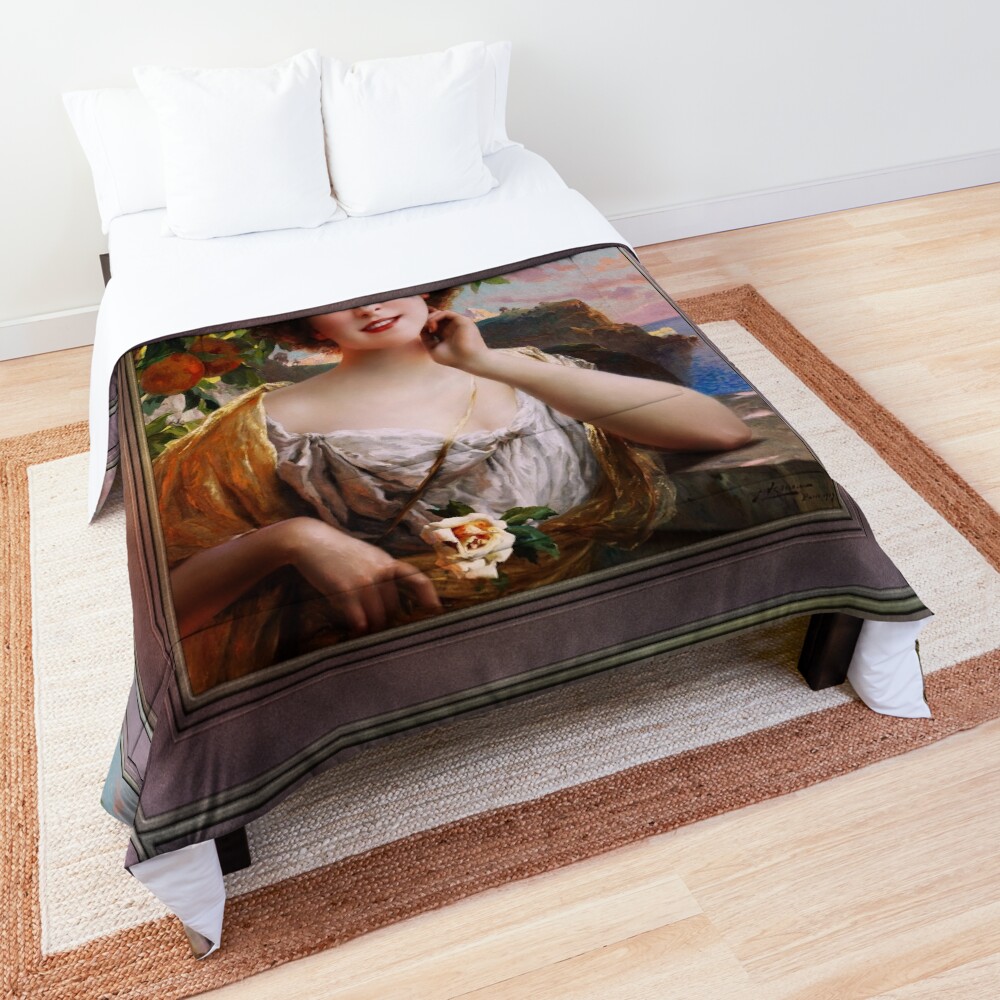
The backdrop of this painting is equally important, setting the tone and mood of the piece. A lush orange tree, heavy with fruit, arches over the woman, framing her in a natural embrace. The leaves of the tree are painted with fine attention to detail, their deep green color providing a striking contrast to the warm oranges, which glow with an almost lifelike intensity. These oranges not only contribute to the painting’s vibrant color palette but also add to the overall sense of calm and bounty that permeates the work. The tree’s canopy seems to provide both shade and shelter, creating a space of peace for the subject.
Beyond the tree, the terrain transitions into a soft, rocky landscape leading toward the ocean. The horizon is painted with a subtle gradient of pastel hues, from soft pinks and purples to the cool blues of the distant water. The light from the setting or rising sun casts a warm glow on the scene, lending the entire piece a romantic and peaceful atmosphere. The artist’s masterful use of light not only highlights the subject but also enhances the feeling of tranquility that flows through the work.
The scene is bathed in the soft glow of daylight, which pours through the canopy, casting dappled shadows onto the ground. The artist’s choice to include the seaside in the background adds depth and a sense of vastness to the scene. The water’s calm, almost reflective surface mirrors the stillness of the subject, reinforcing the theme of serenity that dominates the painting.
El estado de ánimo y el ambiente
El estado de ánimo de “belleza bajo el naranjo” is one of quiet contemplation and natural beauty. la joven, at ease in her surroundings, embodies the ideals of femininity that were celebrated during the Belle Époque period. Her pose is relaxed, suggesting that she is both at peace with herself and in harmony with the environment. Lo suave, almost pastel-like colors used throughout the composition further emphasize the peaceful, humor sereno. The gentle play of light on the woman’s skin and the natural surroundings invites the viewer to experience a sense of calm and admiration.
This mood is also enhanced by the soft textures used throughout the painting. Vernon’s careful attention to detail in the rendering of the fabrics of the woman’s gown, the leaves of the tree, and the waves of the distant ocean, creates an overall sense of softness and tranquility. The scene evokes a timeless beauty, one that could belong to any period but is uniquely tied to the turn-of-the-century fascination with idealized beauty and harmony with nature.
Estilo y técnica artística
Émile Vernon’s painting exemplifies the style of the late 19th and early 20th centuries, where artists sought to bridge the gap between realism and idealism. His ability to blend these two approaches allows the viewer to experience both the realism of the natural world and the idealized vision of beauty. The fine details of the painting, especially in the portrayal of the woman’s skin, cabello, and clothing, demonstrate Vernon’s mastery of texture and light.
Vernon uses rich, saturated colors that give depth to the figures and natural elements in the scene. The oranges of the tree, En particular, seem to leap from the canvas, bringing a vibrant energy to the otherwise tranquil composition. The soft blending of colors, especially in the sky and water, reflects the artist’s skill in capturing light, creando un equilibrio armonioso entre la figura, el arbol, y el paisaje lejano.
La pincelada es sutil pero deliberada., con trazos suaves que forman un todo cohesivo. La mezcla de suave, Los tonos apagados del fondo contrastan con los más definidos., formas radiantes del sujeto y el árbol cargado de frutos. Este contraste enfatiza aún más la figura central, convirtiéndola en el punto focal de la composición.
Conclusión
“belleza bajo el naranjo” de Émile Vernon es una pintura que celebra el mundo natural, belleza femenina, y tranquilidad. A través de su cuidadoso uso de la luz., color, y textura, Vernon crea una escena que es a la vez íntima y expansiva., invitando al espectador a hacer una pausa y apreciar la simplicidad y la paz que se encuentran dentro de la naturaleza.. La pintura captura un momento idealizado de serenidad., ofreciendo una ventana a un mundo donde la belleza y la naturaleza existen en perfecta armonía.
Esta es una reproducción de maestros antiguos de arte digital retocada de una imagen de dominio público que puede comprar como Esta es una elegante chica de glamour art deco vintage..
Esta creación de arte digital, al igual que todas las obras de arte que se pueden encontrar en el sitio web de Xzendor7, están disponibles para su compra en línea en una variedad de formatos de materiales, incluidas impresiones en lienzo, impresiones acrílicas, impresiones de metal, impresiones de madera, láminas enmarcadas, carteles, y como lienzos enrollados en una variedad de tamaños, desde 12 pulgadas a 72 pulgadas según el tamaño de la obra de arte real y la tienda de impresión bajo demanda en la que elija comprar la obra de arte.
La obra de arte también está disponible en una amplia gama de prendas de vestir para hombres y mujeres., tazas, totalizadores, bufandas, cuadernos y diarios y muchos productos de decoración del hogar..
Sobre el artista
Información debajo de Galería y Jan
Émile Vernon era alumno de la escuela de Bellas Artes de Tours, donde ganó el primer premio de dibujo en 1888; luego fue asesorado por William Bouguereau y Auguste Truphème.
Entonces en 1898 participó en la exposición Tours de Bellas Artes y Artes Decorativas y más tarde ese año, en la Exposición de Artistas Franceses y exhibió regularmente su trabajo allí desde 1898 a 1913; presentando retratos, paisajes, escenas de Bretaña, ramos de bodegones que pintó en acuarela, así como figuras femeninas, que luego se convirtió en su especialidad.
Émile se destacó en sus pinturas de luz tenue, adorables figuras de niños y elegantes jóvenes, con quien solía asociar una mascota como un gato, perro o pájaro, y adornaba sus imágenes con guirnaldas o ramos de flores, a lo largo de su carrera; pero también fue un artista muy polifacético que supo pintar con rigor y potencia como en sus obras el retrato de Madame Vernon y Sous la Lampe (Bajo la lámpara).