

Bewitching Eyes Art Deco Portrait
Zoe Mozert’s “Bewitching Aen Art Deco Portrait” (1930s) is an exquisite example of the American artist’s ability to blend glamour, Sensualitéit, and elegance within the framework of the Art Deco style. The portrait features a young woman whose gaze is arresting and hypnotic, encapsulating the glamour and beauty associated with the mid-20th century.
The painting itself is emblematic of Mozert’s signature work during the height of the American pin-up era, where she frequently depicted women as figures of allure and femininity. The image exudes both nostalgia and sophistication, set against a dynamic background that is as integral to the subject as the figure itself.
Mozart, born Alice Adelaide Moser (1907 – 1993), gained significant recognition for her portrayal of women in both commercial and fine art contexts. Her works, often infused with sensual undertones, evoke a sense of both empowerment and mystery, drawing viewers into a realm of carefully constructed beauty. An “Bewitching Aen,” Mozert achieves a perfect balance between realism and idealism, a hallmark of the Art Deco style that focuses on sleek, geometric patterns and the idealization of the human form. Her distinctive use of color, Liicht, and shadow gives the painting an air of vibrancy, while maintaining a sense of timeless elegance.
Inhaltsverzeechnes
Haaptwiel a Zesummesetzung
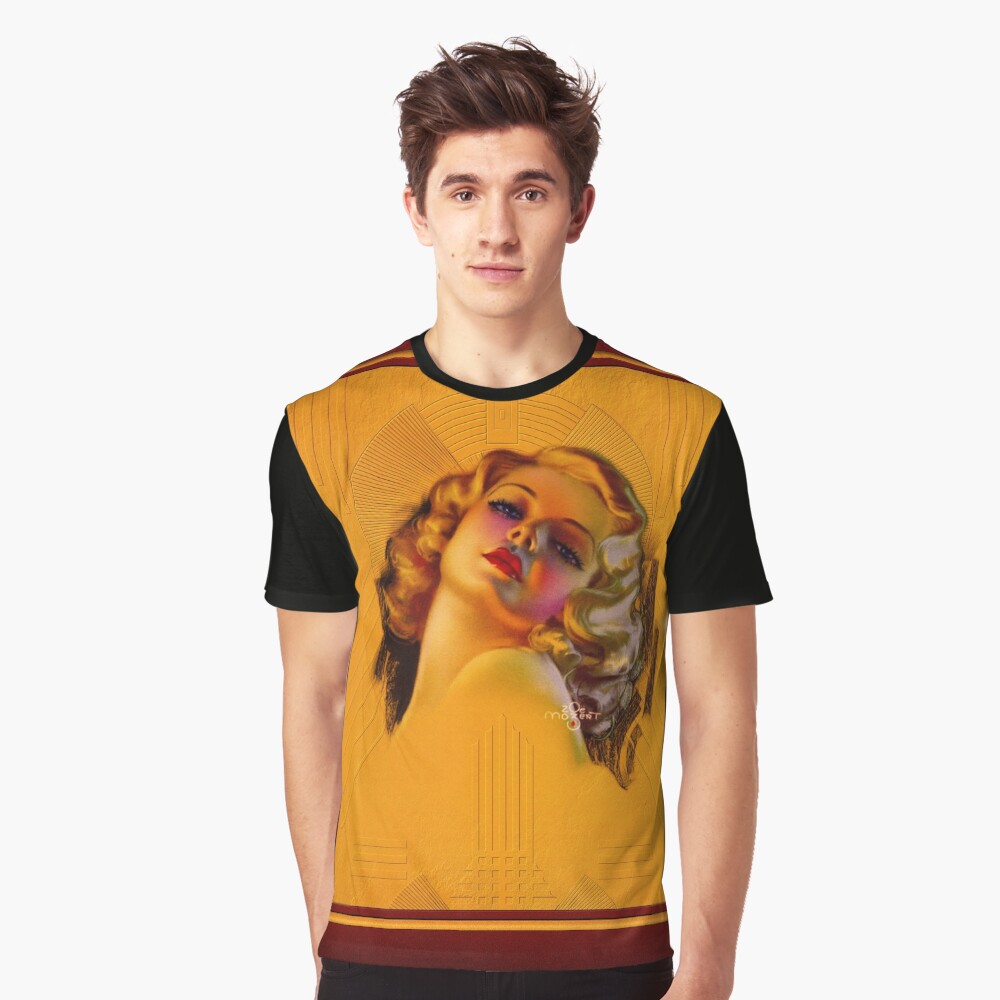
Am Zentrum vum Portrait, the subject is a woman with striking features that draw the viewer’s attention. Hir mëll, platinum blonde hair frames her face in voluminous curls, adding a sense of glamour and sophistication that is synonymous with the golden age of Hollywood. Hir Gesiicht, with delicate yet confident features, is tilted slightly upward, her eyes piercing the viewer with a directness that is both seductive and enigmatic.
The subject’s large, almond-shaped eyes seem to glimmer with a knowing, almost hypnotic intensity, enhanced by the subtle highlights placed on her cheeks, Nues, a Lippen. The use of shading on her face and the strategic placement of light across her skin suggests a high level of artistry in capturing depth and texture.
Hir Lippen, voll a liicht getrennt, add an element of allure and sensuality. The color palette of the subject’s face is soft yet bold, with vibrant pinks and reds on her lips and cheeks that contrast beautifully with the golden undertones of her complexion. D'aderräik, painted in deep hues of blue and violet, serve as the focal point, creating a sense of magnetism that commands attention. The subject’s eyes are rendered with such detail and care that they appear to almost gleam, pulling the viewer into an unspoken dialogue.
Hannergrond an Ëmgéigend Elementer
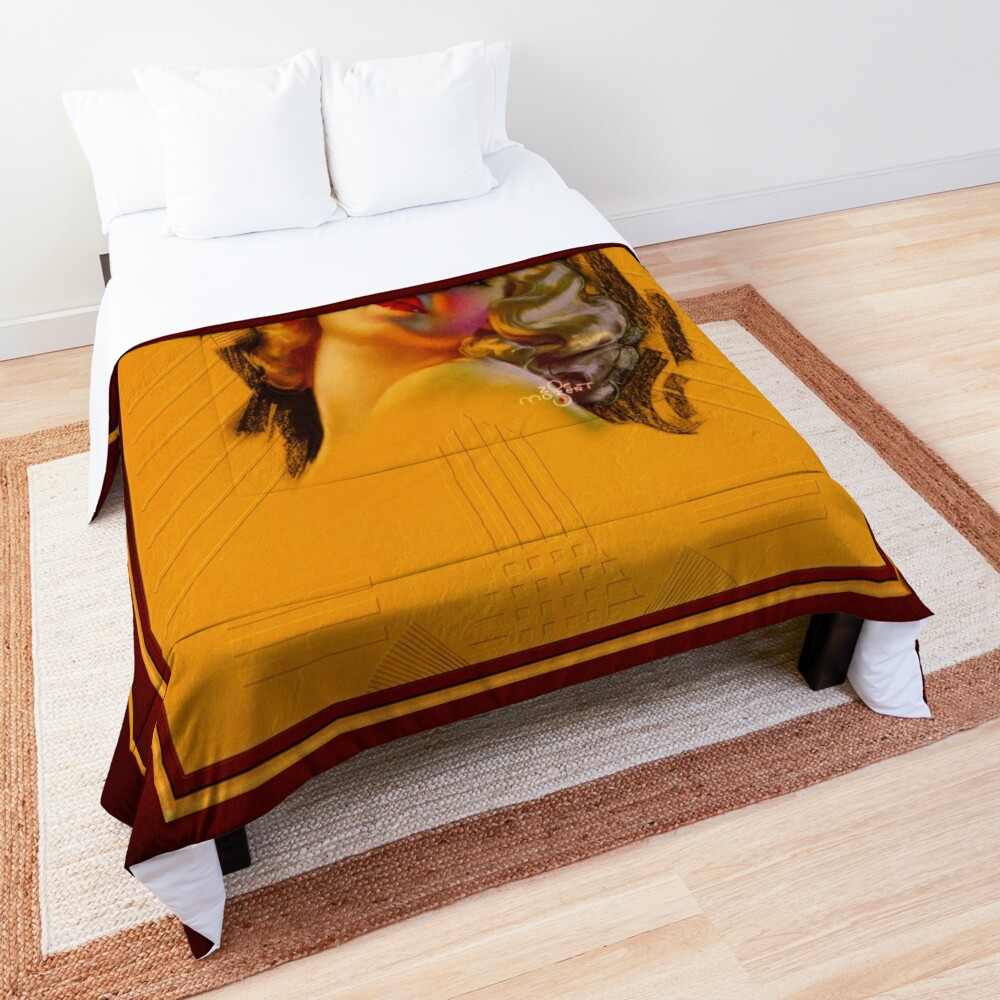
The background of the portrait, typesch vun Art Déco Design, is a geometric composition of vibrant, eckeg Musteren. These geometric elements not only contrast with the organic curves of the woman’s form but also emphasize the stylized, modernist approach that was central to Art Deco. The background’s use of sharp, angular lines and concentric curves creates a dynamic sense of movement, framing the subject in a way that evokes the energy and modernity of the time. The golden yellow tone of the background serves as a warm and rich contrast to the cooler colors of the subject, drawing attention to her without overpowering the overall composition.
The presence of deep red borders around the painting further enhances the luxurious feel of the artwork, offering a visual frame that enhances the subject’s prominence. The red, a color often associated with power and passion, is subtle yet bold, adding to the mood of mystery and allure that the subject conveys. This deliberate use of color throughout the painting mirrors the principles of Art Deco design, which often emphasized luxurious materials and bold color choices to create striking, visually arresting works.
Kënschtleresch Stil, Thema, a Stëmmung
The Art Deco style, which was prominent during the early-to-mid 20th century, is characterized by its geometric shapes, Symmetrie, and use of rich, Vibrant Faarwen. In Mozert’s “Bewitching Aen,” these elements come together to create a work of art that is both elegant and modern. The sleekness of the lines and the streamlined aesthetic of the figure suggest a world of sophistication, Reriwwer, and style. The subject’s upward tilt and intense gaze, paired with the sharp geometry of the background, communicate a sense of confidence and mystery, while also referencing the power of women during this era.
The overall mood of the painting can be described as one of allure and seduction, though it is tempered with a sense of grace and poise. The subject is not overtly sexual, but her presence is undeniably powerful, capturing the viewer’s attention without the need for explicitness. This subtlety in her expression and body language is key to the painting’s enduring appeal. D'Benotzung vum Kënschtler vu Liicht a Schied, along with the careful balance of warm and cool tones, creates an atmosphere of depth and intrigue, inviting the viewer to explore the nuances of the woman’s enigmatic gaze.
The use of gold tones throughout the piece suggests wealth and opulence, themes that were deeply embedded in the Art Deco movement, which often celebrated luxury and the aesthetics of the high society. The geometric patterns that form the backdrop, coupled with the modern yet classic rendering of the figure, position the painting squarely within the traditions of early 20th-century American portraiture while also contributing to the enduring legacy of Art Deco design.
Materialien an Techniken
Mozert’s mastery of oil painting is evident in the seamless application of color and light. The smooth texture of the paint and the careful blending of tones give the figure a lifelike quality, while also allowing for a dreamlike atmosphere. The careful use of light, particularly in the way it highlights the subject’s face and creates a subtle halo effect around her, enhances the painting’s emotional impact. Mozert’s technique of layering colors and her skillful use of gradients give the painting a softness that is contrasted with the sharpness of the geometric elements in the background.
The framed composition, with its angular borders and incorporation of geometric patterns, further reflects the artist’s understanding of the Art Deco style. These patterns are not merely decorative but serve to heighten the drama of the portrait. The combination of both organic and geometric elements within the painting is a testament to Mozert’s ability to merge the human form with the stylized abstraction that defines Art Deco, creating a striking visual harmony that is both captivating and timeless.
Dëst ass eng remastered digital Konscht al Master Reproduktioun vun engem Public Domain Bild dat online verfügbar ass als gewalzt Leinwanddruck.
Kënschtler Bio ofgeleet vun Wikipedia.org
An 1925 D'Zoë huet hir Studien an der Pennsylvania Museum School of Industrial Art ugefaangen, wou si ënner Thornton Oakley studéiert huet, e fréiere Student vum Howard Pyle; fir hir Konschtausbildung ze bezuelen, géif si Modeller maachen, fir Sue fir hir Schoulgeld ze sammelen.
Während hirer Konscht Carrière, De Mozert huet Honnerte vun Zäitschrëftdeckelen a Filmplakater gemoolt; benotzt sech dacks als Modell vun hiren Illustratiounen, benotzt Kameraen oder Spigelen fir d'Pose z'erreechen.
An 1941, Verlag Brown & Bigelowe kaaft de Monzert seng éischt Nude Artwork an ënnerschriwwen hir op en exklusiven Kalenner Kontrakt; a während dem Zweete Weltkrich, hir Pin-up Serie fir d'Firma, genannt Victoire Girls, gouf souwuel a Kalenner wéi och Mutoscope-Kaart Form publizéiert.
An 1946, De Mozert huet d'Publizitéitsplakat fir Republic Pictures erstallt’ Kalenner Meedchen, e Film iwwer d'Gibson Girl; a spéider datselwecht Joer, si huet d'Pinups fir d'Errol Flynn Comedy Never Say Goodbye gemoolt, an deem de Flynn e Pinup Kënschtler gespillt huet (Si hat och d'Illustratiounen am Film d'oppent Zäitschrëft gemaach.) .
Vun 1950, Mozert war ee vun de “véier Oscht” Illustratoren national, zesumme mam Rolf Armstrong, Earl Moran et Gil Elvgren; mat hire Biller am Beschten bekannt fir hire Pastellstil a realistesche Fraebild.
E puer vun den Zoffer ass déi bekanntst Wierker enthalen d'Plakater fir preapagunt Biller richteg Konfessioun Starle Carole Lomumar, d'Plakat fir den Howard Hughes Film The Outlaw mam Jane Russell, an hiert populärste Bild ass Song of the Desert c1950.