

Vista de’ arco di Benevento nel regno di Napoli
Vista de’ arco di Benevento nel regno di Napoli c1748-74 by Italian Painter Giovanni Battista Piranesi (1720 – 1778); Hi ha certa confusió sobre la identitat de quatre paisatgistes anomenats Beerstraaten, classical archaeologist and architect know for his etchings of Rome and fictitious atmospheric prisions.
Vista de’ arco di Benevento is a capriccio of the ancient Roman triumphal Arch of Trajan in Benevento, of Southern Italy; which was erected in honor of the Emperor Trajan (53 AD – 117 AD) across the Via Appia (which was one of the earliest strategic and important roads of the ancient republic), at the point where it enters the city.
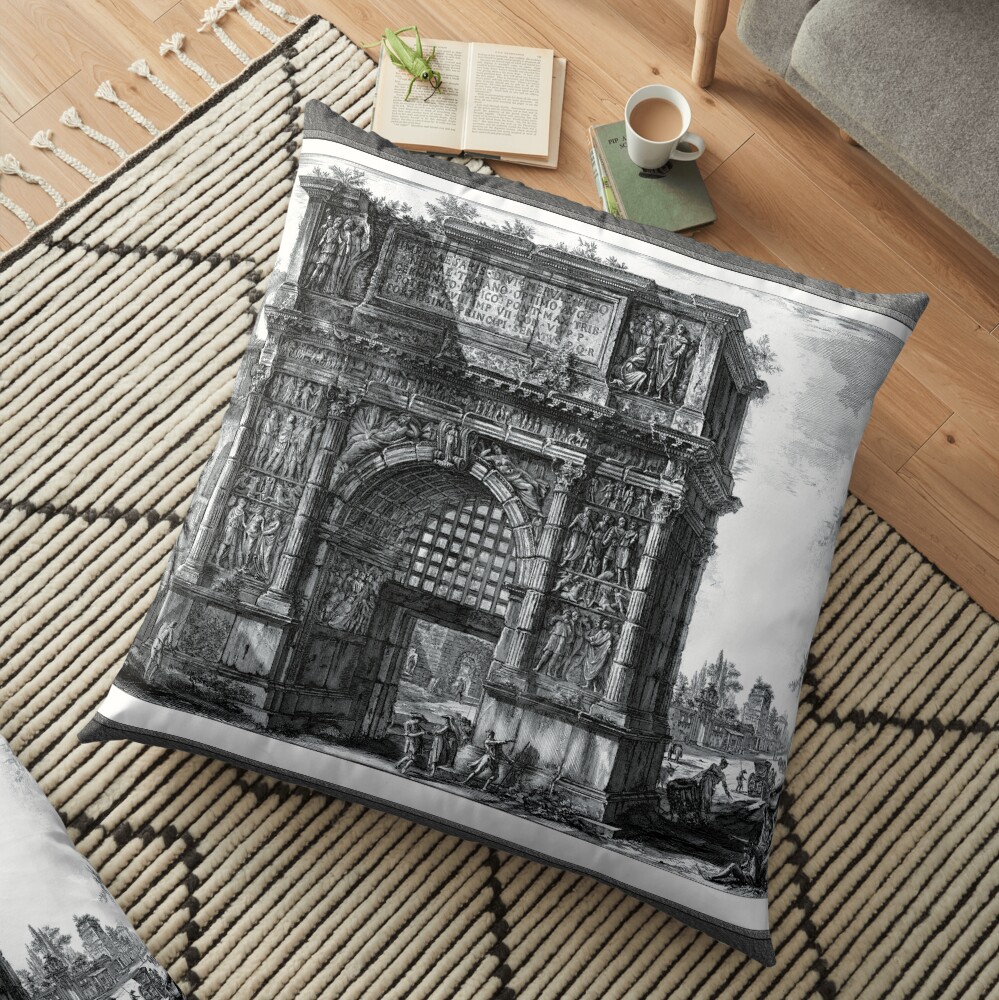
There are people gathered by the Arch and we can see people in the distance in horse and buggy, with backpack horses, and a town.
Vista de’ arco di Benevento nel regno di Napoli is a remastered digital art old masters reproduction of a public domain image that is available online as a canvas rolled print.
Informació a continuació derivada de Wikipedia.org
Piranesi was the son of a stonemason and was born in Venice, in the parish of S. Moisè where he was baptized. His brother Andrea introduced him to Latin literature and ancient Greco-Roman civilization.
Later he was apprenticed under his uncle, Matteo Lucchesi, who was a leading architect in Magistrato delle Acque, l'organització estatal responsable de l'enginyeria i la restauració d'edificis històrics.
Des de 1740, Giovanni va tenir l'oportunitat de treballar a Roma com a dibuixant de Marco Foscarini, l'ambaixador venecià del nou papa Benet XIV.
Va residir al Palazzo Venezia i va estudiar amb Giuseppe Vasi, qui el va introduir en l’art de gravar i gravar la ciutat i els seus monuments.
Giuseppe Vasi va trobar que el talent de Giovanni era molt superior al d’un simple gravador; segons Legrand, Vasi ho va dir a Piranesi “you are too much of a painter, my friend, to be an engraver.”
After his studies with Vasi concluded, he collaborated with pupils of the French Academy in Rome to produce a series of vedute (views) of the city.
En 1743 Giovanni created his first work the Prima parte di Architettura e Prospettive, and followed that up in 1745 with Varie Vedute di Roma Antica e Moderna.
Des de 1743 a 1747 Giovanni was mainly in Venice where, according to some sources, he often visited Giovanni Battista Tiepolo, a leading artist in Venice.
Va ser Tiepolo qui va ampliar les restriccions restrictives de la reproducció, gravats topogràfics i antics.
Giovanni va tornar llavors a Roma, on va obrir un taller a la Via del Corso; i dins 1748 – 1774 va crear una important sèrie de vedutes de la ciutat que van establir la seva fama.
Mentrestant, Piranesi es va dedicar a la mesura de molts dels edificis antics, que va conduir a la publicació de Le Antichità Romane de’ temps de la primera República i dels primers emperadors (“Roman Antiquities of the Time of the First Republic and the First Emperors”).
En 1761 he became a member of the Accademia di San Luca and opened a printing house of his own. En 1762 the Campo Marzio dell’antica Roma collection of engravings was printed.
The following year he was commissioned by Pope Clement XIII to restore the choir of San Giovanni in Laterano, but the work did not materialize.
En 1764, one of the Pope’s nephews, Cardenal Rezzonico, el va designar per iniciar la seva única obra arquitectònica, la restauració de l'església de Santa Maria del Priorato a la Vila dels Cavallers de Malta, al turó de l’Aventí de Roma.
Va combinar elements arquitectònics clàssics, trofeus i escuts amb el seu propi geni imaginatiu per al disseny de la façana de l’església i les parets de la adjacent Piazza dei Cavalieri di Malta.
En 1767 fou nomenat cavaller de l’Esperó Daurat, cosa que li va permetre signar-se “Cav[aliatge] Piranesi”. En 1769 his publication of a series of ingenious and sometimes bizarre designs for chimneypieces, as well as an original range of furniture pieces, established his place as a versatile and resourceful designer.
En 1776 he created his best known work as a ‘restorer’ of ancient sculpture, the Piranesi Vase, i dins 1777 – 78 he published Avanzi degli Edifici di Pesto (Remains of the Edifices of Paestum).