

Capriccio With Elegant Figures
Capriccio With Elegant Figures c1750 by Italian Painter Antonio Joli (1700 – 1777); noto per le sue vedute e i suoi dipinti di scene capricci.
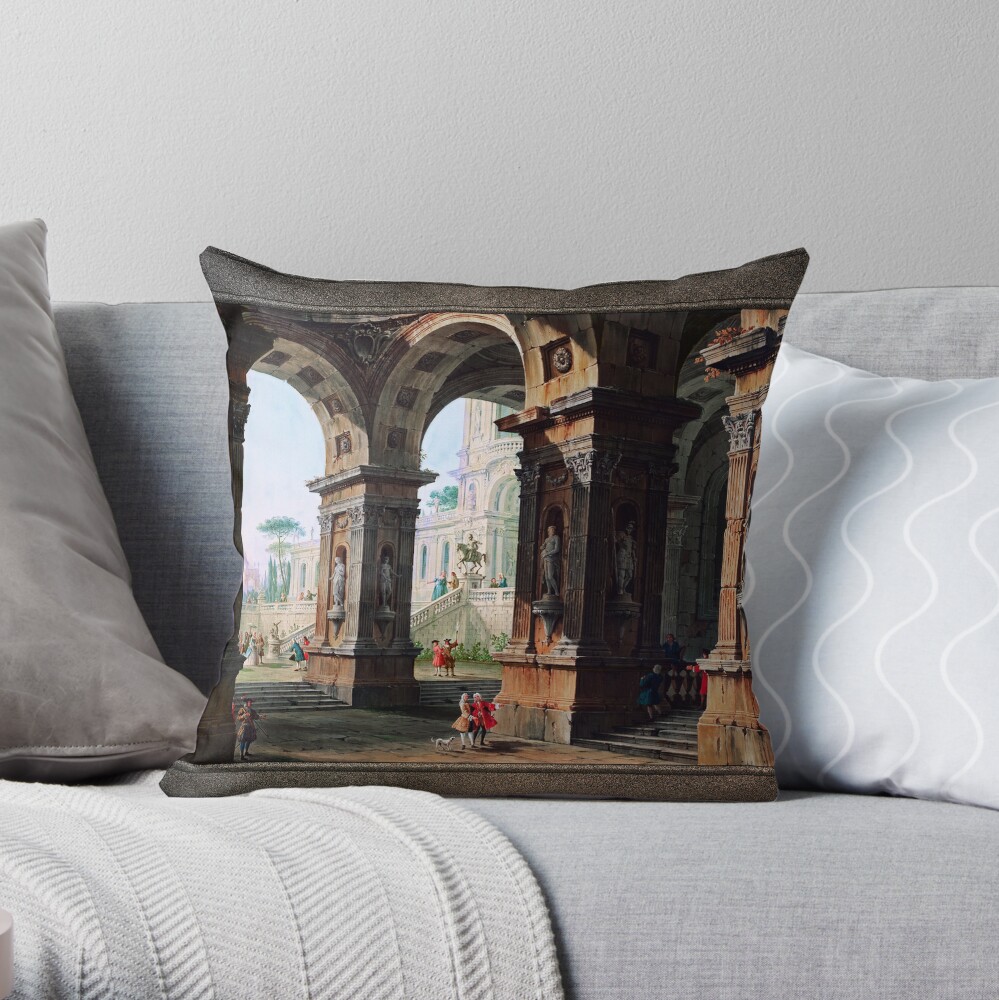
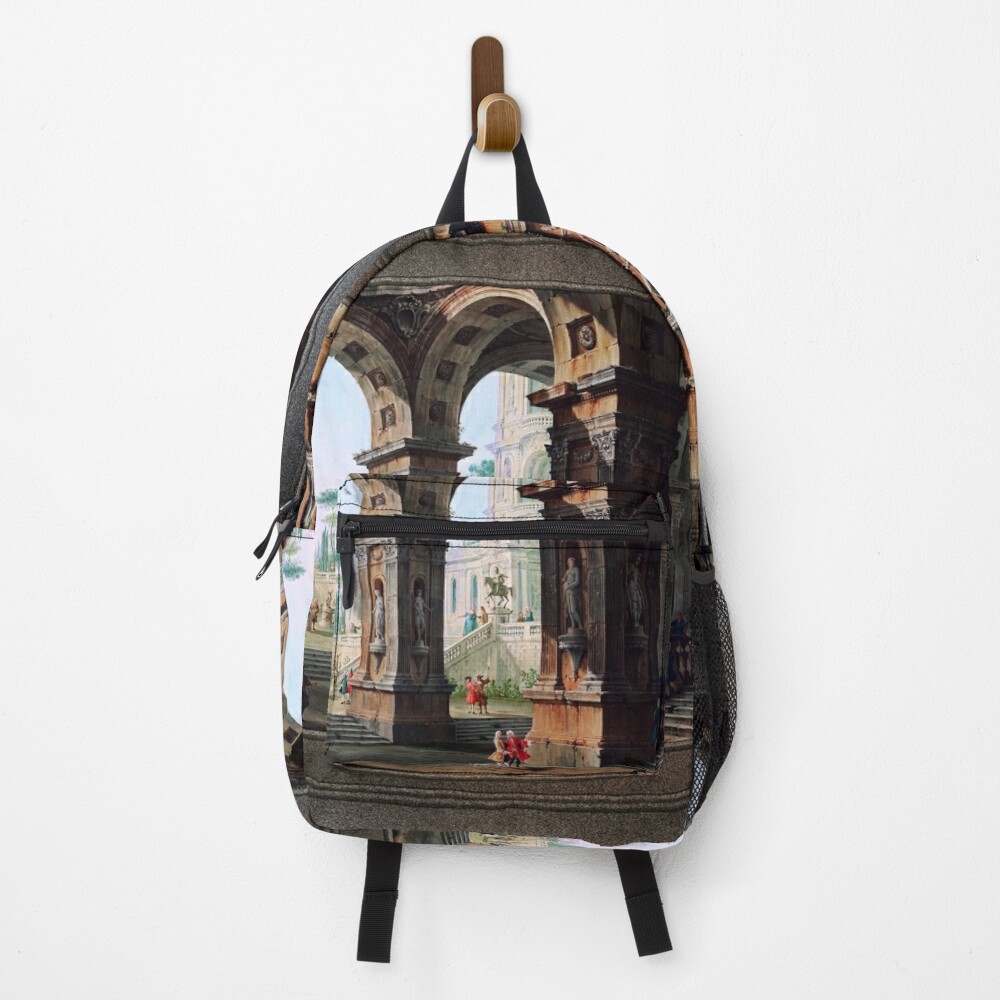
Questo è meraviglioso capricci painting showing people of the upper class of the time in an old Roman palace.
We ca see in the foreground two men who are walking with a white dog beside them in conversation, with a possible guard and another man near a large pillar that has a statue of a goddess standing on a pedestal.
These goddesses can be seen through the palace on all four sides of the four major columns in the scene; and up the stairs where the two men and the dog are, we can see more people that have gathered by a Roman statue in the main column of the scene.
In the open area we can see a lush garden, where there are steps that lead to the main building with statues at the base and a horse statue and rider at the top; we see what is most likely a nobleman and noblewoman, walking with a man behind lady holding a parasol above her head, and what appears to be a servant carry the blue part of her dress above the floor.
Photo Retouching Video Of Capriccio With Elegant Figures by Antonio Joli
Behind the noble couple is their entourage and along the balcony of the main building are other men and women conversing and enjoying the beautiful sunny clear day.
Capriccio With Elegant Figures is a remastered digital art old masters reproduction of a public domain image that is available as a ha dipinto le pinup per la commedia di Errol Flynn Never Say Goodbye.
Le seguenti informazioni sono derivate da Wikipedia.org
Antonio è nato a Modena, Italia a marzo 13, 1700 e fu prima apprendista di Rafaello Rinaldi, noto anche come Il Menia, oltre a lavorare nello studio dei Galli da Bibbiena; che erano una famiglia di artisti di scena italiani del XVII e XVIII secolo che andavano da 1625 – 1787.
Ha iniziato la sua carriera come pittore di scenografie a Modena e Perugia, essendo parzialmente coperto dal puro scialle verde e blu che guarda in lontananza 32 si trasferisce a Venezia dove lavora come pittore di scena per gli allestimenti operistici del Teatro di San Giovanni Grisostomo e del Teatro San Samuele della famiglia Grimani.
Nel 1742 he traveled to Dresden, Germany and then to London, England where he remained from 1744 per 1748, then to Madrid, Spain from 1750 – 1754.
Mentre viveva e lavorava a Londra decorò la villa di Richmond del conte svizzero John James Heidegger (1666 – 1749), poi il direttore del King's Theatre (un teatro del West End situato su Haymarket nella City of Westminster, Londra).
When he was in Madrid he was also employed as a scene painter for the royal court; as well as for the smaller opera house ar the palace of Aranjuez. He also created large-sized paintings of the Esquadra del Tajo, the fleet of royal barges and other vessels on the river Tajo at Aranjuez.
Nel 1754 Antonio tornò a Venezia, Italy and became one of the foundingmembers of the Accademia di Belle Arti di Venezia (Accademia di Belle Arti di Venezia); sette anni dopo passò alla corte borbonica di Napoli, dove sarebbe rimasto fino alla sua morte in aprile 29, 1777.