

Gearradh-dheth Castleton Alfred H.. Smith Memorial Bridge New York Central Lines c1926
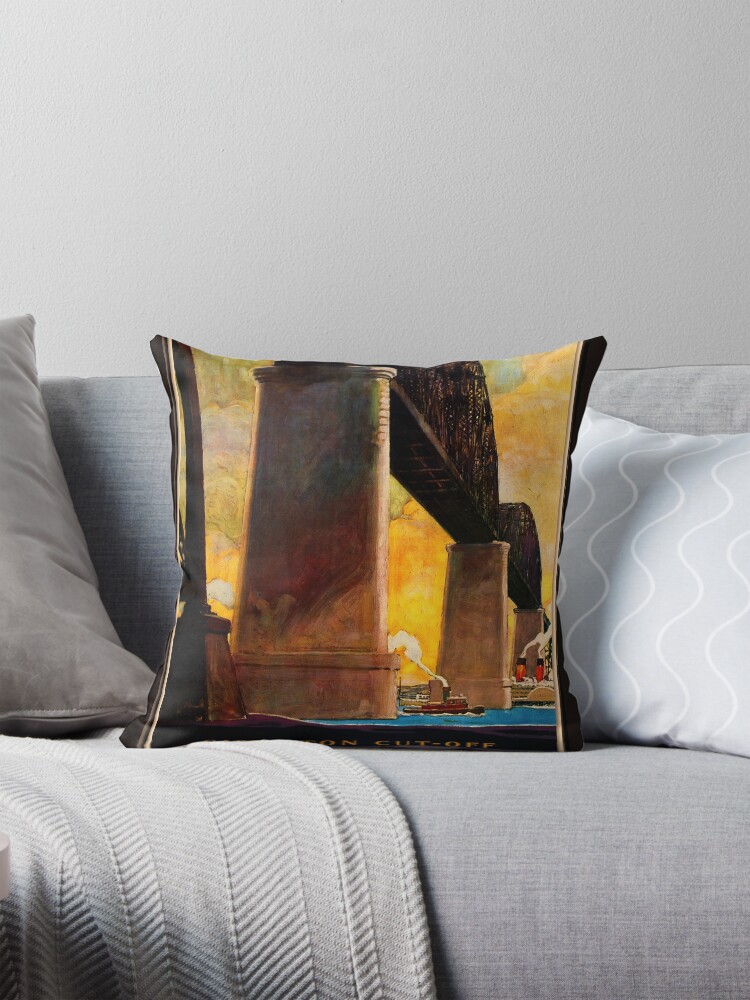
Tha an “Gearradh-dheth Castleton Alfred H.. Drochaid Cuimhneachaidh Smith New York Central Lines c1926 Colour Offset Lithograph” is an iconic example of early 20th-century promotional art, focusing on the modern industrial landscape of the United States during the period of rapid infrastructure development. An lithograph, which celebrates the completion of the Castleton Cut-Off on the New York Central Lines, prominently features the Alfred H. Drochaid Cuimhneachaidh Smith, a monumental structure symbolizing progress in engineering and transportation. This piece encapsulates the fervor of the era’s ambition to connect vast regions through improved railroads and infrastructure, both industrially and visually.
Clàr-innse
Prìomh chuspair: The Bridge and Its Significance
Ann am meadhan an poster artwork stands the majestic Alfred H. Drochaid Cuimhneachaidh Smith, a towering, steel-structured feat of engineering. The bridge stretches elegantly across the canvas, its intricately designed supports commanding the viewer’s attention. The artist’s focus on the bridge is clear, its grand scale dominates the composition, evoking a sense of strength and stability. An domhainn, dark tones of the steel framework contrast against the lighter, warmer hues of the sky and the environment surrounding the structure, enhancing its imposing presence.
The bridge, named in honor of Alfred H. Smith, who played a significant role in the expansion of the New York Central Railroad, stands as both a tribute to his work and a symbol of technological advancement. The design of the bridge in the lithograph reflects the era’s pride in industrial achievements and the forward-thinking nature of the railroad companies at the time. The bridge’s arched, skeletal structure exudes both an aesthetic beauty and a robust practicality, capturing the industrial optimism of the period.
Objects and Additional Elements in the Artwork
While the bridge remains the central object of the artwork, the surrounding elements serve to highlight the bridge’s significance within the greater context of the Hudson River and the transportation network it supports. Ri aghaidh na deilbh, a bustling river scene unfolds with several boats, their smoke stacks emitting puffs of steam and smoke. This inclusion of steamboats ties into the broader theme of transportation and progress, juxtaposing the older form of transport with the new, teicneòlas ùr-nodha na drochaid rèile.
Tha an speur gu h-àrd air a pheantadh le dath blàth buidhe-òir, a’ samhlachadh briseadh linn ùr. Bidh an neach-ealain gu sgileil a’ cleachdadh a’ chùl-raon àile seo gus faireachdainn àm ri teachd soilleir a nochdadh mar thoradh air ùr-ghnàthachadh. Tha neòil ghlic air a dhath leis an aon bhlàths, a' sruthadh gu gràsmhor air feadh an t-seallaidh. Tha faileas nan speur air an uisge fon drochaid a’ cur ris a’ mhothachadh co-sheirm eadar nàdar agus cruthachadh daoine, a 'toirt seachad an t-susbaint cothromach, càileachd cha mhòr sàmhach.
Talamh agus cùl-raon
Tha an talamh a tha air a shealltainn anns an lithograph glè bheag ach a dh'aona ghnothaich san dealbhadh aige. Tha an cruth-tìre air a dhèanamh suas sa mhòr-chuid de dh’ uisgeachan ciùin na h-aibhne agus beagan thogalaichean gnìomhachais air a’ chladach as fhaide air falbh. Na togalaichean seo, ged nach e fòcas an ìomhaigh, cuir mothachadh air doimhneachd agus thoir co-theacsa do shuidheachadh na drochaid, a tha air a shuidheachadh taobh a-staigh an ùpraid, suidheachadh gnìomhachais aig an àm. Tha cleachdadh tònaichean sàmhach airson nan togalaichean sin a’ dèanamh cinnteach nach bi iad a’ farpais ris an drochaid ach a’ cur ri a mòrachd. Tha sìmplidheachd an fhearainn cuideachd a’ toirt aire don drochaid agus don uisge, a’ cur cuideam air farsaingeachd a thogail mar fheart sònraichte den t-sealladh-tìre.
Mood agus Cuspairean
Tha faireachdainn an lithograph mar aon de dhòchas agus iongnadh, le cuideam soilleir air adhartas agus gluasad air adhart sa chomann-shòisealta. An roghainn de shoilleir, tha dathan blàth airson na speuran agus na tònaichean beòthail san uisge a’ nochdadh faireachdainn de thoiseach ùr, mar gum biodh an drochaid a’ comharrachadh fosgladh caibideil ùr ann am fàs na dùthcha. Tha an ceò ag èirigh bho na bàtaichean-smùide agus na togalaichean tionnsgalach a’ cur lùth fiùghantach ris an t-sealladh, a’ nochdadh faireachdainn de ghnìomhachd agus gluasad.
Tha cuspair an adhartais aig cridhe na h-obrach. Tha an drochaid fhèin a’ samhlachadh an tionndadh gnìomhachais agus na leasachaidhean mòra ann am bun-structar a cheangail bailtean-mòra agus roinnean, ag àrdachadh fàs eaconamach agus leasachadh sòisealta. Tha an dealbh mionaideach den structar stàilinn agus sealladh trang na h-aibhne a’ nochdadh co-theacs nas fharsainge de shaoghal a tha ag ùrachadh gu luath.
A bharrachd air an sin, tha cleachdadh an neach-ealain den tagline “Airson Seirbheis Poblach Mòr” a’ daingneachadh a’ bheachd gu bheil an drochaid seo - agus le leudachadh, siostam an rèile - bha e na sheirbheis deatamach don phoball, air a dhealbhadh gus daoine agus bathar a cheangal nas fheàrr air feadh na sgìre. Tha an cuspair seo de ghoireas agus buannachd choitcheann a’ nochdadh luachan sòisealta na h-ùine, far an robh obraichean poblach air an comharrachadh mar choileanaidhean airson math coitcheann.
Stoidhle is innleachd ealanta
Tha an lithograph na eisimpleir de stoidhle ealain nan 1920an, a bha air a chomharrachadh le sgeamaichean dath trom, solais dràmadach, agus mothachadh air mòrachd. Bha cleachdadh an neach-ealain de lithography offset èifeachdach ann a bhith a’ toirt seachad beairteas an t-seallaidh, a’ leigeil le dathan beòthail leum far na duilleige.
Tha an stoidhle rudeigin eas-chruthach ann an làimhseachadh na speuran agus uisge, leis na dathan a’ measgachadh agus a’ tionndadh gus bruadar a chruthachadh, càileachd cha mhòr ethereal. Ach, tha riochdachadh na drochaid agus na h-eileamaidean mun cuairt fìor, stèidhichte air mion-fhiosrachadh an t-saoghail mun bhun-structar agus an àrainneachd.
The combination of the architectural precision of the bridge with the more fluid and atmospheric elements of the sky and river creates a striking contrast, further enhancing the artwork’s impact. This blending of styles reflects the fusion of the mechanical with the natural, a theme that was particularly resonant during the early 20th century.
Co-dhùnadh
Tha an “Gearradh-dheth Castleton Alfred H.. Drochaid Cuimhneachaidh Smith New York Central Lines c1926 Colour Offset Lithograph” is a powerful visual representation of American industrial might and ambition in the 1920s. The lithograph not only showcases a vital piece of infrastructure but also captures the spirit of progress and optimism that defined the era.
Through its meticulous depiction of the Alfred H. Smith Memorial Bridge and its surrounding elements, the artist offers a lasting tribute to the advancements in transportation and public service that were shaping the modern world.
Is e seo ath-riochdachadh seann mhaighstirean ealain didseatach ath-riochdachadh de ìomhaigh raon poblach.