

Chiron Instructing Achilles in the Bow: A Neoclassical Masterpiece
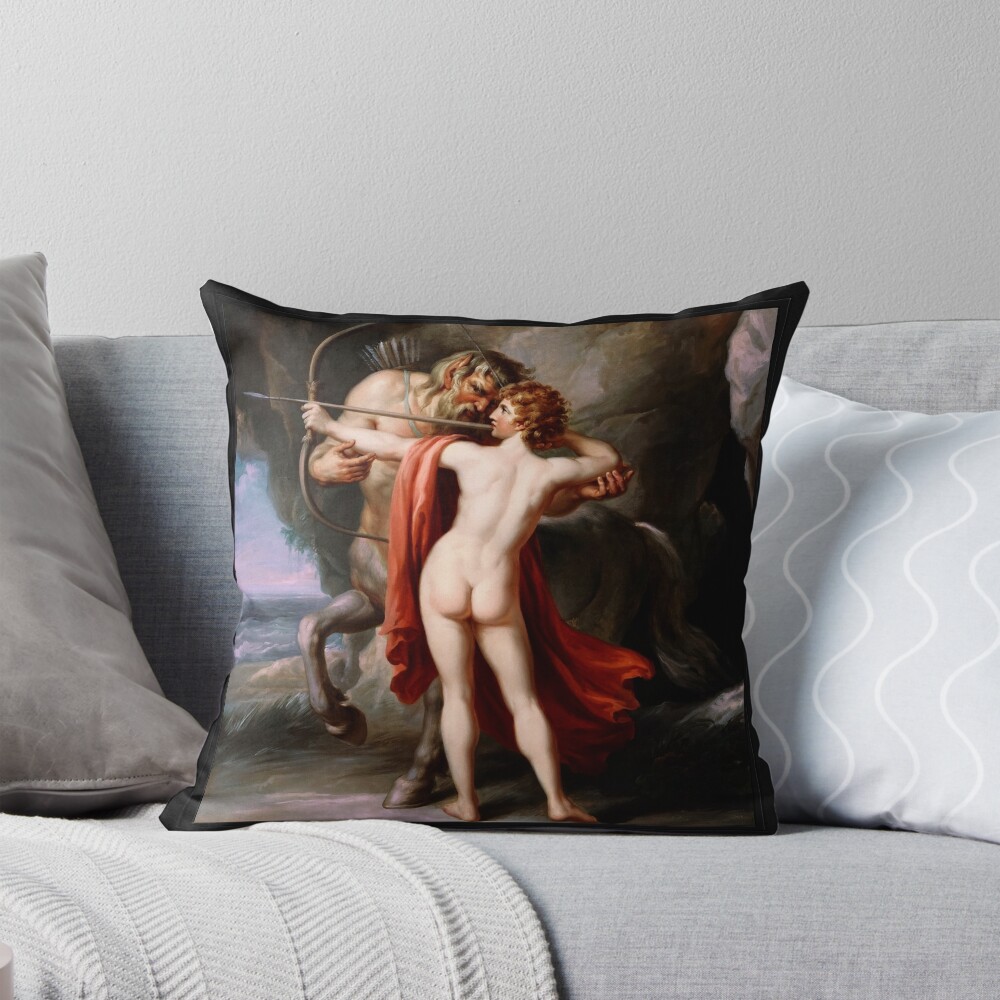
Giovanni Battista Cipriani’s “Chiron Instructing Achilles in the Bow,” painted around 1776, is a captivating example of late Rococo transitioning into Neoclassicism. The artwork depicts a pivotal moment from Greek mythology – the centaur Chiron imparting archery skills to the young hero Achilles. This scene, rich with symbolism and rendered with meticulous detail, exemplifies Cipriani’s mastery of composition, anatomy, and dramatic lighting. It currently resides within the collection of the Yale Center for British Art in New Haven, Connecticut.
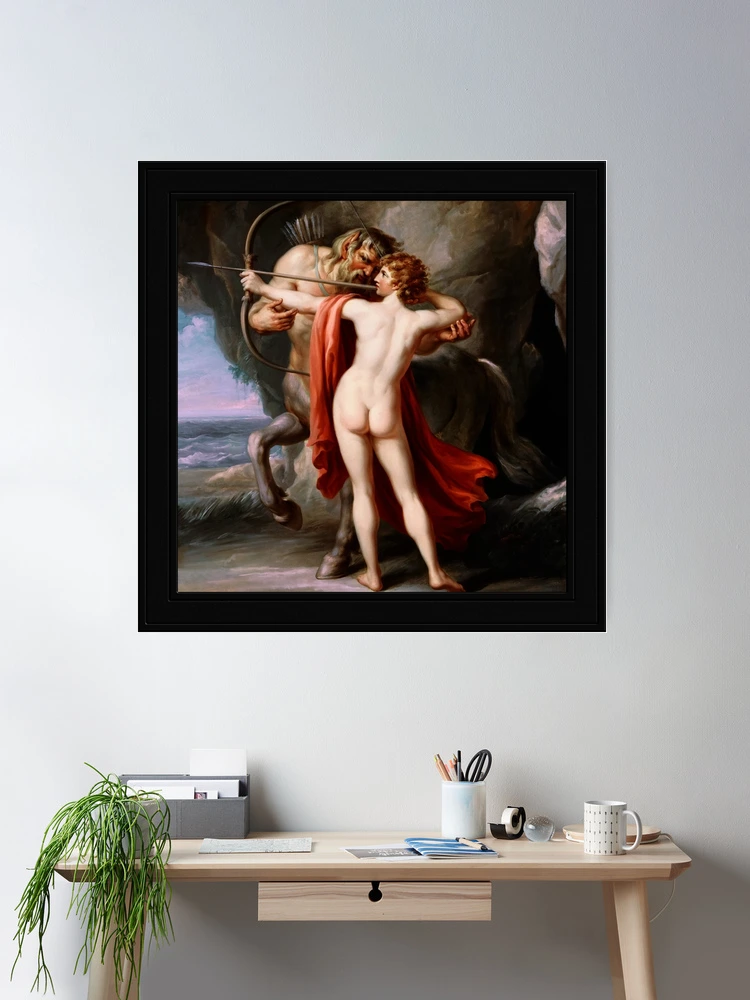
Table of Contents
Compositional Structure & Narrative Focus
The painting’s strength lies in its carefully constructed pyramidal composition. Chiron, a powerful centaur figure, forms the apex, his imposing stature dominating the scene. Achilles, positioned below and slightly to the side, creates a dynamic counterweight. The arrangement guides the viewer’s eye through the narrative: from Chiron’s outstretched arm holding the bow, to Achilles’ focused gaze, and finally down to the distant seascape that provides a serene backdrop. This deliberate structure emphasizes the transfer of knowledge and skill between mentor and pupil. Cipriani avoids overcrowding; instead, he utilizes negative space within the rocky grotto setting to highlight the figures and their interaction.
The Figures: Chiron & Achilles
Chiron, depicted as a muscular centaur with a dignified expression, embodies wisdom and experience. His posture is one of gentle guidance rather than forceful instruction. He holds the bow with practiced ease, demonstrating its proper form for young Achilles. The artist’s rendering of Chiron’s anatomy showcases his skill in depicting musculature; however, it avoids excessive exaggeration, maintaining a sense of classical restraint. The centaur’s grey-toned skin contrasts with the vibrant red drapery that partially covers his flanks, adding visual interest and highlighting his hybrid nature – part man, part beast.
Achilles, portrayed as a youthful figure in partial nudity, is clearly engaged in learning. His body is rendered with idealized proportions characteristic of Neoclassical art. He leans slightly forward, intently observing Chiron’s demonstration. The red cloth draped around his shoulders adds warmth and color to the composition, while also hinting at his future heroic status. His expression conveys a mixture of concentration and eagerness, suggesting a deep desire to master the skill being taught.
Setting & Atmosphere
The setting is an enclosed grotto or cave, partially obscured by rocky formations. The backdrop reveals a tranquil seascape with a soft pink sky, indicating either dawn or dusk. This naturalistic background provides a sense of depth and perspective while also contrasting with the ruggedness of the immediate surroundings. Cipriani’s use of light and shadow is particularly effective in creating atmosphere. The grotto is bathed in a diffused, warm light that illuminates the figures without being harsh. The shadows within the cave add mystery and enhance the dramatic effect of the scene.
Artistic Style & Influences
Cipriani’s style reflects the transition from Rococo to Neoclassicism prevalent during his time. While retaining some of the elegance and decorative flourishes characteristic of Rococo, the painting demonstrates a growing emphasis on classical forms, balanced composition, and restrained emotion – hallmarks of the emerging Neoclassical aesthetic. The influence of artists like Jacques-Louis David is subtly present in the clarity of line and idealized figures. However, Cipriani maintains his own distinct style through his sensitive handling of light and color, and his ability to convey a sense of quiet intimacy within a grand mythological narrative.
Color Palette & Technique
The painting’s color palette is dominated by warm tones – reds, browns, and golds – which contribute to the overall feeling of warmth and serenity. The artist skillfully uses chiaroscuro (the contrast between light and dark) to model the figures and create depth. Cipriani’s brushwork is smooth and refined, demonstrating his technical proficiency. He employs subtle gradations of color to render skin tones and drapery with remarkable realism. Close examination reveals a meticulous attention to detail in every aspect of the painting, from the texture of Chiron’s fur to the folds of Achilles’ garment.
Symbolism & Interpretation
Beyond its narrative function, “Chiron Instructing Achilles in the Bow” is rich in symbolic meaning. Chiron represents wisdom, mentorship, and the transmission of knowledge. Achilles embodies potential, youth, and the pursuit of excellence. The bow and arrow symbolize skill, precision, and ultimately, heroic destiny. The setting itself – a secluded grotto – can be interpreted as a place of learning and transformation. The painting serves as an allegory for education, personal growth, and the preparation for future challenges.
Information Derived From Wikipedia.org
This is a painting of the two characters of Greek Mythology, Chiron a Centaur – a being with the upper body of a man and the lower body of a horse; and Achilles the strongest warrior and hero of the Greek army during the Trojan War.
Chiron was the son of the Titan Cronus and the Oceanid (water nymph) Philyra, the daughter of the Titans Oceanus and Tethys; and as a result was different from most Centaur that were wild creatures, as he was kind civilized, kind and intellegent.
Chiron was abandoned by his mother soon after she gave birth to him, and some time later was found be the god Apollo who took care of him; teaching him the art of music, the lyre, archery, medicine and prophecy; while Apollo’s sister the goddess Artemis, trained him in the skill of archery and hunting.
This scene shows Chiron passing on his knowledge of the bow to Achilles by teaching him how to effectively use the bow near a cave by the seashore.
This is a retouched digital art old masters reproduction of a public domain image.