

Cristo en la tormenta en el mar de Galilea
La obra de arte titulada “Cristo en la tormenta en el mar de Galilea”, creado en 1695 by the German-Dutch painter Ludolf Backhuysen (1630 – 1708), powerfully conveys a dramatic moment of biblical history. Backhuysen, known for his skillful mastery of maritime landscapes, utilizes his expertise to depict both the ferocity of nature and the calm authority of Christ amidst a violent storm. This painting is part of a broader tradition of maritime paintings during the Dutch Golden Age, with a specific focus on the themes of human struggle against nature, intervención divina, and the Christian narrative.
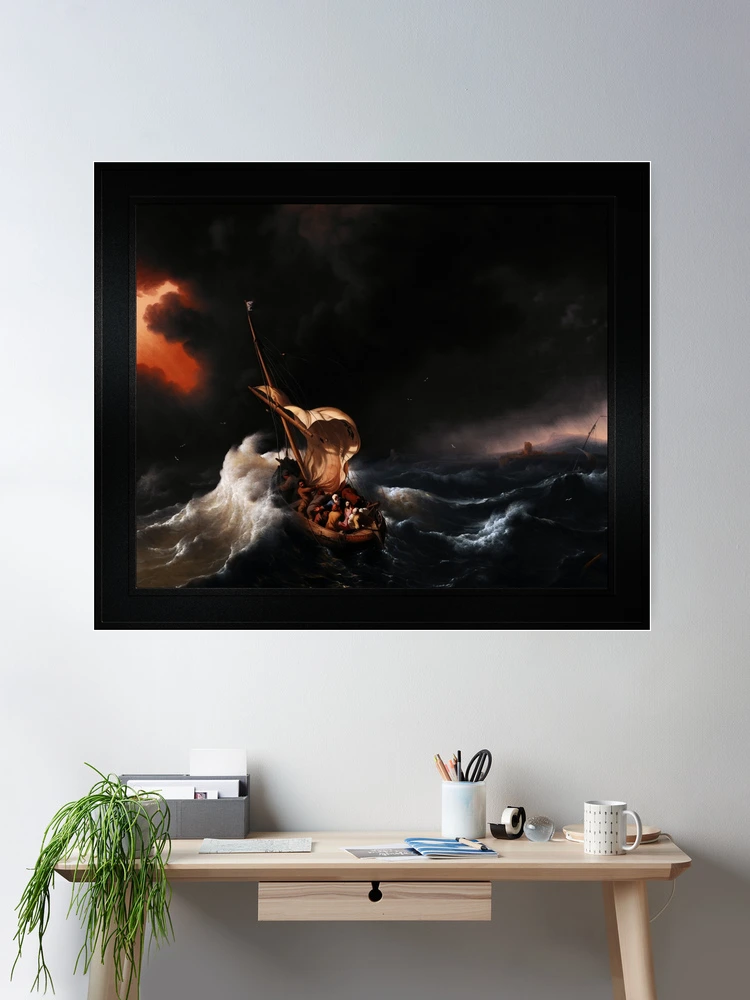
Tabla de contenido
Tema principal y narrativa
The primary subject of the painting is the biblical story from the Gospel of Matthew, where Jesus Christ calms the storm on the Sea of Galilee. Backhuysen chooses to focus on the intense moment of chaos aboard the boat, capturing the panic of the disciples and the calm demeanor of Christ. en primer plano, the viewer sees a group of men, likely disciples, struggling against the wind and waves. Their expressions reveal fear and desperation as the storm rages around them. The turbulent sea, dark clouds, and relentless waves all serve to heighten the sense of danger that envelops the boat.
Amidst the turmoil, Christ remains serene and composed, the central figure of the composition. His presence is both reassuring and commanding, symbolizing divine authority over nature and the human condition. The artist uses the contrast between the violent sea and the peaceful figure of Christ to underscore the miraculous nature of the event. Christ’s stillness contrasts with the frenetic energy of the storm, making His divine role clear.
Objetos y Simbolismo
The boat itself is a critical object in this piece, representing both the literal vessel in the biblical story and the symbolic “ship” of the Christian church navigating through the turbulent waters of the world. The ship is crafted with great detail, and the artist’s ability to render the movement of the water around it adds a sense of realism. The storm is not just a natural occurrence, but also a visual metaphor for the trials and tribulations of life, which are often beyond human control.
The figures in the boat are also symbolic. The disciples, depicted in various stages of panic and struggle, reflect the human response to overwhelming challenges. One figure leans over the edge of the boat, possibly to throw up, while another clutches the mast, his face twisted in fear. These expressions of human vulnerability are contrasted by Christ’s calmness, suggesting faith and the belief that divine intervention will provide salvation.
Adicionalmente, the elements of the storm—raging waves, dark clouds, and flashes of lightning—add to the intensity of the scene. The dark sky, with its dramatic lighting, represents the chaotic forces of nature and, metaphorically, the trials of life. Yet the light breaking through the clouds hints at hope and the divine presence that promises peace and guidance.
Terreno y materiales
The scene unfolds on the turbulent waters of the Sea of Galilee, cual, in Backhuysen’s portrayal, are dark, foamy, and churning. The waves are masterfully painted, showing a range of textures from the frothy white caps to the deep, threatening blue and green depths. The artist’s command of light is particularly notable in the way it reflects off the surface of the water and highlights the contours of the figures, lending a sense of realism to the otherwise supernatural scene.
el cielo, a striking backdrop to the action, is filled with ominous dark clouds, their heavy masses suggesting the sheer power and chaos of the storm. The dramatic interplay of light and dark contributes to the overall mood of the painting, amplifying the tension in the narrative. A small area of light appears through a break in the clouds, potentially indicating the divine presence, adding an aura of hope amidst the turmoil.
Estilo, Tema, y estado de ánimo
Ludolf Backhuysen’s style is one of the defining characteristics of the Dutch Golden Age. Known for his ability to capture the mood and texture of the sea, Backhuysen demonstrates an extraordinary talent for conveying motion and emotion. The turbulence of the water, the billowing sails, and the energy of the storm all exhibit a mastery of the seascape genre.
The theme of the painting merges the natural with the divine, showing human struggle against the overpowering forces of nature, only to be saved through divine intervention. The mood is one of awe and reverence, evoking a sense of the sublime in the viewer. The dynamic clash between the forces of the storm and the calm figure of Christ is a powerful visual metaphor for faith, trust, and divine power.
La paleta de colores, while dominated by darker hues of stormy skies and deep ocean blues, also contains areas of lighter tones that reflect the divine light shining through the chaos. The contrast between light and dark creates a dramatic tension in the composition, emphasizing the miracle at the heart of the scene.
In terms of technique, Backhuysen uses fine brushwork to create a vivid depiction of the storm, with each wave and cloud rendered in intricate detail. The fluidity of the water and the dramatic effects of the sky demonstrate Backhuysen’s technical prowess and his ability to transport the viewer into the heart of the storm.
Conclusión
“Cristo en la tormenta en el mar de Galilea” by Ludolf Backhuysen stands as a testament to both the artistic skill of the artist and the theological depth of the subject matter. The painting is a dramatic visualization of the biblical narrative, combining natural and divine elements in a way that speaks to the viewer on both an emotional and spiritual level. The intensity of the storm, the vulnerability of the disciples, and the calm authority of Christ all combine to create a powerful visual experience, offering a meditation on faith, divine protection, and human endurance.
A Back Story Of The Artwork
Esto parece ser un trabajo que fue copiado de Rembrandt van Rijn. (1606 – 1669) pedazo, “La Tormenta en el Mar de Galilea c1633″.
Mientras que la versión original creada por Rembrandt está de cerca con todo el enfoque en el barco con Jesús y su 12 discípulos en la barca con él; esta versión tiene una visión mucho más amplia.
Esta versión muestra a Jesús en el velero con un adicional 8 hombres, cuando es golpeado de costado por una gran ola; y a la derecha de la escena vemos una parte de un mástil que sobresale del agua y más atrás otro velero atrapado en la tormenta del mar.
En la distancia podemos ver dos estructuras a varios kilómetros de distancia en la orilla., algunas montañas detrás de una de las estructuras, así como grandes nubes de tormenta oscuras con un pequeño claro en las nubes que es de color naranja debido al sol; mientras el barco está siendo iluminado por una luz blanca brillante.
Cristo en la tormenta en el mar de Galilea es una reproducción maestra antigua de arte digital remasterizada de una imagen de dominio público que está disponible como impresión de la lona en línea.
Esta creación de arte digital, al igual que todas las obras de arte que se pueden encontrar en el sitio web de Xzendor7, están disponibles para su compra en línea en una variedad de formatos de materiales, incluidas impresiones en lienzo, impresiones acrílicas, impresiones de metal, impresiones de madera, láminas enmarcadas, carteles, y como lienzos enrollados en una variedad de tamaños, desde 12 pulgadas a 72 pulgadas según el tamaño de la obra de arte real y la tienda de impresión bajo demanda en la que elija comprar la obra de arte.
La obra de arte también está disponible en una amplia gama de prendas de vestir para hombres y mujeres., tazas, totalizadores, bufandas, cuadernos y diarios y muchos productos de decoración del hogar..
Biografía del artista
Información a continuación derivada de Wikipedia.org
Ludolf nació en Emden, Frisia Oriental, una región más baja en la Baja Sajonia Alemania en 1630 y aproximadamente a la edad de 20 fui a Ámsterdam, Países Bajos y obtuvo empleo como calígrafo y empleado de un comerciante.
Fue durante este tiempo que descubrió que tenía un gran talento para la pintura., y así dedicó su tiempo a este esfuerzo, dejar su empleo actual; inicialmente haciendo dibujos a pluma y también estudiando con los eminentes pintores holandeses de la Edad de Oro Allaert van Everdingen (1621 – 1675), un pintor, grabador y grabador, así como Hendrick Dubbels (1621 – 1707), paisajista marino e invernal.
Como estudiante de la naturaleza, Ludolf a menudo salía al mar en un bote abierto para estudiar la naturaleza de las olas durante las tormentas.; ya que su enfoque principal estaba en el arte marino, con énfasis en escenas con olas tormentosas.