

Консуэло Вандербильт, 1906 г.
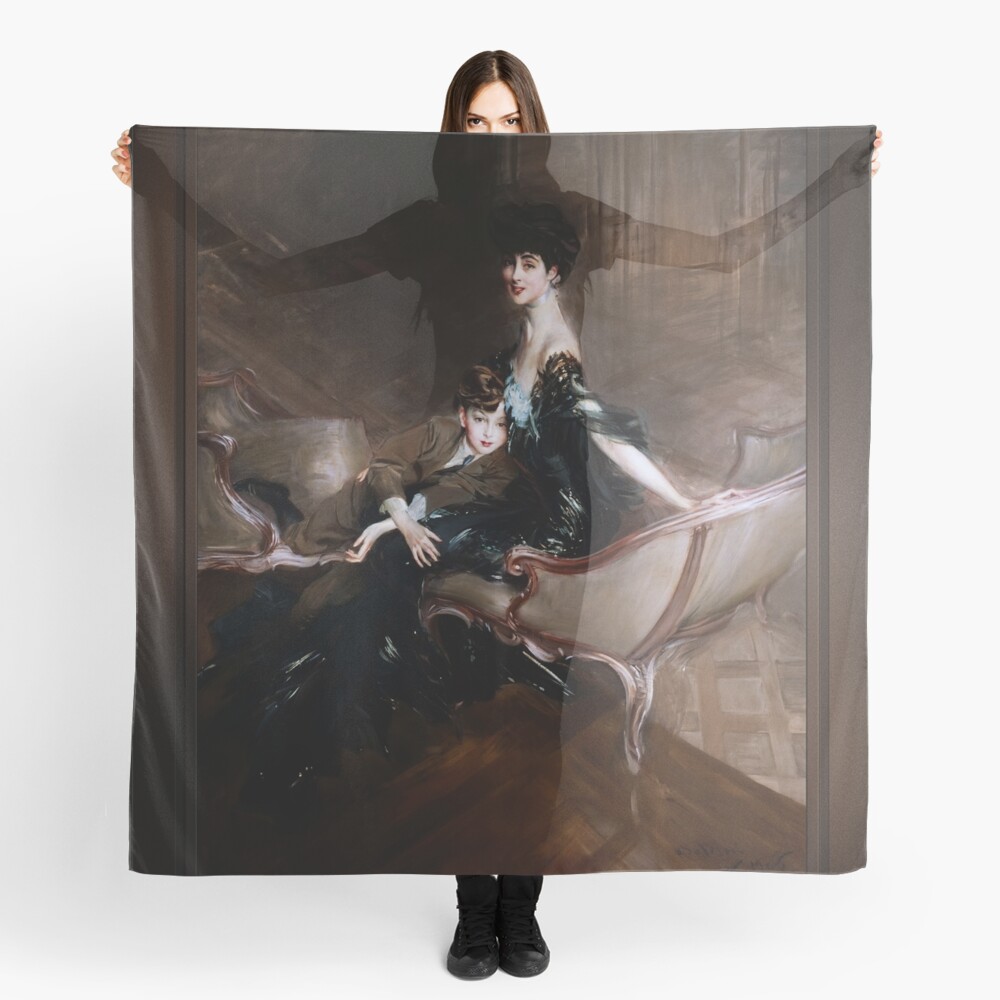
Картина “Консуэло Вандербильт, 1906 г.” известного итальянского художника Джованни Больдини (1842 – 1931) предлагает поразительный взгляд на мир богатства, милость, и аристократическая культура на рубеже 20 века. На этом портрете, Болдини передает элегантность и уравновешенность Консуэло Вандербильт. (1876 -1964), герцогиня Мальборо, и ее сын, Лорд Айвор Спенсер-Черчилль (1898 – 1956), американская наследница, которая была одной из самых почитаемых фигур своего времени.
Этот шедевр, созданный вокруг 1906, олицетворяет утонченное очарование и динамизм периода Belle Époque., эпоха, которая характеризовалась процветанием, Красота, и изысканный круг общения. Портрет излучает ощущение вневременного гламура., сочетание традиционной портретной живописи с современными техниками того времени, утверждение Болдини как мастера своего дела.
Оглавление
Основная тема и композиция
В центре картины — сама Консуэло Вандербильт., изображен изящно сидящим на шезлонге. Она элегантно одета в черное платье, сияющее роскошью., его развевающаяся ткань почти вытекает из холста. Текстура ткани мастерски передана., подчеркивая роскошное качество материала. Использование Болдини широкого, плавные мазки придают платью ощущение движения, как будто платье поймано в момент движения. Контраст между мягким, струящаяся черная ткань и резкие детали безмятежного, но уравновешенного выражения лица Консуэло создают поразительный баланс между формальностью и живостью..
Поза Вандербильта — расслабленная уверенность., излучающий аристократическое спокойствие. Ее поза, одна рука аккуратно положена на спинку шезлонга, способствует общему элегантному поведению. На картине, видно, как она смотрит слегка в сторону, нежная улыбка украшает ее губы, suggesting an air of mystery and quiet introspection. Ее темные волосы, swept into an intricate updo, frames her face delicately, while the diamond earrings that dangle from her ears shimmer with understated elegance.
Beside Consuelo, sitting somewhat closer to her, is her son. The child is dressed in a brown suit, contrasting sharply with the grandeur of Vanderbilt’s attire. The child’s expression appears somewhat pensive, with a relaxed posture that mirrors the woman’s grace. This inclusion of the child adds a layer of narrative depth, symbolizing the continuation of the Vanderbilt legacy and perhaps hinting at the familial relationships that were often central to the societal dynamics of that time.
Окружающая среда и объекты
The background of the portrait is a softly blurred, almost abstract depiction of a lavish interior. The rich brown tones and the hazy light suggest a warm, luxurious atmosphere. The lack of specific detailing in the background, where the figure of the chaise longue blends into the undefined surroundings, directs the viewer’s focus entirely on the figures of Consuelo and her child. This technique exemplifies Boldini’s skill in emphasizing the human subjects while creating a sense of depth and sophistication in the overall composition.
The chaise longue itself is an elegant piece of furniture, upholstered in soft, приглушенные тона, which complements the color palette of the entire painting. Its curved, sweeping lines are emblematic of the furniture styles that were popular during the late 19th and early 20th centuries, emphasizing a luxurious lifestyle. The gently reflective surface of the polished wood of the chair adds a slight gleam, catching the viewer’s eye. тем не мение, the furniture does not detract from the figures at the center of the portrait; скорее, it serves to frame them within the setting of a grand, aristocratic home.
Стиль, Техника, и настроение
Boldini’s style is immediately recognizable for its fluidity, жизненная сила, и движение. He was known for his masterful brushwork and ability to convey motion and life through the manipulation of light and shadow. На этом портрете, the brushstrokes are dynamic and expressive, creating a sense of immediacy and energy. While the detailed areas, such as the face and hands of Consuelo, show the artist’s attention to realism, the flowing gown and background elements are treated with a freer, almost impressionistic technique.
The mood of the portrait is one of serene sophistication. Consuelo’s relaxed yet poised demeanor, в сочетании с мягким, inviting tones of the painting, conveys a sense of calm confidence and timeless beauty. The portrait does not try to overemphasize any particular emotion, but rather captures the subject at a moment of tranquility, possibly reflecting her position in society as a woman of great wealth and influence. The inclusion of the child suggests that the figure of the mother is one of both personal and familial importance, further enhancing the aristocratic atmosphere of the scene.
Boldini’s work is also marked by his ability to integrate the subject into the environment, making the background and surroundings essential to the narrative of the portrait. The slightly abstract treatment of the background allows the viewer to focus more on the subject while still giving the impression of a luxurious setting. The interplay between the formal portrait style and the more dynamic brushwork is characteristic of Boldini’s approach, making this work a powerful example of the Italian painter’s legacy.
Наследие Джованни Больдини
Giovanni Boldini was an Italian painter who spent much of his career in Paris, where he became known for his portraits of the high society. His subjects were often wealthy and influential individuals, much like Consuelo Vanderbilt, who was a prominent figure in both American and European aristocracy. Boldini’s portraits are known for their graceful fluidity, exquisite technique, and emphasis on elegance and refinement. He captured the spirit of his time with a sense of movement and drama, making him one of the most celebrated portrait painters of the late 19th and early 20th centuries.
“Консуэло Вандербильт, 1906 г.” is a prime example of Boldini’s ability to merge realism with an almost painterly abstraction. Through his vibrant brushwork and subtle tonal contrasts, he immortalized his subject not only as an individual but also as a reflection of the social and cultural environment in which she lived. The portrait remains a testament to the grandeur of the Belle Époque era, showcasing both the artist’s technical skill and his ability to capture the essence of his subjects.
Это обновленная цифровая репродукция старых мастеров изображения, являющегося общественным достоянием, которое доступно в качестве печать на холсте онлайн.
Биография художника получена из Wikipedia.org
Болдини родился в Ферраре., Италия в декабре 31, 1842, сыну художника религиозной тематики. В 1862 в возрасте 20, он уехал во Флоренцию на шесть лет, чтобы учиться и заниматься живописью..
Он лишь изредка посещал занятия в Академии художеств., но во Флоренции, познакомился с другими художниками-реалистами, известными как Маккиайоли., кто был итальянскими предшественниками импрессионизма.
Их влияние видно в пейзажах Больдини, которые показывают его спонтанную реакцию на природу., хотя именно своими портретами он стал наиболее известен
Переезд в Лондон, Больдини добился успеха как портретист.. Он выполнил портреты ведущих членов общества, включая леди Холланд и герцогиню Вестминстерскую..
В 1872 он переехал в Париж, где он познакомился и подружился с Эдгаром Дега. В конце 19 века он стал самым модным портретистом Парижа., с дерзким стилем живописи, подчеркивающим влияние Маккиайоли, и оживленностью, напоминающей работы молодых художников., такие как Джон Сингер Сарджент и Пол Хеллеу.
В 1889, он был назначен комиссаром итальянского отдела Парижской выставки., и получил орден Почетного легиона за это назначение. В 1897 у него была персональная выставка в Нью-Йорке; а также он участвовал в Венецианской биеннале в 1895, 1903, 1905, и 1912.