

Dame Mit Margeritenstrauß c1940
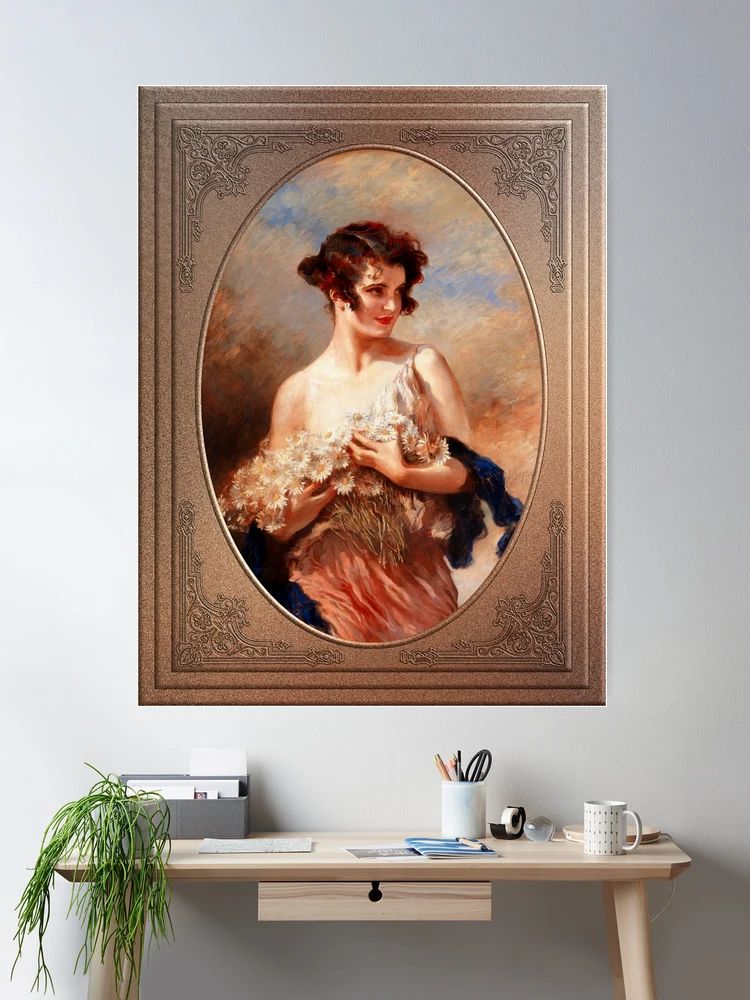
La pintura titulada Dame Mit Margeritenstrauß, created circa 1940 by the renowned German artist Leopold Schmutzler (1864 – 1940), captures an exquisite retrat d’una dama adorned with a bouquet of daisies. Schmutzler, known for his delicate depictions of women, frequently explored themes of femininity, gràcia, i bellesa natural. In this work, the artist uses his signature soft brushwork and skillful handling of light to create a composition that is both tranquil and refined, inviting the viewer into an intimate moment of serenity.
Taula de continguts
Subject and Expression
The central figure of the painting is a young woman, elegantly posed and bathed in soft light. She gazes to the side, her expression gentle and contemplative, with a slight smile that hints at both warmth and a quiet, serene composure. Els seus cabells castanys, styled in soft waves, complements her delicate features, and a few tendrils of hair cascade loosely around her face, adding to the sense of natural beauty. She holds a large bouquet of daisies in her arms, the white flowers almost seeming to burst forth from her chest. The daisies contrast with the warm tones of her skin, and the soft touch of the flowers further emphasizes the delicate, refined nature of the subject. The combination of her demeanor, her hairstyle, and the flowers give the impression of youthfulness and tranquility.
Clothing and Materials
The woman is dressed in a flowing gown, its fabric draping elegantly over her shoulders. The attire is simple yet sophisticated, rendered in soft tones of light pastel hues. The gown does not overpower the figure but instead enhances the natural grace of her form. A delicate sash, which may be made of satin or a similar material, gently wraps around her waist, highlighting her slender figure. The texture of the gown contrasts beautifully with the soft, organic texture of the flowers in her arms. The painting’s materials, especially the soft brushwork, allow for subtle transitions in the fabric’s folds, which seem almost tangible, as if one could reach out and touch them. Schmutzler’s meticulous attention to detail adds depth and realism to her appearance, making the viewer feel as though they are witnessing a quiet moment in her life.
Fons i configuració
The backdrop of the painting is a soft, almost ethereal wash of color that gently fades into the distance. The tones of the background are muted, consisting of warm beiges, light blues, and soft earth tones. The lack of a distinct, concrete setting places more emphasis on the subject herself, removing any distractions that might divert attention away from her serene expression and posture. Schmutzler intentionally leaves out any detailed landscape or environment, instead focusing on the harmonious balance between the figure and the natural beauty of the bouquet she holds.
El suau, blurred background enhances the sense of intimacy in the piece. It transports the viewer into a quiet moment where the subject is enveloped in a peaceful atmosphere. There are no overt symbols or props that detract from the central theme of femininity and grace. The choice of flowers, which are likely daisies, is also significant, as they symbolize purity and innocence. These symbolic elements resonate with the overall mood of the painting, reinforcing the sense of calm and timeless beauty that Schmutzler captures so well.

Artistic Style and Technique
Leopold Schmutzler’s approach to painting in Dame Mit Margeritenstrauß demonstrates his mastery of classical portraiture, with a focus on realism and a sensitivity to light and texture. The brushstrokes are fine and controlled, yet there is an effortless quality to the way he captures the delicate nuances of the subject’s expression and clothing. The painting’s tone is warm and inviting, amb rics, soft hues that evoke a sense of calm and elegance.
The technique Schmutzler employs gives the portrait an almost soft-focus effect, blurring the boundaries between realism and romanticism. The background is hazy and indistinct, yet it provides a beautiful contrast to the sharply focused details of the subject’s face and flowers. This technique reinforces the theme of ethereal beauty and quiet grace. The light that bathes the woman’s figure is soft, highlighting the contours of her face and body, while also casting gentle shadows that add depth to the portrait.
Mood and Interpretation
The mood of the painting is one of calm introspection, where time seems to stand still. There is no hurry in this moment; it is a pause in the midst of daily life, a fleeting instance where the subject exists in harmony with her surroundings. The softness of the color palette and the absence of dramatic contrasts contribute to the overall sense of serenity and quiet beauty. Schmutzler does not impose any grandiose narrative on the viewer but instead invites one to share in this quiet, peaceful moment with the subject.
The flowers she holds—daisies—are emblematic of purity, simplicity, i la innocència. They may represent a connection to nature or the untouched beauty of the subject herself. The juxtaposition of the soft, delicate flowers against her graceful posture and gentle expression creates a sense of harmony, suggesting a narrative of timeless beauty that transcends the ordinary.
Conclusió
En Dame Mit Margeritenstrauß, Leopold Schmutzler masterfully captures the essence of feminine grace, bellesa natural, and tranquility. The artist’s delicate rendering of the subject’s expression, indumentària, i flors, set against a soft and ethereal background, creates a sense of timelessness that invites the viewer to pause and reflect on the serene beauty of the moment. This work is a testament to Schmutzler’s skill in portraying both the physical and emotional aspects of his subjects, making it an exemplary piece of classical portraiture from the early 20th century.
Dama amb ram de margarides de c1940 del pintor alemany Leopold Fehller (1864 – 1940); una escena de gènere d'estil rococó, pintor de retrats i figures femenines.
This is a remastered digital art old masters reproduction of a public domain image that is available as a rolled, metall, acrílic i Impressió de tela en línia.
Artista Bio
Informació a continuació derivada de Wikipedia.org
Leopold va néixer Mies, una ciutat del districte de Tachov a la regió de Plzeň de la República Txeca.
El seu pare era hostaler i guarnicionista i va donar al seu fill les seves primeres lliçons de dibuix, després de 1880 a 1882 va estudiar a l'Acadèmia de Belles Arts de Viena amb el pintor alemany Christian Griepenkerl (1839 – 1916); i més tard a l'Acadèmia de Belles Arts de Munic, estudiant amb Otto Seitz (1846 – 1912).
Després de graduar-se a l'Acadèmia de Belles Arts de Munic a 1885 va decidir establir-se a Munic, i al tombant de segle s'havia convertit en un dels retratistes més buscats de Munic; creant art per a la família reial de Baviera,, intèrprets i ballarins populars, inclòs un retrat de l'actriu Lili Marberg (1876 – 1962) en el paper de Salomé.