

Eas Ilse air a’ Brocken ann am Beanntan Harz
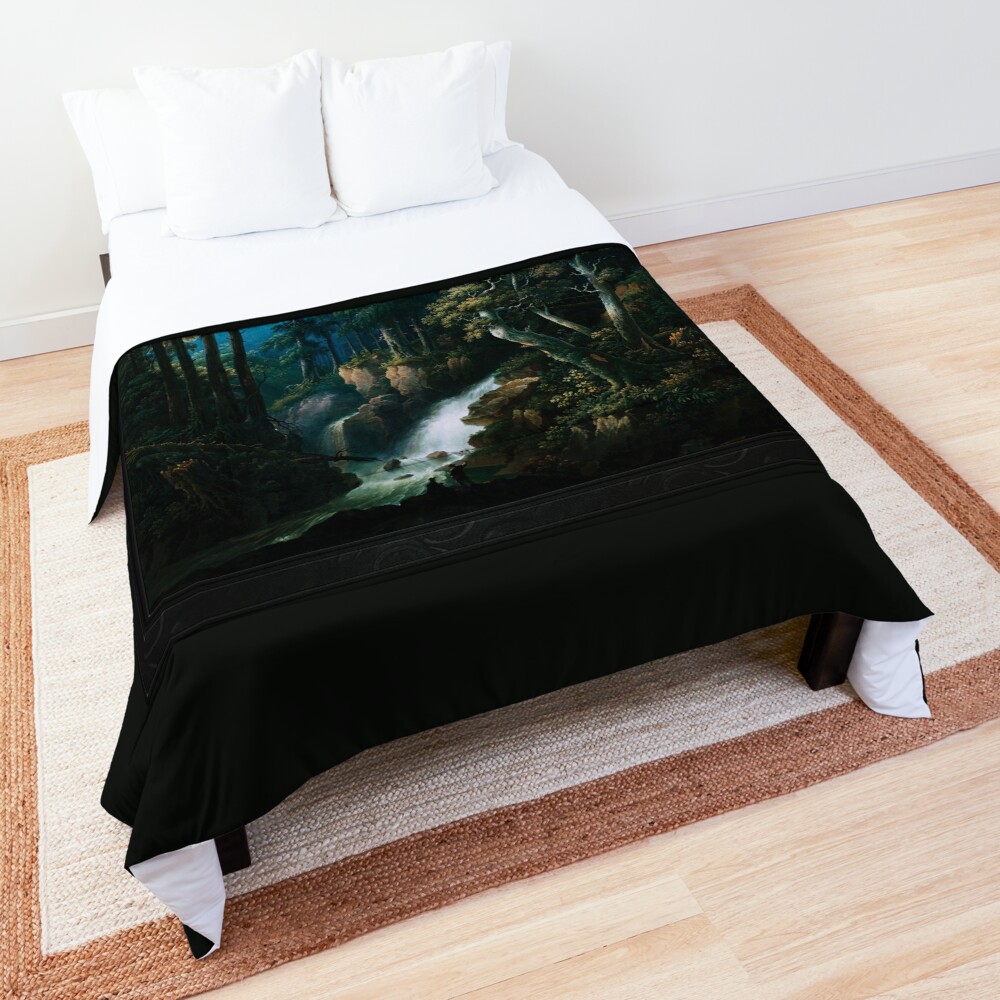
“Eas Ilse air a’ Brocken ann am Beanntan Harz” (Eas an Ilse air a’ Brocken ann am Beanntan Harz), air a chruthachadh a-steach 1830 leis a’ pheantair Gearmailteach Hermann Josef Neefe (1790 – 1854), tha e tarraingeach peantadh cruth-tìre a tha a’ taisbeanadh bòidhchead ciùin ach neo-aithnichte nàdur ann am Beanntan Harz na Gearmailt. Tha dealbh Neefe na dheagh eisimpleir den stoidhle romansach, caractar tràth san 19mh linn, far a bheil nàdar an dà chuid brosnachail agus uaireannan a’ faighinn cus cumhachd. Chan e a-mhàin gu bheil an dealbh a’ glacadh corporra na h-àrainneachd ach tha e cuideachd a’ toirt a-steach ceangal tòcail ris an sublime, prìomh chuspair ann an Romanticism.
Tha am pìos iongantach seo an dà chuid na rannsachadh air an t-saoghal nàdarrach agus na mheòrachadh air cumhachd thar-ghnèitheach na talmhainn.. Tha aghaidh an deilbh air a riaghladh le casg uisge cumhachdach, Eas Ilse, tumbling down rocky cliffs into a foamy pool below. An t-uisge, though turbulent in motion, is executed with such precision that the viewer can almost feel the spray, the chill in the air, and hear the roar of the water. The painter’s careful attention to the intricacies of the water’s flow and the play of light on its surface imparts a dynamic quality to the scene.
Clàr-innse
The Central Waterfall and Terrain
The central focus of the composition is undoubtedly the waterfall itself, which emerges from the dense foliage of the surrounding forest. Neefe has skillfully arranged the elements so that the cascading water acts as both the focal point and a unifying force within the composition. The falls are not merely a natural feature; they become a dramatic symbol of the untamed power of nature. The sharp contrast between the force of the water and the smoothness of the surrounding rocks evokes a sense of the eternal struggle between elemental forces.
The rocky terrain surrounding the waterfall is rugged and uneven, with outcrops of stone jutting out, some of which are partially obscured by foliage. The rocks are bathed in dappled sunlight, suggesting the time of day is late afternoon, when the sun is low in the sky. This sunlight glows with a soft, golden hue as it filters through the forest canopy, cruthachadh eadar-dhealachaidhean iongantach eadar solas agus faileas. Tha na h-eadar-ghluasadan fìnealta sin ann an solas a’ togail faireachdainn de shàmhchair am measg ùpraid an eas, a’ daingneachadh cothromachadh nam feachdan a tha an sàs ann an nàdar.
The Forest and its Atmospheric Presence
An dùmhail, tha coille dhorcha timcheall an eas na theisteanas air sgil Neefe ann a bhith a’ toirt seachad diofar inneach agus feartan chraobhan, duilleach, agus talamh. Tha na craobhan àrd agus làidir, tha na stocan aca air an toinneamh agus air an gearradh mar gum biodh iad air seasamh an aghaidh linntean de dhroch shìde. Tha na duilleagan aca air an dèanamh ann an diofar dhathan uaine, le cuid air an soillseachadh le solus na grèine, agus cuid eile a' fantainn fo sgàile, a 'cruthachadh àlainn, àile cha mhòr dìomhair. Bidh na craobhan àrda a’ cur ri faireachdainn mòrachd, toirt air an neach-coimhead a bhith a’ faireachdainn beag an taca ri farsaingeachd na tìre.
Air a 'chùl, a deep mist seems to rise from the forest floor, further emphasizing the raw and uninhabited beauty of the environment. The mist, combined with the thick forest canopy, suggests an air of mystery and timelessness. The misted area in the distance provides an ethereal and slightly ominous atmosphere, allowing the viewer to imagine that the wilderness is an untamed, untouchable space where human intervention is absent.
Figures in the Landscape
Though the painting primarily emphasizes the overwhelming presence of nature, there are a few figures that provide a sense of scale and add an additional layer of meaning to the composition. A small group of figures stands near the base of the waterfall, almost dwarfed by the massive rocks and the rushing water. These figures appear to be travelers, possibly local people, who seem to be at one with the environment. Their simple attire blends into the scene, suggesting that they are merely passing through or observing nature rather than dominating it.
Their small scale in the painting serves as a reminder of the insignificance of human beings in the face of such grand natural beauty. These figures enhance the theme of Romanticism, where nature is often depicted as both awe-inspiring and humbling. They appear as though they are contemplating the untamed world around them, symbolizing the human desire to experience the sublime and the vastness of nature.
Mood agus faireachdainn
An fhaireachdainn iomlan de “Eas Ilse air a’ Brocken ann am Beanntan Harz” tha e na aon de dh'urram agus de dh' ioghnadh. Neefe’s technique in rendering the landscape’s textures, cluich an t-solais agus an sgàil, and the contrast between the ferocity of the waterfall and the tranquility of the forest creates an atmosphere that is at once serene and dynamic. The work reflects the Romantic fascination with nature as a source of both beauty and power. There is an underlying tension in the piece—the water flows relentlessly, the trees stand strong and silent, and the mist shrouds the distant view—all creating an atmosphere where nature feels both majestic and threatening.
The natural world in this painting is not idealized or controlled; it is wild, unpredictable, and overwhelming. Neefe seems to ask the viewer to consider nature not just as a place of beauty, but as a realm that is indifferent to human existence. Tha am faireachdainn seo de dh’ iongnadh agus spèis don t-saoghal nàdarra air fhighe gu domhainn ann am faireachdainn an deilbh, ga dhèanamh na dheagh eisimpleir de chomharrachadh Romanticism air mòrachd agus dìomhaireachd nàdair.
Stoidhle agus innleachd
A thaobh stoidhle, Tha Neefe a’ leantainn an traidisean romansach, a’ gabhail ri ceangal domhainn ri nàdar agus a’ cur cuideam air dian tòcail thairis air reusantachd. Tha an cleachdadh aige de chiaroscuro - an eadar-dhealachadh eadar solas agus dorchadas - gu sònraichte iongantach. Tha an eadar-dhealachadh soilleir eadar an eas soillsichte agus a’ choille fo sgàil a’ cruthachadh buaidh lèirsinneach iongantach, a’ daingneachadh doimhneachd faireachail an dealbh. Taisbeanadh gu math mionaideach de na h-eileamaidean nàdarra, bho na duilleagan fa leth chun an uisge swirling, a’ sealltainn aire Neefe gu reul-eòlas, ach mar an ceudna a chomas air an t-sealladh a lionadh le suil inntinn.
The landscape itself is lush and alive, filled with textures that invite the viewer to look closer and explore its many layers. Whether through the detailed depiction of tree bark, the subtle gradations of light on the water, or the play of shadow and mist in the background, Neefe brings the landscape to life with an almost tactile quality. His careful brushwork and attention to detail elevate this piece into an unforgettable portrayal of the Harz Mountains and the grandeur of the natural world.
Eas Ilse air a’ Brocken ann am Beanntan Harz c1830 leis a’ pheantair Gearmailteach Hermann Josef Neefe (1790 – 1854); theater and landscape painter of the early 19th century.
Der Wasserfall der Ilse auf dem Brocken is a remastered digital art old masters reproduction of a public domain image that is available as a clò-bhualadh canabhas air-loidhne.
Neach-ealain Bio A thàinig bho Wikipedia.org
Hermann was born on September 3, 1790 ann an Vienna gu Christian Gottlob Neefe na stiùiriche orcastra air còisir a’ chaibeil agus mar leanabh fhuair athair stiùireadh bho athair a bhith a’ cluich na fìdhle; agus aig aois 14 chaidh e gu bràthair athar A. Rösner ann an Vienna a bha na sheinneadair opera ann an trèanadh ciùil Burgtheater.
Fhad 'sa bha e còmhla ri bràthair athar, Chaidh Hermann aon latha a thoirt a-steach don ghràbhalaiche Jakob Christian Schlotterbeck (1757 – 1811) aig tigh a mhàthar.
Chuidich a’ choinneamh cothrom seo e leis an obair ghrafaigeach aige, a thug air tadhal air an Acadamaidh Ealain Lèirsinneach ann an Vienna, An Ostair; far an robh e na A.O. Maighstir oileanach.
Fhad ‘s a bha e ag ionnsachadh aig an acadamaidh bha buaidh mhòr aig Hermann air peantair Theatar na h-Ostair Antonio De Pian (1784 – 1851); agus gu a thaic bha e comasach dha coimisean beag fhaighinn bho dhiofar thaighean-cluiche rè a thrèanadh.
Tro na tidsearan aige aig an acadamaidh chaidh Hermann a thoirt a-steach don stiùiriche theatar Karl Friedrich Hensler, a thuarasdalaich e beagan oibre a dheanamh air a shon; agus an dèidh sin bha a’ chiad obair mhòr aige ann a bhith a’ dealbhadh sheataichean àrd-ùrlair airson ballet chloinne le Friedrich Horschelt.
Ged a bha prìomh obair Hermann na pheantair theatar chruthaich e grunn chruthan-tìre ann an ola agus dathan-uisge; a bhiodh gu tric nan dreachan airson na seataichean àrd-ùrlair aige.