

Dolce Far Niente
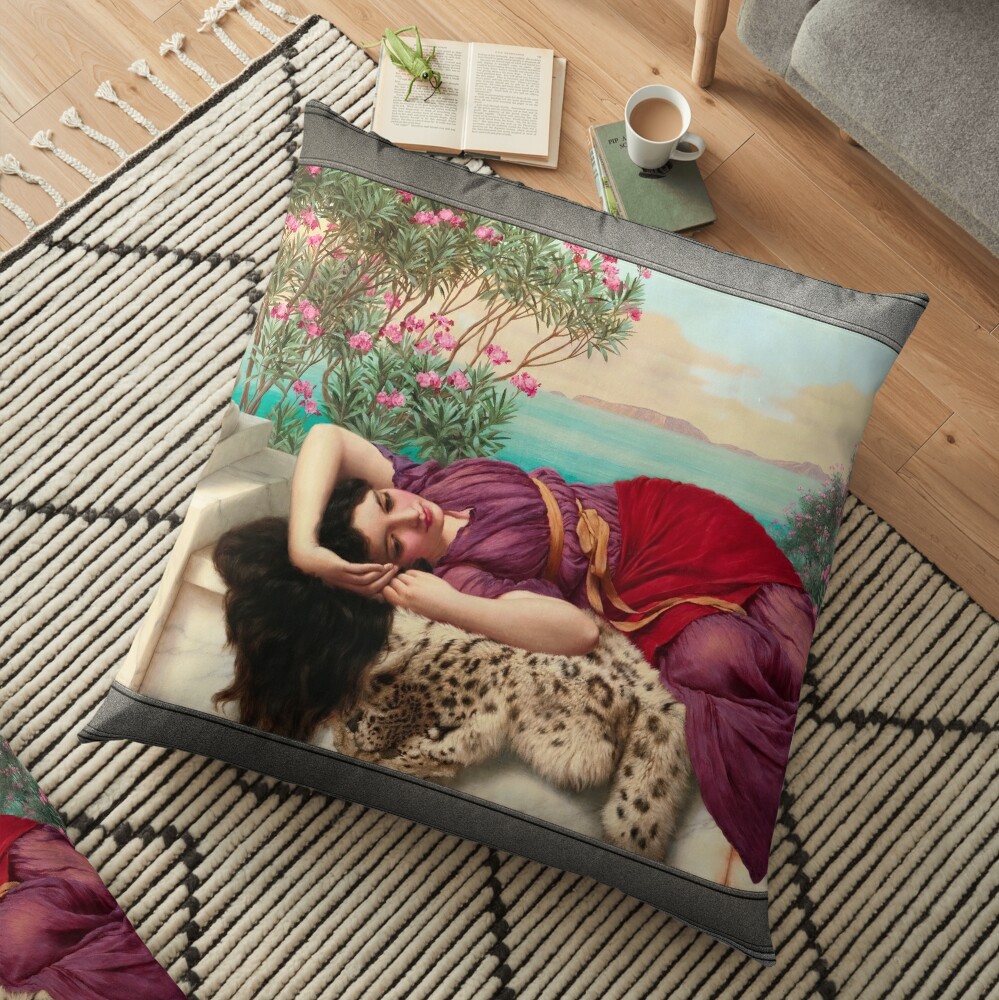
“Dolce Far Niente,” created by the British painter John William Godward urtean 1904, embodies the essence of leisurely tranquility in classical art. John William Godward (1861 – 1922) is renowned for his dedication to depicting serene and opulent scenes inspired by ancient Rome and Greece, often focusing on beautiful women in idealized settings.
Margolan honetan, Godward captures a moment of pure relaxation, where the subject reclines in a luxurious setting, offering the viewer a window into a world of unhurried elegance. Izenburua, which translates from Italian as “The Sweetness of Doing Nothing,” is a fitting description of the painting’s mood. This theme of languor and contentment is a hallmark of Godward’s work and reflects a classical ideal of living in harmony with nature and luxury.
Edukien taula
Gai nagusia: A Reclining Woman
At the heart of the composition lies a young woman, the focal point of the painting. Draped in flowing, Oihal aberatsak, she reclines languidly on a marble terrace. Her pose suggests both comfort and contemplation, her head resting gently on her right arm, while her other hand lies relaxed by her side. The woman’s attire is a blend of classical Greek and Roman influences, with a deep red robe cinched at the waist by a golden sash, flowing loosely around her body.
The fabric of her clothing flows with remarkable realism, draping gracefully over her form and pooling around her on the marble. The woman’s expressive face is calm and serene, exuding a sense of peace and satisfaction. Bere luzea, dark hair tumbles softly over her shoulder and down her back, enhancing her delicate beauty.
The figure is sculpted in a manner that emphasizes classical ideals of beauty, graceful, slender, and harmonious. The figure’s serene expression is a key aspect of Godward’s work, reinforcing the theme of repose and quiet indulgence. Her classical beauty is not only visual but also imbued with the quiet strength of timeless femininity. Her natural poise suggests an air of nobility or refinement, which Godward often associated with the ancient world.
Inguruko Ingurua
The setting is a classical terrace that overlooks a tranquil, Mediterranean-style landscape. The woman is positioned in front of a marble railing, part of a larger architectural structure, perhaps an ancient villa or temple. The terrace’s polished marble surface reflects light beautifully, its smooth, lustrous quality enhancing the overall luxurious atmosphere. The colors of the marble subtly contrast with the rich hues of the woman’s attire, bringing attention to her figure.
Beyond the terrace, the landscape stretches into a serene view of the sea. The coastline is bathed in soft, golden sunlight, with distant hills rolling gently toward the horizon. This idyllic landscape evokes a sense of peace and isolation, where nature and human beauty coexist harmoniously. Several clusters of lush foliage, including pink and purple flowers, border the scene, enhancing the natural beauty of the environment. The plants are rendered with incredible attention to detail, their vibrant colors and intricate shapes adding depth and dimension to the scene.
Paisaia, bere malda leunekin eta zeru garbiekin, erlaxazioaren gaia eta denboraren joan-etorri leuna indartzen du. Itsasoa, lasaia eta zabala, infinitua eta denboragabetasuna iradokitzen du, urruneko muinoek, berriz, lasaitasun eta iraunkortasun sentsazioa ematen dute. Elementu natural hauek eszena markatzen dute ikuslea momentuko isiltasun idilikoa kontenplatzera gonbidatzen duten moduan.
Materialak eta Teknikak
Godwardek ehundura eta argia irudikatzeko duen trebezia nabaria da pinturako materialen erreprodukzio zorrotzean. Marmolezko terraza zehatz-mehatz dago, bere gainazal leundua argi eta itzal jokoak harrapatzen ditu eszenaren errealismoa areagotzen duen moduan. Emakumearen janzkeraren luxuzko ehunak zehaztasun handiz margotuta daude, non ia oihalaren leuntasuna eta pisua senti daitekeela. The vivid reds and purples of her robe contrast beautifully with the more subdued tones of the landscape, drawing the viewer’s attention to her figure.
Godward’s brushwork is delicate and refined, with a focus on smooth surfaces and clarity of form. The light in the painting is soft and even, contributing to the overall sense of calm and timelessness. There are no harsh contrasts or sharp shadows, which emphasizes the restful mood of the piece. The artist’s use of color is also notable, as he employs a rich yet harmonious palette to evoke warmth and serenity. The overall composition is balanced, with each element of the scene working together to create a cohesive and pleasing visual experience.
Artelanaren estiloa eta aldartea
“Dolce Far Niente” embodies the style of academic realism, a movement that prioritized the accurate depiction of human figures, classical themes, and idealized settings. Godward was a part of the late Victorian tradition, and his works often aligned with the aesthetic tastes of the time, which favored classical themes and polished finishes. The painting’s subject matter, a beautiful woman at rest in an idyllic classical setting, is typical of Godward’s oeuvre, where he often sought to create timeless moments of beauty and serenity.
The mood of the painting is one of complete relaxation and peace. There is no urgency or turmoil; horren ordez, the viewer is invited to share in the quiet pleasure of the woman’s repose. This sense of timeless, unhurried contentment is central to the painting’s appeal. The serene landscape, the softness of the light, and the tranquility of the scene combine to evoke feelings of nostalgia for a more harmonious and slower-paced world. Gaia “Dolce Far Niente” reminds the viewer of the simple joys of leisure, free from the pressures of modern life.
Bukaera
“Dolce Far Niente” is a masterful example of John William Godward’s ability to evoke the beauty of the classical world through the lens of academic realism. The painting captures a moment of pure relaxation, where the lines between the natural world and human beauty blur, creating a sense of timeless serenity. The luxurious setting, coupled with the delicate portrayal of the reclining woman, invites the viewer to step into a world where tranquility reigns and time seems to stand still.
Dolce Far Niente is a remastered digital art old masters reproduction of a public domain image that is available as a mihise inprimatua sarean.
Arte digitalaren sorkuntza hau, Xzendor7 webgunean aurki daitezkeen artelan guztiak bezala sarean erosteko eskuragarri dago hainbat material formatutan, mihise inprimatuak barne., estanpatu akrilikoak, metal estanpatuak, egur estanpatuak, marko estanpatuak, kartelak, eta ijetzitako mihise estanpatu gisa hainbat tamainatan 12 zentimetroetara 72 hazbeteko artelanaren eta artea erosteko aukeratzen duzun eskaeraren arabera inprimatzeko dendaren tamainaren arabera.
Artelana gizonezkoen eta emakumezkoen arropa sorta zabal batean ere eskuragarri dago, katiluak, totes, zapiak, koadernoak eta aldizkariak eta etxeko dekorazio produktu ugari.
Artistaren biografia
Beheko informazioa Wikipedia.org
John William Godward bost seme-alaben artean zaharrena zen, eta bere aita John eta William aitonaren omenez jarri zioten izena.
Errege Akademian erakutsi zuen 1887. Italiara joan zenean bere modelo batekin 1912, bere familiak harekin harreman guztiak hautsi zituen eta bere irudia familiako argazkietatik moztu ere egin zuen. Godward Ingalaterrara itzuli zen 1921, urtean hil zen 1922, and is buried in Brompton Cemetery, Londres mendebaldea.
Bere margolan ezagunenetako bat Dolce far Niente da (1904), urtean Andrew Lloyd Webber-en bildumarako erosi zena 1995. Beste hainbat koadroren kasuan bezala, Godward-ek bertsio bat baino gehiago margotu zituen; kasu honetan, bat lehenago (eta ez hain ezagunak) 1897 beste batekin bertsioa 1906 bertsioa.
He committed suicide at the age of 61 eta bere suizidio oharrean idatzi omen zuen hori “mundua ez da aski handia [biak] ni neu eta Picasso bat”.
Bere familia arrotza, artista izatea gaitzetsi zuena, bere buruaz beste egiteaz lotsatu eta paperak erre zituen. Godward-en argazki bakarra bizirik iraun duela ezagutzen da.
Godward neoklasikista viktoriarra izan zen, eta horregatik, teorian, Frederic Leightonen jarraitzailea. Alabaina, estilistikoki estuago dago Sir Lawrence Alma-Tademarekin, harekin partekatu zuen arkitektura klasikoaren erreprodukziorako zaletasuna, bereziki, marmolez eraikitako paisaia-ezaugarri estatikoak.
Godward-en dauden irudi gehienek paisaiaren ezaugarrien aurka jarritako jantzi klasikoko emakumeak ageri dira; bere obran erdi biluzi eta guztiz biluzik dauden irudi batzuk badaude ere, adibide nabarmena izanik “The Tepidarium-en c1913”.
Gai bereko Alma-Tadema koadro polemiko batekin partekatutako izenburua “Lady Lever Art Gallery”. Izenburuek Godward-en inspirazio iturria islatzen dute; zibilizazio klasikoa zena, aipagarriena Antzinako Erromakoa; Godward Alma-Tademarekin lotzen duen gaia artistikoki.
Kontuan izanik beka klasikoa bere margolanen ikusle potentzialen artean hedatuago zegoela bere bizitzan gaur egun baino, Xehetasunen ikerketa zorrotza garrantzitsua izan zen genero honetako artista gisa maila bat lortzeko.
Alma-Tadema arkeologoa eta baita margolaria ere, gune historikoetara joan eta gero bere margolanetan erabili zituen artefaktuak bildu zituena: Jainkoari, ere bai, arkitektura eta janzkera bezalako xehetasunak aztertu zituen, bere lanek benetakotasunaren zigilua zutela ziurtatzeko.
Gainera, Godward-ek arreta handiz eta zorrotz beste ezaugarri garrantzitsu batzuk eman zituen bere margolanetan, margoak dituzten animalien larruak “Eguerdiko atsedenaldia c1910” eta “A Cool Retreat c1910” interpretazio horren adibideak eta baso-loreak ditu “Nerissa c1906” eta “Udako Loreak c1903”.
Godward-en hainbeste mihisetan emakume ederren agertzeak bere lanetara etorri berri asko prerafaelita gisa sailkatzen ditu oker., batez ere, bere paleta kolore biziko koloretsua izaten baita. Gaiaren aukeraketa (antzinako zibilizazioa versus, adibidez, Arturiar kondaira) egokiagoa da neoklasizista viktoriarrarena.
Berarekin garaikide diren margolari ugarirekin komunean, Godward 'High Victorian Dreamer' bat zen, mundu idealizatu eta erromantizatu baten irudiak ekoiztea, Godward zein Alma-Tademaren kasuan, togasan Victorians mundu-ikuskera gisa kritikatu zen.
Jainkoari “azkar ezarri zuen emakume gazteen margolanengatik ospea ingurune klasiko batean eta sentsibilitate eta maisutasun teknikoarekin haragiaren ehundura kontrasteen sentipena transmititzeko gaitasunarekin., marmola, larruak eta ehunak.
Godward-ek garai klasikoan kokatutako artelanak sortzeko zuen zaletasuna, ziurrenik, jaio zen garaitik etorri zen.; mendebaldeko margolanetako eskala osoko azken berpizkunde klasikoa izan baitzen, Ingalaterran loratu zen 1860tik 1890era arte.