

Dolce Far Niente
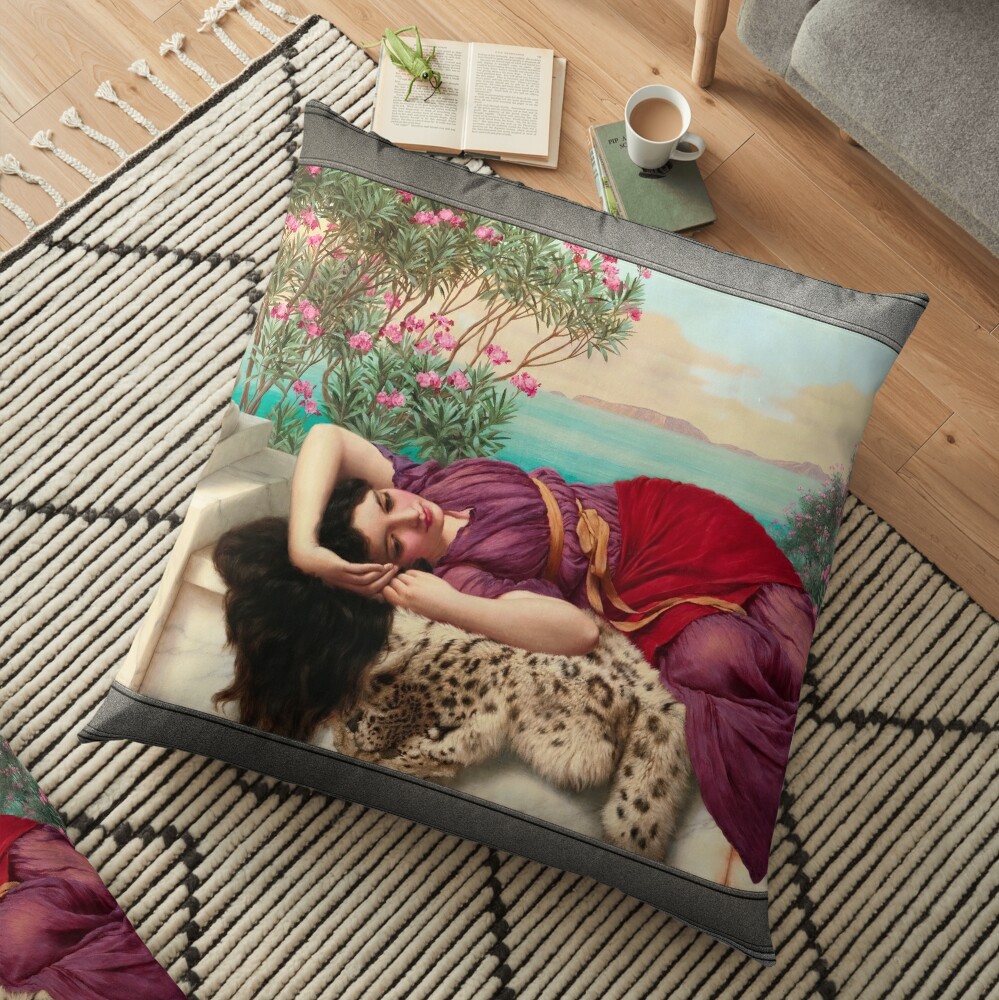
“Dolce Far Niente,” created by the British painter John William Godward w 1904, embodies the essence of leisurely tranquility in classical art. John William Godward (1861 – 1922) is renowned for his dedication to depicting serene and opulent scenes inspired by ancient Rome and Greece, often focusing on beautiful women in idealized settings.
W tym obrazie, Godward captures a moment of pure relaxation, where the subject reclines in a luxurious setting, offering the viewer a window into a world of unhurried elegance. The title, which translates from Italian as “The Sweetness of Doing Nothing,” is a fitting description of the painting’s mood. This theme of languor and contentment is a hallmark of Godward’s work and reflects a classical ideal of living in harmony with nature and luxury.
Spis treści
Główny temat: A Reclining Woman
At the heart of the composition lies a young woman, the focal point of the painting. Draped in flowing, rich fabrics, she reclines languidly on a marble terrace. Her pose suggests both comfort and contemplation, her head resting gently on her right arm, while her other hand lies relaxed by her side. The woman’s attire is a blend of classical Greek and Roman influences, with a deep red robe cinched at the waist by a golden sash, flowing loosely around her body.
The fabric of her clothing flows with remarkable realism, draping gracefully over her form and pooling around her on the marble. The woman’s expressive face is calm and serene, exuding a sense of peace and satisfaction. Jej długie, dark hair tumbles softly over her shoulder and down her back, enhancing her delicate beauty.
The figure is sculpted in a manner that emphasizes classical ideals of beauty, wdzięczny, slender, and harmonious. The figure’s serene expression is a key aspect of Godward’s work, reinforcing the theme of repose and quiet indulgence. Her classical beauty is not only visual but also imbued with the quiet strength of timeless femininity. Her natural poise suggests an air of nobility or refinement, which Godward often associated with the ancient world.
The Surrounding Environment
The setting is a classical terrace that overlooks a tranquil, Mediterranean-style landscape. The woman is positioned in front of a marble railing, part of a larger architectural structure, perhaps an ancient villa or temple. The terrace’s polished marble surface reflects light beautifully, its smooth, lustrous quality enhancing the overall luxurious atmosphere. The colors of the marble subtly contrast with the rich hues of the woman’s attire, bringing attention to her figure.
Beyond the terrace, the landscape stretches into a serene view of the sea. The coastline is bathed in soft, golden sunlight, with distant hills rolling gently toward the horizon. This idyllic landscape evokes a sense of peace and isolation, where nature and human beauty coexist harmoniously. Several clusters of lush foliage, including pink and purple flowers, border the scene, enhancing the natural beauty of the environment. The plants are rendered with incredible attention to detail, their vibrant colors and intricate shapes adding depth and dimension to the scene.
The landscape, with its gentle slopes and clear skies, reinforces the theme of relaxation and the gentle passage of time. The sea, calm and expansive, suggests infinity and timelessness, while the distant hills provide a sense of tranquility and permanence. These natural elements frame the scene in a way that invites the viewer to contemplate the idyllic stillness of the moment.
Materiały i techniki
Godward’s expertise in depicting texture and light is evident in his meticulous rendering of the materials in the painting. The marble terrace is finely detailed, its polished surface capturing the play of light and shadow in a way that heightens the realism of the scene. The luxurious fabrics of the woman’s attire are painted with such precision that one can almost feel the softness and weight of the cloth. The vivid reds and purples of her robe contrast beautifully with the more subdued tones of the landscape, drawing the viewer’s attention to her figure.
Godward’s brushwork is delicate and refined, with a focus on smooth surfaces and clarity of form. The light in the painting is soft and even, contributing to the overall sense of calm and timelessness. There are no harsh contrasts or sharp shadows, which emphasizes the restful mood of the piece. The artist’s use of color is also notable, as he employs a rich yet harmonious palette to evoke warmth and serenity. The overall composition is balanced, with each element of the scene working together to create a cohesive and pleasing visual experience.
The Style and Mood of the Artwork
“Dolce Far Niente” embodies the style of academic realism, a movement that prioritized the accurate depiction of human figures, classical themes, and idealized settings. Godward was a part of the late Victorian tradition, and his works often aligned with the aesthetic tastes of the time, which favored classical themes and polished finishes. Temat obrazu, a beautiful woman at rest in an idyllic classical setting, is typical of Godward’s oeuvre, where he often sought to create timeless moments of beauty and serenity.
The mood of the painting is one of complete relaxation and peace. There is no urgency or turmoil; Zamiast, the viewer is invited to share in the quiet pleasure of the woman’s repose. This sense of timeless, unhurried contentment is central to the painting’s appeal. The serene landscape, the softness of the light, and the tranquility of the scene combine to evoke feelings of nostalgia for a more harmonious and slower-paced world. Temat “Dolce Far Niente” reminds the viewer of the simple joys of leisure, free from the pressures of modern life.
Wniosek
“Dolce Far Niente” is a masterful example of John William Godward’s ability to evoke the beauty of the classical world through the lens of academic realism. The painting captures a moment of pure relaxation, where the lines between the natural world and human beauty blur, creating a sense of timeless serenity. The luxurious setting, coupled with the delicate portrayal of the reclining woman, invites the viewer to step into a world where tranquility reigns and time seems to stand still.
Dolce Far Niente is a remastered digital art old masters reproduction of a public domain image that is available as a druk na płótnie online.
To dzieło sztuki cyfrowej, podobnie jak wszystkie dzieła sztuki, które można znaleźć na stronie internetowej Xzendor7, można kupić online w różnych formatach materiałów, w tym odbitki na płótnie, wydruki akrylowe, metalowe nadruki, druki na drewnie, wydruki w ramkach, plakaty, oraz jako zwinięte wydruki na płótnie w różnych rozmiarach od 12 cale do 72 cale w zależności od rozmiaru rzeczywistej grafiki i sklepu z drukiem na żądanie, w którym zdecydujesz się kupić sztukę.
Grafika jest również dostępna na szerokiej gamie odzieży męskiej i damskiej, kubki, torby, szaliki, notesy i czasopisma oraz wiele produktów do dekoracji wnętrz.
Biografia artysty
Informacje poniżej od Wikipedia.org
John William Godward był najstarszym z pięciorga dzieci, i został nazwany na cześć swojego ojca Johna i dziadka Williama.
Wystawiał w Akademii Królewskiej od 1887. Kiedy przeprowadził się do Włoch z jedną ze swoich modelek 1912, jego rodzina zerwała z nim wszelki kontakt, a nawet wycięła jego wizerunek ze zdjęć rodzinnych. Godward powrócił do Anglii w r 1921, zmarły w 1922, i jest pochowany na cmentarzu w Brompton, Zachodni Londyn.
Jednym z jego najbardziej znanych obrazów jest Dolce far Niente (1904), który został zakupiony do kolekcji Andrew Lloyda Webbera w r 1995. Podobnie jak w przypadku kilku innych obrazów, Godward namalował więcej niż jedną wersję; w tym przypadku, wcześniej (i mniej znane) 1897 wersja z dalszym 1906 wersja.
Popełnił samobójstwo w wieku 61 i podobno napisał to w swoim liście pożegnalnym “świat nie jest na to wystarczająco duży [Zarówno] ja i Picasso”.
Jego odległa rodzina, który nie pochwalał jego zostania artystą, wstydzili się swojego samobójstwa i spalili jego dokumenty. Wiadomo, że przetrwało tylko jedno zdjęcie Godwarda.
Godward był wiktoriańskim neoklasykiem, i dlatego, W teorii, wyznawca Frederica Leightona. jednak, jest bliższy stylistycznie sir Lawrence'owi Alma-Tadema, z którym dzielił upodobanie do oddawania architektury klasycznej – w szczególności, statyczne elementy krajobrazu zbudowane z marmuru.
Zdecydowana większość zachowanych obrazów Godwarda przedstawia kobiety w klasycznych strojach, pozowane na tle krajobrazu; choć w jego twórczości znajdują się postacie półnagie i całkowicie nagie, godnym uwagi przykładem “W Tepidarium ok. 1913 r”.
A title shared with a controversial Alma-Tadema painting of the same subject that resides in the “Lady Lever Art Gallery”. Tytuły odzwierciedlają źródło inspiracji Godwarda; która była cywilizacją klasyczną, przede wszystkim starożytnego Rzymu; temat artystycznie wiążący Godwarda z Alma-Tademą.
Biorąc pod uwagę, że nauka klasyczna była bardziej rozpowszechniona wśród potencjalnych odbiorców jego obrazów za jego życia niż obecnie, skrupulatne badanie szczegółów było ważne, aby osiągnąć pozycję artysty w tym gatunku.
Alma-Tadema był archeologiem i malarzem, który odwiedzał miejsca historyczne i zbierał artefakty, które później wykorzystywał w swoich obrazach: Boski, zbyt, studiował takie szczegóły, jak architektura i ubiór, w celu zapewnienia, że jego dzieła noszą pieczęć autentyczności.
Ponadto, Godward pieczołowicie i skrupulatnie oddał inne ważne cechy na swoich obrazach, skóry zwierzęce, na których znajdują się obrazy “Odpoczynek w południe około 1910 r” i “Fajne odosobnienie c1910” zawiera przykłady takiej interpretacji, a także polne kwiaty “Nerisa ok. 1906 r” i “Letnie kwiaty ok. 1903 r”.
Pojawienie się pięknych kobiet w wystudiowanych pozach na tak wielu płótnach Godwarda powoduje, że wielu nowicjuszy w jego twórczościach błędnie klasyfikuje go jako prerafaelitę, zwłaszcza, że jego paleta jest często bardzo kolorowa. Wybór tematu (starożytna cywilizacja kontra, na przykład, Legenda arturiańska) jest właściwie wiktoriańskim neoklasycystą.
Podobnie jak wielu współczesnych mu malarzy, Godward był „marzycielem epoki wiktoriańskiej”, tworząc obrazy wyidealizowanego i romantycznego świata, zarówno w przypadku Godward, jak i Alma-Tadema, zaczęto krytykować jako światopogląd wiktoriańskich mieszkańców w togach.
Boski “quickly established a reputation for his paintings of young women in a classical setting and his ability to convey with sensitivity and technical mastery the feel of contrasting textures of flesh, marble, fur and fabrics.
Godward’s penchant for creating works of art set in the classical period probably came from the time period in which he was born; as it was the last full-scale classical revival in western paintings, that flourished in England from the 1860s up until the 1890s.