

Girl in Yellow Drapery
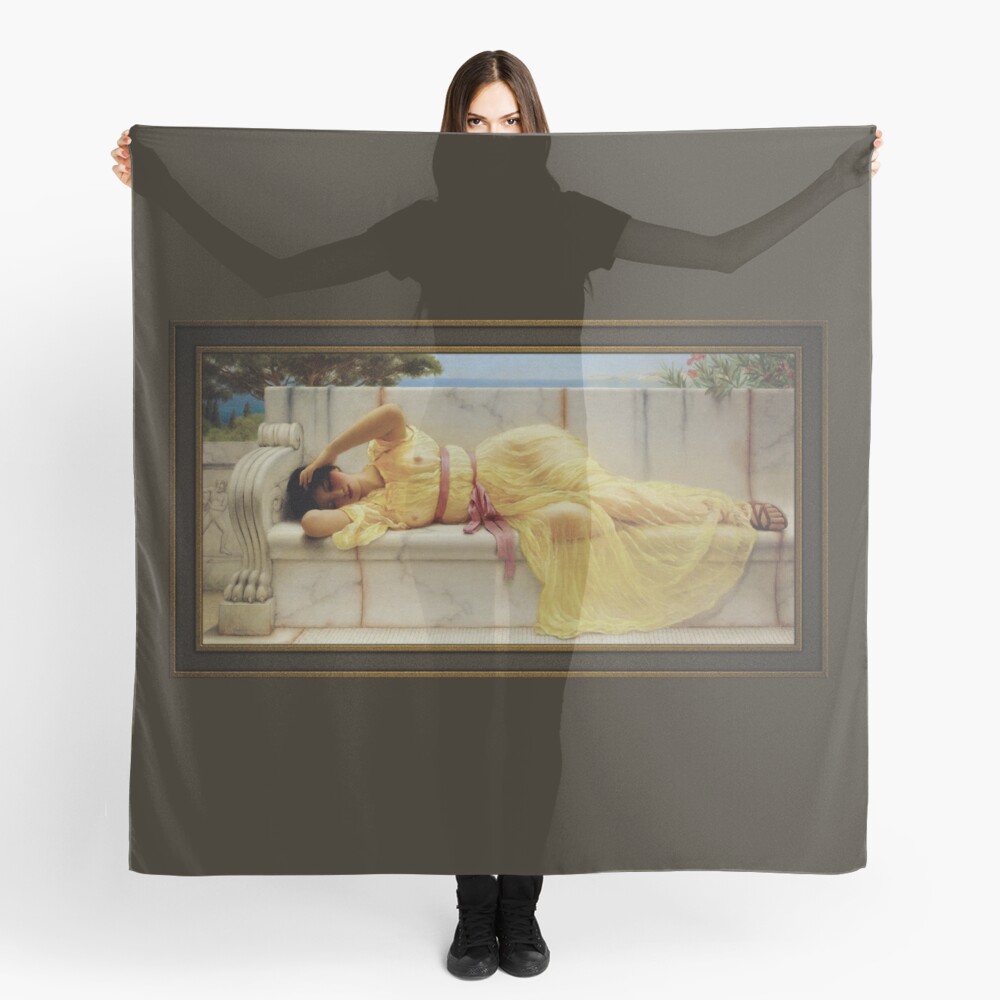
John William Godward’s “Girl in Yellow Drapery,” stworzony w 1901, presents a striking depiction of classical beauty, rendered with masterful detail. Boski, an artist known for his contributions to the Neoklasyczny styl, captured the timeless grace of the ancient world in a manner that emphasizes harmony, piękno, i spokój. Boski'S (1861 – 1922) works often reflect his deep admiration for the art of ancient Rome and Greece, blending idealized female forms with the architectural and natural elements of the classical world. His penchant for delicate color palettes, along with his skill in creating lifelike textures, is evident in this painting.

Spis treści
Główny temat: A Sleeping Figure of Serenity
At the heart of the painting is a reclining young woman draped in a soft, płynący yellow gown that contrasts gracefully against the serene landscape. ten girl’s pose suggests a moment of quiet rest, her head gently resting on her arm while her other hand lies across her forehead, seemingly shielding her eyes from the soft light.
Her physical form is captured with remarkable finesse, ją face is serene and perfectly sculpted, reflecting the idealized beauty that was a hallmark of Godward’s work. The pale yellow gown she wears is airy, almost translucent, fluttering gently around her form as if caressed by a soft breeze. The drapery, though delicate and light in color, carries with it a sense of weight and depth, a testament to the artist’s careful study of fabric and anatomy.
The Atmosphere: Tranquil and Timeless
The mood of the painting is one of tranquility, timelessness, i łaska. The figure appears to be in a state of deep repose, perhaps in the midst of a nap or daydream, untouched by the concerns of the outside world. ten softness of her drapery and the gentle pose of her body evoke an air of peaceful slumber, while the absence of any overt emotion or action leaves the viewer to experience the scene as an invitation to pause and reflect. Boski, in capturing this moment, creates a serene stillness, where time seems suspended.
The Architecture: Classical Influence
Behind the figure, the scene is framed by a classical stone bench that connects the subject to the world of ancient civilization. ten marble bench, with its slightly weathered, elegant columns and scrollwork, serves as a reminder of the classical heritage that influenced much of Godward’s work. The artist’s attention to architectural detail is remarkable, with the texture of the stone clearly articulated in the subtle shadows and light reflections. ten columns, designed in the Corinthian style, suggest an elevated cultural and intellectual world, adding to the painting’s timeless quality.
The Natural Landscape: Calm and Expansive
W tle, the viewer can see a peaceful vista that stretches out beyond the stone bench. The landscape is bathed in soft light, hinting at a horizon where the sea meets the sky. Although the colors of the sky are muted, ten expansive nature of the scene provides a sense of przestrzeń, suggesting an open, tranquil world that contrasts beautifully with the intimacy of the figure’s repose. Trees with a variety of lush greenery add to the sense of calm, their foliage subtly suggesting the warmth of an ancient Mediterranean climate.
The Medium and Technique: Fine Detail and Texture
Godward’s technical prowess is evident in the exquisite detailing of both the figure and the surrounding elements. The softness of the woman’s yellow gown contrasts with the rigid, almost tactile quality of the marble columns and bench. The use of light and shadow on the fabric emphasizes its delicate, flowing nature while the skin of the figure appears almost lifelike in its natural tone. Godward’s technique in blending light and shadow contributes to the sense of realism and depth, imbuing the work with an almost three-dimensional quality. His meticulous rendering of the textures—whether it is the smoothness of the stone, the transparency of the fabric, or the natural sheen of the skin—demonstrates his mastery of light and texture.
Godward’s Style and Themes: Classical Beauty Revisited
Styl “Girl in Yellow Drapery” embodies the core ideals of Neoklasycyzm, a movement that sought to revive the aesthetics and ideals of ancient Greece and Rome. This style is characterized by its focus on idealized beauty, smooth forms, and an emphasis on proportion and harmony. Godward’s work is deeply infused with these principles, especially in his portrayal of the female figure, which is often idealized and posed in tranquil, relaxed settings. His subjects are frequently depicted in lush landscapes or classical architectural settings, as seen in this piece. Ten obraz, zwłaszcza, encapsulates Godward’s fascination with female beauty and classical antiquity.
The theme of a reclining figure, often a symbol of both sensuality and repose, further emphasizes the artist’s commitment to creating a harmonious, serene world in his works. The image of the young woman in Godward’s painting is not merely of a sleeping figure; it is a vision of calm and perfection, disconnected from the worries of the world and set within a timeless environment. It’s an invitation for the viewer to step into a space where beauty and stillness reign.
Wniosek: The Enduring Legacy of Godward’s Work
John William Godward’s “Girl in Yellow Drapery” is a fine example of the artist’s dedication to the Neoclassical style, illustrating his skill in portraying idealized beauty and his deep admiration for classical art forms. Through the careful depiction of the figure, elementy architektoniczne, and the natural world, Godward creates a scene of serene elegance that has continued to captivate audiences long after its creation. His ability to evoke a mood of timeless peace, combined with his technical precision, ensures that this painting remains a significant work in the history of British art.
Girl in Yellow Drapery is a remastered digital art old masters reproduction of a public domain image that is available as a druk na płótnie online.
To dzieło sztuki cyfrowej, podobnie jak wszystkie dzieła sztuki, które można znaleźć na stronie internetowej Xzendor7, można kupić online w różnych formatach materiałów, w tym odbitki na płótnie, wydruki akrylowe, metalowe nadruki, druki na drewnie, wydruki w ramkach, plakaty, oraz jako zwinięte wydruki na płótnie w różnych rozmiarach od 12 cale do 72 cale w zależności od rozmiaru rzeczywistej grafiki i sklepu z drukiem na żądanie, w którym zdecydujesz się kupić sztukę.
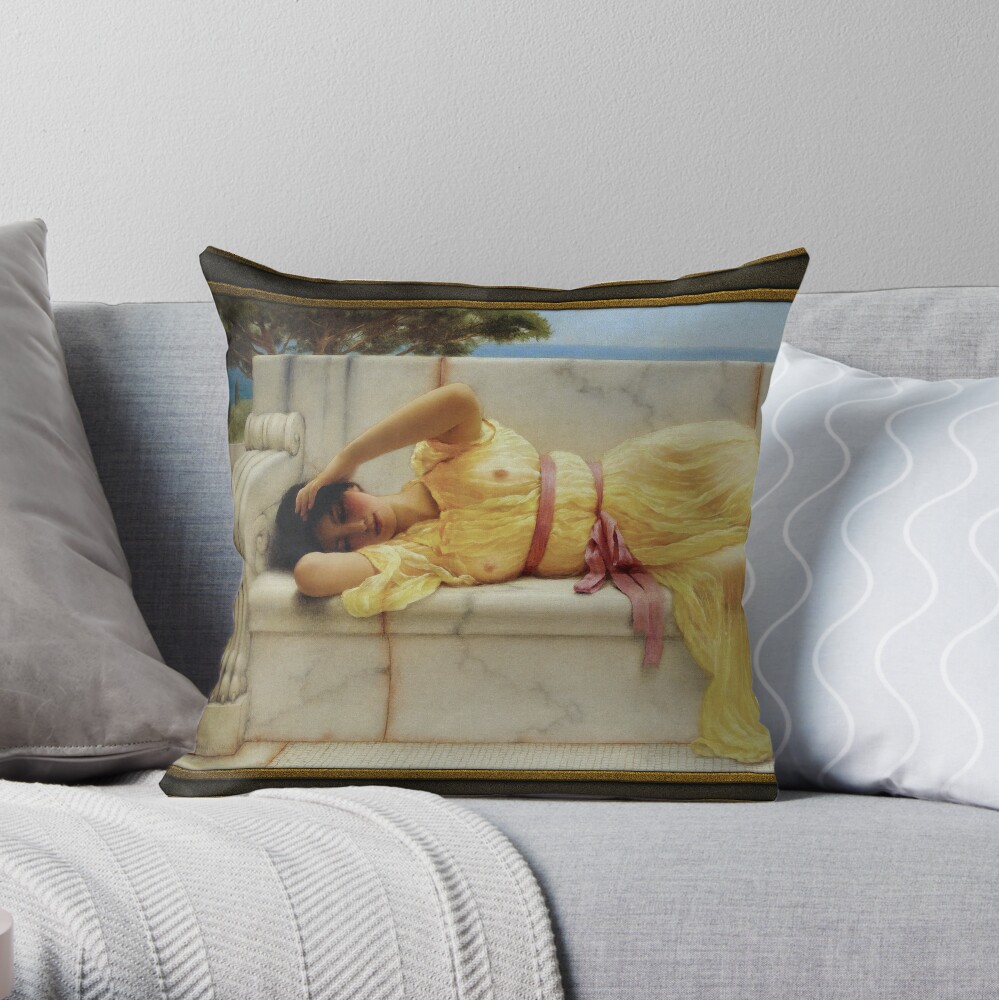
Grafika jest również dostępna na szerokiej gamie odzieży męskiej i damskiej, kubki, torby, szaliki, notesy i czasopisma oraz wiele produktów do dekoracji wnętrz.
Biografia artysty
Informacje poniżej od Wikipedia.org
John William Godward był najstarszym z pięciorga dzieci, i został nazwany na cześć swojego ojca Johna i dziadka Williama.
Wystawiał w Akademii Królewskiej od 1887. Kiedy przeprowadził się do Włoch z jedną ze swoich modelek 1912, jego rodzina zerwała z nim wszelki kontakt, a nawet wycięła jego wizerunek ze zdjęć rodzinnych. Godward powrócił do Anglii w r 1921, zmarły w 1922, i jest pochowany na cmentarzu w Brompton, Zachodni Londyn.
Jednym z jego najbardziej znanych obrazów jest Dolce far Niente (1904), który został zakupiony do kolekcji Andrew Lloyda Webbera w r 1995. Podobnie jak w przypadku kilku innych obrazów, Godward namalował więcej niż jedną wersję; w tym przypadku, wcześniej (i mniej znane) 1897 wersja z dalszym 1906 wersja.
Popełnił samobójstwo w wieku 61 i podobno napisał to w swoim liście pożegnalnym “świat nie jest na to wystarczająco duży [Zarówno] ja i Picasso”.
Jego odległa rodzina, który nie pochwalał jego zostania artystą, wstydzili się swojego samobójstwa i spalili jego dokumenty. Wiadomo, że przetrwało tylko jedno zdjęcie Godwarda.
Godward był wiktoriańskim neoklasykiem, i dlatego, W teorii, wyznawca Frederica Leightona. jednak, jest bliższy stylistycznie sir Lawrence'owi Alma-Tadema, z którym dzielił upodobanie do oddawania architektury klasycznej – w szczególności, statyczne elementy krajobrazu zbudowane z marmuru.
Zdecydowana większość zachowanych obrazów Godwarda przedstawia kobiety w klasycznych strojach, pozowane na tle krajobrazu; choć w jego twórczości znajdują się postacie półnagie i całkowicie nagie, godnym uwagi przykładem “W Tepidarium ok. 1913 r”.
A title shared with a controversial Alma-Tadema painting of the same subject that resides in the “Lady Lever Art Gallery”. Tytuły odzwierciedlają źródło inspiracji Godwarda; która była cywilizacją klasyczną, przede wszystkim starożytnego Rzymu; temat artystycznie wiążący Godwarda z Alma-Tademą.
Biorąc pod uwagę, że nauka klasyczna była bardziej rozpowszechniona wśród potencjalnych odbiorców jego obrazów za jego życia niż obecnie, skrupulatne badanie szczegółów było ważne, aby osiągnąć pozycję artysty w tym gatunku.
Alma-Tadema był archeologiem i malarzem, który odwiedzał miejsca historyczne i zbierał artefakty, które później wykorzystywał w swoich obrazach: Boski, zbyt, studiował takie szczegóły, jak architektura i ubiór, w celu zapewnienia, że jego dzieła noszą pieczęć autentyczności.
Ponadto, Godward pieczołowicie i skrupulatnie oddał inne ważne cechy na swoich obrazach, skóry zwierzęce, na których znajdują się obrazy “Odpoczynek w południe około 1910 r” i “Fajne odosobnienie c1910” zawiera przykłady takiej interpretacji, a także polne kwiaty “Nerisa ok. 1906 r” i “Letnie kwiaty ok. 1903 r”.
Pojawienie się pięknych kobiet w wystudiowanych pozach na tak wielu płótnach Godwarda powoduje, że wielu nowicjuszy w jego twórczościach błędnie klasyfikuje go jako prerafaelitę, zwłaszcza, że jego paleta jest często bardzo kolorowa. Wybór tematu (starożytna cywilizacja kontra, na przykład, Legenda arturiańska) jest właściwie wiktoriańskim neoklasycystą.
Podobnie jak wielu współczesnych mu malarzy, Godward był „marzycielem epoki wiktoriańskiej”, tworząc obrazy wyidealizowanego i romantycznego świata, zarówno w przypadku Godward, jak i Alma-Tadema, zaczęto krytykować jako światopogląd wiktoriańskich mieszkańców w togach.
Boski “quickly established a reputation for his paintings of young women in a classical setting and his ability to convey with sensitivity and technical mastery the feel of contrasting textures of flesh, marble, fur and fabrics.
Godward’s penchant for creating works of art set in the classical period probably came from the time period in which he was born; as it was the last full-scale classical revival in western paintings, that flourished in England from the 1860s up until the 1890s.