

Elegant Lady with a Bouquet of Roses
Elegant Lady with a Bouquet of Roses c~ by French Painter Emile Vernon (1872 – 1919); dy't him spesjalisearre hat yn it skilderjen fan akwarellen, mei syn haadûnderwerp froulju en bern yn heldere en kleurige plattelânsynstellingen. Hy trainde ûnder William Bouguereau en Auguste Trouphème yn 'e School of Fine Arts yn Parys Frankryk.
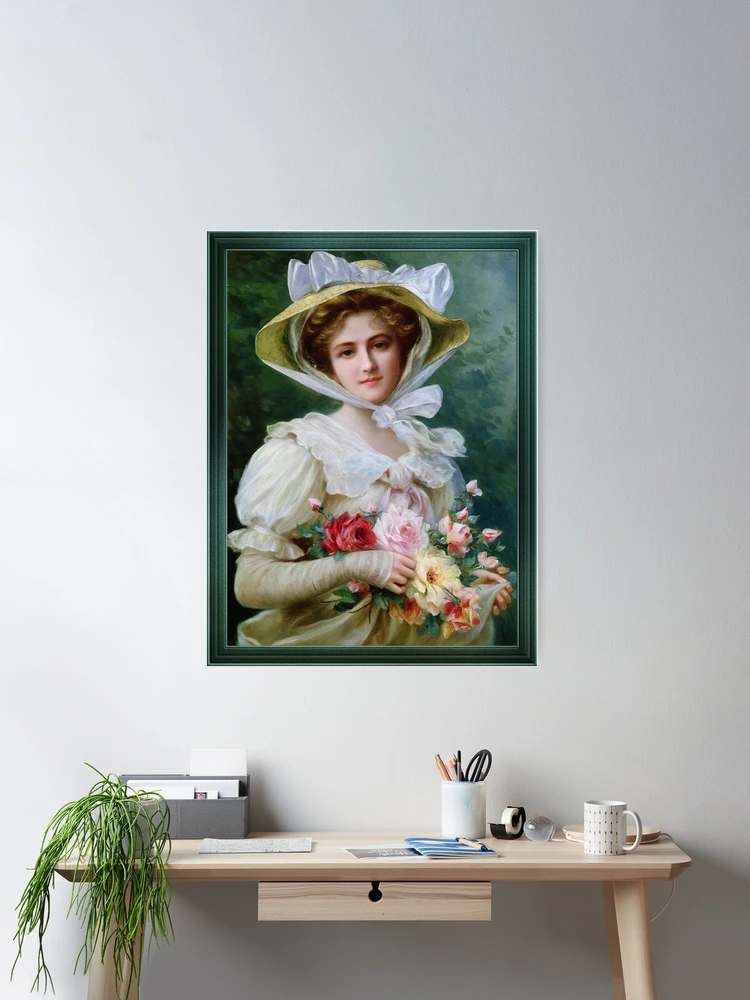
It skilderij mei de titel Lady with a Bouquet of Roses presents an elegant depiction of a young woman, evoking the charm and sophistication typical of late 19th-century French portraiture. De keunstner, known for his meticulous attention to detail, uses soft, natural lighting and vibrant color contrasts to breathe life into the subject. The painting showcases the subject against a muted yet lush green background, which not only highlights her but also enhances the serene, idyllic atmosphere typical of Vernon’s work.
The lady at the heart of the composition is presented as an embodiment of grace and femininity. She wears a soft, billowy white dress, typysk foar de moade fan it tiidrek, mei delikate ruches oan 'e halsline en mouwen dy't in touch fan romantyk tafoegje. Har klean is beskieden, mar weelderich, in tsjinstelling dy't de ferfine gefoelens fan har tiid wjerspegelet.
De jurk knuffelt sêft har foarm, flowing elegantly, en syn wite stof tsjinnet om de sêfte tinten fan har gesicht en it boeket dat se hâldt, te beklamjen. Har funksjes binne sêft en jeugdich, útstrieling fan in lucht fan stille fertrouwen en sêftens. De útdrukking fan 'e frou is serene, har lippen bûgden altyd sa'n bytsje yn in teare glimke, de sjogger útnoegje yn har wrâld fan tiidleaze genede.
Har aksessoires omfetsje in brede striehoed, fersierd mei in grut wyt lint dat har gesicht omskriuwt, it lienen fan in ekstra laach sjarme en frisheid oan it portret. De sêfte, windblown ribbons and the carefree drape of the hat evoke a sense of summer warmth, further emphasizing the peaceful, idyllic nature of the scene. The hat is positioned delicately on her head, while her tousled, golden-brown hair peeks out from beneath it, adding a sense of natural beauty. The soft texture and glossy quality of her hair are rendered with exceptional care, which enhances the overall lifelike quality of the painting.
Yn har hannen, she holds a bouquet of roses, which are both vibrant and abundant, contrasting against the delicacy of her dress. De roazen, with their rich reds, rôze, and pale yellows, provide a striking contrast to the cool greens of the background, infusing the piece with a burst of color. The roses are arranged loosely in her hands, creating a sense of harmony and elegance that further highlights her soft femininity. The floral arrangement symbolizes natural beauty, jeugd, and love, traditional themes in French portraiture from the period. The choice of roses, a symbol of romance and purity, complements the subject’s youthful, graceful appearance and adds an element of symbolic depth to the portrait.
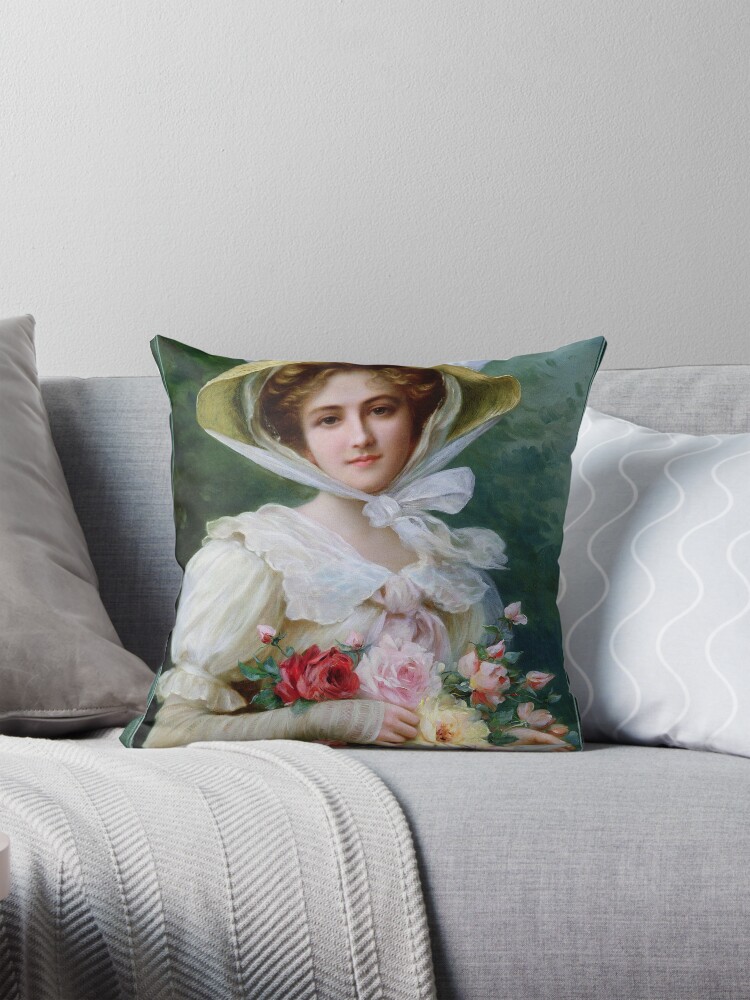
The lush background, painted in various shades of green, is subtly blurred, allowing the subject to remain the focal point. This technique of softening the background—allowing the greenery to gently merge together—enhances the sense of depth in the artwork and directs the viewer’s attention to the delicate detailing of the woman’s face and the bouquet she holds. The gentle brushstrokes and rich texture of the green backdrop suggest a secluded garden or a peaceful natural setting, further reinforcing the romantic and tranquil theme of the painting.
The overall mood of the painting is one of calm, ferfining, en nostalgy. It captures a fleeting moment of quiet elegance, evoking the gracefulness of a summer day in a bygone era. It sêfte kleurenpalet, consisting of pastel tones and earthy hues, amplifies this sense of serenity and timeless beauty. The detailed rendering of the roses, the lady’s gentle expression, and the harmonious composition contribute to the work’s sense of tranquility and charm.
Vernon’s technical mastery is evident in his rendering of light and shadow. The delicate interplay of light on the woman’s face and dress creates a sense of realism, while the soft shadows and highlights enhance the three-dimensional quality of the painting. The naturalistic treatment of texture in the woman’s skin, klaaiïng, and bouquet reveals Vernon’s expertise in capturing the tactile nature of his subjects, making the painting not only a visual experience but also an invitation to imagine the textures within the scene.
Yn termen fan styl, this artwork adheres to the traditions of French academic painting while also embracing a certain softness and romanticism that became more prevalent in the late 19th century. The use of delicate brushwork, the focus on elegance and refinement, and the emphasis on natural beauty are all hallmarks of Vernon’s approach to portraiture. It is in wjerspegeling fan 'e Frânske fassinaasje mei idealisearre skientme en natuerlike genede yn dizze perioade, in tiid dat de rokoko-ynfloeden fan de 18e iuw noch yn de keunstwrâld neiholden.
De ynstelling, de klean fan de frou, en de symboalyske oanwêzigens fan 'e roazen drage allegear by oan in skilderij dat de geast fan syn tiid ynkapselt - in tiidrek wêryn romantyk, skientme, en de natuer wiene koestere idealen. It ûnderwerp is rêstich, hast etheryske kwaliteit noeget de sjogger út om in wrâld yn te stappen dêr't dizze idealen ferivige wurde, foar altyd bewarre bleaun yn 'e libbendige fervestreken.
Dit is in retouchearre reproduksje fan âlde masters fan digitale keunst fan in ôfbylding yn it iepenbier domein.