

Esquire Calendar Girl c1946
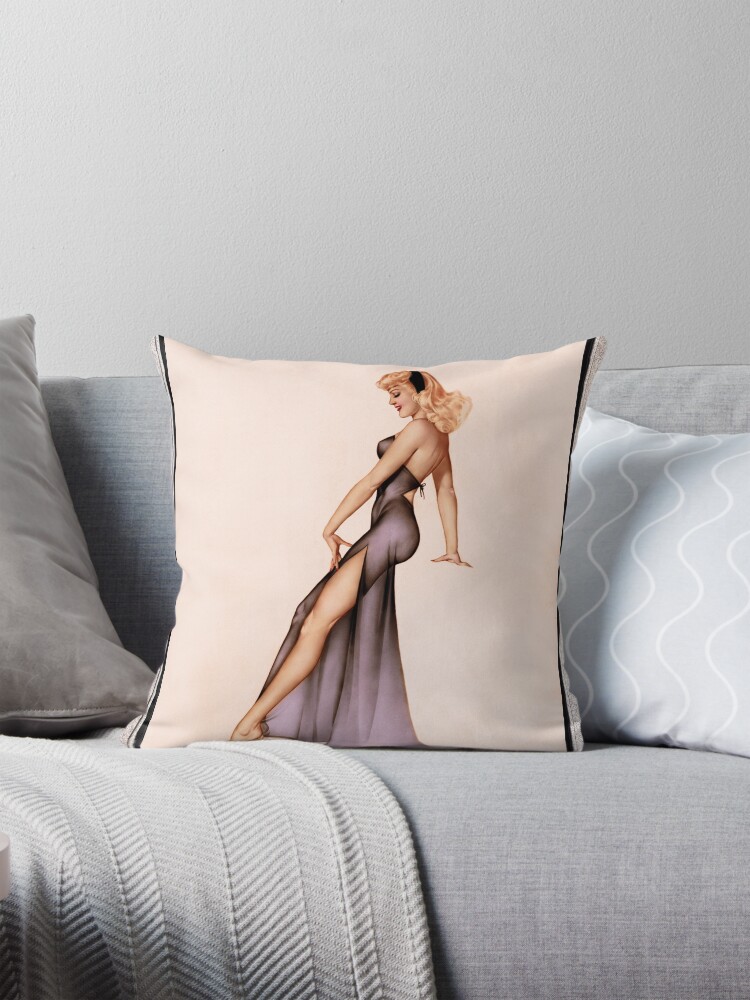
“Esquire Calendar Girl 1946” is in opfallend foarbyld fan mid-20e-ieuske pin-up keunst makke troch de ferneamde Peruaansk-Amerikaanske keunstner Alberto Vargas, waans wurken emblematysk waarden fan 'e gouden ieu fan 'e Amerikaanske yllustraasje. Berne yn 1896 en fuortgean yn 1982, Vargas waard ferneamd om syn glamoureuze ôfbyldings fan froulju dy't de geast fan it neioarlochske tiidrek boeide en ferbylde.. Dit bysûndere stik, ûntworpen foar de byldbepalende kalindersearje fan Esquire tydskrift, waard makke yn 1946 en hat ien fan de keunstner syn meast memorabele pin-up famkes, in idealisearre foarstelling fan froulike skientme en sensualiteit dy't in byldbepalend symboal fan syn tiid bliuwt.
Ynhâldsopjefte
It ûnderwerp: De Pin-Up Girl
Yn it hert fan “Esquire Calendar Girl 1946” stiet in fêste en elegante frou, sierlik posearre mei in lucht fan selsfersekering en sjarme. Se is klaaid yn in slinky, form-fitting gown made from a translucent, soft fabric that drapes smoothly over her body, creating both a sensual and sophisticated visual effect.
The gown is a muted shade of lavender that shifts to a slightly darker hue at the edges, emphasizing the woman’s curvaceous silhouette as she turns slightly to the side. De stof, though revealing, retains an aura of modesty as it is designed to highlight her graceful, feminine form rather than expose it overtly. Her delicate hand rests lightly on her waist, her fingers gently curling as though interacting with the viewer in a subtle yet intimate invitation.
Vargas’s skill in capturing the model’s curves and contours through the fluid drapery of the gown speaks to his mastery of rendering the human body in an idealized manner that is both glamorous and empowering. The woman’s face, with a serene expression, gazes downward, har sêft, blond hair styled in a voluminous, vintage wave that falls gently over her shoulders and neck. A simple black headband ties her hairstyle together, adding a touch of retro chic that aligns with the fashion of the period.
De ynstelling en komposysje
De eftergrûn fan “Esquire Calendar Girl 1946” is kept deliberately simple, allowing the woman herself to dominate the composition. The pastel pinkish hue of the backdrop serves to emphasize the cool tones of her gown while also evoking a sense of softness and tranquility. There is no discernible landscape or detailed setting behind the figure, which is a typical approach in Vargas’s pin-up work. The clean, neutral background ensures that the viewer’s focus remains on the subject, highlighting the figure’s curves and beauty in an uncluttered, almost ethereal space.
The composition is framed with a sense of balance and elegance. The model’s position creates a slight S-curve in her posture, with one hip slightly lifted and her weight shifted onto one leg, showcasing the artful way in which Vargas captures the human form in motion. The way the fabric of the gown flows, accentuating the curves of her body, is a testament to Vargas’s sensitivity to both the figure and the materials he depicted. This pin-up girl exudes confidence and allure, yet there is a sense of grace and poise that elevates her beyond mere sensuality.
Styl en technyk
Alberto Vargas’s pin-up style is characterized by smooth, precise lines and an almost photographic quality to his depictions of women. His artistic technique in this piece is grounded in traditional illustration methods, where he combined oil painting skills with fine brushwork to achieve a highly detailed, polished look. The soft gradations of color used on the woman’s skin and gown give the painting a three-dimensional depth, wylst de glêde, flawless complexion of the model’s face and body highlights the idealized beauty that Vargas was known for. The gown’s soft, almost translucent fabric is rendered with a masterful blend of light and shadow, creating a sense of movement and texture.
De ferljochting fan it skilderij is sêft en diffús, dy't wurket om it ûnderwerp te flatterjen en har froulike kromingen te markearjen. Vargas's foarsichtige gebrûk fan ljocht en skaad is benammen evident yn 'e manier wêrop de jurk en hûd it ljocht fange, útlienen fan de figuer in hast gloeiende, oare wrâldske kwaliteit. De subtyl, ljochte effekten fan 'e stof beklamje de streamende natuer fan' e jurk, wat fierder fersterket it gefoel fan elegânsje en ferfining.
De stimming fan it keunstwurk is sensueel, mar elegant, ropt op de ferfine glamour fan 'e jierren '40. Vargas syn wurk, hoewol sûnder mis sensueel, wie net fulgêr; leaver, it wie trochdrenkt mei in gefoel fan genede en romantyk, it fêstlizzen fan it froulike ideaal fan 'e tiid. De serene hâlding en de posityfe posysje fan it ûnderwerp suggerearje in stille krêft en fertrouwen, presenting a woman who is in full command of her beauty.
Moommet en tema
De stimming fan “Esquire Calendar Girl 1946” is one of gentle allure and sophistication. Posysje fan it ûnderwerp, kombinearre mei de sêfte, muted color palette, conveys a sense of quiet sensuality rather than overt sexuality. The delicate yet confident expression on her face hints at an underlying depth of character, as if she is aware of her beauty but not consumed by it. Har blik, directed slightly downward, conveys a sense of self-reflection and grace, in contrast to the more common overtly flirtatious expressions seen in pin-up art.
The theme of beauty and femininity is central to this work, reflecting the post-war desire for glamour and escapism. Yn dizze tiid, pin-up art became a symbol of a return to normalcy and a celebration of feminine allure after the hardships of the war. Vargas’s work was popular not only for its aesthetic qualities but also for how it embodied the optimism and rejuvenation of the period.
Yn “Esquire Calendar Girl 1946,” the artist encapsulates the delicate balance between sensuality and elegance, presenting a woman who is not just an object of desire but also a figure of grace and dignity. The artwork serves as a timeless representation of feminine beauty, offering viewers a glimpse into the cultural ideals of mid-century America while remaining an enduring example of Vargas’s mastery as a pin-up artist.
Esquire Calendar Girl 1946 is in retouchearre digitale keunst âlde masters reproduksje fan in byld yn it iepenbier domein.
Artist Bio From Wikipedia.org
Berne yn Arequipa, Perû, hy wie de soan fan de ferneamde Peruaanske fotograaf Max T. Wee[1] Alberto Vargas ferhuze nei de Feriene Steaten yn 1916 nei in stúdzje keunst yn Europa, Zurich, en Genève foar de Earste Wrâldkriich. Wylst er yn Jeropa wie, kaam er it Frânske tydskrift La Vie Parisienne yn 'e kunde, mei in omslach fan Raphael Kirchner, dy't neffens him in grutte ynfloed wie op syn wurk.
Syn iere karriêre yn New York omfette wurk as artyst foar de Ziegfeld Follies en foar in protte Hollywood-studio's. Ziegfeld hong syn skilderij fan Olive Thomas yn it teater, en se waard tocht as ien fan 'e ierste Vargas Girls. Wee’ meast ferneamde stik film wurk wie foar de poster fan de 1933 film The Sin of Nora Moran, dy't in hast neakene Zita Johann toant yn in pose fan wanhoop. De poster wurdt faak neamd as ien fan 'e grutste filmposters dy't ea makke binne.
Hy waard rûnom bekend makke yn 'e 1940's as de makker fan byldbepalende pin-ups út 'e Twadde Wrâldoarloch foar it tydskrift Esquire bekend as “Vargas Girls.” Tusken 1940 en 1946 Vargas produsearre 180 skilderijen foar it tydskrift.[1] De noaskeunst fan in protte Amerikaanske en Alliearde fleantugen fan 'e Twadde Wrâldoarloch waard ynspireare en oanpast fan dizze Esquire pin-ups, lykas dy fan George Petty, en oare keunstners.