

Faust’s Dream
Faust’s Dream: A Vision of Temptation in Falero’s Brushstrokes
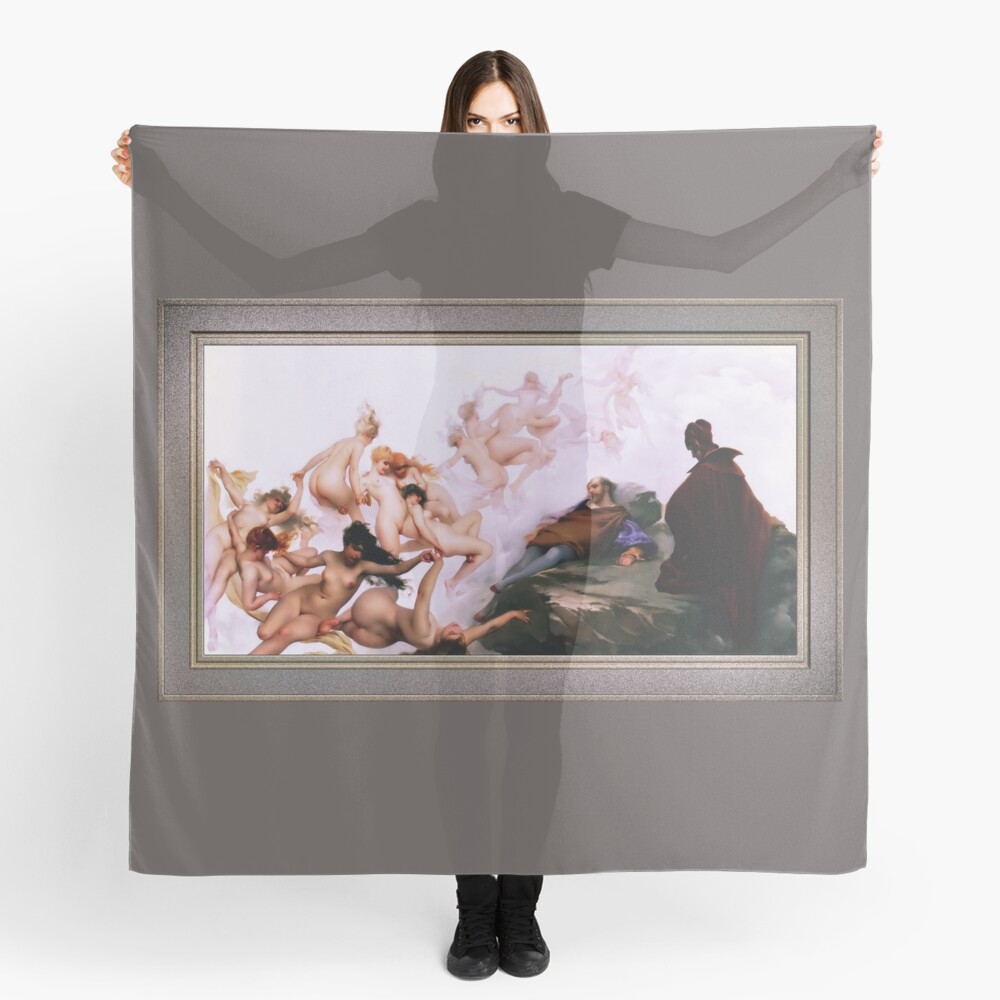
Luis Ricardo Falero’s “Faust’s Dream,” inguruan margotua 1880, is a captivating work that draws heavily from Goethe’s dramatic poem, Faust. The painting depicts a pivotal moment within the narrative – Faust’s dream sequence where he is presented with an alluring vision of sensual pleasure and fleeting beauty. Falero masterfully translates this literary concept into a visually arresting scene filled with movement, argia, and a palpable sense of yearning. This piece exemplifies the academic style prevalent in late 19th-century Spanish painting, showcasing technical skill alongside a dramatic narrative sensibility.

Edukien taula
Konposizio Egitura & Narrative Focus
The composition is dominated by two distinct zones: an ethereal upper realm populated by numerous figures and a more grounded lower section where Faust himself resides. The arrangement immediately establishes a hierarchical relationship between the dream world and the protagonist’s reality. Faust, depicted in dark robes, occupies the right foreground, his back largely to the viewer, emphasizing his passive role as an observer of this unfolding spectacle.
He is positioned on a rocky outcrop that rises from a swirling mist, creating a visual barrier between him and the dreamscape above. The figures within the dream are arranged in dynamic groupings, their bodies intertwined in poses suggesting both playful abandon and seductive allure. Efektu orokorra kaos kontrolatuarena da; a vibrant swirl of forms contained within a carefully structured frame.
Figures & Their Representation
The central focus of the painting lies with the numerous nude female figures that populate the dreamscape. They are not portrayed as individuals but rather as embodiments of sensual delight, their bodies rendered with meticulous anatomical detail and a soft, idealized beauty characteristic of academic art. Their poses range from languid reclining positions to graceful leaps and swirling dances, all contributing to the sense of movement and fleeting pleasure.
The figures are bathed in a luminous light that highlights their forms and creates an otherworldly atmosphere. Their expressions are largely ambiguous – some appear serene, others playful, but none convey a sense of individual personality or narrative depth. They function as archetypes representing temptation and ephemeral beauty.
One figure lies prone at the base of the rocky outcrop, seemingly reaching towards Faust, while others float and dance above. The arrangement suggests an invitation, a beckoning toward a world of fleeting gratification. The sheer number of figures contributes to the overwhelming nature of the dream, emphasizing its seductive power and potential for distraction from more meaningful pursuits.
Kolore Paleta & Lighting Effects
Falerok kolorearen erabilera margolanaren efektu orokorrean parte hartzen du. A predominantly warm palette – dominated by pinks, kremak, urreak, and pale blues – creates a sense of warmth and sensuality. Argiztapena dramatikoa eta antzerkia da, with strong contrasts between light and shadow that accentuate the forms of the figures and create a heightened emotional atmosphere. The dreamscape itself appears to be illuminated from within, giving it an ethereal glow that sets it apart from Faust’s more grounded reality. The dark tones of Faust’s robes further emphasize his separation from this alluring vision.
Eragin artistikoak & Estilo
“Faust’s Dream” reflects the influence of several artistic traditions. The academic style is evident in the meticulous rendering of anatomy, the idealized beauty of the figures, and the overall emphasis on technical skill. The painting also draws inspiration from classical mythology and Renaissance art, particularly in its depiction of nude figures within a fantastical setting. Falero’s work shares affinities with the works of artists like Jean-Léon Gérôme and William-Adolphe Bouguereau, who were known for their large-scale historical paintings and allegorical scenes. The dramatic lighting and swirling composition also echo the Baroque tradition, particularly the works of Peter Paul Rubens.
Exekuzio Teknikoa & Pintzelada
Falero’s technical skill is evident in every detail of the painting. The brushwork is smooth and controlled, with a focus on creating realistic textures and subtle gradations of tone. The figures are rendered with remarkable anatomical accuracy, while the background details – the rocky outcrop, the swirling mist – are painted with a delicate touch. Despite the complexity of the composition, the painting maintains a sense of visual harmony and balance. The artist’s mastery of oil paint is apparent in his ability to create luminous highlights and deep shadows that enhance the dramatic impact of the scene.
Interpretazioa & Ondarea
“Faust’s Dream” offers a compelling visual interpretation of Goethe’s exploration of human desire, temptation, eta ezagutzaren bila. The painting captures the allure of fleeting pleasure while also hinting at its potential for deception and ultimately, etsipena. Falero’s work remains an important example of late 19th-century Spanish academic art, demonstrating the artist’s technical skill and his ability to translate complex literary themes into a visually compelling narrative. It serves as a testament to the enduring power of Faustian themes in Western culture.
Artistaren bio eratorria Wikipedia.org
Falero Granadan jaio zen eta jatorriz Espainiako Armadan egin zuen karrera, baina gurasoen etsipenari utzi zion; Parisera bidaiatzea erabaki baitzuen, non artea ikasi zuen, kimika eta ingeniaritza mekanikoa.
Kimika eta ingeniaritza mekanikoko ikasketak egiten ditu; arriskutsuegitzat jo zituen berak egin behar zituen esperimentuak, horrela, arreta pinturan bakarrik zentratzera eraman zuen.
Ondorioz, Gabriel-Joseph-Marie-Augustin Ferrier frantses erretratu-margolari eta orientalistaren ikasle bihurtu zen. (1847 – 1914). Parisen ondoren, Londresera joan zen bizitzera, bertan jarraitu zituen ikasketak, eta azkenean finkatu.
Falerok astronomiarekiko interes berezia zuen eta zeruko konstelazioa sartu zuen bere lan askotan, esaterako “Kometa baten ezkontza” eta “Izar bikiak”. Astronomiarekiko interesak eta ezagutzak Camille Flammarionen lanak ilustratzera ere eraman zuten.
In 1896, bere heriotzaren urtea, Maud Harveyk aitatasunagatik auzitara eraman zuen Falero. Trajeak Falerok Harvey liluratu zuela esaten zuen hura zegoenean 17, lehenik bere etxeko neskame gisa, eta gero bere eredua. Haurdun zegoela jakin zuenean, baztertu egin zuen.
Kasua irabazi zuen eta astean bost txelin ematen zizkioten haien seme-alaben alde. Falero University College ospitalean hil zen, Londres, urterekin 45
Faust’s Dream is a retouched digital art old masters reproduction of a public domain image that is available for purchase online as a ijetzitako mihise inprimatua.