

Weiblech Portrait vun enger jonker Fra
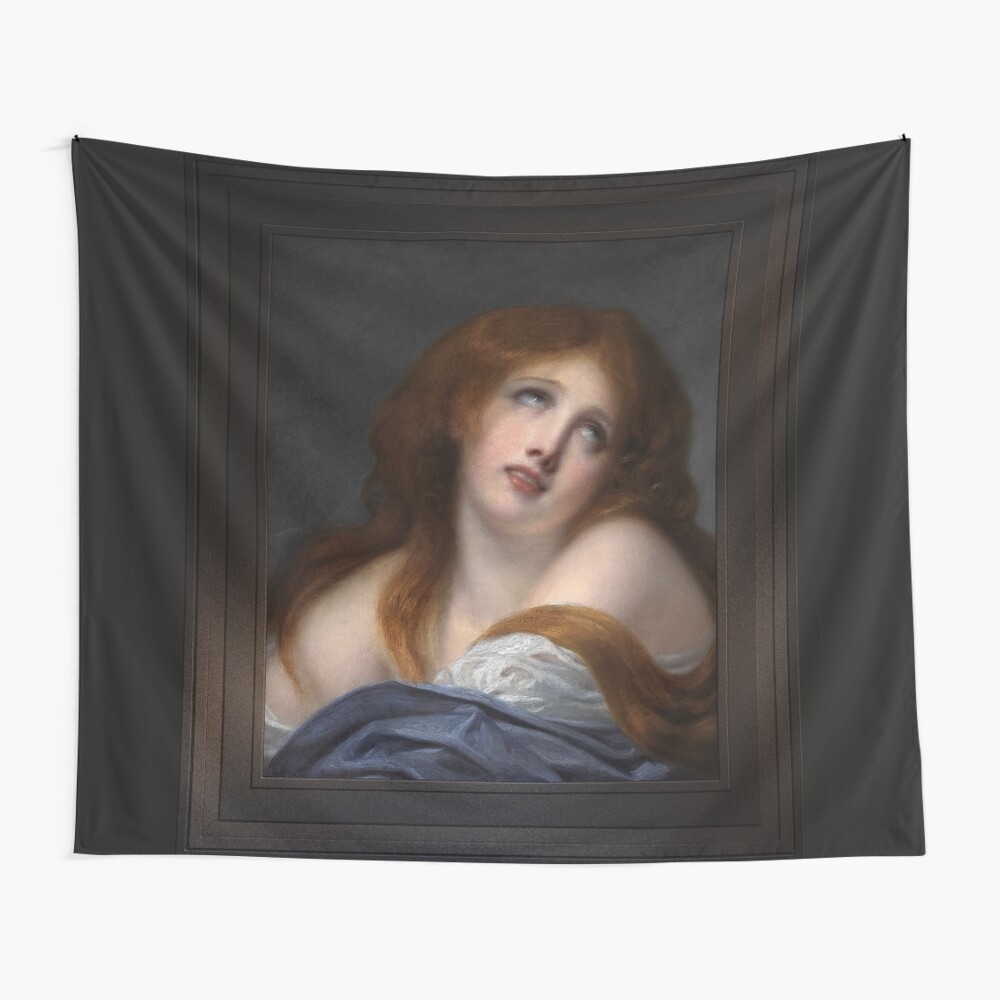
Dëst exquisite Portrait, betitelt Weiblech Portrait vun enger jonker Fra, gouf gemoolt vun Jean-Baptiste Greuze, e renomméierten franséische Moler aktiv am 18. Joerhonnert. Gebuer zu 1725 a passéiert fort 1805, De Greuze war bekannt fir seng zaarten an emotional Portraite vum mënschlechen Zoustand. Seng Aarbecht huet dacks Momenter vun déif emotional Déift ageholl, an Weiblech Portrait vun enger jonker Fra ass en erstaunlech Beispill vun dësem. D'Thema vum Portrait, eng jonk Fra, schéngt mat hirem Kapp liicht gekippt, no uewen kucken mat engem melancholeschen Ausdrock deen e komplexen emotionalen Zoustand schéngt ze verkierperen.
Inhaltsverzeechnes
Styl an Technik
Dem Greuze säi Stil ass eng Mëschung aus Rokoko Eleganz an déi opkomende neoklassizistesch Trends vu senger Zäit. Déi delikat Pinselwierk an dësem Bild, zesumme mat der subtiler Notzung vu Liicht a Schied, beliicht seng Meeschterleeschtung vum Chiaroscuro, eng Technik déi mat Kontraster tëscht hell an donkel spillt fir e Gefill vun Déift a Volumen ze kreéieren. Der mëller, bal ätheresch Rendering vun der Fra hir Haut an déi luxuriéis Stofffolden ëm hir Schëlleren si charakteristesch fir dem Greuze seng raffinéiert Approche zu Portraiten. Sengem Choix vun engem gedämpft, donkelen Hannergrond verbessert d'Liichtqualitéit vun der Figur weider, konzentréieren all Opmierksamkeet op déi delikat Charakteristiken a graziéis Haltung vun der Fra.
D'Benotzung vum Kënschtler vum Liicht déngt net nëmmen fir d'Figur ze modelléieren, awer och fir déi emotional Intensitéit vum Sujet ze ënnersträichen. De Wee wéi d'Liicht d'Haut vum Sujet sanft stéiert, besonnesch hiert Gesiicht an d'Schëller, füügt eng Schicht vun Zärtheet a Schwachstelle un de Portrait. Dës Technik gëtt dacks am Greuze sengem Wierk gesinn, where light symbolizes emotional clarity, Onschëlleg, or purity.
Thema a Stëmmung
The young woman depicted in the painting appears to be lost in thought, her expression caught in a moment of contemplation or introspection. Hir Ae, slightly upturned, are soft and gazing into the distance, which could suggest a longing, a moment of pensive reflection, or even a quiet sorrow. Déi mëll Kéiren vun hirem Gesiicht, illuminated by the light, evoke a sense of fragility and grace, enhancing the feeling of emotional vulnerability. The woman’s slightly parted lips further add to her contemplative expression, as if she is on the verge of speaking but chooses instead to remain silent.
The mood of the painting can be interpreted as both serene and wistful. There is a subtle melancholy to the woman’s gaze, a suggestion of something unspoken. D'emotional Déift vum Portrait ass charakteristesch fir dem Greuze säi Wierk, déi dacks Themen vun der Tugend exploréiert hunn, emotional Onrou, a mënschlech Verbindung. Am Géigesaz zu méi formelle Portraite vun der Zäit, déi sech op déi baussenzeg Groussheet an Adel vum Thema konzentréiert hunn, Dëse Portrait verdreift an d'Bannenwelt vun der Figur, den Zuschauer invitéieren d'Gedanken an d'Emotiounen virzestellen, déi hannert dem mëllen Bléck leien.
Objeten a Materialien
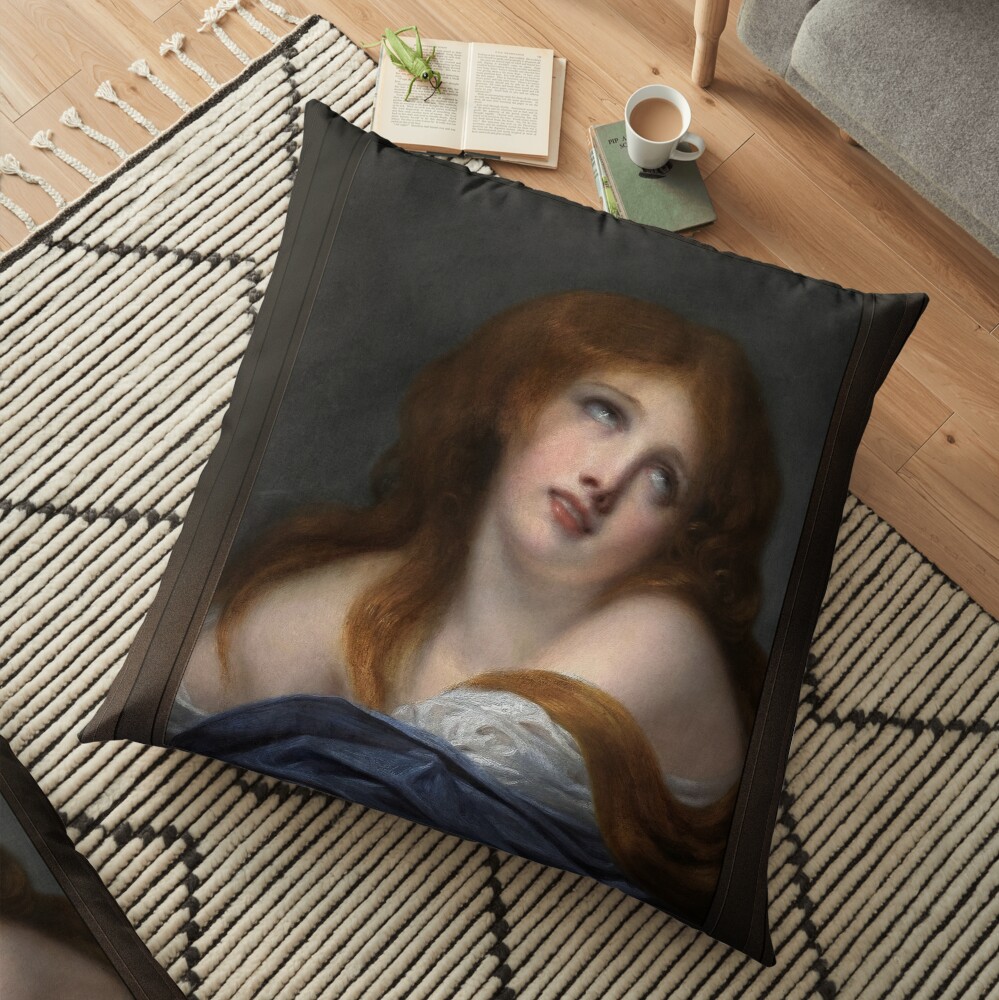
De primäre Fokus vum Bild ass, natierlech, déi jonk Fra selwer, mee d'Objeten ronderëm si spillen och eng bedeitend Roll fir d'Stëmmung an de Kontext vum Portrait ze vermëttelen. De Stoff ass ëm hir Schëlleren drappt, méiglecherweis Satin oder Seid, proposéiert e Gefill vun aristokratescher Eleganz. D'Falten vum Stoff ginn suergfälteg gemaach, all Kéier a Knascht mat grousser Präzisioun erfaasst, Textur an Déift an d'Bild bäizefügen. The soft interplay of light on the fabric contrasts with the smoothness of her skin, further enhancing the contrast between her delicate figure and the luxurious materials she is draped in.
While the background is dark and unadorned, serving to accentuate the figure, the overall effect of the composition feels balanced. The simplicity of the background and the focus on the woman’s features suggest that she is the subject of utmost importance, both in terms of emotional significance and personal identity.
Faarfpalette
The color palette employed by Greuze is restrained but harmonious, mat mëll, muted tones that emphasize the delicate nature of the portrait. The colors of the fabric, a deep blue or grey, provide a subtle contrast to the pale complexion of the subject. The combination of blue and white gives the portrait an air of calm and tranquility, while the faint touches of warmth in the woman’s hair and skin tone create a sense of life and vitality. The careful application of these colors allows the subject to appear as if she is gently illuminated by a soft, natierlech Luucht, giving the painting an almost lifelike presence.
Conclusioun
Jean-Baptiste Greuze’s Female Portrait is a testament to his ability to capture the emotional subtleties of his subjects, conveying not just their physical likeness but also the deeper currents of their inner worlds. The delicate rendering of the subject, the serene but melancholic expression, an déi mëll, evocative use of light and shadow all work together to create a timeless piece of art that transcends the moment of its creation. D'Stëmmung vum Bild, suffused with a quiet sadness and introspection, invites the viewer to pause and reflect on the emotional complexities of the human experience. Greuze’s ability to infuse his portraits with such emotional depth makes this work a stunning example of 18th-century French portraiture.
Dëst ass eng remastered digital Konscht al Master Reproduktioun vun engem Public Domain Bild dat als Canvas Print online verfügbar ass.
Dës digital Konscht Kreatioun, wéi mat all de Konschtwierker, déi op der Xzendor7 Websäit fonnt kënne ginn, ass online a verschiddene Materialformater ze kafen, dorënner Canvas Prints, acryl Prints, Metallofdréck, Holzdrécker, cadréiert Printen, Plakater, a wéi gewalzt Canvas Printen a ville Gréissten vun 12 Zoll zu 72 Zoll ofhängeg vun der Gréisst vum aktuellen Konschtwierk an dem Print-on-Demande Buttek vun deem Dir gewielt hutt d'Konscht ze kafen.
D'Konschtwierk ass och op eng breet Palette vu Männer- a Fraekleedung verfügbar, Becher, totes, Schal, Notizbicher an Zäitschrëften a vill Heemdekoratiounsprodukter.
Iwwer de Kënschtler
Déi ënnescht Informatioun ass ofgeleet vu NGA.gov
De Jean gouf zu Tournus gebuer, Frankräich an 1725 als sechste Jong vun engem Meeschter-Tier, deen säin Talent ganz fréi erkannt huet; hien op Lyon geschéckt, Frankräich fir mam franséische Porträtmoler Charles Grandon ze studéieren (1691 – 1762).
Am Alter vun ongeféier 30 hien huet Lyon verlooss, an op Paräis gereest, Frankräich fir an der Académie royale de peinture et de sculpture oder der Royal Academy of Painture and Sculpture ze studéieren; déi zu där Zäit déi éischt Konschtinstitutioun vu Frankräich am leschten Deel vum Ancien Régime war (Alt Regiem ~1500 bis 1789), bis et ofgeschaaft gouf an 1793 während der franséischer Revolutioun.
Och wann héich talentéiert a ganz erfollegräich an de 1760er an 1770er Joren, mat Patréiner vun der Marquise de Pompadour (1721 – 1764), Keeserin Catherine II vu Russland (r. 1762 – 1796), an den Ange Laurent vu La Live de Jully (1725 – 1779); seng rebellesch Natur a Konflikter mat Akademie a Salon Beamten géif beweisen sengem Ongléck gin; besonnesch no sengem Bestietnes mat Anne Marie Babuty an 1759; wat fir hien eng Katastroph wier, wéi si bekannt war fir verschidde Affären mat senge Studenten a Sitter ze hunn, wat him Akommesverloscht an ëffentlech Vernedering verursaacht huet.
Wann d'Bestietnes eriwwer ass 34 Joer méi spéit krut seng Fra eng substantiell Siidlung, déi him an schlëmmen finanzielle Sträich hannerlooss a vun der Zäit vu sengem Doud an 1805 am Alter vun 80 hie war bal gebrach.