

The Innocent Swan (הברבור; חפות מפשע)
“The Innocent Swan (הברבור; חפות מפשע)” היא יצירה יוצאת דופן שנוצרה על ידי אליזבת סונרל (1874 – 1953), ב 1905, encapsulating the graceful and serene qualities associated with the Symbolist movement that defined much of the late 19th and early 20th centuries. נוֹלָד בְּ 1874 ועובר רחוק 1953, Sonrel was a French artist whose works often blended the ethereal and the earthly, producing dreamlike scenes that were deeply influenced by mythology and the natural world. This specific piece, infused with both tranquility and delicate beauty, perfectly exemplifies Sonrel’s ability to combine the elegance of natural forms with symbolic richness.
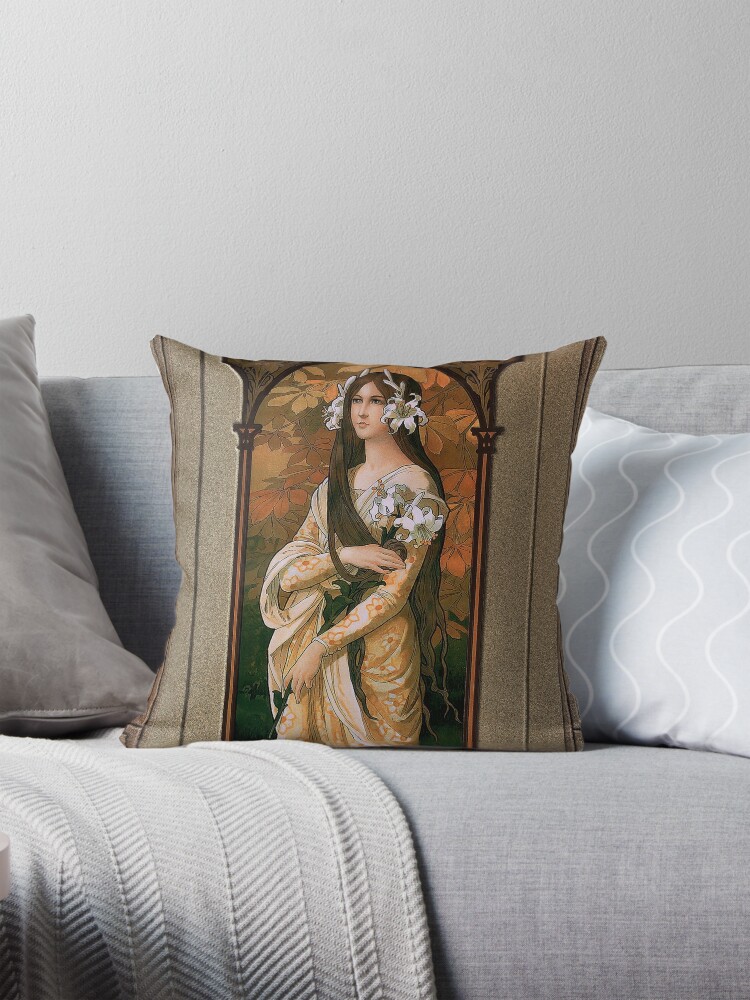
The central figure of the painting is a young woman dressed in an opulent yellow gown adorned with soft floral patterns. Her long brown hair cascades past her shoulders, entwined with white lilies that give her a pure and almost mystical appearance. She stands in a calm, poised stance with a swan at her feet, symbolizing the innocence and grace attributed to both the bird and the figure she represents. The soft rendering of her face, with an expression of contemplation, invites the viewer to ponder her thoughts while gazing upon the tranquil setting that surrounds her.
תוכן העניינים
Composition and Surroundings
The composition of the painting is characterized by a harmonious blend of the natural and the human, with the figure of the woman placed in a vertical format that emphasizes the elongated style of the subject. She is situated against a lush, verdant background, where delicate autumn leaves in shades of orange, זָהָב, and green suggest the time of year and create a backdrop that contrasts beautifully with the pale, luminous gown she wears. The subtle inclusion of the swan further elevates the symbolic aspect of the work, as swans are traditionally linked with themes of purity, תְמִימוּת, ויופי, reinforcing the title of the piece.
The swan, which rests at the woman’s feet, seems to mirror her own graceful posture. Its neck curves delicately, almost as if echoing the lines of her figure. This visual connection between the human and the bird further deepens the symbolism of the painting, suggesting a harmonious relationship between humanity and nature. The swan’s white feathers reflect the woman’s innocence, offering a serene presence that balances the vibrancy of the autumn leaves in the background.
לוח צבעים וטכניקה
Sonrel’s use of color is one of the most striking aspects of the painting. The soft pastel tones of the yellow gown are balanced by the earthier tones of the foliage behind the figure, creating a warm and inviting ambiance. The yellows, זהב, and subtle greens of the dress blend with the oranges and reds of the autumn leaves, evoking a sense of calm serenity that is further reflected in the softness of the background. The subdued hues work together to draw attention to the figure of the woman, allowing her to remain the focal point of the piece.
The technique employed by Sonrel showcases her skill in using soft brushstrokes and a gentle application of light and shadow. עבודת המכחול, though precise, retains an air of fluidity that enhances the overall delicacy of the scene. There is an almost translucent quality to the woman’s skin, suggesting her ethereal nature, while the details in the gown, פרחים, and leaves are rendered with a subtle yet deliberate attention to texture and form. This blending of realism with a dreamy, almost otherworldly quality is characteristic of Sonrel’s approach to painting.
Symbolism and Meaning
The swan in “The Innocent Swan” is not just a decorative element, but rather a powerful symbol. In various cultures, the swan is associated with purity, טרנספורמציה, והאלוהי. In Greek mythology, לדוגמה, swans were often connected to gods and goddesses, embodying both grace and the higher realms of beauty. כאן, the swan’s purity is reflected in the figure of the young woman, who is portrayed with an expression of innocence and calm. The lily flowers, which intertwine with her hair, further reinforce this symbolism of purity and innocence.
The combination of the woman’s serene posture, the swan’s graceful presence, and the natural elements around them creates a timeless scene of tranquility, emphasizing the connection between humanity and nature. The autumnal setting could be seen as a representation of the fleeting nature of innocence and beauty, reminding the viewer of the transient moments in life. The gentle curve of the woman’s figure and the soft tones of the piece give the painting a nostalgic quality, evoking a sense of longing for a simpler, purer time.
סגנון והשפעה אמנותית
“The Innocent Swan” is a prime example of the Symbolist style, which was marked by an emphasis on emotions, the imagination, and an exploration of the mystical and metaphysical realms. Sonrel’s work is deeply embedded in this tradition, capturing moments that evoke a sense of reverie and contemplation. The fine lines, תשומת לב לפרטים, and use of symbolic imagery also tie her work to the Art Nouveau movement, which was flourishing in France during her time. The floral motifs, קווים זורמים, and organic forms in the painting align it with the decorative and ornamental elements that defined Art Nouveau.
In terms of mood, the painting exudes a quiet, peaceful atmosphere, filled with an air of timeless grace. The subject’s expression, the soft light, and the harmonious relationship between the figure and the swan all contribute to a sense of calm and purity. It is a work that encourages the viewer to pause, to appreciate the subtle beauty of the scene, and to reflect on the deeper symbolism that lies beneath the surface.
מַסְקָנָה
ב “The Innocent Swan (הברבור; חפות מפשע),” Élisabeth Sonrel captures the delicate beauty of innocence through the portrayal of a young woman in a serene, dreamlike setting. The careful composition, combined with the symbolic imagery of the swan and the soft palette, creates a work that is both visually captivating and emotionally resonant. Through her meticulous rendering of natural forms and the symbolic interplay between the human and the animal, Sonrel invites the viewer into a world of tranquil reverie, where innocence, טוֹהַר, and beauty are forever preserved in time.
The Innocent Swan (הברבור; חפות מפשע) מאת צייר צרפתי אליזבת סונרל (1874 – 1953); ומאייר בסגנון הארט נובו; מי עבודותיו כללו נושאים אלגוריים, מיסטיקה וסמליות, דיוקנאות ונופים.
The Innocent Swan is a retouched digital art old masters reproduction of a public domain image.
יצירת אמנות דיגיטלית זו, כמו כל יצירות האמנות שניתן למצוא באתר Xzendor7 זמין לרכישה אונליין במגוון פורמטים חומריים כולל הדפסי קנבס, הדפסי אקריליק, הדפסי מתכת, הדפסי עץ, הדפסים ממוסגרים, עמוד הבית של Xzendor7, וכהדפסי קנבס מגולגלים במגוון גדלים מ 12 אינצ'ים ל 72 אינצ'ים בהתאם לגודל הגרפיקה בפועל ולחנות ההדפסה לפי דרישה ממנה תבחר לקנות את האמנות.
יצירות האמנות זמינות גם במגוון רחב של בגדי גברים ונשים, ספלים, טוטס, צעיפים, מחברות ויומנים ומוצרי עיצוב לבית רבים.
ביו אמן
מידע למטה באדיבות Wikipedia.org
אליזבת סונרל (1874 סיורים - 1953 כלבי ים) היה צייר ומאייר צרפתי בסגנון אר -נובו. עבודותיה כללו נושאים אלגוריים, מיסטיקה וסמליות, דיוקנאות ונופים.
היא הייתה בתו של ניקולא סטפן סונרל, צייר מטורס, וקיבלה ממנו את ההכשרה המוקדמת שלה. להמשך לימודיה המשיכה לפריז כסטודנטית של ז'ול לפבר בבית הספר לאמנויות.
ב 1892 היא ציירה את עבודות הדיפלומה שלה, 'Pax et Labor', יצירה שניתן לראות במוזיאון לאמנויות דה טורס. מכאן ואילך הציגה בסלון דה ארטס פרנסאי בין 1893 ו 1941, יצירות החתימה שלה הן צבעי מים גדולים באופן טרום רפאלי, אותו אימצה לאחר טיול בפירנצה ורומא, לגלות את ציירי הרנסנס – חלק מעבודותיה בעלות צללים ברורים של בוטיצ'לי. הציורים שלה היו לעתים קרובות בהשראת רומנטיקה ארתורית, הקומדיה האלוהית של דנטה אליגיירי’ ו"החיים החדשים ", נושאים מקראיים, ואגדות מימי הביניים. עבודותיה המיסטיות כוללות את 'איימס errantes'’ (סלון של 1894) ו'רוחות התהום '’ (סלון של 1899) ו"צעירה עם השטיח ".
ב- Universelle התערוכה של 1900, הנושא העיקרי שלו היה ארט נובו, שֶׁלָה 1895 ציור "שנת הבתולה"’ (שינה של הבתולה), זכתה במדליית ארד, ופרס אנרי להמן של 3000 פרנק על ידי האקדמיה לאמנויות יפות.[3] מ 1900 ואילך הגבילה את ציוריה לדיוקנאות, נופי בריטני מרהיבים, ומחקר פרחים מדי פעם.
היא ערכה טיולי ציור קבועים לבריטני, בהשראת היער ברוסליאנדה, ומ 1910 למקומות שונים בחוף כגון קונקרנו, פלוגסטל, Pont-l'Abbé ו- Loctudy, מתארחים לעתים קרובות בפונדקים ומלווים על ידי סטודנט אחד או שניים. היא ציירה מספר עבודות בלה פאואה לפני שבנתה וילה בלה באולה בשנות השלושים. עובד בעיקר בצבעי מים וגואש, היא גילתה היצע מוכן של דוגמניות בקרב נערות צעירות באזור, ומצאו שברטונים בדרך כלל ידידותיים, כנה ובטוחה בעצמה.
התערוכה האחרונה שלה בסלון הייתה ב 1941 בגיל 67. יש גם תיעוד שהיא הציגה בליברפול. בשנותיה הראשונות ייצרה סונר כרזות, גלויות ואיורים, בסגנון ארט נובו.