

Vue de l'église de Sloten en hiver – Vue de l'église de Sloten en hiver
Vue de l'église de Sloten en hiver (Vue de l'église de Sloten en hiver), créé autour 1640 à 1666 par Rue Jan Abrahamsz Beerstraaten (1622 – 1666), a Dutch Golden Age painter, is renowned for his remarkable winter landscapes that capture the essence of the season with vibrant realism. Dans ce tableau, Beerstraaten demonstrates his mastery of light, ombre, and atmosphere, immersing the viewer in the stark beauty of a frozen Dutch landscape. Ce travail, which perfectly embodies the cold, crisp winter day, also captures the activity and life that existed in these harsh conditions, offering a stunning snapshot of daily life during the 17th century.
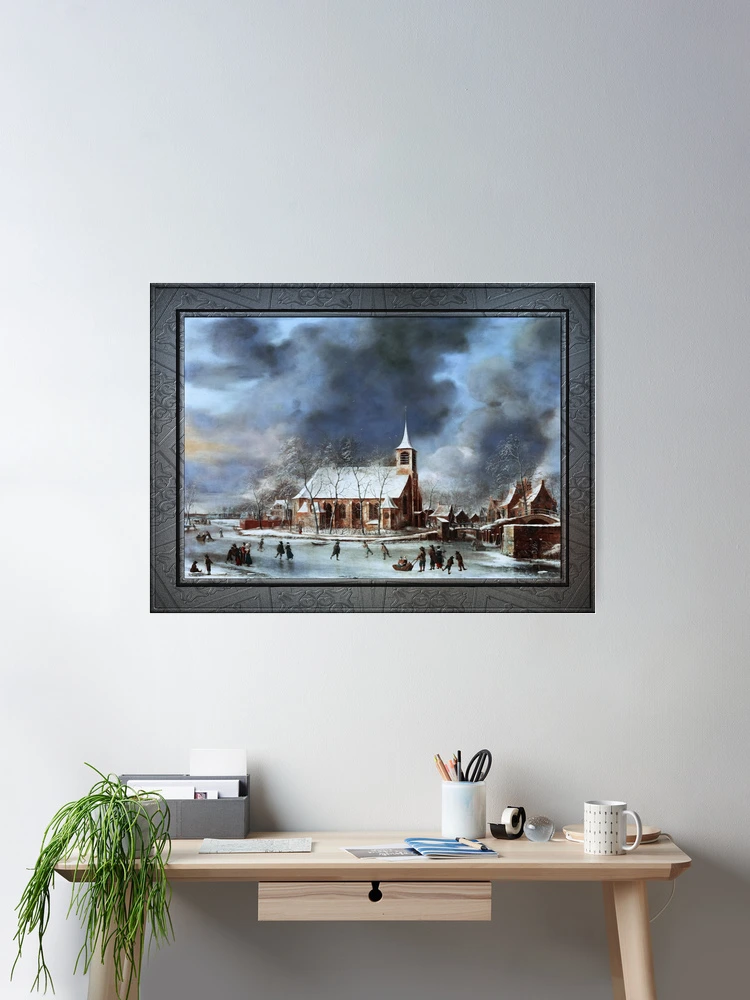
Table des matières
The Church and Architecture
At the heart of this composition is the church, a central feature in the village of Sloten. Beerstraaten positions the building slightly to the left of the frame, allowing it to anchor the composition while giving plenty of space to the surrounding natural landscape.
The church’s distinct steeple rises above the snow-covered rooftops, its architecture typical of the Dutch Renaissance, with red brick walls that contrast sharply with the wintry white surroundings. The church serves as both a physical and cultural landmark, symbolizing the enduring presence of faith and community in a rural Dutch town.
The small houses and structures scattered around the church suggest a quiet, self-sufficient settlement, typique de l'époque. Each building is covered in a thick blanket of snow, lending the scene a peaceful, almost serene quality despite the biting cold.
Winter Activity and Figures
Au premier plan, Beerstraaten fills the icy scene with life. The frozen waterway serves as a gathering place for the villagers, who are depicted skating, walking, and engaging in various activities. Some figures glide across the ice gracefully on skates, while others push sleds laden with goods.
Their clothing, heavy and layered, includes fur-lined coats, Chapeaux, et des bottes, indicating the frigid temperatures. The painter captures the subtle interaction between the figures and the landscape, with careful attention to how their bodies move through the snow and ice.
The lively scene is a testament to the resilience of the Dutch people, qui, despite the harsh winter conditions, continue with their daily routines. Les chiffres, although small in scale, add a sense of realism to the painting, reminding the viewer that winter was both a challenge and an opportunity for recreation and commerce.
The Frozen Landscape and Light
Beerstraaten’s treatment of light and shadow in this painting is nothing short of extraordinary. The bright white snow, which blankets the ground and coats the buildings, reflects the dim winter sunlight, créer un doux, almost ethereal glow throughout the scene. Le ciel, which is filled with dense, nuages tourbillonnants, suggests that the weather is both dynamic and unpredictable.
There are moments of light breaking through the clouds, casting brief illuminations on parts of the scene, such as the rooftops or the skaters below. The juxtaposition of light and shadow contributes to the painting’s mood, creating an atmosphere of both tranquility and tension. The dark clouds overhead imply that a storm may be approaching, yet the activity of the villagers continues unabated.
Composition et style
Beerstraaten’s style is characterized by a meticulous attention to detail, especially in his rendering of textures. The snow is not just a uniform white mass but is painted with delicate gradations of light and shadow that suggest the varied texture of freshly fallen snow. The ice on the frozen canal is similarly detailed, with patches of darker shadows indicating areas of wear, where the skaters have glided.
The surrounding trees, their branches bare and etched in sharp lines against the sky, add to the starkness of the winter scene. Beerstraaten’s use of atmospheric perspective further enhances the depth of the painting, drawing the viewer’s eye from the foreground to the distant horizon.
En termes de composition, the balance between the church, the village, and the people is carefully maintained. Beerstraaten does not allow any single element to dominate the scene; plutôt, he allows each part of the painting to contribute to the overall sense of harmony. The icy landscape, avec son doux, muted colors, is contrasted with the more solid forms of the church and the figures. The church acts as a point of rest for the eye, giving the viewer a place to pause amidst the visual busyness of the figures and the swirling clouds above.
Ambiance et thème
L'ambiance de Vue de l'église de Sloten en hiver is one of quiet reflection. Despite the activity taking place on the ice and the heavy clouds above, the scene feels serene and contemplative. The villagers move with purpose, but their interactions with the environment seem harmonious, as if the cold is simply a natural part of life to be accepted.
The muted colors of the sky and the reflective quality of the snow create a subdued, almost melancholic tone, yet there is also a sense of life and vitality. Beerstraaten encapsulates the essence of winter in the Netherlands, where the season is harsh but not without its moments of beauty and liveliness. The work speaks to the resilience of the human spirit, the coexistence of community with the natural world, and the unbroken continuity of life despite seasonal hardships.
Conclusion
Jan Abrahamsz Beerstraaten's Vue de l'église de Sloten en hiver is a masterful depiction of a Dutch winter landscape that captures both the harshness and beauty of the season. Through his careful rendering of the architecture, chiffres, and icy terrain, Beerstraaten creates a scene that is at once lively and tranquil, cold yet warm with human activity. The painting stands as a testament to his skill as a landscapist and his ability to convey the timeless rhythm of daily life, even in the most challenging of environments.
Il s'agit d'une reproduction de maîtres anciens d'art numérique retouchée d'une image du domaine public.
Cette création d'art numérique, comme toutes les œuvres d'art disponibles sur le site Web Xzendor7, elles sont disponibles à l'achat en ligne dans une variété de formats de matériaux, y compris des impressions sur toile., impressions acryliques, impressions métalliques, gravures sur bois, impressions encadrées, affiches, et sous forme d'impressions sur toile roulées dans une variété de tailles de 12 pouces à 72 pouces en fonction de la taille de l'œuvre d'art réelle et de la boutique d'impression à la demande auprès de laquelle vous choisissez d'acheter l'art.
L’œuvre d’art est également disponible sur une large gamme de vêtements pour hommes et femmes., tasses, fourre-tout, écharpes, cahiers et journaux et de nombreux produits de décoration intérieure.
À propos de l'artiste
Ci-dessous Info Courtoisie Wikipedia.org
Il y a une certaine confusion sur l'identité de quatre peintres paysagistes nommés Beerstraaten; Johannes, ce Jan Abrahamsz, Abraham, et Antoine. Jan Abrahamsz, peintre, marié à Amsterdam le 30 août 1642.
De ce mariage sont nés onze enfants, et quand il s'est marié une deuxième fois en 1665, une fille est née. Actuellement, Le RKD enregistre Johannes comme la même personne, et Abraham Beerstraaten est considéré comme son fils aîné.
Anthonie Beerstraaten était apparenté à ce peintre. Le RKD a enregistré deux tableaux signés Anthonie van Beerstraten: l'une est une vue d'un port maritime du sud depuis 1664 (emplacement actuel Enkhuizen) et l'autre une vue d'une église à Aarlanderveen dans l'ancien hôtel de ville d'Alphen aan den Rijn. Sur la base de ces deux peintures C.
Hofstede de Groot, un des premiers historiens de l'art néerlandais, tableaux classés signés A. Beerstraaten comme par Anthonie s'ils étaient moins bons que ceux déjà attribués à Abraham.