

Girl in Yellow Drapery
John William Godward’s “Girl in Yellow Drapery,” erstallt an 1901, presents a striking depiction of classical beauty, rendered with masterful detail. Godward, an artist known for his contributions to the Neoklassesch style, captured the timeless grace of the ancient world in a manner that emphasizes harmony, Schéinheet, a Rou. Godward'S (1861 – 1922) works often reflect his deep admiration for the art of ancient Rome and Greece, blending idealized female forms with the architectural and natural elements of the classical world. His penchant for delicate color palettes, along with his skill in creating lifelike textures, is evident in this painting.

Inhaltsverzeechnes
D'Haaptthema: A Sleeping Figure of Serenity
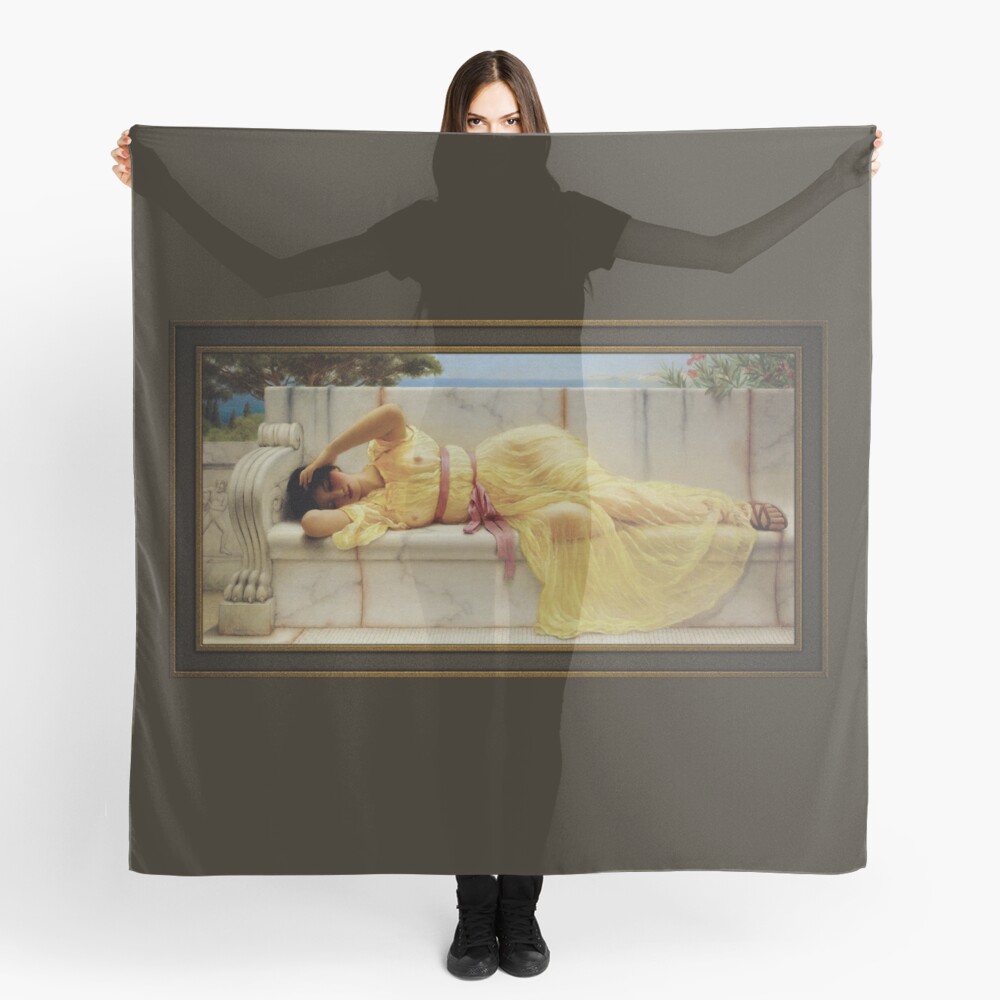
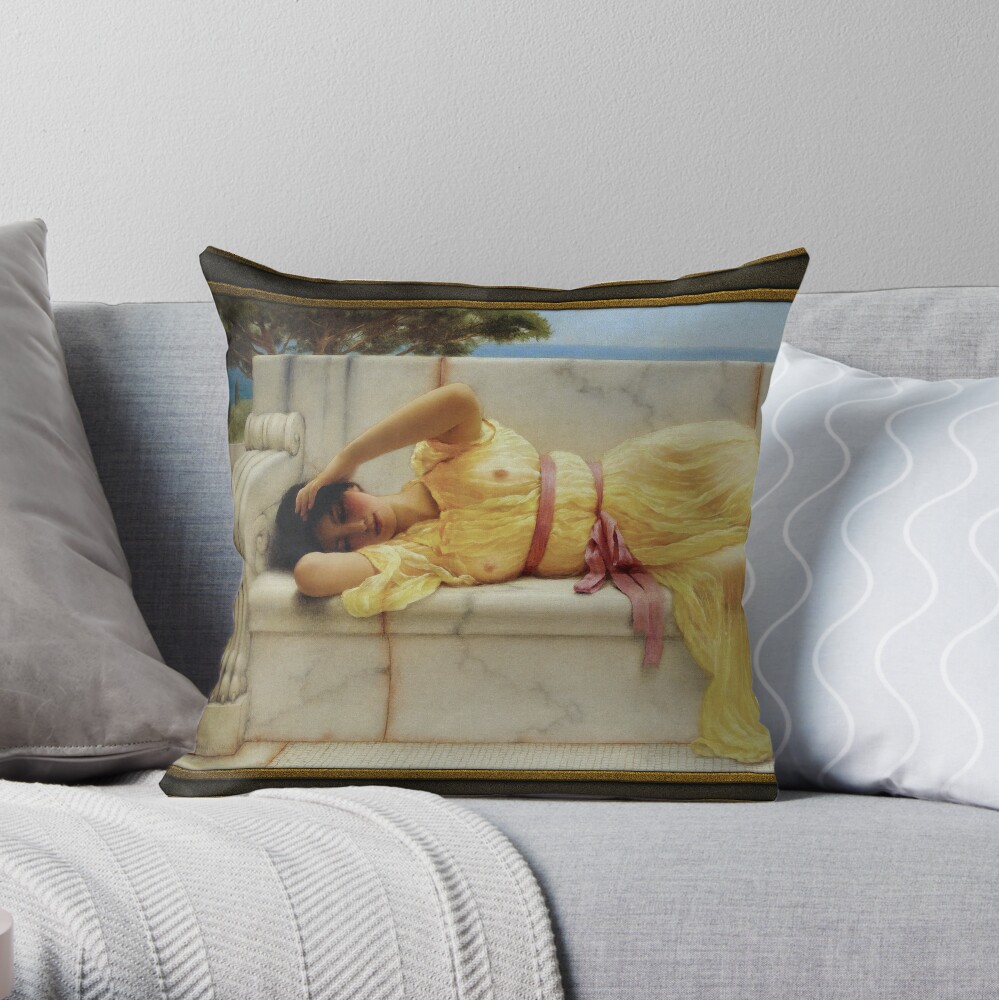
At the heart of the painting is a reclining young woman draped in a soft, flowing yellow gown that contrasts gracefully against the serene landscape. Den girl’s pose suggests a moment of quiet rest, her head gently resting on her arm while her other hand lies across her forehead, seemingly shielding her eyes from the soft light.
Her physical form is captured with remarkable finesse, hirem Gesiicht is serene and perfectly sculpted, reflecting the idealized beauty that was a hallmark of Godward’s work. The pale yellow gown she wears is airy, almost translucent, fluttering gently around her form as if caressed by a soft breeze. The drapery, though delicate and light in color, dréit e Gefill vu Gewiicht an Déift mat sech, en Testament fir de Kënschtler seng virsiichteg Studie vu Stoff an Anatomie.
D'Atmosphär: Tranquil and Timeless
D'Stëmmung vum Bild ass eng vu Rou, Zäitlosegkeet, a Gnod. D'Figur schéngt an engem Zoustand vun déif Rou ze sinn, vläicht an der Mëtt vun engem Schlof oder Dagdreem, onberéiert vun de Bedenke vun der Äussewelt. Den Weichheet vun hirem Draperie an déi sanft Pose vun hirem Kierper evitéieren eng Loft vu friddleche Schlof, wärend d'Feele vun enger offensichtlecher Emotioun oder Handlung de Betrachter léisst d'Szen ze erliewen als Invitatioun fir ze pausen a reflektéieren. Godward, an dësem Moment festzehalen, schaaft eng roueg Still, wou d'Zäit suspendéiert schéngt.
The Architecture: Classical Influence
Hannert der Figur, d'Szene gëtt vun engem Klassiker encadréiert Steenbänk dat verbënnt d'Thema mat der Welt vun der antiker Zivilisatioun. Den Marmer bänk, mat sengem liicht verwiddert, elegant columns and scrollwork, serves as a reminder of the classical heritage that influenced much of Godward’s work. The artist’s attention to architectural detail is remarkable, with the texture of the stone clearly articulated in the subtle shadows and light reflections. Den Sailen, designed in the Corinthian style, suggest an elevated cultural and intellectual world, adding to the painting’s timeless quality.
The Natural Landscape: Calm and Expansive
Am Hannergrond, the viewer can see a peaceful vista that stretches out beyond the stone bench. The landscape is bathed in soft light, hinting at a horizon where the sea meets the sky. Although the colors of the sky are muted, den expansive nature of the scene provides a sense of Plaz, suggesting an open, tranquil world that contrasts beautifully with the intimacy of the figure’s repose. Beem mat enger Vielfalt vu üppige Gréngs addéieren de Sënn vu Rou, hir Blieder subtil suggeréieren d'Hëtzt vun engem antike Mëttelmierklima.
The Medium and Technique: Fine Detail and Texture
Dem Godward seng technesch Fäegkeet ass evident an der exquisite Detailer vu béiden Figur an déi ronderëm Elementer. D'Weichheet vum giele Kleed vun der Fra kontrastéiert mat der steifer, bal taktile Qualitéit vun de Marmer Sailen a Bank. D'Benotzung vu Liicht a Schatten op de Stoff ënnersträicht seng delikat, fléissend Natur wärend d'Haut vun der Figur bal lieweg a sengem natierlechen Toun erschéngt. Dem Godward seng Technik beim Vermëschung vu Liicht a Schied dréit zum Sënn vu Realismus an Déift bäi, d'Aarbecht mat enger bal dreidimensionaler Qualitéit duerchzeféieren. Seng virsiichteg Rendering vun den Texturen - egal ob et d'Glattheet vum Steen ass, the transparency of the fabric, or the natural sheen of the skin—demonstrates his mastery of light and texture.
Godward’s Style and Themes: Classical Beauty Revisited
De Stil vun “Girl in Yellow Drapery” embodies the core ideals of Neoklassizismus, a movement that sought to revive the aesthetics and ideals of ancient Greece and Rome. This style is characterized by its focus on idealized beauty, smooth forms, and an emphasis on proportion and harmony. Godward’s work is deeply infused with these principles, especially in his portrayal of the female figure, which is often idealized and posed in tranquil, relaxed settings. His subjects are frequently depicted in lush landscapes or classical architectural settings, as seen in this piece. Dëst Bild, besonnesch, encapsuléiert dem Godward seng Faszinatioun mat weiblech Schéinheet a klassescher Antikitéit.
D'Thema vun engem reclining Figur, dacks e Symbol vu Sensualitéit a Rou, weider ënnersträicht de Kënschtler Engagement fir eng harmonesch schafen, serene Welt a senge Wierker. D'Bild vun der jonker Fra am Godward senger Molerei ass net nëmmen eng schléift Figur; et ass eng Visioun vu Rou a Perfektioun, vun de Suerge vun der Welt ofgeschloss an an engem zäitlosen Ëmfeld gesat. Et ass eng Invitatioun fir den Zuschauer an e Raum ze trëppelen wou d'Schéinheet an d'Stille regéieren.
Conclusioun: The Enduring Legacy of Godward’s Work
John William Godward’s “Girl in Yellow Drapery” ass e gutt Beispill vum Kënschtler seng Engagement fir den neoklassesche Stil, illustréiert seng Fäegkeet fir idealiséiert Schéinheet ze portraitéieren a seng déif Bewonnerung fir klassesch Konschtformen. Duerch déi virsiichteg Duerstellung vun der Figur, the architectural elements, and the natural world, Godward creates a scene of serene elegance that has continued to captivate audiences long after its creation. His ability to evoke a mood of timeless peace, combined with his technical precision, ensures that this painting remains a significant work in the history of British art.
Girl in Yellow Drapery is a remastered digital art old masters reproduction of a public domain image that is available as a Canvas Print online.
Dës digital Konscht Kreatioun, wéi mat all de Konschtwierker, déi op der Xzendor7 Websäit fonnt kënne ginn, ass online a verschiddene Materialformater ze kafen, dorënner Canvas Prints, acryl Prints, Metallofdréck, Holzdrécker, cadréiert Printen, Plakater, a wéi gewalzt Canvas Printen a ville Gréissten vun 12 Zoll zu 72 Zoll ofhängeg vun der Gréisst vum aktuellen Konschtwierk an dem Print-on-Demande Buttek vun deem Dir gewielt hutt d'Konscht ze kafen.
D'Konschtwierk ass och op eng breet Palette vu Männer- a Fraekleedung verfügbar, Becher, totes, Schal, Notizbicher an Zäitschrëften a vill Heemdekoratiounsprodukter.
Kënschtler Bio
Info Ënnen Vun Wikipedia.org
Den John William Godward war den eelste vu fënnef Kanner, a gouf no sengem Papp John a Grousspapp William benannt.
Hien huet op der Royal Academy ausgestallt 1887. Wéi hien an Italien geplënnert ass mat engem vu senge Modeller an 1912, seng Famill huet all Kontakt mat him ofgebrach a souguer säi Bild vu Familljebiller geschnidden. Godward zréck an England an 1921, gestuerwen am 1922, a gëtt um Brompton Kierfecht begruewen, West London.
Eng vu senge bekanntste Biller ass d'Dolce far Niente (1904), déi fir d'Sammlung vum Andrew Lloyd Webber kaaft gouf an 1995. Wéi am Fall vun e puer anere Biller, Godward huet méi wéi eng Versioun gemoolt; an dësem Fall, eng fréier (a manner bekannt) 1897 Versioun mat enger weider 1906 Versioun.
Hien huet Suizid am Alter vun 61 a soll a senger Suizidnotiz dat geschriwwen hunn “d'Welt ass net grouss genuch fir [souwuel] ech selwer an e Picasso”.
Seng auslännesch Famill, deen ofgeleent hat vu sengem Kënschtler ginn, hu sech fir säi Suizid geschummt a seng Pabeiere verbrannt. Nëmmen eng Foto vu Godward ass bekannt fir z'iwwerliewen.
Godward war e Victorian Neo-Classicist, an dofir, an der Theorie, en Unhänger vum Frederic Leighton. Allerdéngs, hien ass méi no verbonnen stilistesch dem Sir Lawrence Alma-Tadema, mat wiem hien e Virdeel fir d'Rendering vun der klassescher Architektur gedeelt huet - besonnesch, statesch Landschaftsfeatures aus Marmor gebaut.
Déi grouss Majoritéit vun de existente Biller vum Godward weisen Fraen a klassesche Kleed géint Landschaftsfeatures; och wann et e puer semi-plakeg a voll plakeg Figuren a sengem Wierk abegraff sinn, e bemierkenswäert Beispill ze sinn “Am Tepidarium c1913”.
En Titel gedeelt mat enger kontroverser Alma-Tadema Molerei vum selwechte Sujet deen an der wunnt “Lady Lever Art Gallery”. D'Titele reflektéieren dem Godward seng Inspiratiounsquell; déi klassesch Zivilisatioun war, besonnesch dee vum antike Roum; e Sujet bindend dem Godward no un Alma-Tadema artistesch.
Gitt datt klassescht Stipendium méi verbreet war ënner dem potenzielle Publikum fir seng Biller wärend sengem Liewen wéi am haitegen Dag, suergfälteg Fuerschung vum Detail war wichteg fir e Stand als Kënschtler an dësem Genre z'erreechen.
Alma-Tadema war en Archäolog wéi och e Moler, deen op historesche Site gaang ass an Artefakte gesammelt huet, déi hie spéider a senge Biller benotzt huet: Godward, ze, studéiert sou Detailer wéi Architektur a Kleed, fir sécherzestellen datt seng Wierker de Stempel vun der Authentizitéit droen.
Zousätzlech, De Godward huet mëttelméisseg a virsiichteg aner wichteg Features a senge Biller gemaach, Déierefell vun deenen d'Biller “Mëtteg Dag Rescht c1910” an “E Cool Réckzuch c1910” enthält Beispiller vu sou enger Ausféierung wéi och Wëldblummen “Nerissa c1906” an “Summer Blummen c1903”.
D'Erscheinung vu schéine Fraen a studéierte Posen a sou vill vu Godward Canvasen verursaacht vill Newcomer zu senge Wierker fir hie falsch als Pre-Raphaelit ze kategoriséieren, besonnesch well seng Palette dacks eng vibrant faarweg ass. D'Wiel vum Thema (antike Zivilisatioun versus, zum Beispill, Arthurian Legend) ass méi richteg dee vum Victorian Neo-Klassiker.
Gemeinsam mat ville Moler zäitgenëssesch mat him, Godward war en "High Victorian Dreamer", produzéiert Biller vun enger idealiséierter a romantiséierter Welt déi, am Fall vu Godward an Alma-Tadema, koum als Weltvisioun vu Victorianer an Togas kritiséiert.
Godward “séier e Ruff etabléiert fir seng Biller vu jonke Fraen an engem klassesche Kader a seng Fäegkeet fir mat Sensibilitéit an technescher Meeschterschaft d'Gefill vu contrastesche Texturen vu Fleesch ze vermëttelen, Marmer, Pelz a Stoffer.
Dem Godward seng Virléift fir Konschtwierker an der klassescher Period ze kreéieren ass méiglecherweis aus der Zäit an där hie gebuer gouf; well et war déi lescht voll-Skala klassesch Erhuelung a westleche Biller, déi an England vun den 1860er bis zu den 1890er bléie gelooss hunn.