

Gretchen vor der Statue der Heiligen Maria (Gretchen in front of the statue of Saint Mary) c1850
“Gretchen vor der Statue der Heiligen Maria” is a painting from around 1850 by the Austrian painter Adam Vogler (1822 – 1856). The artwork captures an intimate moment of contemplation and reverence, drawing inspiration from religious themes that were common during the 19th century. The artist presents the central figure, a young woman named Gretchen, in front of a marble statue of Saint Mary. The mood is serene and contemplative, evoking a sense of devotion and personal connection with the divine.
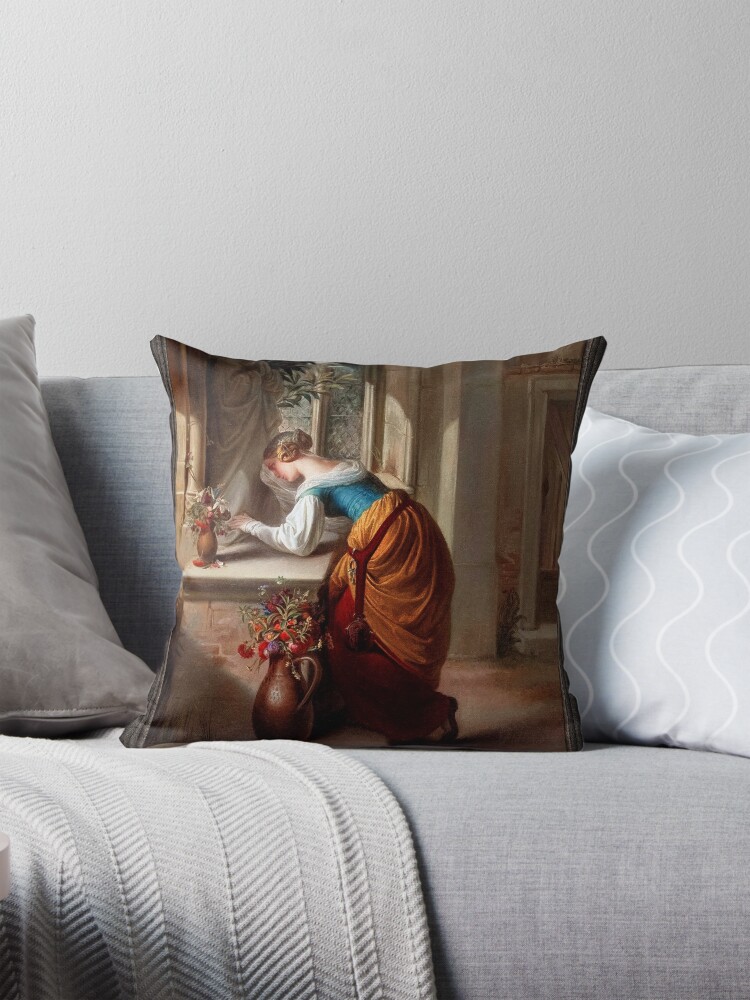
Table of Contents
The Central Figure: Gretchen
In the painting, Gretchen is portrayed in a moment of quiet reflection, with her head slightly bowed as she gazes towards the statue of Saint Mary. She is dressed in a traditional 19th-century European gown, a blend of vibrant colors, including a blue bodice and a rich orange skirt that contrasts against the softer tones of the background.
Her blonde hair is neatly styled, and her posture conveys an air of humility and reverence. The way her fingers delicately touch the edge of her clothing further emphasizes her connection to the statue, symbolizing a gesture of prayer or contemplation. This gentle interaction between the figure and the religious image invites the viewer into a personal, almost sacred moment.
Gretchen’s expression is pensive, and her body language suggests a deep emotional engagement with the statue, possibly in a state of prayer or personal devotion. The softness of her form against the solid, unmoving statue of Saint Mary contrasts her youth and life force against the symbolic permanence of the holy figure, embodying the artist’s exploration of spirituality and piety during the era.
The Statue of Saint Mary
Dominating the left side of the composition is the statue of Saint Mary, the central religious object in the scene. The marble figure stands in the shadows of a grand, arched window frame. Saint Mary is depicted with grace, her robes cascading in folds that suggest the artist’s careful attention to the texture of the stone.
The statue’s serene expression and poised posture give a sense of divine tranquility, a timeless representation of motherhood and virtue. The choice to place this image of Saint Mary at the focal point of the painting accentuates her importance as a figure of compassion and maternal love.
Vogler has carefully detailed the statue to evoke a sense of holiness and sanctity. The folds of Mary’s robes are sculpted with precision, highlighting the artist’s technical expertise in representing both fabric and form. The folds of the drapery around the statue and the delicate hands of Mary, which are poised as if reaching out to the viewer, invite a reflection on the saint’s maternal nature.
The Setting: The Architecture and Environment
The setting is a traditional religious interior, likely a church or chapel, as suggested by the architectural elements surrounding the central figures. The arched window behind the statue frames the scene, letting in a soft, diffused light that bathes the figures in a gentle glow.
The architectural features, including the stone walls and the softly lit backdrop, give the viewer the impression of a sacred space. There is a calm stillness in the environment that complements the quiet reverence of the figure of Gretchen and the statue. The artist’s meticulous attention to the detailed architecture enhances the solemnity of the scene, creating a space where religious devotion and contemplation can thrive.
The light streaming through the window, gently illuminating the figure of Gretchen and casting shadows on the walls, heightens the dramatic effect. The soft contrast between the light and shadow, especially on the textures of the stone and Gretchen’s garments, evokes a mood of introspection. The overall atmosphere is serene and contemplative, inviting the viewer to join Gretchen in her private, spiritual moment.
The Materials and Technique
Vogler’s use of oil paints allows for the subtle rendering of textures and the depth of emotion in his subjects. The palette is muted, with soft earth tones and pastel shades, which contribute to the overall serenity of the composition. The interplay between light and shadow is another notable feature of the painting, with the light falling gently on the figure of Gretchen and the statue, enhancing their spiritual connection.
The technique used to depict the folds of clothing, the smoothness of the statue, and the delicate flowers in the vase next to Gretchen is indicative of Vogler’s skill in capturing both human and material forms with remarkable detail. The flowers, placed near the bottom of the image, are painted with soft, almost translucent colors, adding to the sense of realism and bringing life to the scene without detracting from the spiritual focus of the painting.
The Mood and Themes
The mood of the painting is contemplative and pious. The theme centers around devotion, spirituality, and the reverence of religious figures. The juxtaposition of the youthful Gretchen with the immovable, eternal statue of Saint Mary highlights the contrast between mortal life and the divine. This interaction suggests a deep, personal connection between the viewer and the divine presence, as symbolized by the statue of Saint Mary.
In the 19th century, religious art was often used as a medium for personal reflection and devotion, and Vogler’s work is no exception. The viewer is invited into the sacred space with Gretchen, encouraging a sense of connection to the divine. This reflects the broader cultural movement of the time, where themes of piety, humility, and devotion were central to artistic expression.
Conclusion
In “Gretchen vor der Statue der Heiligen Maria,” Adam Vogler presents a moving depiction of religious devotion and the quiet strength found in prayer and contemplation. Through his careful rendering of light, texture, and form, Vogler captures a serene moment that transcends the temporal world, inviting the viewer into a reflective space that encourages spiritual connection. The painting speaks to universal themes of reverence, faith, and the eternal presence of the divine.
This is a retouched digital art old masters reproduction of a public domain image.