

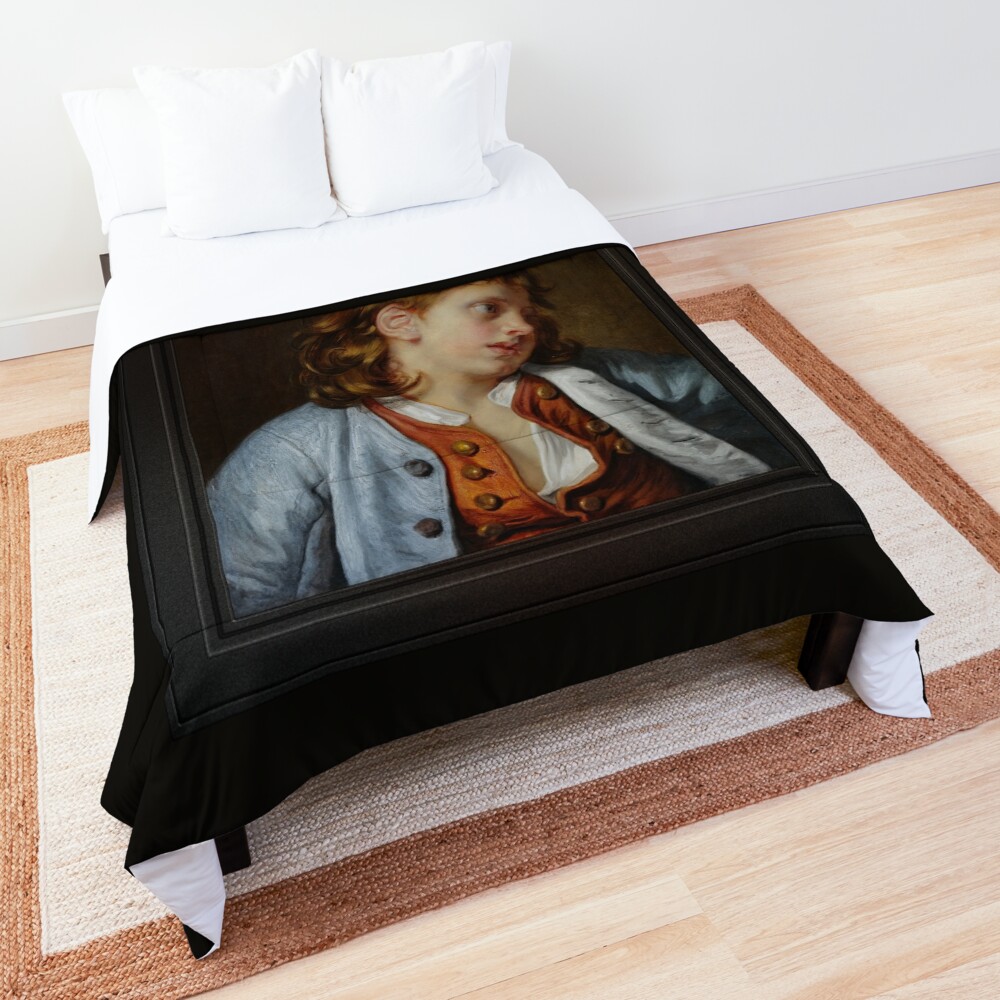
어린 소년의 머리(c1763)
제목의 작품 어린 소년의 머리 에서 생성되었습니다 1763 프랑스의 유명 화가의 작품 장 바티스트 그뢰즈 (1694 – 1774). 이 초상화는 젊음의 부드러움과 순수함을 담고 있습니다., 섬세한 디테일과 뛰어난 붓놀림을 통해 감정과 성격을 표현하는 아티스트의 뛰어난 기술을 보여줍니다.. 그레즈, 종종 장르 장면을 묘사한 것으로 유명합니다., 감정 표현, 도덕적인 주제와, 어린 소년의 사색적 성격의 본질을 생생하게 표현합니다.. 그림은 대상의 머리에 초점을 맞춥니다., 피부 결을 강조하다, 그의 특징의 부드러움, 그리고 그의 표정, 그뢰즈 특유의 사실성과 인간의 감정에 대한 민감성을 활용하면서.
목차
주제와 구성
그림의 주요 초점은 어린 소년의 머리와 상반신입니다., 그의 나이는 아마도 12살이나 13살쯤 되었을 것이다., 조용히, 잠겨있는 순간. 머리가 살짝 옆으로 돌아간 상태, 시선은 아래쪽과 오른쪽을 향하고, 그에게 자기 성찰의 분위기를 주고.
소년의 섬세한 이목구비가 정밀하게 포착되어 어린 피부의 질감과 부드러운 피부의 가벼움이 거의 느껴집니다., 곱슬 머리. 그의 얼굴, 밤색 갈색 머리의 느슨한 웨이브로 둘러싸인, 평화로워 보이지만 우울한 감정이 스며들어 있다.. 그의 눈, 부드럽지만, 근본적인 감정의 깊이를 전달하는 것 같습니다., 마치 작가가 단순히 육체적인 모습뿐만 아니라 감정적인 성찰의 순간까지 포착하려는 의도인 것처럼 말이죠..
그 소년은 단순한 옷을 입고 있다, 그래도 좀 세련됐어, 어린 소년들을 위한 18세기 중반 프랑스 패션의 특징. 그는 적갈색 밑받침이 있는 옷을 입는다., 느슨한 아래 부분적으로 드러났습니다., 황동 단추로 장식된 파란색 재킷.
그의 옷 색깔, 소박하고 조용하다, 그의 얼굴의 자연스러운 톤을 보완하는 역할을 합니다., 초상화의 실물과 같은 품질을 강조. 그의 옷의 질감은 절묘한 디테일로 렌더링됩니다., Greuze의 시그니처인 부드러운 브러시워크로 원단에 거의 촉감을 부여합니다., 보는 사람이 손을 뻗어 소재의 질감을 느낄 수 있는 느낌을 전달.
예술적 스타일과 기술
Jean-Baptiste Greuze는 로코코 리얼리즘의 대가로 널리 알려져 있습니다., 이 초상화는 섬세한 조화를 이루는 그의 능력을 보여주는 대표적인 예입니다., 깊은 감성적 깊이를 지닌 세련된 미학. 작가의 테크닉 어린 소년의 머리 빛과 그림자의 뉘앙스에 대한 그의 민감성을 보여줍니다.. 광원은 왼쪽에서 나옵니다., 소년의 얼굴을 빛나게 해주고 어린 피부의 부드러움을 돋보이게 해줍니다..
빛이 그의 이목구비를 따라 섬세하게 움직인다, 이마의 하이라이트 사이에 부드러운 대비를 만듭니다., 코, 그리고 뺨, 그리고 그의 눈 주위와 턱 아래의 미묘한 그림자들. 명암대비법의 뛰어난 활용 (빛과 어두운 대조) 인물에 실제와 같은 입체감을 부여합니다., 현실감을 강화하다.
Greuze의 붓놀림은 부드러우면서도 정확합니다., 질감과 형태를 불러일으키기 위해 세심하게 렌더링된 모든 디테일. 피부의 부드러움이 부드럽게 표현됩니다., 유동적인 스트로크, 질감이 있는 요소가 많을수록, 재킷의 단추나 천의 접힌 부분 등, 더 선명하게 칠해져 있어요, 더 정의된 선. 부드럽고 단단한 붓놀림의 균형은 초상화에 깊이와 사실성을 부여합니다., and contributes to the tender mood of the piece.
테마와 분위기
The theme of the painting appears to focus on the quiet, reflective nature of childhood. Unlike other portraits of children from this period that may emphasize their status or wealth, Greuze seems to highlight the vulnerability and introspective quality of youth. The boy’s subtle, almost melancholic expression evokes a sense of innocence and fragility, suggesting that the subject’s internal world is being gently explored by the artist.
His somewhat somber expression does not indicate sadness, but rather a contemplation of his surroundings or of life itself. This emotional depth is characteristic of Greuze’s genre paintings, which often dealt with themes of morality, 인간의 감정, and the complexities of youth.
그림의 분위기는 차분하고 내성적입니다.. 소년의 표정, 부드러운 조명과 옷의 차분한 톤과 함께, 고요함과 반성을 만들어낸다.. 구성의 단순함, 소년의 머리와 상체에만 집중, 이 명상적인 분위기를 강화합니다, 관객이 어린 시절의 본질과 Greuze가 그의 주제 내에서 포착할 수 있었던 정서적 깊이를 생각해 보도록 유도합니다..
재료 및 기술
어린 소년의 머리 캔버스에 유성 페인트로 실행됩니다., Greuze가 그의 경력 전반에 걸쳐 탁월한 매체. 기름을 사용하면 부자가 될 수 있다, 질감 있는 안료 적용, 소년의 이목구비와 의복의 섬세한 디테일과 피규어의 입체감을 높여주는 제품입니다.. Greuze의 페인트 레이어링 기술, 빛과 그림자를 조종하는 능력도 그렇고, 그를 당시 가장 존경받는 초상화가 중 한 명으로 만든 기술적 전문성을 보여줍니다..
지지 재료로 캔버스를 선택하면 Greuze가 정밀하게 페인트 층을 쌓을 수 있는 매끄러운 표면이 제공됩니다.. 캔버스 자체의 질감, 육안으로는 거의 인지할 수 없지만, 그림의 전체적인 분위기를 좌우하는, 피사체의 실제 모습을 향상시키는 방식으로 빛을 흡수하고 확산시키는 데 도움을 줍니다.. 색의 깊이, 특히 그 소년의 얼굴에서, 섬세한 유약 기술을 통해 달성됩니다., 빛나는 효과를 내기 위해 건조된 베이스 레이어 위에 반투명 페인트를 얇게 바르는 작업입니다..
결론
에 어린 소년의 머리, Jean-Baptiste Greuze는 피사체의 정서적, 심리적 깊이를 포착하는 탁월한 재능을 보여줍니다.. 어린 소년, 섬세한 사실감으로 표현된, 단순한 아이의 초상화가 아니다, 그러나 청소년의 내면 생활에 대한 탐구.
그림의 고요한 분위기, 세심한 기술과 빛과 그림자의 연상적인 사용이 결합되었습니다., 인간의 표현의 미묘함을 통해 감정과 생각이 조용히 표현되는 세계로 관객을 안내합니다.. 이 작품은 초상화 분야에서 Greuze의 뛰어난 능력을 입증하는 증거로 남아 있습니다., 젊음의 본질과 인간 감정의 복잡성에 대한 시대를 초월한 성찰을 제공합니다..
온라인에서 캔버스 인쇄로 사용할 수 있는 퍼블릭 도메인 이미지의 리마스터된 디지털 아트 올드 마스터 복제본입니다..
아티스트 약력
아래 정보는 NGA.gov
장은 투르뉘에서 태어났다., 프랑스 1725 아주 어린 나이에 자신의 재능을 알아본 기와장인의 여섯째 아들로; 그를 리옹으로 보낸다, 프랑스 초상화가 Charles Grandon과 함께 공부하는 프랑스 (1691 – 1762).
대략 나이에 30 그는 리옹을 떠났다, 그리고 파리를 여행했다., 프랑스 Académie royale de peinture et de sculpture 또는 Royal Academy of Painting and Sculpture에서 공부; Ancien Régime 후반기에 당시 프랑스 최고의 예술 기관이었습니다. (구 제도 ~1500 ~ 1789), 에서 폐지될 때까지 1793 프랑스 혁명 동안.
1760년대와 1770년대에 매우 재능 있고 매우 성공적이었지만, Marquise de Pompadour와 같은 후원자가 있습니다. (1721 – 1764), 러시아 황후 캐서린 2세 (아르 자형. 1762 – 1796), 그리고 La Live de Jully의 Ange Laurent (1725 – 1779); 그의 반항적 인 성격과 아카데미 및 살롱 관계자들과의 갈등은 그의 불행임을 증명할 것입니다.; 특히 Anne Marie Babuty와의 결혼 이후 1759; 그에게 재앙이 될 것입니다, 그녀는 그의 학생 및 보모들과 다양한 일을 한 것으로 알려졌습니다., 이로 인해 그는 소득 손실과 대중의 굴욕감을 느꼈습니다..
결혼이 끝났을 때 34 몇 년 후 그의 아내는 상당한 합의금을 받았습니다., 그로 인해 그는 심각한 재정난에 빠졌고 사망할 때까지 1805 세의 나이에 80 그는 거의 파산했다.