

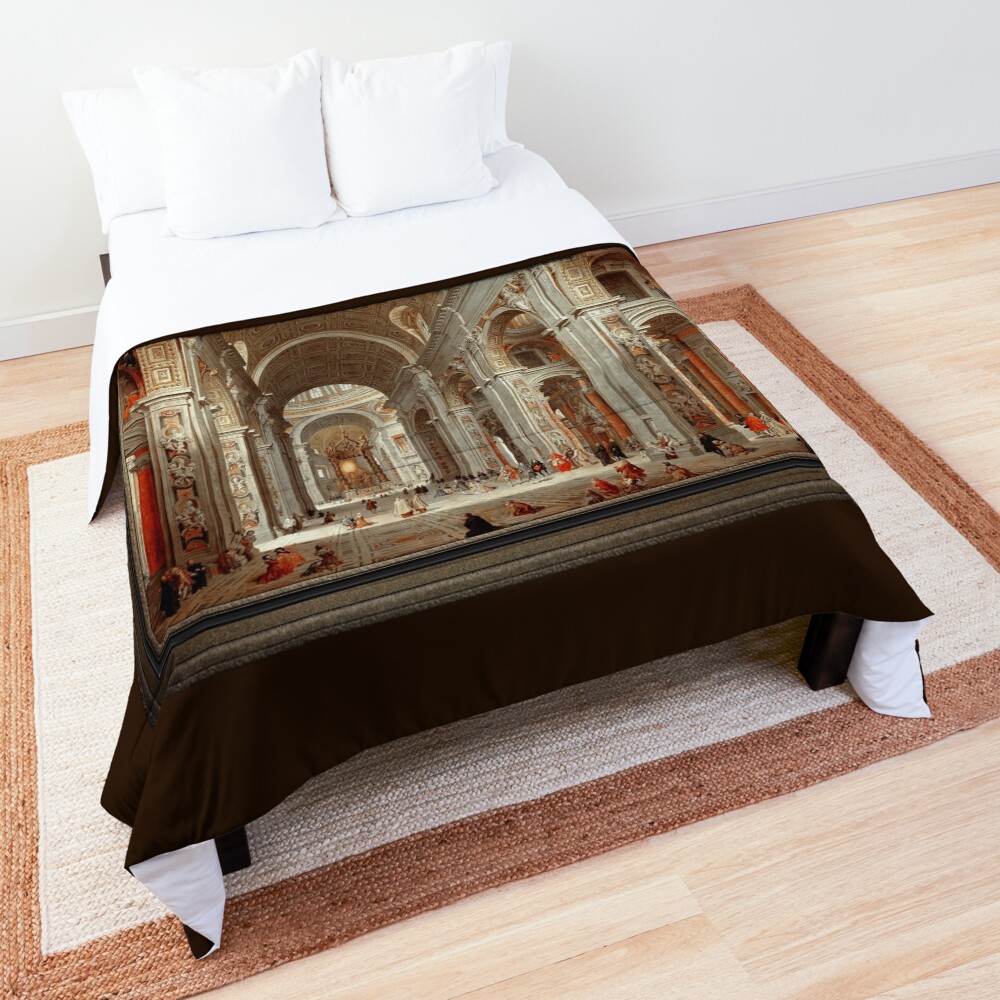
Interior View of St Peters Basilica c1750
Interior View of St Peters Basilica is a magnificent painting created in 1750 by the renowned Italian artist Giovanni Paolo Pannini (1691 – 1765). This masterful work exemplifies Pannini’s extraordinary ability to capture the grandeur of 建築 and the spirit of classical antiquity.
Through his artistic vision, Pannini offers an inside view of one of the most iconic architectural structures in the world; St. Peter’s Basilica in Vatican City. The composition not only illustrates the architectural wonders of the space but also immerses the viewer in a detailed narrative of daily life in the grand cathedral during the 18th century.
目次
主な主題と構成
The painting’s primary subject is the interior of St. サンピエトロ大聖堂, a symbol of both religious devotion and architectural excellence. Pannini presents a sweeping view of the basilica’s vast nave, with towering columns, intricate arches, and expansive ceilings, all rendered with great precision and grandeur.
The vaults and domes rise majestically toward the heavens, drawing the viewer’s gaze upward toward the light that seems to pour into the structure from above. The large, circular windows and the dome of the church create a contrast between the serene, soft illumination from the windows and the richly detailed interiors.
The layout of the painting mirrors the layout of the basilica itself, offering a perspective that guides the viewer’s eye from the foreground, filled with figures, toward the distant altar, which is adorned with golden rays of light. The vastness of the space is emphasized by the presence of numerous small figures scattered throughout the scene, some in worship, others in casual conversation, and still more engaged in quieter, reflective activities. This addition of human figures brings life to the artwork, making the monumental space feel more approachable, それでもなお畏敬の念を抱かせる.
アーキテクチャの詳細
The intricacy and magnificence of St. Peter’s Basilica are captured through Pannini’s detailed renderings of the basilica’s structural elements. The soaring columns of the nave are painted with sharp precision, giving the illusion of depth and grandeur. The artist incorporates exquisite details of the marble textures, particularly in the columns’ rich reddish hues and creamy veins, contributing to the sense of luxury and permanence that pervades the building. バックグラウンドで, elaborate arches and coffered ceilings stretch endlessly, further emphasizing the vast scale of the space.
One of the most striking features in the painting is the dome designed by Michelangelo. Pannini captures the essence of the dome’s curvature and its sculptural form, which seems to soar beyond the limits of the canvas, filling the viewer with a sense of awe. The use of light and shadow in the painting gives a tangible texture to the surfaces, lending a three-dimensional quality to the architecture. The colors are rich yet subdued, with earthy tones of stone and marble contrasting beautifully with the golden accents of the altar and religious icons.
Human Figures and Interaction
A significant aspect of Pannini’s work is the inclusion of human figures, which add a sense of scale and activity to the otherwise static space. These individuals are depicted in various poses—some kneeling in prayer, others engaged in conversation or walking through the grand nave. Pannini’s attention to the varied gestures and clothing of these figures further enriches the narrative. The elegantly dressed men and women in the foreground offer a glimpse into the social life of the 18th century, showcasing the attire and customs of the time.
The interactions among the figures in the scene suggest a peaceful coexistence within the sacred space. Some figures seem to pause in contemplation before the altar, while others, perhaps tourists or pilgrims, look around with admiration. This human presence, though small in comparison to the vast architecture, serves to enhance the grandeur of the basilica. It also invites the viewer to reflect on the spiritual and cultural significance of the church as a gathering place for both the faithful and the curious.
気分と雰囲気
The mood of the painting is one of reverence and awe. The grandeur of the basilica’s interior creates a sense of tranquility and solemnity, while the human figures add a feeling of warmth and human presence. The use of light and shadow contributes to the overall atmosphere, with rays of light streaming through the large windows and casting a gentle glow on the figures and columns. The warm hues of the painting, combined with the serene figures in repose, create a peaceful, almost meditative environment.
There is also a sense of timelessness in the scene. 絵の中の人物たち, while clearly of the 18th century, seem to be engaged in a kind of eternal ritual within the hallowed walls of the basilica. アーキテクチャ, although representing the pinnacle of 17th-century Baroque design, also seems to transcend time, suggesting that the church has stood as a witness to countless generations of worshippers. The mood is contemplative and reverent, encouraging the viewer to reflect not only on the grandeur of the basilica but also on its significance as a place of religious and historical importance.
結論
Giovanni Paolo Pannini’s “聖の内部ビュー. サンピエトロ大聖堂” is a breathtaking portrayal of one of the most celebrated architectural marvels in the world. Through meticulous attention to architectural detail, careful rendering of light and shadow, and the inclusion of human figures, Pannini conveys the awe-inspiring scale and spiritual significance of the basilica.
The painting serves as both a historical record and a work of art that captures the essence of 18th-century religious life. The balance between grandeur and intimacy, between architecture and humanity, allows the viewer to experience St. Peter’s Basilica not just as a monumental structure, but as a living, breathing space where art, 建築, and faith converge.
聖の内部ビュー. Peter’s Basilica is a retouched digital art reproduction of a public domain image.
アーティスト略歴の由来 Wikipedia.org
ジョバンニパオロパニーニまたはジョバンニパオロパニーニは、ローマで働いていた画家兼建築家であり、主にヴェドゥータの1人として知られています (“画家を見る”).
画家として, パニーニはローマの彼の景色で最もよく知られています, 彼は街の古代遺跡に特に興味を持っていました.
彼の最も有名な作品の中には、パンテオンの内部の彼の見方があります (フランチェスコ・アルガロッティに代わって 1712 – 1764 – ベネチアン博学者), ローマの景色を含む写真ギャラリーの彼のヴェドゥータ絵画.
彼の作品のほとんど, 特に廃墟のもの, カプリッチョのテーマに特徴的な空想的で非現実的な装飾があります. この点で、彼らはイタリアの画家で印刷メーカーのマルコ・リッチのカプリッチに似ています (1676 – 1730).
パニーニも肖像画を描いた, 教皇ベネディクトゥス14世の1人を含む (生まれたプロスペロロレンツォランベルティーニ 1675 – 1758 – からカトリック教会の頭 1740 – 1758).
ローマで, パニーニは宮殿の装飾者として名を馳せました. 彼の作品のいくつかには、Villa Patrizi c1719/25が含まれていました, パラッツォデカロリスc1720, とローマ神学校c1721/22).
に 1719, パニーニはVirtuosialPantheonの会衆に入院しました. 彼はローマのアカデミアディサンルカとアカデミアデフランスで教えました, 彼がジャン・オノレ・フラゴナールに影響を与えたと言われている場所. に 1754, 彼は王子を務めました (監督) アカデミアディサンルカ.