

Kraka c1862
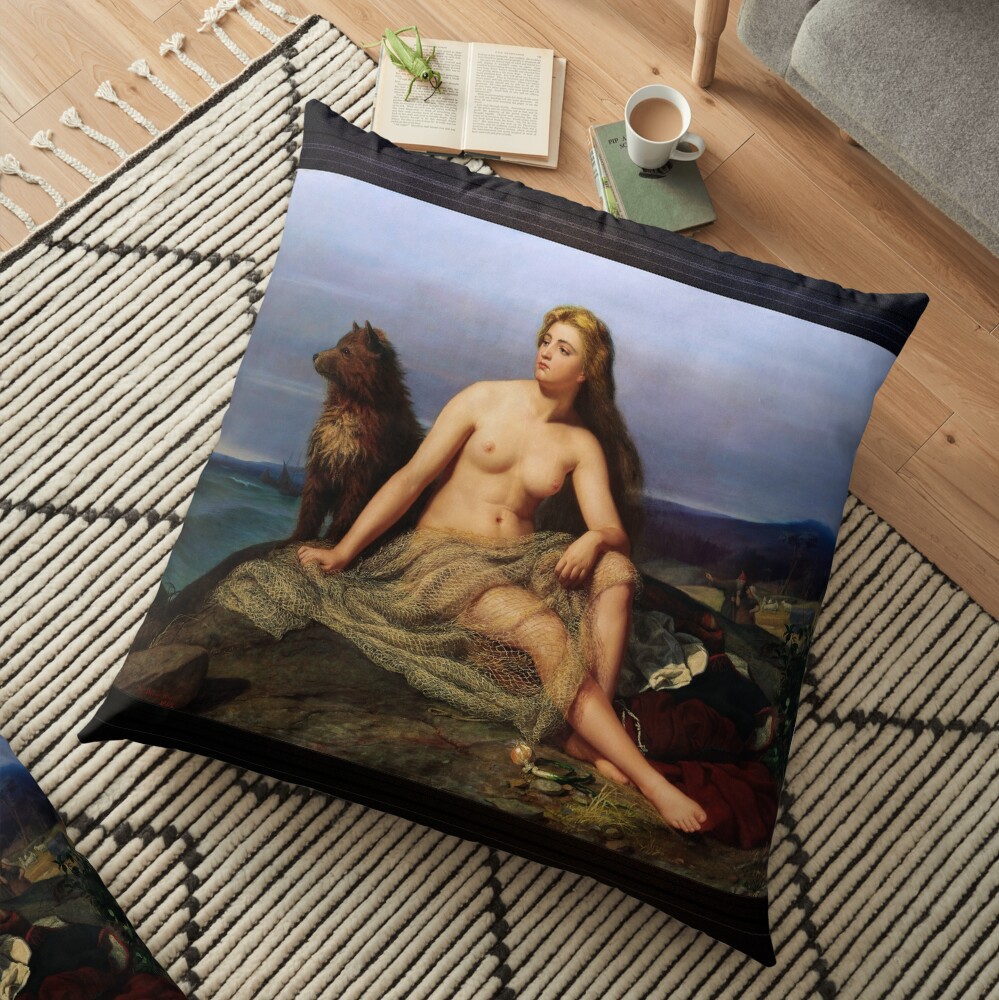
“Kraka,” criado em 1862 by the Swedish artist Mårten Eskil Winge (1825 – 1896), stands as a powerful example of romantic realism in the 19th century. This painting captures a mythological scene that combines the mystical with the natural world, featuring a young woman accompanied by a wild wolf. Winge’s ability to merge the human form with elements of nature demonstrates his deep understanding of classical themes and romantic ideals, evoking a sense of both harmony and solitude.
Índice
O Assunto
No coração de “Kráka” lies the figure of a young woman, sitting gracefully on a rocky outcrop by the shore. She is depicted in a moment of quiet contemplation, her gaze directed slightly off to the distance, perhaps lost in thought or in reverence to the natural landscape before her. A mulher, named Kráka, is portrayed in the nude, draped only by a fishing net that loosely covers her lower body. The delicacy of her pose and the naturalistic rendering of her form suggest a purity of connection between humanity and nature.
Her pale skin contrasts strikingly against the rich tones of the landscape, while the wildness of the net around her forms an immediate link to the natural world and the primal force of the untamed. She does not seem overtly sexualized; em vez de, she represents a mythological archetype, perhaps a goddess or a spirit of the wilderness, closely tied to the earth, its creatures, and the unbridled power of nature. The woman’s relaxed posture and serene expression evoke a sense of peaceful coexistence with the natural world.
The Wolf
By her side, the wolf stands as both companion and guardian. The animal is rendered with careful attention to detail, its fur textured and its stance alert. The wolf’s position next to Kráka implies a deep, symbiotic bond between the woman and the creature, both of which seem to belong to the untamed wilderness. The wolf’s presence is not one of aggression but of loyalty and vigilance, which elevates the theme of harmony between humans and the natural world.
Winge’s portrayal of the wolf is imbued with a sense of mythological symbolism. In many cultures, wolves are revered as protectors, symbols of courage, and representatives of the wild forces of nature. The animal’s role here seems to emphasize Kráka’s deep-rooted connection to the primal and untamable aspects of the world, reinforcing the mythic tone of the scene.
The Landscape and Terrain
The landscape surrounding Kráka and the wolf is expansive, adding to the painting’s sense of isolation and remoteness. A dramatic coastline unfolds in the background, where jagged rocks line the shore and the sea stretches out to the horizon. The waves appear calm yet assertive, gently lapping against the shore, while the fading light of the setting or rising sun casts a warm, golden glow over the scene.
To the right, the distant view reveals a sparse, rugged terrain with trees and hills that evoke a northern wilderness, possibly representative of Sweden’s natural beauty. The combination of water, land, and sky in the painting suggests a world that is both tranquil and wild, where the forces of nature are at once nurturing and untamable. The natural elements are not mere backdrops but rather integral components that help define the relationship between the human figure and the world she inhabits.
Materiais e Técnica
Winge’s technique in “Kráka” is marked by rich, detailed brushwork that gives the figures and landscape a lifelike quality. The texture of the woman’s skin and the wolf’s fur is achieved through delicate layers of paint that allow for nuanced shadows and highlights. The artist’s attention to naturalistic detail is evident in the way the light falls across Kráka’s body, subtly illuminating her features and adding depth to the composition.
The rough texture of the fishing net is skillfully rendered, creating an additional contrast between the softness of the figure and the coarse, raw nature of the net. The water and sky are painted with fluid, sweeping brushstrokes that give a sense of movement and life to the scene, reinforcing the theme of nature’s ever-changing power.
The palette Winge employs is rich yet muted, dominated by earth tones and subtle hues. The blues and greens of the water and the surrounding landscape are balanced by the warm, golden light that bathes the scene, creating a harmonious blend of color and atmosphere. This careful control of color helps establish the mood of the painting, which is one of serene contemplation and quiet power.
Estilo, Tema, e humor
The painting adheres to the romantic style, characterized by a deep appreciation for nature, myth, e expressão emocional. Winge’s attention to realism is tempered with a sense of the idealized, bringing a sense of awe and reverence to the scene. The theme of “Kráka” is one of mystical harmony between humanity and the wilderness, a recurring motif in romantic art, where the natural world is portrayed as a place of spiritual power and timeless beauty.
The mood of the painting is contemplative and serene, yet underpinned by an unmistakable sense of primal force. Kráka and the wolf, though surrounded by the peaceful beauty of the landscape, are also linked to something untamed, representing a connection to the forces of nature that remain beyond human control. The painting invites the viewer to consider the beauty and raw power of the natural world, as well as humanity’s place within it. O macio, dreamlike quality of the scene contrasts with the rugged, untamed wilderness, creating a tension that enriches the painting’s narrative.
Conclusão
“Kráka” by Mårten Eskil Winge is a poignant reflection of the romantic era’s fascination with the sublime and the mythological. The artist masterfully blends mythological themes with natural beauty, creating a work that is both intimate and grand in its scope. Through Kráka, the wolf, and the vast landscape, Winge explores the enduring connection between humanity and the wild, celebrating the untamed beauty of the natural world and its profound influence on the human spirit.
Esta é uma reprodução remasterizada de arte digital de antigos mestres de uma imagem de domínio público que está disponível como impressão em tela online.
Esta criação de arte digital, assim como todas as obras de arte que podem ser encontradas no site do Xzendor7 estão disponíveis para compra on-line em uma variedade de formatos de materiais, incluindo impressões em tela, impressões acrílicas, impressões metálicas, gravuras em madeira, impressões emolduradas, cartazes, e como impressões em tela enrolada em vários tamanhos, desde 12 polegadas para 72 polegadas, dependendo do tamanho da obra de arte real e da loja de impressão sob demanda em que você escolher comprar a arte.
A arte também está disponível em uma ampla variedade de roupas masculinas e femininas, canecas, bolsas, lenços, cadernos e diários e muitos produtos de decoração para casa.