

Lady Beatrice Butler
In this exquisite portrait of Lady Beatrice Butler (1876 – 1952_Lady Pole-Carew), created around 1900 by British painter Ellis William Roberts (1860 – 1930), the artist captures not only the grace and elegance of its subject but also the refined nature of high society during the turn of the 20th century. Lady Beatrice Butler, the daughter of James Butler, 3rd Marquess of Ormonde (1844 – 1919), and the wife of Lieutenant-General Sir Reginald Pole-Carew (1849–1924); General Officer Commanding 8th Division in Southern Ireland in 1903, is depicted with regal poise and dignity. The choice of medium, classical style, and atmospheric richness suggest the artist’s intent to emphasize Lady Beatrice’s noble lineage and social prominence.
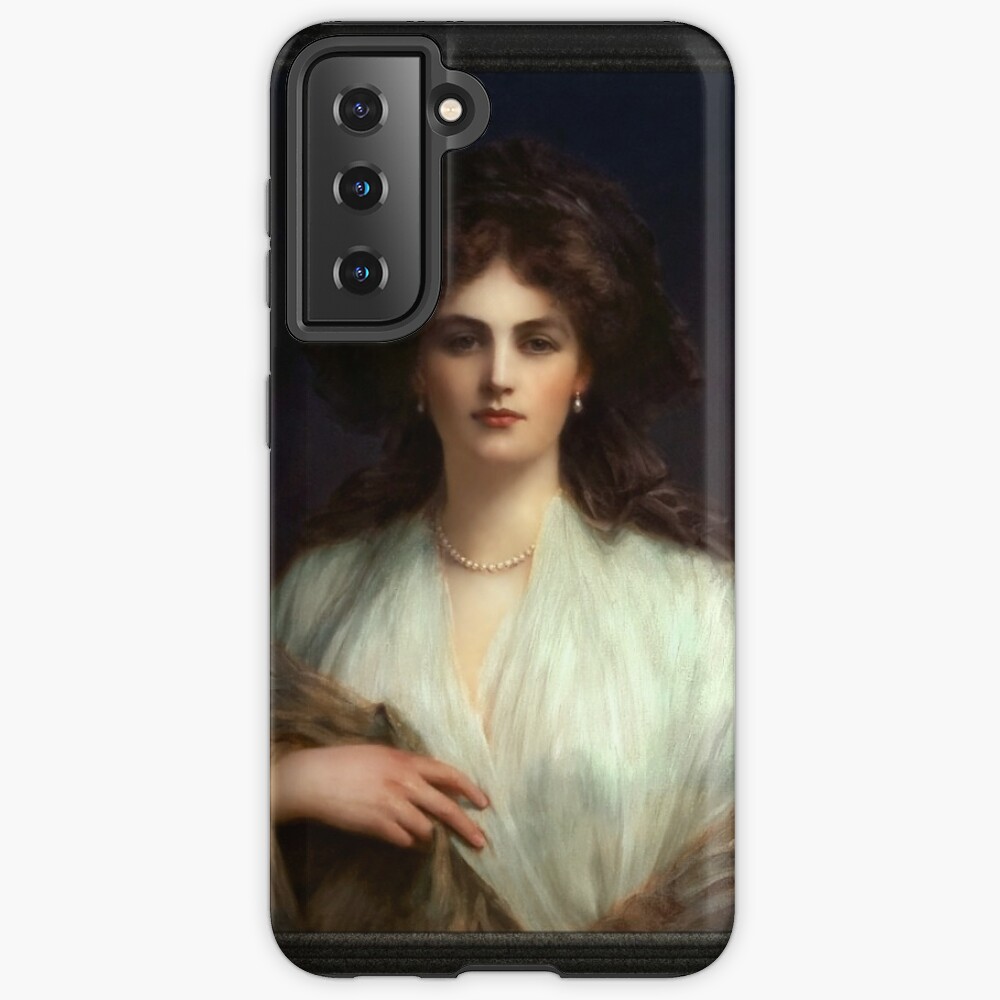
Table of Contents
Subject and Mood
The main subject of the painting is Lady Beatrice, shown in a traditional portrait style that emphasizes her noble features and aristocratic elegance. She is dressed in a pale, soft-colored gown that seems to shimmer with a subtle translucency, a choice that contrasts with the darker hues of the background. This ethereal appearance, combined with the graceful contours of her figure, suggests not only her high status but also a kind of timeless beauty.
Lady Beatrice’s face exudes a serene and composed expression, capturing a moment of quiet contemplation. The pearl necklace adorning her neck adds an extra layer of sophistication, further enhancing her aristocratic air. Her slightly parted lips and soft gaze indicate confidence and tranquility, inviting the viewer to imagine her as a woman of both refinement and intellect.
This calm yet dignified mood is heightened by the dark, muted background, which serves to focus the viewer’s attention solely on Lady Beatrice and her remarkable presence. The lack of extraneous detail in the surroundings ensures that she remains the sole subject of the portrait.
Composition and Color Palette
The composition of the painting is balanced and well-structured, with Lady Beatrice positioned slightly off-center, drawing the viewer’s gaze from her delicate face to the folds of her luxurious gown. The soft lighting, which delicately illuminates her features, creates a contrast between the highlights on her face and the shadowed areas of the background and clothing. This lighting effect serves to bring out the fine details of her attire and facial features, enhancing the sense of realism in the work.
Roberts has employed a muted color palette dominated by soft creams, pale blues, and greys. These colors not only complement Lady Beatrice’s attire but also suggest the elegance of her social class. The artist’s use of light and shadow is particularly noteworthy; it highlights her porcelain skin and the flowing folds of her gown, while also allowing the dark, indistinct background to recede, emphasizing her figure. This use of contrasting tones helps create a three-dimensional quality to the portrait, making Lady Beatrice appear lifelike and almost tangible.
Materials and Techniques
The materials used in this artwork, though not specified in detail, clearly align with the traditional methods of oil painting. The texture and depth of the work suggest the use of fine oil paints that Roberts expertly applied to canvas. The artist’s brushstrokes are subtle yet deliberate, lending the piece a sense of fluidity and grace. The smooth application of the paint gives the portrait a luminous quality, particularly in the depiction of Lady Beatrice’s skin and gown, while the shadows provide a contrast that grounds the subject firmly within the space.
The portrait’s finely detailed rendering of Lady Beatrice’s features and gown is indicative of Roberts’ masterful skill in capturing the textures and fabrics of the time. The subtle transitions of light and shadow create a harmonious effect, making the figure appear both soft and refined. The pale blue and cream tones of her dress are carefully blended, demonstrating Roberts’ expertise in conveying the delicate quality of silk or fine fabrics worn by aristocratic women during this period.
Historical Context and Significance
Lady Beatrice Butler’s portrait is not only a representation of a prominent aristocrat but also serves as an embodiment of the social status and elegance associated with the British upper class at the time. The painting reflects the cultural importance of portraiture during the late 19th and early 20th centuries, a period when aristocratic families commissioned works to immortalize their legacy and convey a sense of dignified authority. In this sense, the portrait transcends its status as a mere likeness and becomes a symbol of Lady Beatrice’s noble heritage.
The careful attention to detail in the depiction of Lady Beatrice’s features, along with the use of luxurious fabrics and pearls, reflects the opulence of the era’s high society. The choice to portray Lady Beatrice in such a serene and composed manner speaks to the values of the time, values that emphasized refinement, grace, and the decorum expected of women in her social circle. As such, this portrait serves not only as a testament to the sitter’s personal beauty but also as a reflection of the societal expectations placed upon women of her rank.
The Artist: Ellis William Roberts
Ellis William Roberts, a British artist renowned for his portraits, possessed a deep understanding of the classical tradition, which is evident in his portrayal of Lady Beatrice. Known for his attention to detail and his ability to capture the essence of his subjects, Roberts was highly regarded during his lifetime. His works often featured individuals from high society, and he skillfully portrayed both their physical appearance and the noble character they embodied.
Roberts’ portrait of Lady Beatrice Butler is characteristic of his work, displaying his mastery of light, shadow, and texture. His ability to infuse a sense of quiet elegance into his portraits, while still conveying the subject’s individuality, is apparent in this piece. The painting’s timeless quality speaks to Roberts’ skill in capturing not just the outward appearance of his subjects but also their inner dignity and poise.
This is a retouched digital art old masters reproduction of a public domain image that is available online as a rolled canvas print.
This digital art creation, as with all the artwork that can be found on the Xzendor7 website is available for purchase online in a variety of material formats including canvas prints, acrylic prints, metal prints, wood prints, framed prints, posters, and as rolled canvas prints in a variety of sizes from 12 inches to 72 inches depending on the size of the actual artwork and the print on demand shop you choose to buy the art from.
The artwork is also available on a broad range of men’s and women’s apparel, mugs, totes, scarfs, notebooks and journals and many home decor products.