

Mademoiselle de Lancey c1876
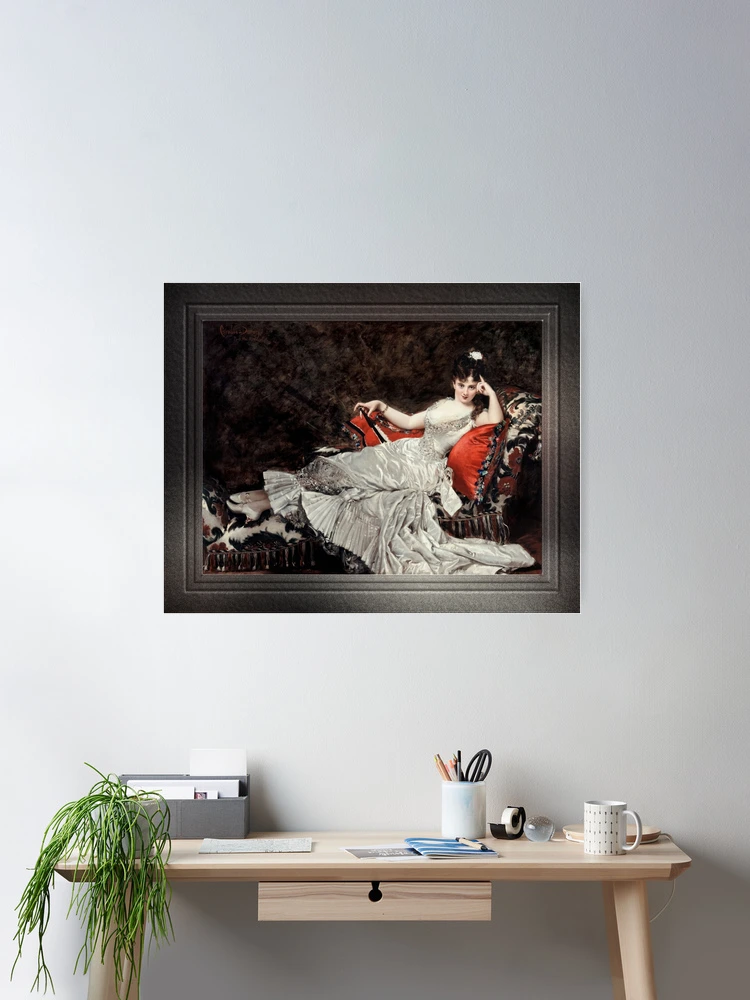
Mademoiselle de Lancey c1876 is an exquisite portrait painted by the renowned French artist Carolus-Duran (Charles Auguste Émile Durant – 1837 – 1917). The painting showcases the artist’s mastery of erretratua and his ability to capture the essence of 19th-century aristocratic life through his detailed representation of the subject. Duran, celebrated for his precise and lifelike depictions of his sitters, infuses this work with a rich sense of elegance and refinement that transports the viewer to the golden era of French high society.
Edukien taula
Gaia
At the center of the composition is Mademoiselle de Lancey, the young woman whose captivating beauty and poised demeanor take center stage. The subject reclines casually on a luxurious, ornate sofa, her posture graceful yet relaxed, embodying the aristocratic confidence typical of women in the late 19th century. Zuzenean begiratzen dio ikusleari, her expression one of thoughtful contemplation, which suggests a quiet, reserved intelligence. Bere begirada, coupled with her subtle smile, creates a balance between openness and reserve, inviting the viewer into her world without fully revealing her innermost thoughts.
The woman’s attire is as much a reflection of her social standing as it is a key element of the painting. She is dressed in a sumptuous white gown adorned with delicate lace and shimmering embellishments, a testament to the fashion of the time. Bata, which seems to almost glow against the dark backdrop of the painting, perfectly complements her fair complexion. The layers of fabric, with their intricate folds and delicate texture, are rendered in a way that emphasizes the tactile nature of the materials. The artist has paid careful attention to the fine details, capturing the delicacy of the fabric and the way it clings to the body, showcasing Duran’s exceptional skill in portraying the human form.
Her hairstyle, styled with elegant curls and soft waves, is topped with a small white flower that adds a subtle touch of femininity. The adornment, though small, enhances her graceful appearance, further elevating her aristocratic charm. The overall effect of Mademoiselle de Lancey’s attire and appearance suggests a refined, cultivated woman, fully aware of her status and the expectations placed upon her by society.
Ezarpena
The setting in which Mademoiselle de Lancey is portrayed is equally important in defining her character. She reclines on an opulent, plush sofa that is covered in rich, patterned fabric. The cushions are arranged with meticulous care, their colors—deep reds and golds—contrasting beautifully with the whiteness of her gown. The sofa serves as a symbol of wealth and luxury, its intricate patterns and rich textures suggesting the social status that the subject holds.
Haren atzean, the dark background, painted in deep browns and blacks, contrasts with the brightness of her gown, creating a striking visual effect that draws the eye directly to her. The background is not overtly detailed, but rather serves as a backdrop that enhances the focus on the figure. It exudes a sense of timelessness, as though the setting itself is secondary to the woman’s presence. The simplicity of the background emphasizes the subject’s prominence in the composition, drawing the viewer’s attention solely to her and her attire.
Materialak eta Teknika
Carolus-Duran’s technique in this portrait is remarkable for its precision and fluidity. The use of oil paints allows the artist to achieve the depth of color and fine detail for which he is known. The rich textures of the fabric, from the silk of the gown to the velvet of the cushions, are portrayed with remarkable accuracy. The play of light and shadow is masterfully handled, particularly in the way it falls across Mademoiselle de Lancey’s face and gown, giving the figure a sense of volume and presence. The folds of the gown, carefully painted to show the weight and texture of the fabric, demonstrate Duran’s ability to depict clothing with exceptional realism.
The brushwork is delicate, with soft transitions between light and shadow that create a sense of three-dimensionality. Leuna, almost velvety texture of the skin, the sheen of the fabric, and the subtle reflections in the eyes are rendered with exquisite detail. The artist’s handling of light—both the highlights on the skin and the soft shadows under the chin—adds to the lifelike quality of the portrait. Duran’s ability to convey the softness of the skin and the detailed textures of the fabric speaks to his exceptional training and his understanding of the materials he was working with.
Aldartea eta Gaia
ren aldartea “Lancey andereñoa” is one of serene elegance and quiet sophistication. The subject’s calm and contemplative expression, combined with her luxurious surroundings, evokes a sense of aristocratic refinement. Biguna, natural lighting enhances this mood, adding a warmth to the figure and making her appear approachable, despite her aristocratic attire. There is a subtle tension between the subject’s inner world—her contemplation—and the external world of high society, which is represented through her elaborate dress and the opulence of the setting.
The theme of the painting is closely tied to the social realities of 19th-century French aristocracy. It captures the cultural ideals of beauty, liraintasun, eta pausa, embodying the expectations placed upon women of the upper classes during that period. The portrait speaks to the roles women were expected to play—elegant, reserved, and composed—while also hinting at the private world that lay beneath the public exterior. Modu honetan, the painting subtly reflects the tension between outward appearances and inner lives, a theme that resonates with viewers even today.
Bukaera
Carolus-Duran’s “Lancey andereñoa” (1876) is a masterful example of 19th-century portraiture, showcasing the artist’s skill in capturing both the physical likeness and the emotional depth of his subject. Xehetasunen arreta zorrotzaren bidez, a refined sense of light and shadow, and an elegant composition, Duran succeeds in immortalizing the grace and beauty of Mademoiselle de Lancey. The portrait is not just a depiction of a young woman; it is a reflection of a specific moment in time—an era of elegance, sofistikazioa, and societal expectations. The painting stands as a testament to the skill of its creator and the timeless allure of its subject.
Lancey andereñoa (1851 – 1913) c1876 Carolus-Duran margolari frantziarrak (Charles Auguste Émile Durant – 1837 – 1917); Frantziako Hirugarren Errepublikako goi gizarteko erretratugile ospetsuenetako bat izan zen.
Mademoiselle de Lancey domeinu publikoko irudi baten erreprodukzio zaharreko arte digitala da.
Artistaren biografia Wikipedia.org
Carolus-Duran hotel jabe baten semea zen. Bere lehen marrazki ikasgaiak Augustin-Phidias Cadet de Beaupré izeneko bertako eskultore batekin izan ziren (1800 – ?) Lilleko Akademian; ondoren, François Souchonekin margotzeari ekin zion,[2] Jacques Louis Daviden ikaslea. Parisera joan zen 1853, non hartu zuen izena “Carolus-Duran”.
In 1859, Salonean egin zuen bere lehen erakusketa. Urte horretan bertan, Suitzako Akademian joaten hasi zen, non ikasi zuen arte 1861. Bere lehen eraginetako bat Gustave Courbeten Errealismoa izan zen.
Bertatik 1862 to 1866, Erromara eta Espainiara bidaiatu zuen, bere jaioterriak emandako beka bati esker. Denbora horretan, Courbet-en estilotik urrundu eta Diego Velázquezengana gehiago interesatu zen. Frantziara itzultzean, bere lehen urrezko domina eman zioten Salonean.
In 1867, bederatzi kideetako bat bihurtu zen “Japoniako Jinglar Elkartea” (ardo mota bat); Henri Fantin-Latour barne hartzen zuen taldea, Félix Bracquemond eta Marc-Louis Solon. Hilean behin elkartzen ziren Sèvresen afari batean “Japoniako estiloa”.
Pauline Croizetterekin ezkondu zen, bere koadrorako posatu zuen pastellista eta miniaturista “Eskularrudun Dama” urtean 1869.[6] Hiru seme-alaba izan zituzten. Haien alaba zaharrena, Marie-Anne, Georges Feydeau antzerkigilearekin ezkondu zen.
Ondoren 1870, ia osorik erretratuetara dedikatzen zen. Bere arrakastak Boulevard du Montparnasse-n estudio bat irekitzeko aukera eman zion, bertan pintura eskolak ere eman zituen. urtean Ohorezko Legioko Zaldun izendatu zuten 1872; urtean ofizialera igotzea 1878, Komandantea sartu 1889 eta ofizial handia 1900.
In 1889 eta 1900 Expositions Universelles-eko epaimahaietan aritu zen. In 1890, bigarren Société Nationale des Beaux-Arts erakundearen sortzaileetako bat izan zen eta Académie des Beaux-Arts-eko kide hautatu zuten. 1904. Hurrengo urtean, Erromako Frantziako Akademiako Zuzendari izendatu zuten, arte izan zuen kargua 1913.
Fréjuseko estaziora maiz joaten zen, non txalet txiki bat zuen. Haren heriotzaren ondoren, estazioak plaza bati eta hondartza bati izena jarri zion.