

Marie Antoinette c1773-4
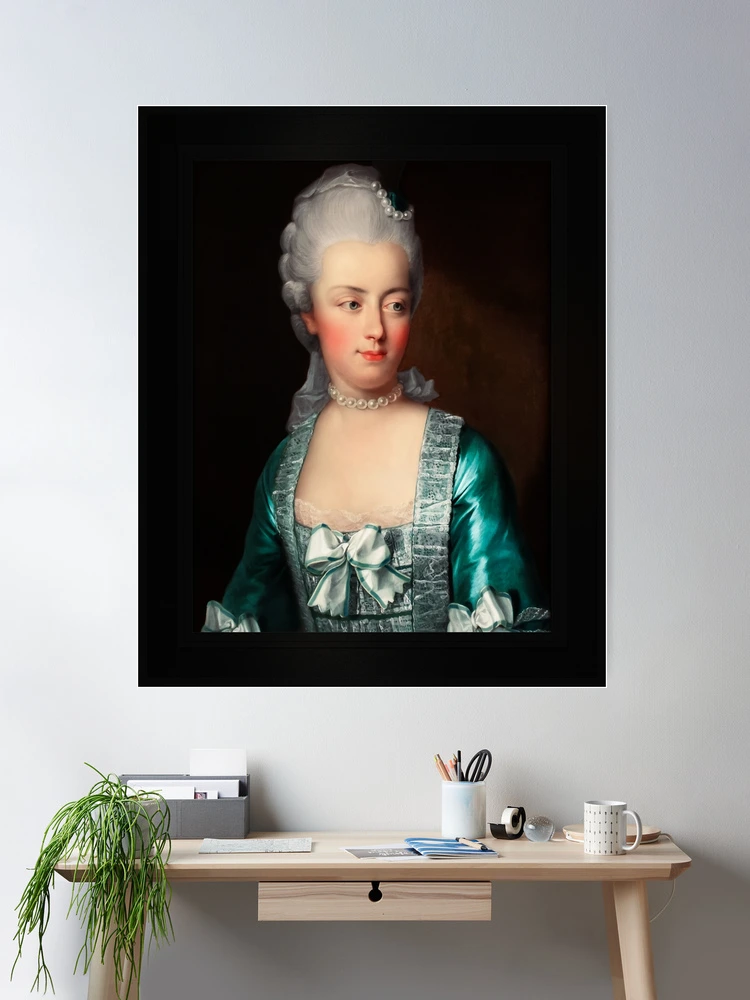
Maalaus “Marie Antoinette c1773-4” by Austrian painter Joseph Hickel (1736 – 1807) is a splendid example of Rococo muotokuva, captured during the queen’s early years as the consort of King Louis XVI of France. Tämä muotokuva, believed to have been painted around 1773-1774, illustrates the opulence of the French monarchy just before the turbulence of the French Revolution. The work embodies the grace and elegance that became synonymous with the queen’s image in popular culture and royal court life.
Sisällysluettelo
Pääaihe: Queen Marie Antoinette
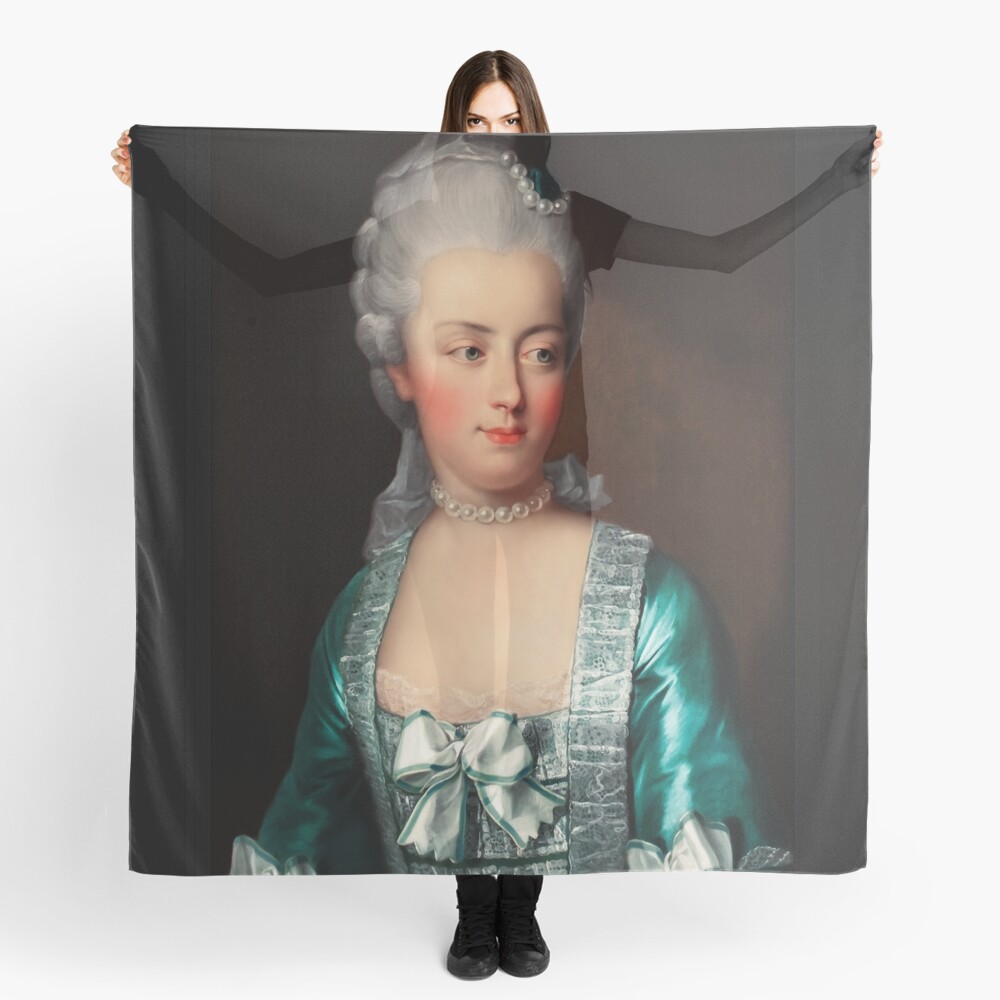
Marie Antoinette is depicted in a dignified and serene pose, evoking both innocence and regal elegance. Her countenance is youthful yet poised, with an air of quiet confidence befitting her royal status. She is dressed in an exquisite gown made from silken, pale turquoise fabric that has been delicately painted to highlight its lustrous texture. This attire is further adorned with large, intricate satin ribbons that form elegant bows at the front and along her sleeves. The composition centers around her gentle gaze, her eyes softly fixed upon the viewer, which fosters a sense of personal connection.
Her pale complexion is radiant, melkein eteerinen, while her cheeks are touched with a soft, rosy glow that contrasts beautifully with the colder tones of her gown and background. This subtle use of color enhances the life-like quality of the portrait. Hänen hiuksensa, powdered and styled in an elaborate fashion, features cascading curls, and it is ornamented with a large pearl-embellished accessory at the back of her head, completing the fashionable aesthetic of the time.
The pearls themselves are significant, symbolizing the wealth and grandeur of the French monarchy, and they highlight her high rank. Marie Antoinette’s youthful and composed expression further emphasizes the public’s perception of her as a queen—one who radiates charm, armo, and a sense of regal authority.
The Attire and Fabrics
Marie Antoinette’s gown is not only a visual delight but also a reflection of the delicate artistry of Rococo fashion. The fabric is a rich and luxurious material, reflecting the stylistic preference of the French court at the time. The texture of the dress has been meticulously rendered, with soft folds that create an almost tangible sensation of its softness. The fabric of the gown is made from fine silk, which was the height of luxury during the 18th century. This is further emphasized by the painter’s careful attention to the play of light on the dress, creating subtle glimmers that catch the viewer’s eye and further elevate the queen’s image.
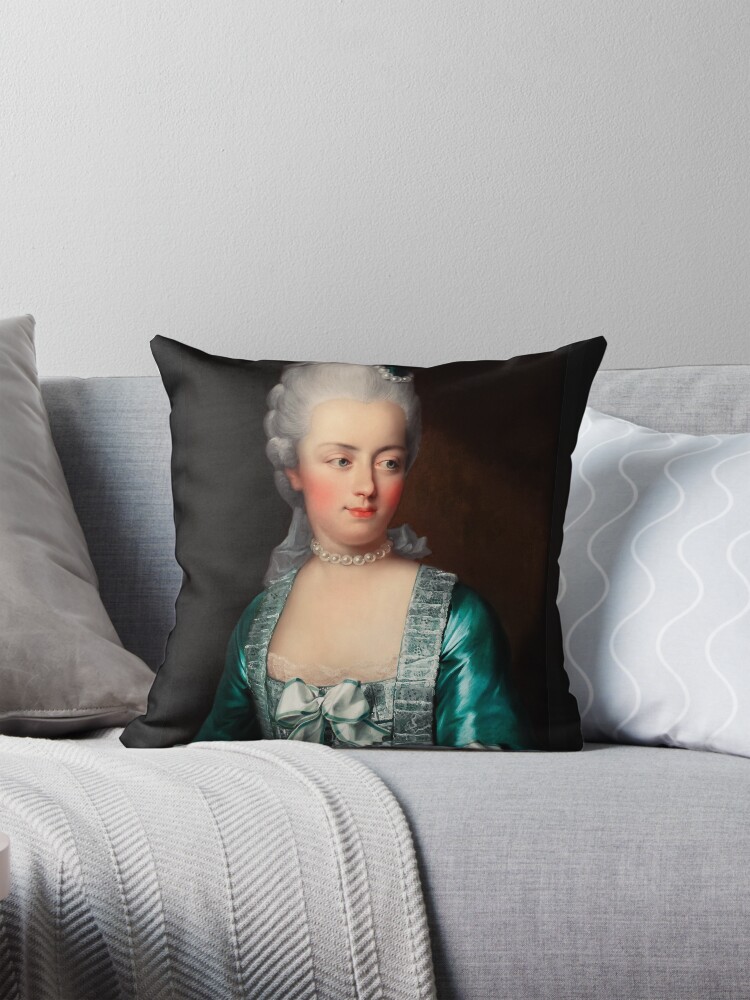
The large bows placed strategically at the front and sleeves of the gown symbolize femininity, varallisuus, ja armo. Such detailing is characteristic of the Rococo style, which favored ornamentation and elaborate embellishments. The dress’s cut, kun muodollinen, also suggests the leisurely lifestyle of the aristocracy during this era, where attention to fashion and appearance was paramount.
The Artist’s Style and Technique
Joseph Hickel’s approach to portraiture demonstrates his exceptional command of Rococo aesthetics, which are evident in the graceful curves of his subject’s body, pehmeä, diffused lighting, and the emphasis on textures. Hickel’s technique here showcases the light and airy qualities that define much of the Rococo style—an aesthetic that emerged in France during the 18th century and was characterized by its emphasis on soft colors, delicate brushstrokes, and light-hearted themes.
The light in the painting is subtly diffused, illuminating Marie Antoinette’s face and gown while leaving the background darker. The contrast between light and shadow serves to emphasize the royal subject, drawing the viewer’s focus to her delicate features and fine attire. Hickel’s ability to capture both the material quality of the fabric and the softness of her complexion demonstrates his deep understanding of the medium, further showcasing his prowess in fine detail work.
Lisäksi, Hickel’s use of color is subtle yet effective. The soft turquoise of the gown contrasts beautifully with the warmer, almost ochre tones in the background, emphasizing Marie Antoinette’s figure as the focal point. The inclusion of the soft, pale pinks and warm highlights around her face enhances the sense of realism, as well as the gentle grace that the queen exudes.
Tausta ja asetus
The background of this portrait is relatively simple, with a muted dark tone that allows the queen and her gown to stand out. The subtle gradient from a dark, shadowed space to a lighter area behind her head helps to frame the figure. This choice of a dark, almost indistinct background is typical of Rococo portraiture, which often featured such backgrounds to heighten the focus on the subject’s appearance rather than the surroundings. The lack of intricate detail in the backdrop suggests the artist’s intention to keep the viewer’s attention firmly on Marie Antoinette, hänen pukeutumisensa, ja hänen ilmaisunsa, while allowing her to be placed in an undistracted, almost idealized space.
The overall effect of the portrait is one of refinement, eleganssi, and the cultivation of a royal image. The lack of any distracting elements in the background serves to reinforce the queen’s majestic aura, positioning her as a powerful symbol of the monarchy.
Theme and Mood of the Artwork
The mood conveyed by this portrait is one of regal dignity and quiet grace. The queen’s serene expression and gentle gaze suggest a calm composure, which aligns with the idealized image of royalty during the 18th century. The portrait is a reflection of the prevailing mood of the time—an era of grandeur, runsaus, and aristocratic display.
There is an almost ethereal quality to the portrayal of Marie Antoinette; she appears to transcend the immediate moment, her portrait capturing her in an idealized, almost divine state. This was common practice during the Rococo period, where portraits of royalty were often designed to present the subject as an almost untouchable figure. Tämä muotokuva, erityisesti, emphasizes Marie Antoinette’s position as a queen who is both beloved and revered by the public, yet distanced by the role she occupies.
Johtopäätös
Joseph Hickel’s portrait of Marie Antoinette from 1773-4 captures not only the physical beauty of the queen but also her role as the personification of the French monarchy during the late 18th century. Through the artist’s masterful use of color, valaistus, ja rakenne, the portrait brings to life an image of the queen as the epitome of aristocratic femininity. The work also serves as a reminder of the grand, yet increasingly fragile, nature of the French royal court just before the onset of revolution.
Taiteilija Bio on johdettu Christies.com
Joseph syntyi Wienissä, Itävalta sisällä 1736 ja opiskeli Kuvataideakatemiassa, Wienistä 1756 noin 1766 jossa hän opiskeli muotokuvamaalausta.
Sisään 1768 keisarinna Maria Teresa (1717 – 1780) tilasi hänet maalaamaan sarjan muotokuvia Italian aatelistosta; jossa hän matkusti Milanon kaupunkeihin, Parma ja Firenze.
Seuraavana vuonna hänestä tuli Firenzen Accademia di Belle Artin jäsen, Italia; ja sisään 1772 hänet nimitettiin Wienin Gemldegalerien varajohtajaksi.
Sisään 1776 Josephista tuli sitten keisarillinen hovimaalari, ja tästä eteenpäin 1780-luvulla hänestä tuli yksi Wienin kysytyimmistä muotokuvamaalareista.
Uskotaan, että Joosef loi elämänsä aikana enemmän kuin 3000 muotokuvia; johon kuului Itävallan keisarillinen perhe, Paavi Pius VI, Napolin kuningas Ferdinand IV ja kuningatar Maria Carolina, ja monet aateliston jäsenet, keskiluokka, sekä Hofburg-teatterin näyttelijät.