

Portrait dune Femme Portant des Perles (Helmiä pukeutuvan naisen muotokuva)
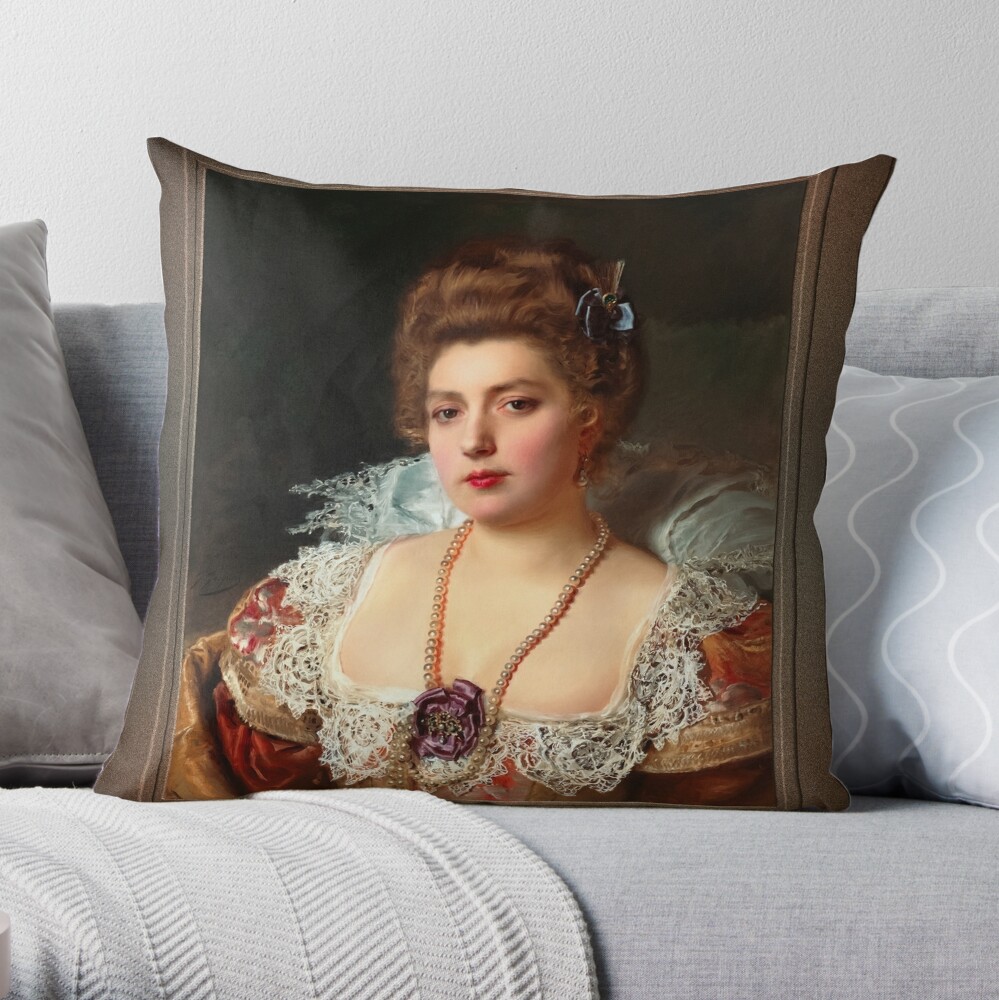
“Portrait dune Femme Portant des Perles” (Helmiä pukeutuvan naisen muotokuva) is a renowned work created by French painter Gustave Jean Jacquet, jotka asuivat 1846 että 1909. This stunning portrait, dated to the late 19th century, embodies the opulence and elegance of its era. Taiteilija, well known for his portraits and historical scenes, masterfully captures the delicate beauty of the female subject in this painting, blending his academic training with a deep understanding of the nuances of light and texture. The painting reflects the grandiosity of the period while also imparting a sense of personal intimacy.
Sisällysluettelo
Pääaihe
The subject of the portrait is a poised woman dressed in luxurious attire. Hänen katseensa, slightly downward and soft, conveys an air of calm sophistication. She is adorned with a stunning necklace of large, lustrous pearls, which gives the painting its title. The pearls reflect light subtly, emphasizing the delicate textures of her skin and the grace with which she carries herself. Her expression is neutral yet profound, perhaps suggestive of the inner contemplation often associated with high society women of the time. Her full lips are delicately painted with a subtle rose hue, which contrasts against the ivory tones of her skin.
Her hairstyle, an elaborate updo, is a hallmark of the period’s fashion, with carefully arranged curls and twists that provide a sense of controlled, aristocratic elegance. A dark ribbon or hair accessory is placed in her hair, adding a touch of contrast to the lighter tones of her skin and gown. The setting does not detract from the subject; sen sijaan, it enhances her importance, offering a glimpse into a world of refinement and exclusivity.
The Gown and Accessories
The woman’s gown is lavishly designed, made from rich fabrics, todennäköisesti silkki tai satiini, which appear soft and flowing despite the stiffness of her regal posture. The color palette of her gown is primarily a rich blend of crimson and deep rose, highlighting the luxurious nature of her wardrobe. Lace detailing decorates the edges of her sleeves and neckline, adding intricate texture and reflecting the fashion preferences of the period. The gown is ornamented with a floral design on the bodice, perhaps symbolic of wealth and beauty.
In addition to the pearls, her necklace is a key feature of the composition. The necklace’s large pearls are perfectly round and well-polished, casting subtle reflections of light onto her chest and emphasizing the richness of the attire. The pearls are linked by delicate gold or silver clasps that seem to blend seamlessly with the overall form of the jewelry, niiden sileät, round surfaces contrasting with the rough textures of the lace and fabric. This attention to detail is typical of Jacquet’s ability to bring realism to his works, showing an acute awareness of textures and surfaces.
The Background and Composition
The background of the portrait is dark and subdued, a technique commonly used by 19th-century portraitists to ensure that the subject remains the central focus of the artwork. It is composed of deep, muted greens and browns, which not only draw attention to the subject but also convey a sense of mystery. This choice of color creates a stark contrast against the softness of the woman’s face and the vibrant hues of her attire, amplifying her presence in the piece.
The dark background is not overly busy or distracts from the subject, allowing the viewer to focus solely on the woman in front of them. Pehmeä, diffused light falling from the left illuminates the subject’s face, emphasizing her smooth features, while the faint shadows provide depth and dimension, giving the portrait a lifelike quality. This play of light and shadow adds volume to her face, allowing the painter to capture a sense of softness and realism.
Tunnelma ja teema
The mood of the portrait can be described as serene yet somewhat melancholic. There is a sense of quiet grace about the subject, as though she is a figure who has been immortalized in time, forever held in this moment of poised elegance. The portrayal of the woman’s calm and composed expression speaks to the themes of femininity, armo, and the inner strength often attributed to women of high social standing in the 19th century. The use of rich textures and luxurious fabrics further enhances the atmosphere of wealth and refined beauty that permeates the painting.
There is an underlying theme of timelessness in the piece, which is highlighted by the woman’s delicate features and attire. Jacquet, known for his impeccable attention to detail, ensures that the painting not only reflects the fashion of the time but also evokes a deeper sense of permanence. The viewer is invited to contemplate the fleeting nature of beauty and wealth, as embodied by the subject. The careful preservation of her image suggests a wish to immortalize the fleeting moments of grace that come with youth and beauty.
Materiaalit ja tekniikka
The medium used in this artwork is oil on canvas, a common choice for portraits of this nature, allowing for rich, deep hues and fine detailing. Jacquet’s technique in the use of oil paint is evident in the smooth, almost velvety texture of the subject’s skin and the delicate interplay of light and shadow that makes the portrait come to life. The attention to texture—seen in the soft folds of the gown, the subtle sheen of the pearls, and the intricate lacework, demonstrates Jacquet’s technical mastery in capturing materials with realism and depth.
His brushstrokes are fine and precise, giving a detailed finish to the gown’s fabric and the contours of the woman’s face, while the background remains softer and more impressionistic, serving to focus the viewer’s attention on the subject. This balance between detail and subtlety speaks to Jacquet’s artistic sensibilities and his ability to convey both the surface and emotional depth of his subjects.
Tämä on remasteroitu digitaalisen taiteen vanhojen mestareiden kopio julkisessa käytössä olevasta kuvasta, joka on saatavilla a kankaalle printti verkossa.
Artist Bio Is Derived From 19thcenturypaintings.com
Gustave syntyi Pariisissa, Ranska päälle 1846 ja oli ranskalaisen taidemaalari William-Adolphe Bouguereaun oppilas (1825 – 1905) uusklassismista, Realismi, Akateeminen, Symboliikka, Modernin taiteen aikakausi; eikä koskaan mentoroinut kenenkään muun taiteilijan kanssa ja saanut häneltä voimakkaita vaikutteita uransa alkuvaiheessa.
Gustaven debyyttitaideteos oli La Reverie, Salonille esitelty allegoriapala 1865; sitten sisään 1866 esitteli pienikokoisia maalauksia, jotka kuvasivat 16. luvun elämää, 17ja 1700-luvun elämää, sekä maalata muotokuvia kohteista 1500-luvun aikakausiasuissa.
Sisään 1875 Gustave palkittiin huippuosaamisen mitalilla ja 4 vuotta myöhemmin hänet valittiin Kunnialegioonan ritariksi (Kunnialegioona, entinen Legion of Honor -kuninkaallinen ritarikunta); on Ranskan korkein ansiomerkki, sekä sotilaallinen että siviili. Perustettu 1802 kirjoittanut Napoleon Bonaparte.