

Marie-Gabrielle Capet
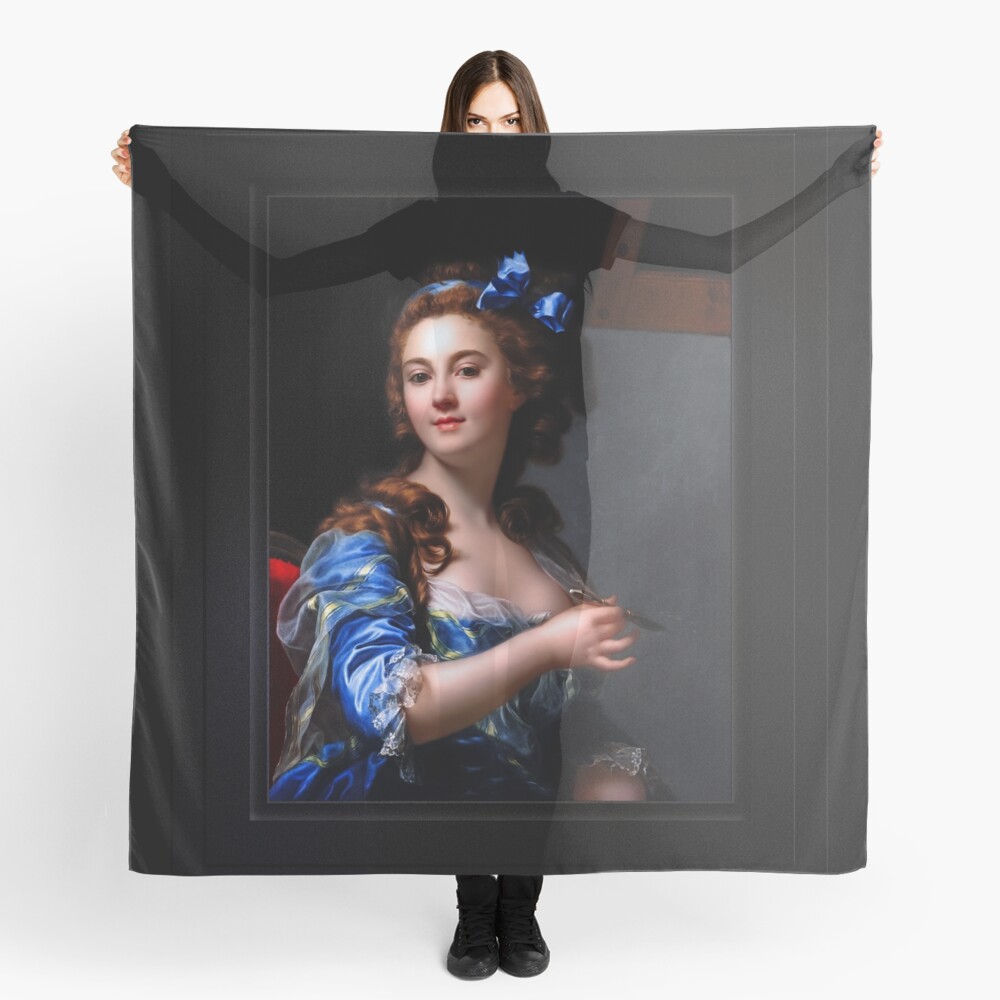
Marie-Gabrielle Capet (Self-Portrait c1783) av den franske maleren Marie-Gabrielle Capet (1761 – 1818), som malte i den nyklassiske stilen
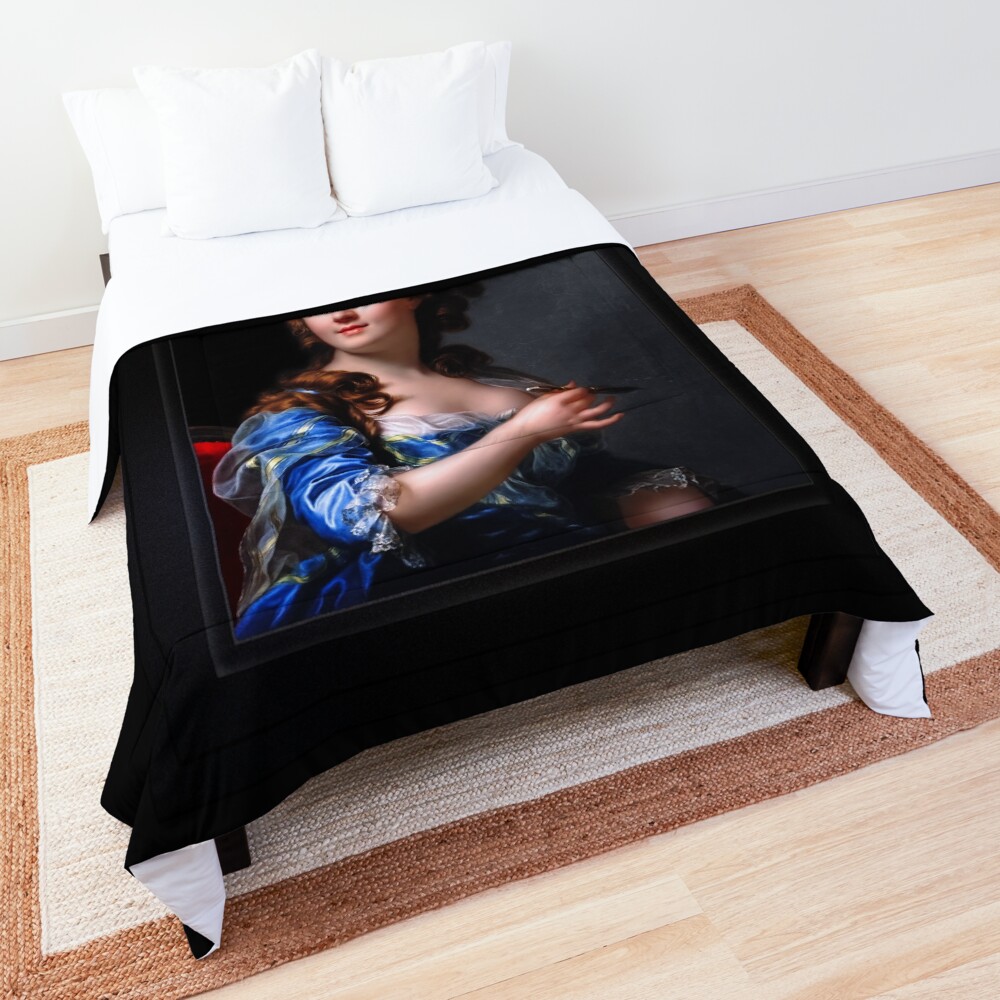
Dette er vakkert og elegant portrett av en dame; dette selvportrettet av Marie-Gabrielle Capet fanger henne i all sin ungdommelige herlighet.
She is sitting on a chair with red padding in front of a painting easels with light illuminating her form the left side of the painting, while holding a metal chalk holder in her right hand that has an eraser fitted into a slot on its back end; with a light outline of a figure she has drawn on the canvas placed on the easel.
She is wearing a wide blue ribbon around her hair, that is tied into a bow, just off to her left side, with her long curly hair flowing on her shoulders.
She is dressed in a matching blue dress that has sheer silk shawl like garment weaved into that has gold stripe patters throughout the shoulders, upper sleeves and front of the dress; as well as silk ruffles at the cuffs of the short sleeves.
This is a retouched digital art reproduction of a public domain image that is available for purchase online as a rullet lerretstrykk.
Info nedenfor avledet fra Wikipedia.org
Marie-Gabrielle kom fra en beskjeden bakgrunn og gikk i ungdommen på en offentlig tegneskole i byen hennes. I 1781, tjue år gamle Capet flyttet til Paris for å bli student til Adélaïde Labille-Guiard (1749–1803), en nyklassisk kunstner som ble tatt opp på Royal Academy of Art i 1783.
På 1700 -tallet Frankrike, the Royal Academy of Art was responsible for training artists and exhibiting artworks at the Salon that glorified heroic values promoted by the Bourbon monarchy. Until the French Revolution, the Royal Academy of Art in Paris was the central institution for official artistic practice, and limited its number of female students to four at a time.
Capet showed her early work at the Exposition de la jeunesse, and later exhibited at the Salon when it was opened to all artists after the French Revolution. Her body of work included miniature paintings, oil paintings, and pastels, which were praised for their virtuoso draftsmanship and use of colour.
Many of her pastel paintings were portraits, though by 1808 she was regarded as a history painter in her own right; and counted among other customers several members of the royal family, and other members of Paris society, such as the lawyer Pierre-Nicolas Berryer and the playwright Joseph Chénier.
Capet and Labille-Guiard not only enjoyed a professional relationship, but were also close family friends. Capet would move in with her teacher at the Louvre until Labille-Guiard’s death. Even after Adélaïde Labille-Guiard married the painter François Vincent in 1799, Capet continued to live in their home. After Adélaïde Labille-Guiard’s death, Capet lived with her husband until his death in 1816. Upon his death, Capet purchased Labille-Guiard and Vincent’s estate.
Among Marie-Gabrielle Capet best known works are those of Mesdames Adelaide and Victoire, Madame Vincent surrounded by her pupils, Mlle. Mars, and Jean-Antoine Houdon.