

Maternity c1917
“Maternidad,” creado en 1917 by British painter Edmund Blair Leighton (1852 – 1922), encapsulates the profound and timeless theme of maternal care and devotion. This exquisite painting is a reflection of Leighton’s signature approach to historical and genre painting, imbued with an atmosphere of reverence and serenity. The artwork features a tender and intimate scene, where a young mother, cradling her child, is surrounded by figures exuding a sense of peace and grace.
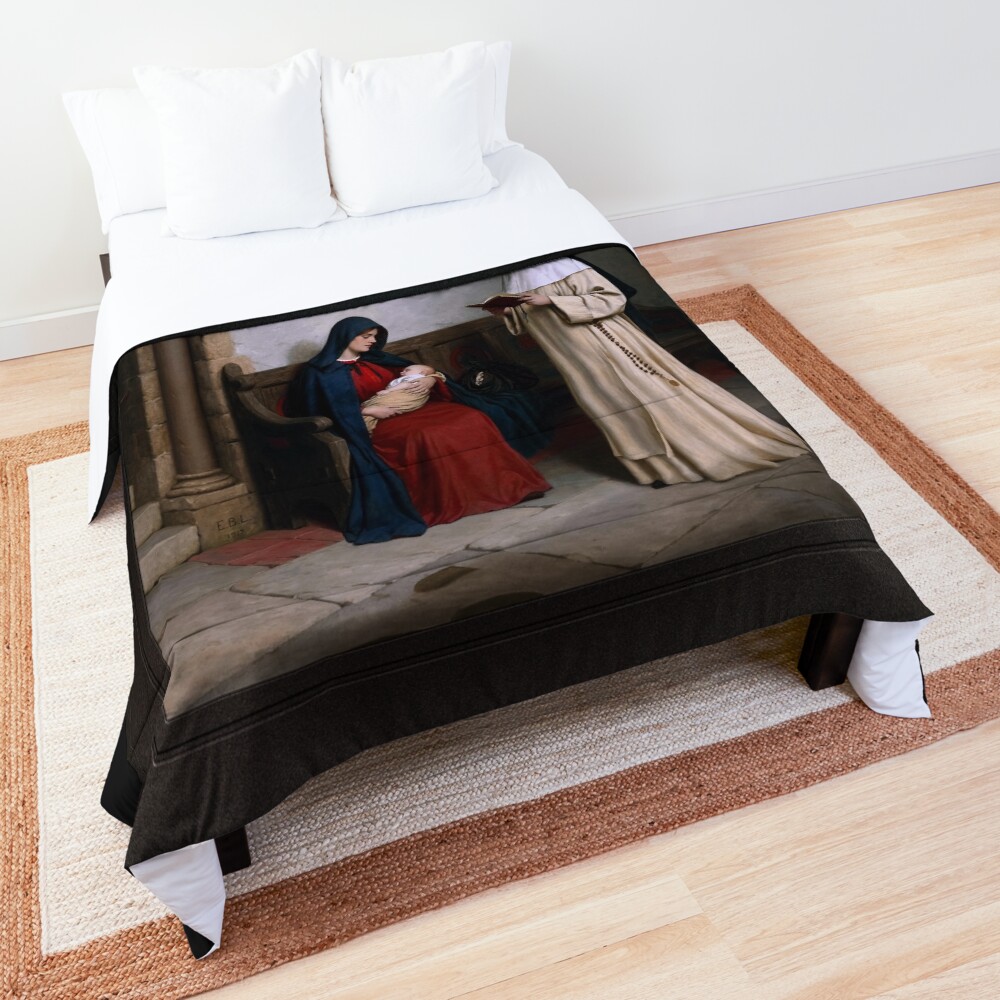
Tabla de contenido
The Scene and Composition
The composition of the painting is both balanced and harmonious, drawing the viewer’s eye to the central figure of the mother. She sits in a stone pew within a somber, yet beautifully lit interior, which evokes a sense of both religious sanctity and domestic comfort. The mother’s attire is rich in color, with a deep red dress that contrasts against the muted tones of the surrounding space. The blue cloak she wears adds a layer of serenity and formality, reinforcing her importance in the composition. She gazes down lovingly at the infant in her arms, an image of maternal devotion that is both poignant and universal.
To the right of the mother stands a nun, dressed in the simple yet distinguished habit of the time. She holds an open book, perhaps a prayer or passage of scripture, and her gaze is directed downward, suggesting a quiet reverence for the scene unfolding before her. This juxtaposition of the divine and the maternal strengthens the underlying themes of sacred motherhood. The subtle interaction between the two figures, one focused on the child, the other engaged in spiritual contemplation, imparts a sense of balance between earthly and spiritual care.
Symbolism and Themes
El tema de “Maternidad” is deeply rooted in the idea of the sacred and selfless nature of motherhood. The painting communicates not only the love a mother has for her child but also the reverence associated with this relationship. The mother is depicted as a figure of nurturing warmth, providing a safe space for her infant in her protective embrace. The act of breastfeeding, depicted here, has historically been seen as an intimate and spiritual gesture, one that embodies the sacrificial and unconditional love a mother offers her child. In the presence of the nun, the scene also suggests that motherhood is not merely a physical role, but also a spiritual one, linking the earthly and the divine.
In the context of the time in which it was painted, just after World War I, the image of a mother with her child could be seen as a symbol of hope, continuidad, and the restoration of peace after a period of suffering. La sencillez del entorno., with its stone walls and subdued lighting, adds to the painting’s sense of timelessness, reflecting the perennial nature of the bond between mother and child.
Estilo y técnica artística
Leighton’s artistic style in “Maternidad” is characterized by a meticulous attention to detail and an almost photographic realism. Lo suave, naturalistic lighting that bathes the mother and child creates an ethereal glow, emphasizing their importance within the painting. The rich textures of the clothing, the smoothness of the child’s skin, and the soft folds of the fabric are all rendered with exceptional skill, showcasing Leighton’s technical mastery. The artist’s use of light and shadow adds depth and dimension, drawing the viewer’s eye to the central figures while allowing the surrounding elements to fade gently into the background.
The figures themselves are carefully proportioned, each face expressing subtle emotions that add layers of meaning to the scene. The mother’s expression is one of deep tenderness and love, while the nun’s is one of quiet contemplation. The serene expressions on both figures are a testament to the peaceful mood that Leighton has successfully evoked.
El entorno y los materiales
The interior depicted in “Maternidad” suggests an ecclesiastical environment, perhaps a church or monastery, with its stone walls, arched columns, and medieval-style windows. The simplicity of the setting does not detract from the sacredness of the scene; bastante, it enhances the intimate and personal nature of the moment. The rough-hewn texture of the stone contrasts with the softness of the figures, heightening the emotional impact of the scene.
The materials used in the painting, óleo sobre lienzo, allow Leighton to achieve the rich depth of color and fine detail that characterize his works. The glimmer of light against the figures’ garments and the smoothness of the mother’s skin highlight the artist’s ability to capture the human form with exquisite precision.
Estado de ánimo e impacto emocional
El estado de ánimo de “Maternidad” is one of profound peace and quiet reverence. La composición evoca una sensación de quietud., as if time has momentarily paused in this sacred space. La iluminación suave, gentle expressions, and the maternal bond between the two women create a tranquil atmosphere that invites reflection. The image of the mother, tenderly cradling her infant, speaks to the universal themes of love, protección, and the sacred nature of motherhood. The inclusion of the nun reinforces the connection between the earthly and the divine, emphasizing the sanctity of the maternal role.
The painting also resonates with themes of renewal and hope, particularly in the context of its creation during the aftermath of the First World War. The act of nurturing a child, in such a calm and sacred setting, could be interpreted as a symbol of the resilience of the human spirit, even in times of great turmoil. The mother’s act of care, set against the backdrop of a period of hardship, offers a message of quiet strength and the promise of a brighter future.
Esta es una reproducción de maestros antiguos de arte digital remasterizada de una imagen de dominio público que está disponible como Esta es una elegante chica de glamour art deco vintage..
Biografía del artista
Información a continuación derivada de Wikipedia.org
Edmund nació de Caroline Leighton (de soltera Boosey) y el artista Charles Blair Leighton (1823 – 1855) en Londres Inglaterra en septiembre 21, 1852; y se educó en la University College School, que abandonó a la edad de 15 trabajar para un comerciante de té.
Como tenía interés en el arte y quería estudiarlo.; se inscribió en South Kensington y comenzó a tomar clases por la noche; y de allí asistió a la Heatherley’s School en Newman Street, Londres.
Cuando él era 21 años de edad ingresó en la Royal Academy of Arts, que fue fundada en 1768; y luego recibiría su primera comisión de arte haciendo ilustraciones monocromáticas para Cassell's Magazine y su Libro de baladas británicas..
Expuso su primera pintura titulada: Una falla en el título en 1874 en la Real Academia, lo que le valió 200 Libras; y exhibiría sus obras anualmente durante los próximos 40 años en la Real Academia hasta 1920.
Edmund fue un artista que prestó gran atención a los detalles y produjo obras de arte históricas decorativas de gran acabado., que presentaba escenas románticas de caballería y mujeres con atuendo medieval, que tuvo un gran atractivo popular.