

Memories of Olive
Memories of Olive: A Glimpse into 1920s Glamour by Alberto Vargas
Symbol zastępczy dla Alberto Vargas’ “Memories of Olive,” created around 1920, is a captivating example of the artist’s signature style – a blend of classical beauty ideals with the burgeoning pin-up aesthetic that defined much of the early twentieth century. The painting offers a window into an era of evolving social norms and artistic expression, showcasing a woman in a moment of quiet contemplation and sensual allure. Vargas, born in Peru but largely based in the United States, was renowned for his elegant depictions of women, often working for publications like tytuł grzecznościowy i Vogue, where he helped shape the visual language of glamour during the interwar period.
Spis treści
Temat: Olive’s Poised Presence
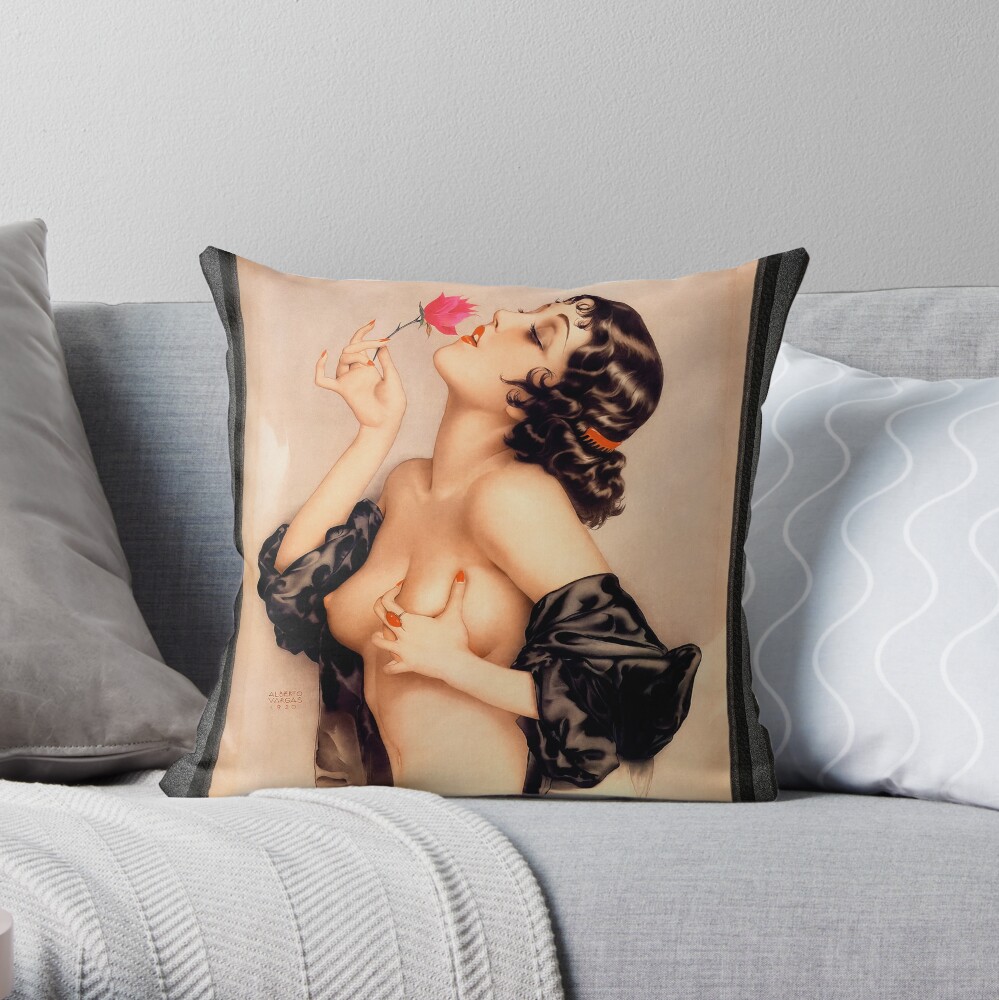
Centralna postać, identified as “Olive,” is presented in a reclining pose that evokes classical sculpture while simultaneously embracing a more modern sensibility. Her body is gracefully curved, emphasizing the contours of her form with a delicate balance between realism and idealization. She isn’t posed aggressively or provocatively; raczej, she exudes an air of quiet confidence and introspection.
Olive’s face is framed by dark, wavy hair meticulously styled in the fashionable bob cut of the 1920s, secured with a decorative band. Her eyes are downcast, focused intently on a single pink rose held delicately between her fingers. This gesture suggests a moment of private reflection, perhaps recalling cherished memories or simply appreciating the beauty of the flower itself.
Kompozycja i paleta kolorów: A Study in Warmth and Light
Vargas masterfully utilizes light and shadow to create depth and dimension within the portret kompozycja. The painting is bathed in soft, warm lighting that highlights Olive’s skin tones and creates a gentle glow around her form. This diffused illumination contributes to the overall sense of intimacy and tranquility. The color palette is similarly restrained, dominated by muted earth tones – creams, tans, and browns – which provide a subtle backdrop for the figure. The vibrant pink of the rose serves as a striking focal point, drawing the viewer’s eye and adding a touch of vibrancy to the otherwise understated scene. The dark fabric draped across her shoulders provides a visual counterpoint, grounding the composition and enhancing the sense of volume.
Wpływ artystyczny: Classical Roots and Modern Sensibilities
Vargas’ artistic background is evident in “Memories of Olive.” The reclining pose directly references classical depictions of goddesses like Venus, demonstrating an appreciation for traditional beauty standards. jednak, Vargas departs from strict academic conventions by incorporating elements of Art Deco design and the emerging pin-up style. This fusion results in a unique aesthetic that is both timeless and distinctly modern. The emphasis on naturalism in Olive’s features and the relaxed posture contribute to a sense of accessibility and relatability, moving away from the more distant and idealized portrayals often found in earlier classical art.
Technical Skill: Precyzja i szczegółowość
The painting showcases Vargas’ exceptional technical skill as an artist. The rendering of Olive’s skin is particularly noteworthy, with subtle gradations of tone that capture the softness and luminosity of flesh. Each strand of hair appears meticulously rendered, contributing to the overall sense of realism. The details in the fabric – the folds, cienie, and textures – are equally impressive. Vargas’ ability to create such a convincing illusion of three-dimensionality through paint alone is a testament to his mastery of technique.
Contextual Significance: A Reflection of an Era
“Memories of Olive” emerged during a period of significant social and cultural change in the United States. The 1920s, often referred to as the “Roaring Twenties,” were characterized by economic prosperity, technological advancements, and shifting attitudes towards gender roles. Vargas’ paintings reflected this evolving landscape, portraying women with a newfound sense of independence and self-assurance. While still adhering to traditional notions of beauty, his depictions moved away from Victorian ideals of demureness and restraint, embracing a more modern and sensual aesthetic that resonated with the spirit of the age. “Memories of Olive” stands as a poignant reminder of this transformative era in American art and culture.
Bio artysty z Wikipedia.org
Urodzony w Arequipie, Peru, był synem znanego peruwiańskiego fotografa Maxa T. Vargas.[1] Alberto Vargas przeniósł się do Stanów Zjednoczonych w 1916 po studiach artystycznych w Europie, Zurych, i Genewa przed I wojną światową. Będąc w Europie natknął się na francuski magazyn La Vie Parisienne, z okładką Raphaela Kirchnera, co, jak powiedział, miało ogromny wpływ na jego pracę.
Jego wczesna kariera w Nowym Jorku obejmowała pracę jako artysta dla Ziegfeld Follies i dla wielu hollywoodzkich studiów. Ziegfeld powiesił swój obraz Olive Thomas w teatrze, i była uważana za jedną z pierwszych Vargas Girls. Vargas’ najsłynniejszym dziełem filmowym był plakat filmu 1933 film Grzech Nory Moran, który przedstawia prawie nagą Zitę Johann w pozie desperacji. Plakat jest często nazywany jednym z najlepszych plakatów filmowych, jakie kiedykolwiek powstały.
W latach 40. stał się powszechnie znany jako twórca kultowych pin-upów z czasów II wojny światowej dla magazynu Esquire znanego jako “Dziewczyny Vargasa.” Między 1940 i 1946 Wyprodukowano Vargas 180 obrazy dla magazynu.[1] Rysunki na nosie wielu amerykańskich i alianckich samolotów z okresu II wojny światowej zostały zainspirowane i zaadaptowane z tych pin-upów Esquire, jak również te George'a Petty, i innych artystów.
This remastered vintage art pin up girl reproduction, podobnie jak wszystkie dzieła sztuki, które można znaleźć na stronie internetowej Xzendor7, można kupić online w różnych formatach materiałów, w tym odbitki na płótnie, wydruki akrylowe, metalowe nadruki, druki na drewnie, wydruki w ramkach, plakaty, i jako zwijane wydruki na płótnie w różnych rozmiarach od 12 cale do 72 cale w zależności od rozmiaru rzeczywistej grafiki i sklepu z drukiem na żądanie, w którym zdecydujesz się kupić sztukę.
Jest to retuszowana reprodukcja starych mistrzów sztuki cyfrowej będąca własnością publiczną.