

Czerwona Infolinia
Czerwona Infolinia: A Celebration of Glamour and Playfulness
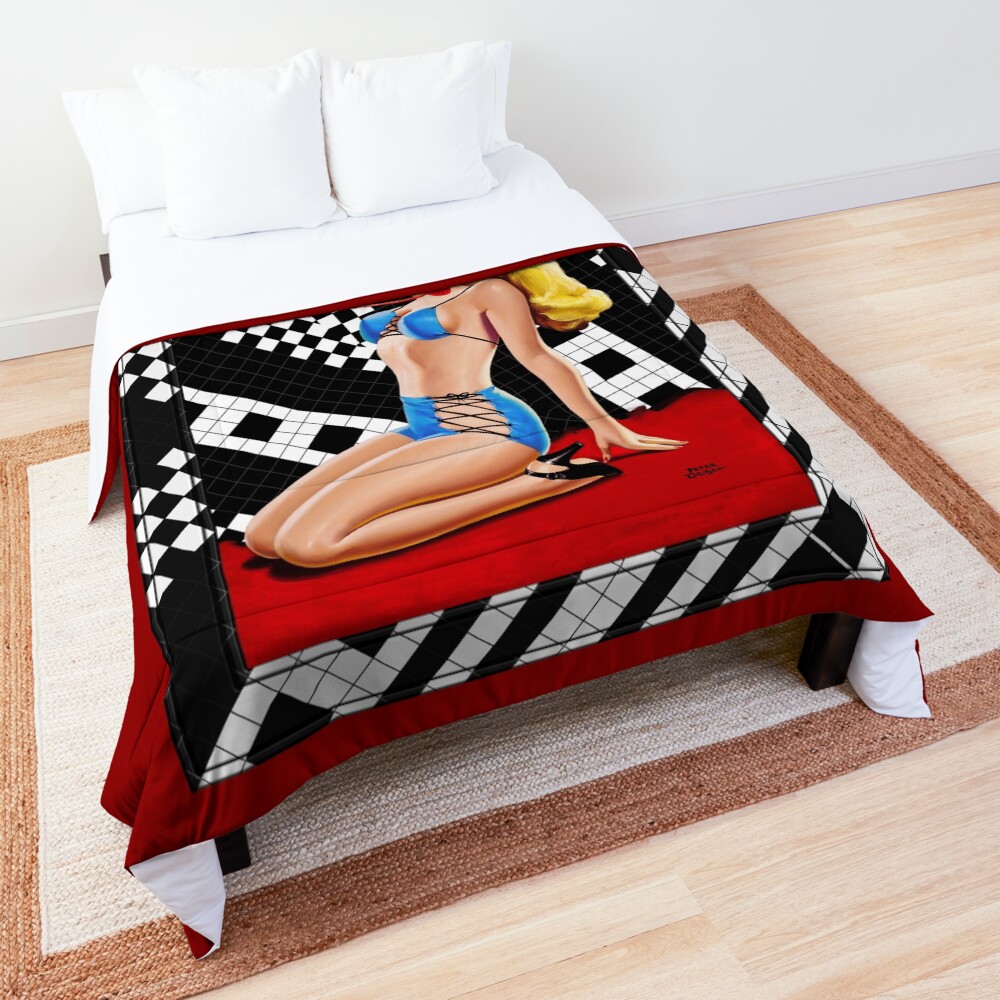
Czerwona gorąca linia Petera Driben (1903 – 1968), an esteemed American pin-up artist of the mid-20th century, was celebrated for his ability to infuse vitality and charm into his works; and this piece is a quintessential example of his artistry, epitomizing the flirtatious yet wholesome essence of pin-up culture. Driben‘s vibrant palette, mastery of form, and knack for storytelling through visual art are on full display in this piece.
Spis treści
Główny temat: The Radiant Blonde in Blue
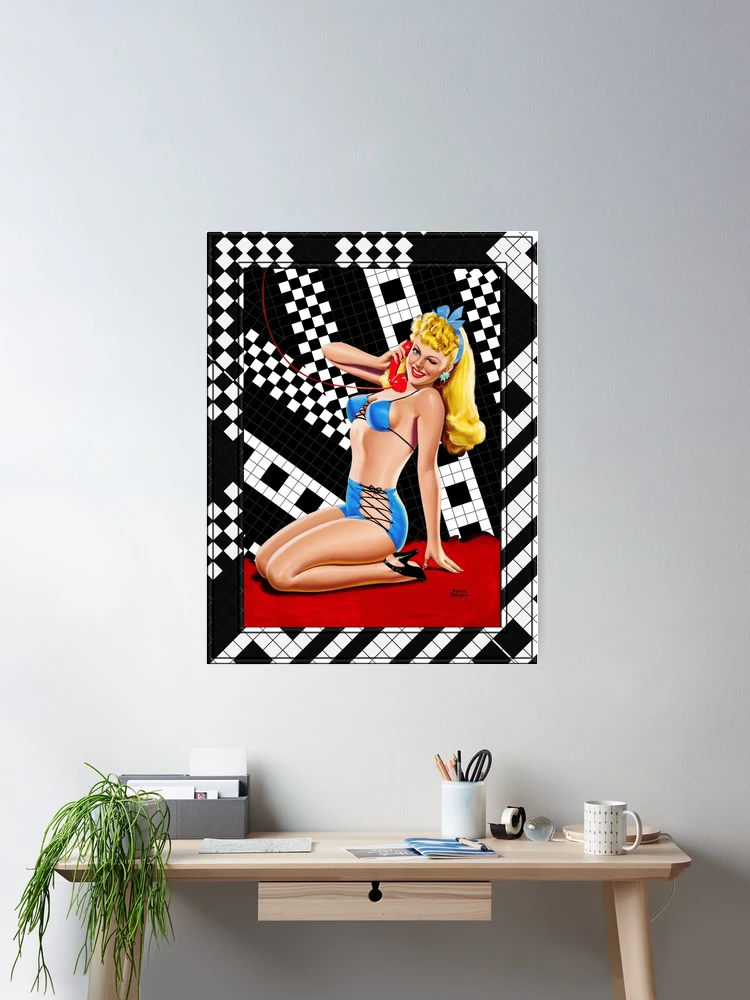
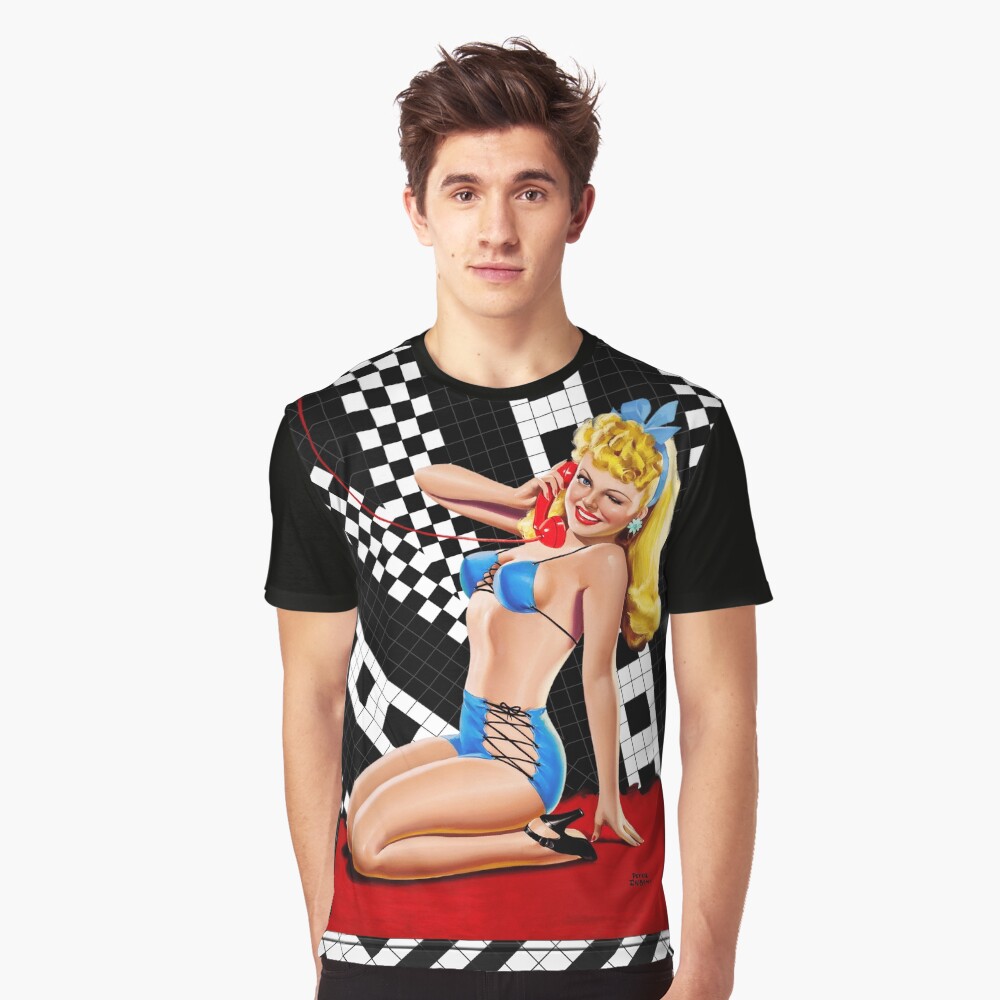
W sercu “Czerwona Infolinia” lies a playful and coquettish depiction of a young blonde woman. Her golden hair cascades in carefully stylized waves, adorned with a large, cheerful blue bow that complements her swimsuit. The bright smile on her face, coupled with her winking eye, exudes an inviting charm, drawing viewers into the narrative. She holds a bright red telephone receiver, which lends the artwork its name and serves as a pivotal object within the composition.
The subject is dressed in a light blue bikini with black lace detailing. The high-waisted bottoms, characteristic of 1940s and 1950s fashion, are secured with crisscrossed laces, adding a touch of suggestive allure without compromising the overall playfulness of the scene. Her slender figure, accented by the pose, kneeling on a red carpet with one hand on the ground and the other holding the phone, demonstrates Driben’s skillful portrayal of anatomy and movement.
Background and Surrounding Objects
Tło “Czerwona Infolinia” is a dazzling geometric checkerboard pattern, executed in stark black and white. This graphic, almost optical illusion-like design provides a modernist contrast to the soft, feminine figure in the foreground. The abstract background evokes a sense of energy and boldness, reinforcing the dynamic quality of the composition.
The red telephone cord playfully winds across the frame, connecting the subject to an unseen caller and injecting a sense of narrative intrigue. The phone itself, a vibrant red, stands out sharply against the monochrome and blue elements, acting as both a visual and thematic anchor.
The red carpet beneath the woman serves a dual purpose. It frames her pose while adding a warm, inviting tone to the composition. This patch of red balances the cooler tones of her attire and ties back to the telephone, creating a cohesive color scheme.
Styl i technika
Driben’s work embodies the Golden Age of pin-up art, an era when illustrators captured an idealized, often cheeky depiction of femininity. His style is defined by bold colors, czyste linie, and a high level of polish that recalls the glossy advertisements and magazine covers of his time.
W “Czerwona Infolinia,” Driben’s use of light and shadow is subtle but effective. The glossy sheen on the telephone and the laces of the swimsuit adds a sense of texture and realism, while the soft shadows along the figure’s curves enhance her three-dimensionality. The artist’s attention to detail—such as the precise rendering of her glossy black heels or the subtle highlights in her hair—showcases his technical prowess.
Temat i nastrój
Temat “Czerwona Infolinia” jest beztroski i zabawny, rooted in the optimism and cheeky humor that characterized mid-century pin-up art. The telephone introduces an element of storytelling, inviting viewers to imagine the conversation taking place. Is she flirting with a suitor? Sharing a laugh with a friend? The ambiguity allows for a range of interpretations, adding depth to the seemingly simple scene.
The mood is undeniably fun and flirtatious, yet it remains within the realm of innocent escapism. Driben’s pin-ups often walked the line between suggestiveness and wholesomeness, a balance that made them widely popular and accessible during their time. “Czerwona Infolinia” nie jest wyjątkiem, offering a playful fantasy that never veers into vulgarity.
Materiały i medium
While the specific medium of this piece isn’t detailed here, Driben was known for his work in gouache and oil paints. These mediums allowed him to achieve the vibrant colors and smooth finishes seen in “The Red Hotline.” The level of precision in the lines and shading suggests that this artwork was originally created as an illustration, likely intended for print in a magazine, calendar, or poster.
Cultural Context and Legacy
“Czerwona Infolinia” reflects the cultural zeitgeist of its era. Created during a time when pin-up art was at its peak, it embodies the idealized femininity and playful sensuality that appealed to audiences in the mid-20th century. Driben’s works were part of a broader movement that celebrated beauty, glamour, and the allure of the everyday woman.
As a piece of pin-up art, “Czerwona Infolinia” carries with it the legacy of a genre that influenced fashion, reklama, and popular culture. Dzisiaj, it stands as a nostalgic reminder of a bygone era, appreciated both for its aesthetic qualities and its historical significance.
Wniosek
“Czerwona Infolinia” by Peter Driben is a masterful example of mid-century pin-up art. Its captivating subject, bold design, and vibrant execution showcase the artist’s talent and creativity. Driben’s ability to combine playfulness with technical precision ensures that this artwork remains an enduring icon of its genre. It captures a moment in time when glamour and charm were celebrated, offering viewers a delightful glimpse into the world of vintage illustration.
Jest to zremasterowana cyfrowa reprodukcja starych mistrzów obrazu z domeny publicznej, która jest dostępna jako metalowy druk online.
O Artystce
Informacje poniżej od Wikipedia.org
Peter Driben urodził się w Bostonie, i studiował w Vesper George Art School, zanim przeniósł się do Paryża 1925. Podczas zajęć na Sorbonie w 1925, rozpoczął serię bardzo popularnych rysunków piórem i tuszem przedstawiających miejskie tancerki.
W marcu 1934 Driben stworzył swój pierwszy znany pin-up, który był okładką La Paree Stories; i przez 1935, produkował okładki dla Snappy'ego, Energia, Noce Nowego Jorku, Francuskie życie nocne i Caprice.
Wraz ze wzrostem popularności Dribena pod koniec lat trzydziestych stworzył więcej okładek dla innych czasopism, w tym Silk Stocking Stories, Filmowa karuzela i prawdziwa zabawa na ekranie.
Kariera Dribena rozszerzyła się na reklamę, kiedy późno przeprowadził się do Nowego Jorku 1936. Tutaj stworzył oryginalne trójwymiarowe, wycinane wyświetlacze okienne dla Philco Radios, Ręczniki kąpielowe Cannon, oraz Firma Piekarska Weber.
Być może jego najsłynniejszym dziełem są oryginalne plakaty i grafiki reklamowe dla Sokoła maltańskiego. Peter Driben był także bliskim przyjacielem wydawcy Roberta Harrisona, i w 1941 zlecono mu produkcję okładek nowego magazynu Harrisona Beauty Parade.
Stamtąd Peter namalował setki okładek tej publikacji i pozostałych siedmiu tytułów, które Harrison miał wypuścić na rynek – Flirt, Szept, Dozorujący, Puścić oczko, Spojrzenie, Chichocze, i Jokera.
Driben często publikował aż sześć lub siedem swoich okładek co miesiąc. Praca Dribena dla Harrisona uczyniła go jednym z najbardziej rozpoznawalnych i odnoszących sukcesy amerykańskich artystów pin-up i glamour. Tuż przed rozpoczęciem pracy dla Harrisona, Driben poślubił artystę, aktorka i poetka, Louise Kirby.
W 1944 zaoferowano mu niezwykłą okazję, dla artystki pin-up; który miał zostać dyrektorem artystycznym „New York Sun”., stanowisko, które piastował do 1946. Podczas wojny, jego popularny obraz przedstawiający amerykańskich żołnierzy podnoszących flagę na Iwo Jimie wzbudził duże zainteresowanie mediów.
W 1956, Driben i Louise przeprowadzili się do Miami Beach, gdzie spędził lata emerytalne malując portrety (w tym jeden z Dwighta D. Eisenhowera) i inne dzieła sztuki, które jego żona zorganizowała w udane wystawy. Driben zmarł w 1968, Luiza w 1984.