

Ensomia de lluna: Un estudi en llum i forma de Luis Ricardo Falero
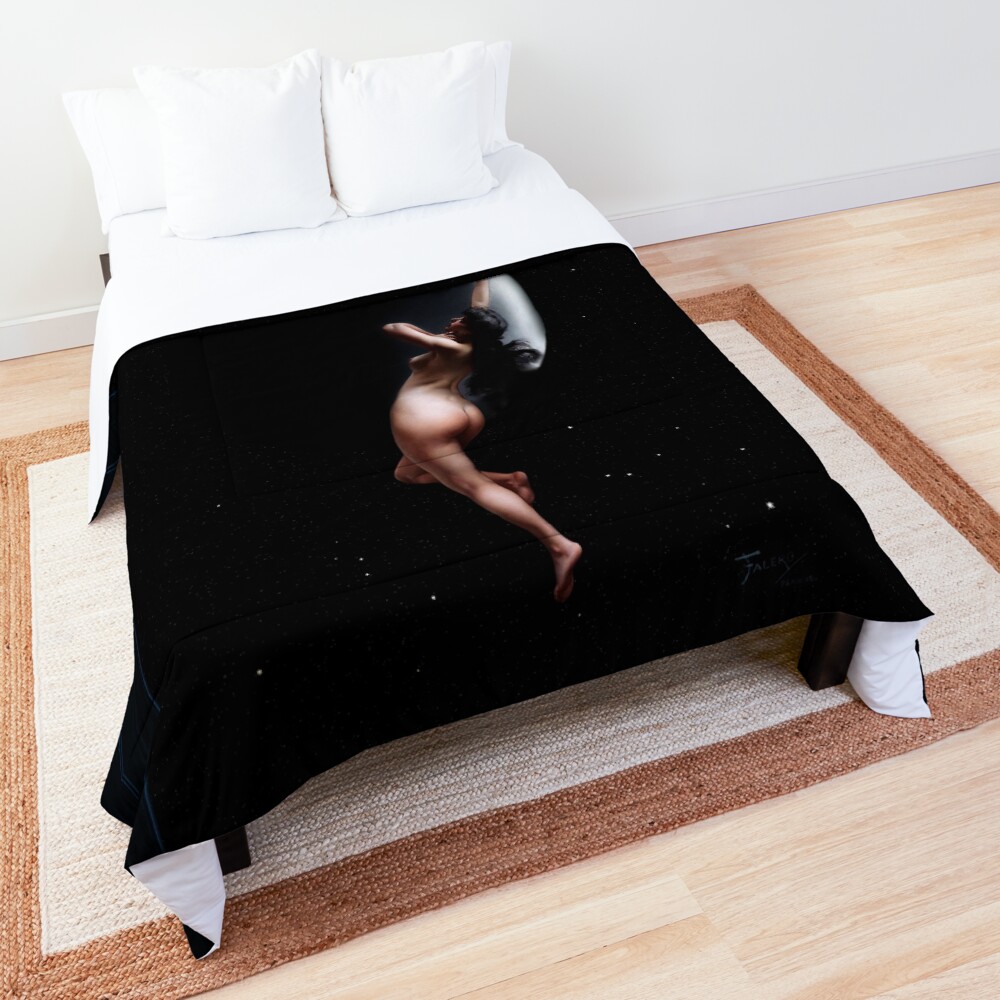
Luis Ricardo Falero"Nimfa de la Lluna,” pintat al voltant 1896, és un exemple captivador de la pintura acadèmica de finals del segle XIX, combinant ideals clàssics amb una creixent sensibilitat romàntica. L'obra d'art presenta una figura femenina solitària suspesa sobre el teló de fons d'un vast, cel nocturn amb estrelles i una lluna creixent lluminosa.
L'ús magistral de Falero del clarobscur -el joc dramàtic de llum i ombra- és immediatament evident, atreu l'atenció de l'espectador al subjecte central i alhora emfatitza la immensitat del cosmos circumdant. La pintura evoca una sensació de bellesa etèria i contemplació tranquil·la, inviting viewers into a dreamlike realm where earthly concerns fade away.
Taula de continguts
Elements compositius & Tècnica
The composition is strikingly simple yet profoundly effective. The figure occupies the lower portion of the canvas, her form gracefully arcing upwards towards the moon. This upward trajectory creates a visual flow that guides the eye from the darkness below to the radiant light above. Falero’s technique demonstrates a clear understanding of anatomical accuracy and idealized beauty, hallmarks of academic training.
While the figure is nude, the presentation avoids any sense of overt sensuality; en canvi, it emphasizes her form as an embodiment of natural grace and harmony with the celestial environment. El suau, blended brushstrokes contribute to the painting’s overall softness and dreamlike quality. There’s a palpable stillness in the scene, heightened by the absence of any other figures or objects beyond the moon and stars.
Paleta de colors & Il·luminació
The color palette is deliberately restrained, dominated by deep blacks and blues representing the night sky, punctuated by the silvery glow of the moon and the subtle flesh tones of the figure. Falero’s skillful manipulation of light is central to the painting’s impact. The moonlight casts a gentle radiance on the woman’s body, highlighting her contours while leaving much of her form in shadow.
This creates a sense of mystery and adds depth to the composition. The stars scattered across the sky are rendered as tiny points of light, adding texture and visual interest to the otherwise dark background. The contrast between the darkness of space and the illuminated figure is dramatic, emphasizing the woman’s isolation and her connection to the lunar sphere.
Simbolisme & Interpretació
While Falero’s work doesn’t explicitly convey a narrative, it resonates with symbolic meaning rooted in classical mythology and Romantic ideals. The moon has long been associated with femininity, intuïció, and the subconscious, making its prominence in the painting significant. The figure’s upward reach towards the moon suggests an aspiration or yearning for something beyond the earthly realm – perhaps spiritual enlightenment or connection to a higher power.
Her pose evokes a sense of weightlessness and freedom, as if she is unbound by gravity and earthly limitations. The overall effect is one of quiet transcendence, inviting viewers to contemplate the mysteries of existence and the beauty of the natural world. The painting’s lack of overt narrative allows for multiple interpretations, making it a deeply personal and evocative work of art.
Context artístic de Falero

Luis Ricardo Falero was an Argentine painter who received his training in Europe, studying at the Real Academia de Bellas Artes de San Fernando in Madrid. His artistic style reflects the influence of academic painting traditions prevalent during the late 19th century, characterized by a focus on technical skill, anatomical accuracy, i la bellesa idealitzada.
malgrat això, Falero’s work also demonstrates an appreciation for Romanticism’s emphasis on emotion, imaginació, and the sublime power of nature. “Moon Nymph” exemplifies this synthesis of influences, showcasing Falero’s ability to create works that are both technically proficient and emotionally resonant. His paintings often depict mythological or allegorical subjects, reflecting a broader cultural interest in classical themes during his time.
Llegat & Significat
“Moon Nymph” stands as a testament to Falero’s artistic talent and the enduring appeal of Romantic ideals. The painting’s timeless beauty and evocative imagery continue to captivate viewers today. It serves as a valuable example of late 19th-century academic painting, demonstrating the artist’s mastery of technique and his ability to create works that are both aesthetically pleasing and intellectually stimulating. The artwork’s enduring popularity speaks to its universal themes of beauty, aspiració, and connection to the natural world.
Biografia de l'artista derivada de Wikipedia.org
Falero va néixer a Granada i originàriament va fer carrera a l'Armada espanyola, però ho va cedir als seus pares’ decepció. Va viatjar a peu fins a París, on va estudiar art, química i enginyeria mecànica.
Els experiments que va haver de fer en aquests dos últims van ser perillosos, leading him to decide to focus on painting alone.[3] He was a student of Gabriel Ferrier.[4] Després de París, va estudiar a Londres, where he eventually settled.[2]
Falero tenia un interès particular per l'astronomia i va incorporar les constel·lacions celestes a moltes de les seves obres, tal com “El casament d'un cometa” i “Estrelles Bessones”. El seu interès i coneixements per l'astronomia també el van portar a il·lustrar les obres de Camille Flammarion.
En 1896, l'any de la seva mort, Maud Harvey va demandar a Falero per paternitat. La demanda al·legava que Falero va seduir Harvey quan era ella 17, primer servint de serventa, i després modelar. Quan va descobrir que estava embarassada, la va acomiadar.
Va guanyar el cas i se li van concedir cinc xílings a la setmana en suport del seu fill. Falero va morir a l’University College Hospital, Londres, a l'edat de 45
Moon Nymph is a retouched digital art reproduction of a public domain image that is available for purchase as a canvas art print online.