

Nymfit ja Satyr
Nymfit ja Satyr: A Study in Classical Fantasy
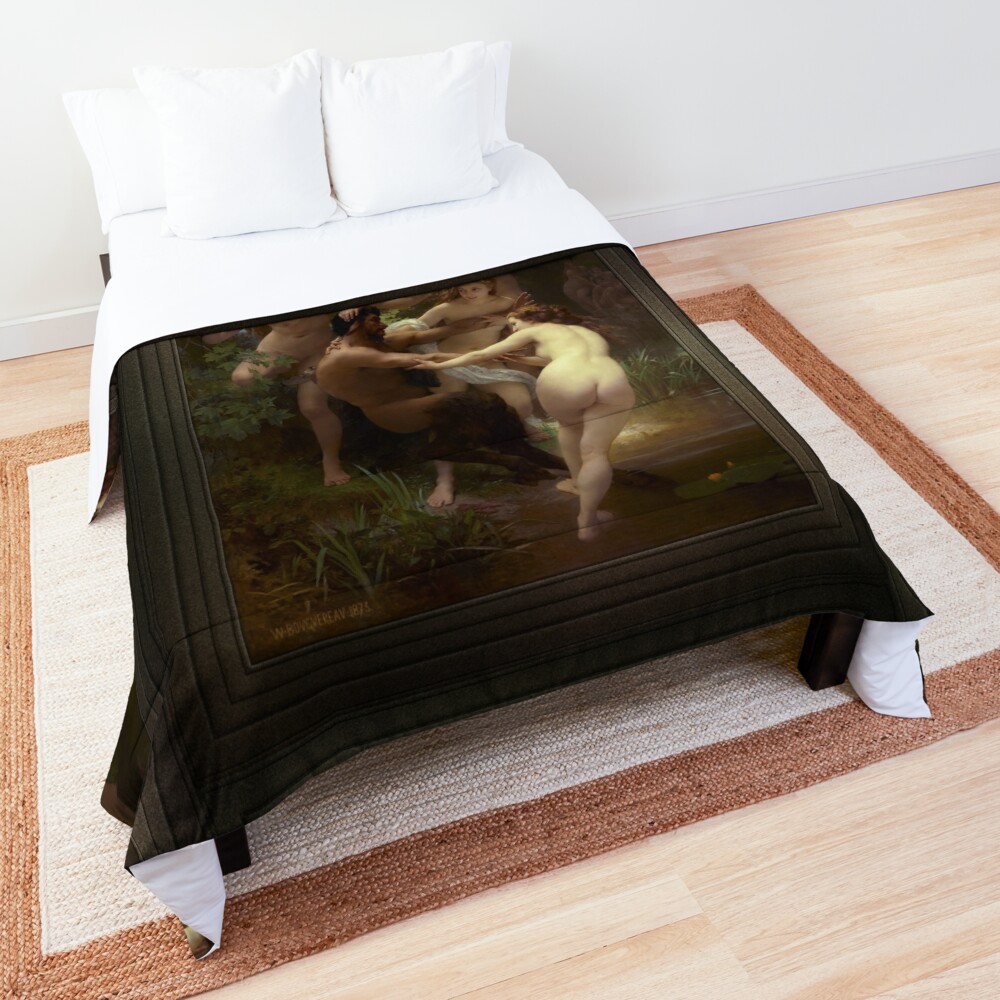
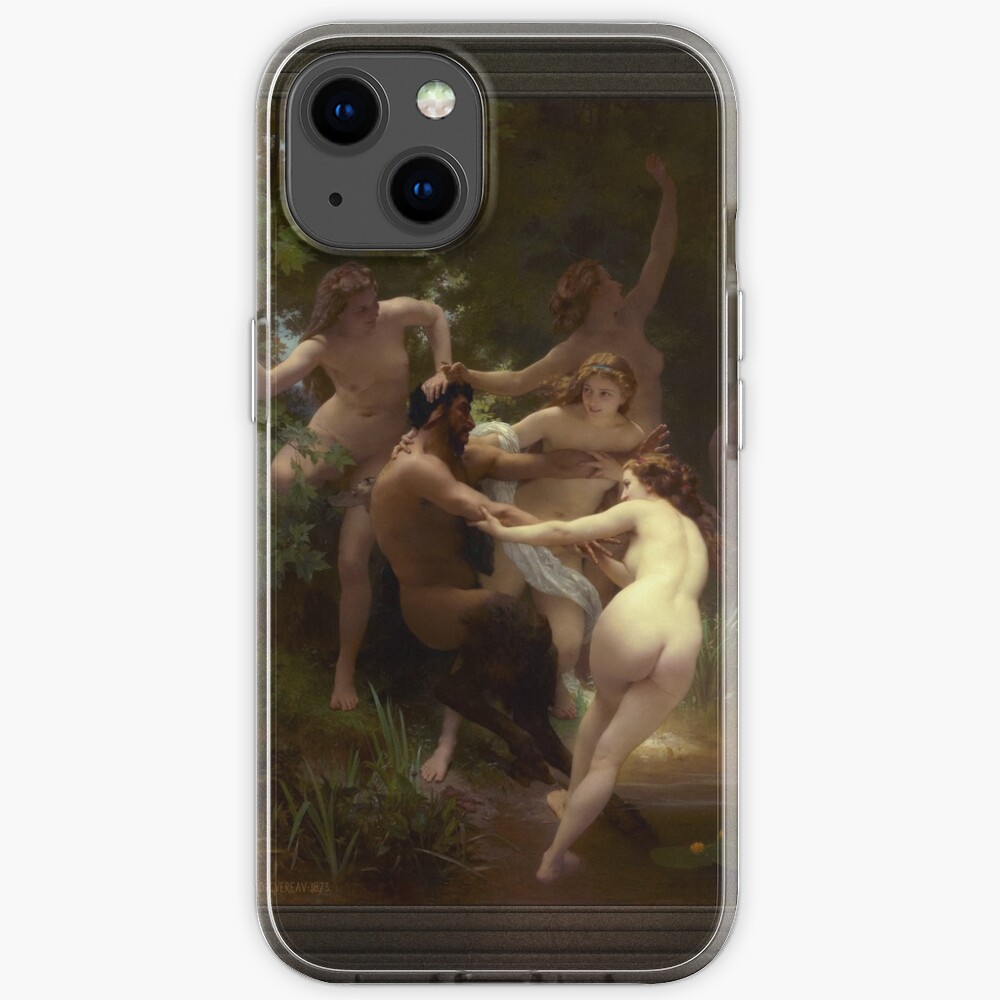
William-Adolphe Bouguereau’s “Nymphs and Satyr,”Maalattu ympäri 1873, exemplifies the artist’s celebrated academic style and his fascination with mytologinen subjects. The painting depicts a playful scene of nymphs playfully encircling a satyr within a lush woodland setting. It is a work that showcases Bouguereau’s technical mastery – particularly his ability to render flesh tones and create an atmosphere of idyllic beauty, while also reflecting the broader artistic trends of 19th-century France, specifically the revival of classical themes and allegorical narratives.
Sisällysluettelo
Koostumusrakenne & Kertomus
The composition is carefully structured around a central figure: the satyr. He occupies the lower center of the canvas, his dark skin contrasting with the lighter complexions of the surrounding nymphs. The arrangement isn’t one of aggression or threat; pikemminkin, it conveys a sense of lighthearted pursuit and playful entanglement.
The nymphs are positioned in a dynamic circular formation around him, their bodies intertwined and their expressions ranging from amusement to gentle teasing. This creates a visual rhythm that draws the viewer’s eye across the canvas, emphasizing the interaction between the figures. Tausta on tarkoituksella hämärtynyt, receding into a dense forest of verdant foliage, which serves to isolate the group and focus attention on the central action.
Luvut: Nymfit & Satyr
Each nymph possesses distinct features and postures, contributing to the overall sense of movement and vitality. Their bodies are rendered with meticulous detail, showcasing Bouguereau’s skill in depicting the human form. They wear minimal attire – flowing drapery that clings to their forms while revealing the contours of their bodies, a common characteristic of academic nudes during this period.
Their hair is loosely arranged, cascading around their shoulders and adding to the overall sense of naturalness. The satyr, a creature from Greek mythology representing wild nature and revelry, stands out due to his darker skin tone and more rugged features. His posture suggests surprise and perhaps mild discomfort as he finds himself surrounded by the playful nymphs. He is depicted with horns and pointed ears, characteristic attributes of his mythological identity.
Värivalikoima & Valaistus
Bouguereau’s use of color contributes significantly to the painting’s atmosphere. The palette is dominated by warm earth tones – greens, ruskeat, and ochres – which evoke a sense of natural harmony. The nymphs’ skin tones are rendered with remarkable subtlety, capturing the play of light on their bodies. Pehmeä, diffused light filters through the foliage, illuminating the figures from above and creating gentle shadows that enhance their three-dimensionality. The lighting is not harsh or dramatic; sen sijaan, it contributes to the overall sense of tranquility and idyllic beauty. The contrast between the satyr’s darker skin and the nymphs’ lighter complexions further emphasizes the visual dynamic within the composition.
Taiteellisia vaikutteita & Tyyli
“Nymphs and Satyr” reflects Bouguereau’s training in the academic tradition, which emphasized technical skill, anatomical accuracy, and idealized beauty. His work draws inspiration from classical sculpture and Renaissance painting, evident in the graceful poses of the figures and the harmonious composition.
Bouguereau was a proponent of realism, but his paintings are not simply representational; they possess an element of idealization that elevates them beyond mere depictions of reality. The painting’s subject matter, a mythological scene, was also popular among artists during this period, reflecting a broader interest in classical themes and allegorical narratives. Bouguereau’s style is often associated with the academic tradition, characterized by its emphasis on technical proficiency and idealized beauty.
Tekninen toteutus & Detail
The painting’s surface reveals meticulous brushwork, particularly evident in the rendering of flesh tones and foliage. Bouguereau employed a layering technique to build up color gradually, creating subtle gradations and enhancing the sense of realism.
The details are rendered with precision – from the delicate folds of drapery to the individual strands of hair, demonstrating Bouguereau’s mastery of his craft. The artist’s attention to detail extends to the background elements as well; the foliage is depicted with a remarkable degree of naturalism, creating a convincing sense of depth and atmosphere.
Perintö & Merkitys
“Nymphs and Satyr” remains one of Bouguereau’s most celebrated works, admired for its technical brilliance and its depiction of idyllic beauty. The painting exemplifies the artist’s ability to synthesize classical themes with contemporary artistic trends, creating a work that is both timeless and representative of its era. It stands as a testament to Bouguereau’s enduring legacy as one of the leading academic painters of his time.
Artist Bio: Luvalla Wikipedia.org
William-Adolphe Bouguereau syntyi La Rochellessa, Ranska, päällä 30 marraskuu 1825, viini- ja oliiviöljykauppiaiden perheeseen.[4] Théodore Bouguereaun poika (syntynyt 1800) ja Marie Bonnin (1804), tunnetaan nimellä Adeline, William kasvatettiin katoliseksi. Hänellä oli vanhempi veli, Alfred, ja nuorempi sisko, Marie (tunnetaan nimellä Hanna), joka kuoli kun hän oli seitsemän.
Perhe muutti Saint-Martin-de-Réen vuonna 1832. Toinen sisar syntyi vuonna 1834, Kisu. Iässä 12, Bouguereau meni Mortagneen asumaan setänsä Eugènen luo, pappi ja kehitti rakkautta luontoon, uskontoa ja kirjallisuutta.
Sisään 1839, hänet lähetettiin opiskelemaan pappeutta Ponsin katoliseen korkeakouluun. Täällä Louis Sage opetti hänet piirtämään ja maalaamaan, joka opiskeli Ingresin johdolla. Bouguereau jätti vastahakoisesti opintonsa palatakseen perheelleen, asuu nyt Bordeaux'ssa.
Siellä hän tapasi paikallisen taiteilijan, Charles Marionneau, ja aloitti kaupungin piirustus- ja maalauskoulussa marraskuussa 1841. Bouguereau työskenteli myös kauppa -avustajana, litografioiden värjääminen käsin ja pienten maalausten tekeminen kromolitografialla.
Hän oli pian luokkansa paras oppilas, ja päätti tulla taiteilijaksi Pariisissa. Muuton rahoittamiseksi, hän myi muotokuvia - 33 öljyä kolmessa kuukaudessa. Kaikki olivat allekirjoittamattomia ja vain yksi on jäljitetty. Hän saapui Pariisiin ikääntyneenä 20 maaliskuussa 1846.
Tasa -arvoa ennen kuolemaa (Tasa -arvo ennen kuolemaa), 1848, öljy kankaalle, 141 × 269 cm (55.5 × 105.9 sisään), Orsay -museo, Pariisi. Tasa -arvo on Bouguereaun ensimmäinen suuri maalaus, tuotettu kahden vuoden kuluttua École des Beaux-Arts de Parisissa vuoden iässä 23.
Bouguereausta tuli École des Beaux-Artsin opiskelija.[4] Täydentääkseen muodollista piirustuskoulutustaan, hän osallistui anatomisiin leikkauksiin ja opiskeli historiallisia pukuja ja arkeologiaa.
Hänet otettiin François-Édouard Picotin studioon, jossa hän opiskeli maalausta akateemiseen tyyliin. Dante ja Virgil helvetissä (1850) oli varhainen esimerkki hänen uusklassisista teoksistaan.
Akateeminen maalaus asetti korkeimman aseman historiallisille ja mytologisille aiheille, ja Bouguereau päätti voittaa Prix de Rooman, joka saisi hänelle kolmen vuoden asunnon Villa Medicissä Roomassa, Italia, jossa hän voi muodollisten oppituntien lisäksi opiskella omakohtaisesti renessanssin taiteilijoita ja heidän mestariteoksiaan, samoin kuin kreikka, Etruski, ja Rooman antiikkia.
Nymphs and Satyr is a retouched digital art reproduction of a public domain image which is available for purchase as a rullattu kanvastulostus verkossa.