

Odalisque c1858
“Odalisque c1858” is a masterpiece by the French artist Henri Pierre Picou, who lived from 1824 to 1895. Margotuta 1858, this artwork represents a fine example of Romanticism, a movement that sought to convey deep emotion, sententzia, and vivid imagery. The subject matter and composition reflect the opulence and sensuality typical of the 19th-century French salons. Picou’s work, filled with vivid color and graceful detail, encapsulates the atmosphere of the Orient and the allure of the harem, an artistic theme that gained popularity in European art during the 19th century.
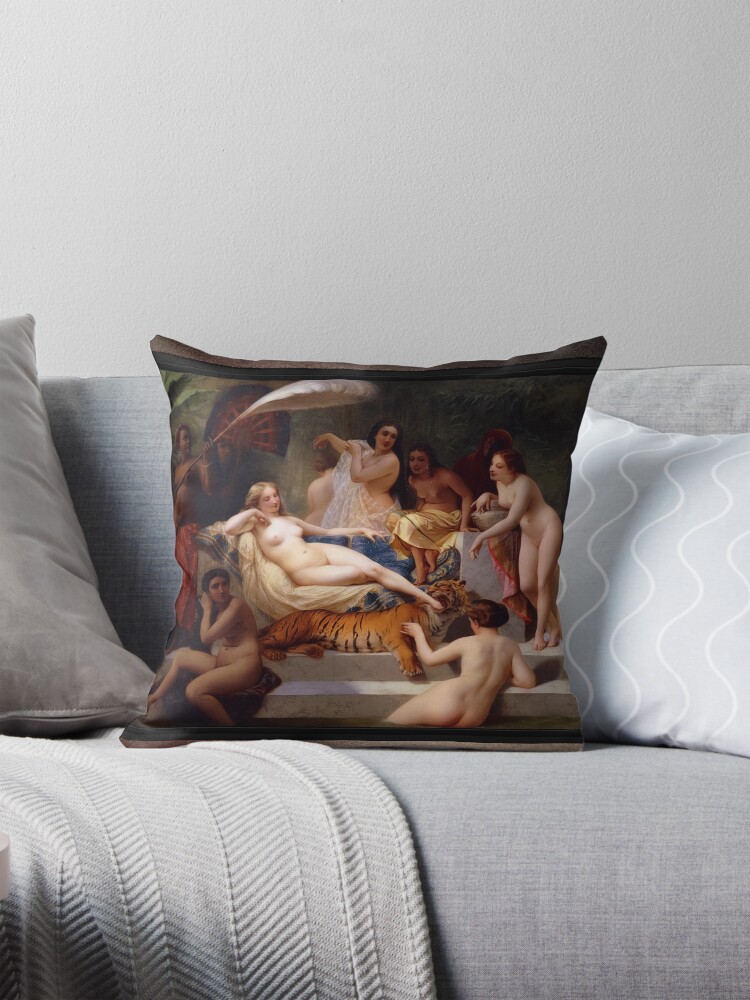
The painting depicts an exotic and opulent scene set within a lush, green garden. Lehen planoan, a reclining nude woman lies draped over a luxurious tiger skin rug, her body elegantly posed to convey both relaxation and sensuality.
Margolanaren gaia, often referred to as an “odalisque” in the art world, refers to a woman in a harem, typically a concubine or servant, though in this case, the figure embodies a sense of power and beauty rather than mere submission. The subject’s position, partially turned to the side, suggests a moment of repose, eta bere espresioa, while not overly emotive, evokes a serene yet slightly aloof mood. The figure is meticulously detailed, leunarekin, porcelain-like skin that contrasts with the vivid richness of her surroundings.
Edukien taula
The Setting and Composition
The background of the painting is a lush, Ezarpen naturala, with the surrounding foliage creating a sense of depth and enclosure. The warm tones of the earth and the deep greens of the trees contrast against the vibrant golds and turquoises of the woman’s attire, which consists of flowing, sheer fabrics. These colors and textures evoke a sense of Eastern luxury, in line with the Romanticized view of the Orient that was prevalent in European art of the time.
Ezarpena bera, comprising not just a garden but also figures of other women and servants—adds a sense of social hierarchy to the piece. Atzealdean, several other figures are partially visible. Some women are depicted in various stages of undress, attending to the main figure in a way that suggests both intimacy and exotic allure. The way they are positioned around the central figure highlights the harem setting and the role of women within it. The inclusion of a tiger further adds to the exoticism, as it symbolizes power and mystery, reflecting the theme of untamed nature and luxury.
The Figures and Their Role
In addition to the reclining odalisque, the painting features a number of secondary figures, including female attendants and an exotic servant. One such figure stands at the back, holding a fan and facing the central figure, adding to the dynamic of the scene. The presence of these figures serves to reinforce the sense of the harem environment, where women are not only objects of desire but also part of a larger, intricate social structure.
The figures in the painting are rendered with remarkable attention to detail, especially in terms of their anatomy and expressions. The artist pays great care to the human form, emphasizing the smoothness and softness of the flesh in stark contrast to the more tactile textures of the tiger skin rug and the surrounding environment. The female figures, each with their unique postures and roles, form a visual harmony that draws the viewer’s eye back to the central reclining figure.
Sinbolismoa eta Gaia
The central theme of the painting is the depiction of female sensuality, and by extension, the romanticized concept of the Orient. In the 19th century, the harem became a popular subject in European art, often seen as a symbol of luxury, forbidden beauty, and exotic allure. Alabaina, Picou’s portrayal moves beyond a simple depiction of sensuality, suggesting a more complex narrative about power, gogoa, and the roles of women in different cultures.
The use of the tiger skin rug as a central motif is highly symbolic. Tigers, in European art, were often associated with untamed forces, indarra, and sometimes danger. Emakumea, by lying atop the tiger, suggests her control over the ferocity and wildness of the animal, a metaphor for both her own power and the heightened sense of mystery associated with the East. Emakumezkoen forma, smooth and vulnerable, is in contrast with the wildness of the tiger, yet it is not subdued or submissive, it is regal, lasai, and in control of her surroundings.
The harem, as depicted in this piece, is less a place of confinement than a space of empowerment and mystery, where women exist outside the usual rules of society and are able to express a more sensual and liberated existence. Erdiko figuraren jarrera lasaian eta eszenaren beraren luxuan islatzen da hori. Odaliska atseden egoeran aurkeztuz, Picou-k sakontasun geruza bat gehitzen dio piezari, iradokiz emakumearen boterea ez dagoela ageriko ekintzan, baina bere erakargarritasunean, bere misterioa, eta bere presentzia.
Aldartea eta tonu emozionala
Margolanaren aldartea luxu lasaiaren eta botere ezkutuarena da. Erdiko figuraren adierazpen lasaiak aktiboagoarekin kontrajartzen du, oraindik pasiboa, beste emakumeen rolak eta bere inguruko ingurune exotikoa. Margolanaren sentsualitatea ez da guztiz probokatzailea, baizik eta emakumearen formaren lerro leunen bidez transmititzen da., giroaren oparotasuna, eta irudien eta haien inguruaren arteko elkarrekintza harmoniatsua. There is an almost dreamlike quality to the scene, enhanced by the naturalistic details and the rich color palette.
The interaction between the various figures in the painting, some passive, others active, creates a subtle tension within the composition. This interplay of emotions and roles adds a layer of narrative complexity to the piece, allowing the viewer to interpret the scene in a variety of ways, depending on their own perspective.
Bukaera
Henri-Pierre Picou’s “Odalisque c1858” is an exquisite representation of 19th-century French Romanticism. Through the lush, sensual portrayal of the reclining figure and the exotic environment, Picou creates a mood that combines luxury with mystery. The painting encapsulates the fascination with the Orient that was prevalent during the era, while also exploring themes of power, sententzia, eta feminitatea. Its careful composition, xehetasunetan arreta, eta sinbolismoaren erabilerak edertasun iraunkorreko obra bihurtzen du, Haremaren erakargarritasuna Europako irudimen artistikoaren ehunean ehundu zeneko une bat harrapatzen.
Odalisque c1858 margolari frantsesak Henri Pierre Picou (1824 – 1895); bere lehen erretratu lanengatik eta gai historikoengatik eta azken urteetan bere gai alegoriko eta mitologikoengatik ezaguna.
Odaliska bat turkiar seraldi bateko laguntzaile edo ganberroa zen (otomandar etxe bateko emazteek eta ohaideek erabiltzen duten bizilekua.).
Odaliska margolan honek erdiko emakume figura biluzi bat erakusten du, emazte nagusia edo Ohaide nagusia izan daitekeena, Burko eta maindire apaingarriz beteta dagoen marmolezko sofa batean atseden hartzen ari da; hori igerileku batera eramaten duen marmolezko oinarri bikoitzaren parte da; eta atzealdean landare berdeak daude.
She is surrounded by eight other nude women; two that are partially in the pool of water. with one petting a young tiger that is putting the foot of the main female into its mouth.
There are also three more females (which are most like the Odalisque), that one can assume are slaves that are providing for the needs of the other women that are relaxing on the marble pedestal.
Odalisque is a retouched digital art old masters reproduction of a public domain image that you can purchase as home decor wall art prints.
Arte digitalaren sorkuntza hau, Xzendor7 webgunean aurki daitezkeen artelan guztiak bezala sarean erosteko eskuragarri dago hainbat material formatutan, mihise inprimatuak barne., estanpatu akrilikoak, metal estanpatuak, egur estanpatuak, marko estanpatuak, kartelak, eta ijetzitako mihise estanpatu gisa hainbat tamainatan 12 zentimetroetara 72 hazbeteko artelanaren eta artea erosteko aukeratzen duzun eskaeraren arabera inprimatzeko dendaren tamainaren arabera.
Artelana gizonezkoen eta emakumezkoen arropa sorta zabal batean ere eskuragarri dago, katiluak, totes, zapiak, koadernoak eta aldizkariak eta etxeko dekorazio produktu ugari.
Artistaren biografia
Informazioa Behean Deribatua Wikipedia.org
Henri-Pierre margolari akademikoa izan zen eta Neo-Grec eskolaren sortzaileetako bat, Gustave Boulanger bere lagun minekin batera, Jean-Leon Gerome, eta Jean-Louis Hamon, margolari akademikoak ere.
All of the men studied in the workshops of both Paul Delaroche and later Charles Gleyre. Picou’s style was noticeably influenced by Gleyre; while the rest of the group generally painted classical and mythological subjects.
Picou-k estilo artistikoa da lehen aldiz estreinatu zuen Salon-en 1847; eta hurrengo urtean bigarren mailako domina eman zioten bere margoagatik, Kleopatra eta Antonio Cydnus gainean. Cleopatra on the Cydnus bezala ere ezaguna, normalean Picouren maisulantzat hartzen da.
Saloian egindako emanaldia 1848 Kleopatraren eta Antonioren Cydnoren gainean idatzi zuen Théophile Gautier kritikariak, gaia asmo handiegia zela uste zuenak, baina hori ere esan zuen “Den bezala, artista gaztearen etorkizunerako itxaropenik onena ematen du, eta Saloneko zazpi edo zortzi margolan garrantzitsuenen artean kokatzen da.”
In 1875, margolana New Yorken erakutsi zuten, eta gero leku bat aurkitu zuen San Frantziskoko arte galeria pribatu bateko hormetan.
Picou-k tailer handi bat mantendu zuen Parisen, Boulevard de Magenta-n, horrek bere fresko zabalak lantzeko lekua eman zion. Bere ospea gora egiten jarraitu zuen eta Bigarren Prix de Rome-n irabazi zuen 1853 bere margoagatik, Jesus saltzaileak tenplutik kanpora botatzen (Diru-emaileak tenplutik atzetik atera ziren), eta bigarren mailako beste domina bat bere Salon pinturagatik 1857.
Bere debuta hasi zenetik 1847, ohiko bihurtu zen Salonean, ia urtero erakusten du bere azken erakusketa arte 1893. Frantziako Bigarren Inperioaren amaiera aldera modan dagoen margolaritzat jo izan da; eta komisio asko jaso zituen, besteak beste, eliza askotako fresko erlijioso handietarako enkarguak, Saint-Roch eliza barne hartzen zuena.