

Odalisque c1858
“Odalisque c1858” is a masterpiece by the French artist Henri Pierre Picou, dy't wenne fan 1824 nei 1895. Painted in 1858, this artwork represents a fine example of Romanticism, a movement that sought to convey deep emotion, sensualiteit, and vivid imagery. The subject matter and composition reflect the opulence and sensuality typical of the 19th-century French salons. Picou’s work, filled with vivid color and graceful detail, encapsulates the atmosphere of the Orient and the allure of the harem, an artistic theme that gained popularity in European art during the 19th century.
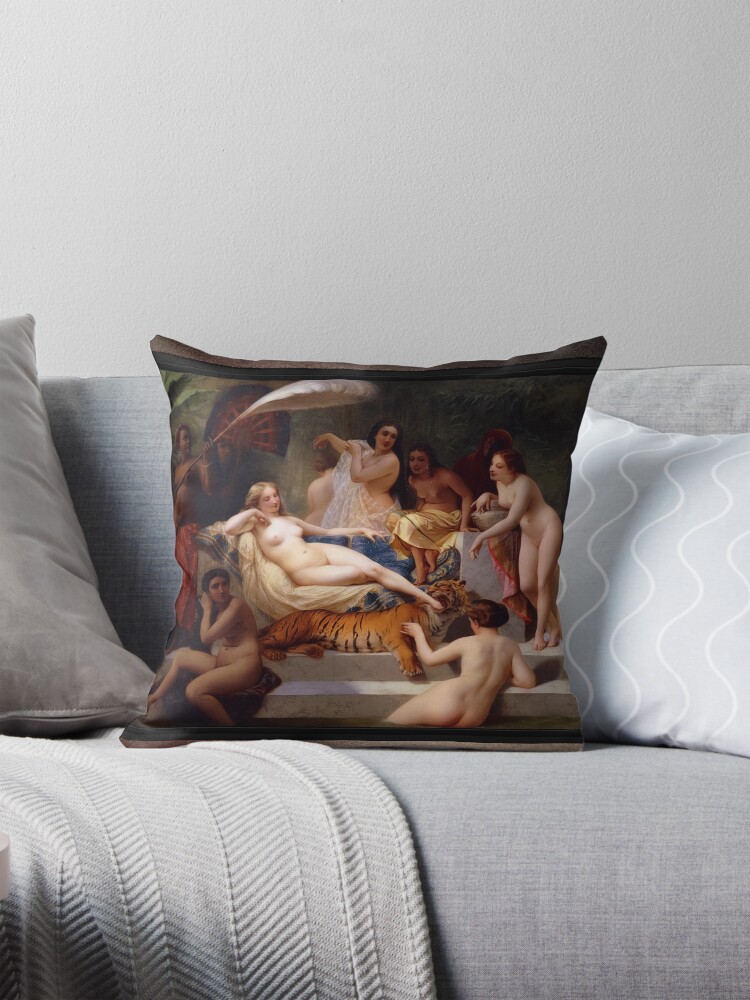
The painting depicts an exotic and opulent scene set within a lush, green garden. Op de foargrûn, a reclining nude woman lies draped over a luxurious tiger skin rug, her body elegantly posed to convey both relaxation and sensuality.
It ûnderwerp fan it skilderij, often referred to as an “odalisque” in the art world, refers to a woman in a harem, typically a concubine or servant, though in this case, the figure embodies a sense of power and beauty rather than mere submission. The subject’s position, partially turned to the side, suggests a moment of repose, en har útdrukking, while not overly emotive, evokes a serene yet slightly aloof mood. The figure is meticulously detailed, mei sêft, porcelain-like skin that contrasts with the vivid richness of her surroundings.
Ynhâldsopjefte
De ynstelling en komposysje
The background of the painting is a lush, natural setting, with the surrounding foliage creating a sense of depth and enclosure. The warm tones of the earth and the deep greens of the trees contrast against the vibrant golds and turquoises of the woman’s attire, which consists of flowing, sheer fabrics. These colors and textures evoke a sense of Eastern luxury, in line with the Romanticized view of the Orient that was prevalent in European art of the time.
De ynstelling sels, comprising not just a garden but also figures of other women and servants—adds a sense of social hierarchy to the piece. Op 'e eftergrûn, several other figures are partially visible. Some women are depicted in various stages of undress, attending to the main figure in a way that suggests both intimacy and exotic allure. The way they are positioned around the central figure highlights the harem setting and the role of women within it. The inclusion of a tiger further adds to the exoticism, as it symbolizes power and mystery, reflecting the theme of untamed nature and luxury.
The Figures and Their Role
In addition to the reclining odalisque, it skilderij hat in oantal sekundêre figueren, ynklusyf froulike begelieders en in eksoatyske feint. Ien sa'n figuer stiet efteryn, holding in fan en facing de sintrale figuer, taheakjen oan de dynamyk fan it toaniel. De oanwêzigens fan dizze sifers tsjinnet om it gefoel fan 'e haremomjouwing te fersterkjen, dêr't froulju binne net allinnich objekten fan winsk, mar ek diel fan in grutter, yngewikkelde sosjale struktuer.
De figueren yn it skilderij wurde werjûn mei opmerklike oandacht foar detail, benammen yn termen fan harren anatomy en útdrukkingen. De keunstner jout grutte soarch foar de minsklike foarm, beklamje de glêdens en sêftens fan it fleis yn skril kontrast mei de mear tactile tekstueren fan it tigerhûd tapyt en de omlizzende omjouwing. De froulike figueren, elk mei har unike posysjes en rollen, foarmje in fisuele harmony dy't it each fan de sjogger werom lûkt nei de sintrale lizzende figuer.
Symbolism and Theme
It sintrale tema fan it skilderij is de útbylding fan froulike sinlikens, en by útwreiding, it romantisearre konsept fan it Oriïnt. Yn de 19e iuw, de harem waard in populêr ûnderwerp yn Europeeske keunst, faak sjoen as in symboal fan lúkse, ferbeane skientme, en eksoatyske allure. lykwols, Picou's portret giet fierder as in ienfâldige ôfbylding fan sensualiteit, suggerearret in komplekser ferhaal oer macht, begearen, en de rollen fan froulju yn ferskate kultueren.
It brûken fan it tijgerhûd tapyt as sintraal motyf is tige symboalysk. Tigers, yn Europeeske keunst, waarden faak ferbûn mei ûnbeheinde krêften, sterkte, en soms gefaar. De frou, troch boppe op 'e tiger te lizzen, suggerearret har kontrôle oer de wreedheid en wyldens fan it bist, a metaphor for both her own power and the heightened sense of mystery associated with the East. The female form, smooth and vulnerable, is in contrast with the wildness of the tiger, yet it is not subdued or submissive, it is regal, kalm, and in control of her surroundings.
The harem, as depicted in this piece, is less a place of confinement than a space of empowerment and mystery, where women exist outside the usual rules of society and are able to express a more sensual and liberated existence. This is reflected in the calm demeanor of the central figure and the luxuriousness of the scene itself. By presenting the odalisque in a state of repose, Picou adds a layer of depth to the piece, suggesting that the woman’s power lies not in overt action, but in her allure, her mystery, and her presence.
The Mood and Emotional Tone
The mood of the painting is one of quiet luxury and latent power. The serene expression of the central figure contrasts with the more active, yet passive, roles of the other women and the exotic environment around her. The sensuality in the painting is not overtly provocative but is instead conveyed through the soft lines of the female form, the opulence of the setting, and the harmonious interaction between the figures and their surroundings. There is an almost dreamlike quality to the scene, enhanced by the naturalistic details and the rich color palette.
The interaction between the various figures in the painting, some passive, others active, creates a subtle tension within the composition. This interplay of emotions and roles adds a layer of narrative complexity to the piece, allowing the viewer to interpret the scene in a variety of ways, depending on their own perspective.
Konklúzje
Henri-Pierre Picou’s “Odalisque c1858” is an exquisite representation of 19th-century French Romanticism. Through the lush, sensual portrayal of the reclining figure and the exotic environment, Picou creates a mood that combines luxury with mystery. The painting encapsulates the fascination with the Orient that was prevalent during the era, while also exploring themes of power, sensualiteit, en froulikens. Its careful composition, oandacht foar detail, and use of symbolism make it a work of enduring beauty, capturing a moment in time when the allure of the harem was woven into the fabric of European artistic imagination.
Odalisque c1858 troch Frânske skilder Henri Pierre Picou (1824 – 1895); bekend om syn iere portretwurk en histoarysk ûnderwerp en yn syn lettere jierren om syn allegoaryske en mytologyske tema's
In Odalisque wie in froulike begelieder of keamerfaam yn in Turkske Seaglio (in sequestered wenwyk brûkt troch froulju en bywiven yn in Ottomaanske húshâlding.).
Dit Odalisque skilderij lit in neaken sintrale froulike figuer sjen dy't de haadfrou as konkubine kin wêze, is rêstend op in moarmeren bank dy't opboud is mei dekorative kessens en lekkens; dat is diel fan in dûbele steapele moarmeren basis dy't liedt ta in swimbad; en op de eftergrûn steane griene planten.
Se wurdt omjûn troch acht oare bleate froulju; twa dy't foar in part yn it wetterbad binne. mei ien dy't in jonge tiger aait dy't de foet fan it wichtichste wyfke yn 'e mûle stekt.
Der binne ek noch trije wyfkes (dy't it meast lykje op de Odalisque), dat men kin oannimme dat se slaven binne dy't foarsjen yn 'e behoeften fan' e oare froulju dy't ûntspanne op 'e moarmeren sokkel.
Odalisque is in retouchearre reproduksje fan âlde masters fan digitale keunst fan in ôfbylding yn it iepenbier domein dat jo kinne keapje as home decor wall art prints.
Dizze digitale keunst skepping, lykas mei al it keunstwurk dat te finen is op 'e Xzendor7-webside is online te keap yn in ferskaat oan materiaalformaten, ynklusyf canvasprints, acryl prints, metalen prints, hout prints, framed prints, posters, en as rôlde canvasprints yn in ferskaat oan grutte fan 12 inches oan 72 inch ôfhinklik fan de grutte fan it eigentlike keunstwurk en de print-on-demand winkel wêrfan jo kieze om de keunst te keapjen.
It keunstwurk is ek te krijen op in breed oanbod fan klean foar manlju en froulju, mokken, totes, sjaals, notebooks en tydskriften en in protte home decor produkten.
Artist Bio
Info hjirûnder ôflaat fan Wikipedia.org
Henri-Pierre wie in akademysk skilder en ien fan de oprjochters fan de Neo-Grykske skoalle, tegearre mei syn neiste freonen Gustave Boulanger, Jean-Leon Gerome, en Jean-Louis Hamon, ek akademyske skilders.
Alle manlju studearren yn 'e workshops fan sawol Paul Delaroche as letter Charles Gleyre. De styl fan Picou waard merkber beynfloede troch Gleyre; wylst de rest fan de groep algemien skildere klassike en mytologyske ûnderwerpen.
Picou earst debutearre is artistike styl by de Salon yn 1847; en it folgjende jier waard bekroane mei in twadde klasse medalje foar syn skilderij, Cleopatra en Antonius op de Cydnus. Ek bekend as Cleopatra op de Cydnus, it wurdt ornaris beskôge as Picou syn masterstik.
De foarstelling by de Salon yn 1848 fan Cleopatra en Antonius oer de Cydnus waard skreaun troch de kritikus Théophile Gautier, dy't fûn dat it ûnderwerp te ambisjeus wie, mar ek sei dat “Sa as it is, it jout de bêste hope foar de takomst fan de jonge keunstner, en heart by de sân of acht wichtichste skilderijen fan de Salon.”
Yn 1875, it skilderij waard útstald yn New York, en letter fûn in plak op 'e muorren fan in privee keunstgalery yn San Francisco.
Picou ûnderhâlde in grutte workshop yn Parys oan de Boulevard de Magenta, dy't him romte joech om oan syn útwreide fresko's te wurkjen. Syn populariteit bleau tanimme en hy wûn de Twadde Prix de Rome yn 1853 foar syn skilderij, Jezus driuwt de ferkeapers út 'e timpel (De jildjilders jagen út 'e timpel), en in oare twadde klasse medalje foar syn Salon skilderij yn 1857.
Ut de tiid fan syn debút yn 1847, hy waard fêst yn 'e Salon, toant hast alle jierren oant syn lêste tentoanstelling yn 1893. Hy is nei it sluten fan it Twadde Frânske Ryk de meast modieuze skilder neamd; en krige in protte opdrachten, ynklusyf opdrachten foar grutte religieuze fresko's fan in protte tsjerken, dy't de Église Saint-Roch omfette.