

Order Please
Ìomhaigh neach-àite Alberto Vargas, a Peruvian-born artist renowned for his glamorous and captivating pin-up illustrations, air a chruthachadh Order Please ann am meadhan an 20mh linn. Known for his impeccable ability to blend sensuality with elegance, Vargas’s works became iconic in American pop culture. Am pìos sònraichte seo, Order Please, showcases the artist’s mastery of form, dath, and his ability to create captivating female figures. Rugadh e a-steach 1896 agus a’ dol a-steach 1982, Vargas’s legacy continues to influence the art world, particularly within the realms of pin-up art and the depiction of female beauty.
Clàr-innse
Prìomh chuspair
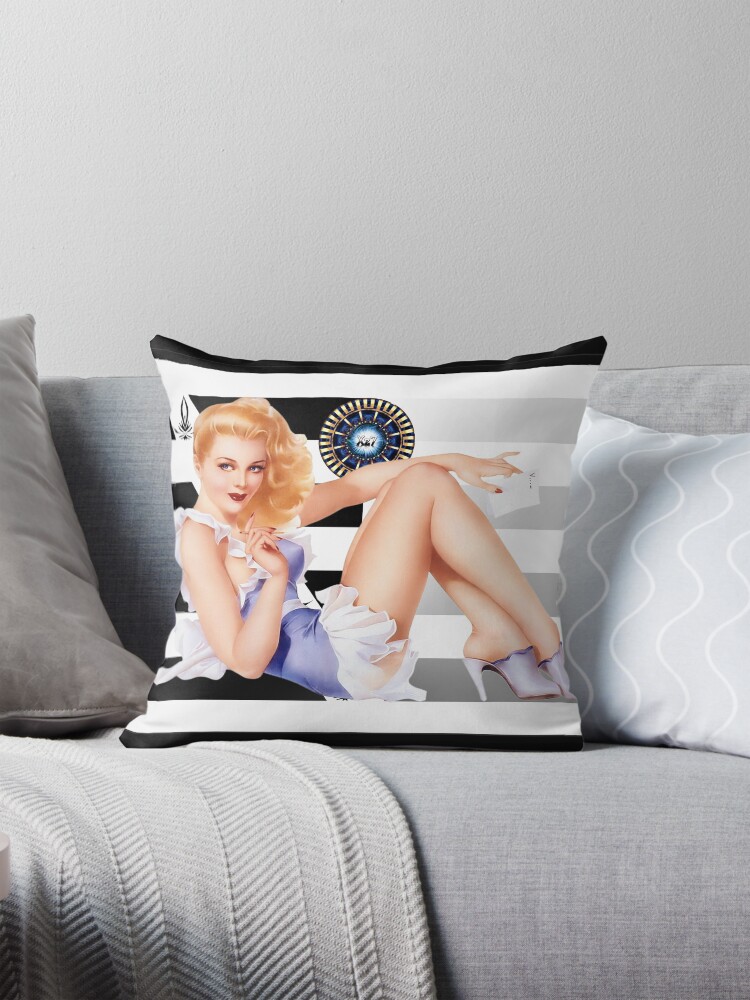
Prìomh chuspair Order Please 's e boireannach a th' ann, poised in a relaxed yet confident posture. Seated with her legs crossed, she gazes directly at the viewer with a playful yet seductive expression. The woman’s platinum blonde hair is styled in soft waves, accentuating the vintage glamour that defines Vargas’s pin-up art.
She wears a delicate, ruffled garment with a soft pastel palette, primarily white, which contributes to the airy, ethereal feel of the image. The soft folds of her clothing and her poised position emphasize both her femininity and her strength, exuding an aura of elegance and charm.
Her facial expression is one of quiet confidence, subtly suggestive yet not overtly sexual. Tha an t-aodach aice dìreach, engaging the viewer with an almost whimsical invitation to admire her beauty. The contrast between the softness of her attire and the boldness of her expression makes her appear both approachable and mysterious. Her nude or bare shoulders further enhance the sensual aspect of her appearance, while the simplicity of her pose and attire keeps the focus on her natural allure.
Rudan
Air beulaibh an deilbheadh, the woman holds a white object delicately in her right hand, though its precise nature is not entirely clear. It could be interpreted as a folded letter or a piece of paper, suggesting communication or perhaps a message.
This simple object, Ged a tha e beag, contrasts with the grandeur of the figure, creating a subtle narrative element that complements the overall theme of the artwork. The use of this item as a focal point helps to balance the viewer’s attention between the woman’s form and the object’s ambiguity, which adds a layer of intrigue to the piece.
There is also a subtle round emblem, positioned in the upper-right corner of the artwork. This emblem, while not elaborated upon in the visual narrative, a’ nochdadh mothachadh air òrdugh agus ùghdarras, a 'toirt iomradh air an tiotal Order Please. Tha e coltach gu bheil an suaicheantas agus a shuidheachadh a’ toirt a-steach eileamaid fhoirmeil no fo smachd taobh a-staigh faireachdainn neo-fhoirmeil agus spòrsail suidheachadh a’ bhoireannaich., a’ daingneachadh cuspair àithne agus eireachdas gu ìre.
Talamh agus cùl-raon
Cùl-fhiosrachadh a Order Please air a dhèanamh suas de stiallan dubh is geal mu seach, a tha gu math eadar-dhealaichte bho na seallaidhean as buige ann am figear agus èideadh boireannaich. Bidh na stiallan sin a 'frithealadh iomadh adhbhar: chuir iad sìos am figear ann an geàrr-chunntas, àrainneachd grafaigeach fhad ‘s a tha e cuideachd a’ cur cuideam air cumaidhean rèidh a bodhaig.
Tha cho follaiseach sa tha na stiallan dubh-is-geal a’ cruthachadh teannachadh fiùghantach leis na lùban nas organach den fhigear, a’ comharrachadh a’ cho-sheirm eadar cruth an duine agus an àrainneachd. Tha an iomsgaradh seo na eileamaid àbhaisteach de stoidhle Vargas, where he often employed bold, graphic backgrounds to underscore the sensuality of the female figures without overwhelming them.
The geometric nature of the background adds a layer of modernity to the otherwise vintage and timeless feel of the figure. The stripes lend a sense of order and structure, making the subject’s relaxed, confident demeanor seem even more out of place within such an ordered space. This contrast of elements creates a visual tension that draws the viewer’s eye toward the central figure while maintaining the graphic integrity of the overall composition.
Stoidhle, Cuspair, agus Mood
Alberto Vargas’s work is deeply rooted in the pin-up style, characterized by its playful sensuality, bòidhchead air leth freagarrach, and vibrant color schemes. The painting exudes a sense of glamour and sophistication, with the sensuality of the subject tempered by the clean lines and formal environment of the background.
Faireachdainn de Order Please is one of confident allure, with the woman depicted as both approachable and commanding. Co-thaobhadh bog, feminine curves and the structured geometric lines of the background gives the piece a dynamic balance, characteristic of Vargas’s ability to infuse life into a static image.
The theme of order, suggested by the title, plays out in the contrast between the soft and the structured, the sensual and the formal. The image of a woman comfortably seated, exuding confidence and poise, reflects the idea of control and elegance amidst the orderliness of the world around her. Vargas’s pin-up art, often considered a form of escapism, invites the viewer to partake in a world where beauty and grace rule, and where the viewer’s gaze is captured by both the subject’s physical form and the implied narrative of the scene.
The use of color also plays a critical role in the piece’s overall mood. The soft pastels of the woman’s clothing, contrasted with the bolder black-and-white stripes, create a visual harmony that speaks to the idealization of beauty, while the intensity of the subject’s expression suggests a deeper, more complex emotional depth than would otherwise be inferred from her attire alone.
Co-dhùnadh
Order Please by Alberto Vargas is a masterful example of mid-20th-century pin-up art, blending sensuality with sophistication and creating a visual narrative that speaks to both the strength and vulnerability of the female form. The confident pose of the subject, the abstracted background, and the interplay of soft and bold elements all contribute to an artwork that is both timeless and evocative. Tron am pìos seo a, Vargas continues to exemplify his unparalleled skill in capturing the essence of feminine beauty and the interplay of order and sensuality.
Is e seo ath-riochdachadh seann mhaighstirean ealain didseatach ath-leasaichte de ìomhaigh raon poblach a tha ri fhaighinn mar a clò-bhualadh canabhas air-loidhne.
Neach-ealain Bios bho Wikipedia.org
Rugadh e ann an Arequipa, Peru, bha e na mhac leis an dealbhadair ainmeil Peruach Max T.. Vargas. Ghluais Alberto Vargas dha na Stàitean Aonaichte a-steach 1916 às deidh dha sgrùdadh a dhèanamh air ealain san Roinn Eòrpa, Zurich, agus Geneva ron Chiad Chogadh.
Fhad ‘s a bha e san Roinn Eòrpa thàinig e air an iris Frangach La Vie Parisienne, le còmhdach le Raphael Kirchner, a thuirt e a thug buaidh mhòr air an obair aige.
Bha a dhreuchd tràth ann an New York a ’toirt a-steach obair mar neach-ealain airson na Ziegfeld Follies agus airson mòran stiùidio Hollywood. Chroch Ziegfeld an dealbh aige de Olive Thomas aig an taigh-cluiche, agus bhathas den bheachd gur i aon de na caileagan Vargas as tràithe.
Vargas’ bha am pìos film as ainmeil airson postair an 1933 film The Sin of Nora Moran, a tha a ’sealltainn Zita Johann a tha cha mhòr lomnochd ann an suidheachadh dòrainn. Tha am postair air ainmeachadh gu tric mar aon de na postairean film as motha a chaidh a dhèanamh a-riamh.
Bha e ainmeil fad is farsaing anns na 1940an mar neach-cruthachaidh ìomhaighean ainmeil àm an Dàrna Cogaidh airson an iris Esquire ris an canar “Nigheanan Vargas.” Eadar 1940 agus 1946 Vargas air a thoirt a-mach 180 dealbhan airson an iris.
Chaidh ealain sròin mòran de phlèanaichean Ameireagaidh agus an Dàrna Cogadh a bhrosnachadh agus atharrachadh bho na h-iomairtean prìne Esquire sin, a bharrachd air an fheadhainn aig Seòras Petty, agus luchd-ealain eile.