

Ballarí de paó
Peacock Dancer c1935 de l'il·lustrador nord-americà Earle Kulp Bergey (1901 – 1952), pintor i artista pin-up, És considerat el pintor més prolífic del segle XX.
Va crear la portada de milers de revistes Pulp Fiction i llibres de paper en paper d'una gran diversitat de gèneres.
El Paó real La ballarina és una bella i extravagant il·lustració art déco d'una ballarina que porta un vestit de paó, ballant-lo sobre un fons negre.
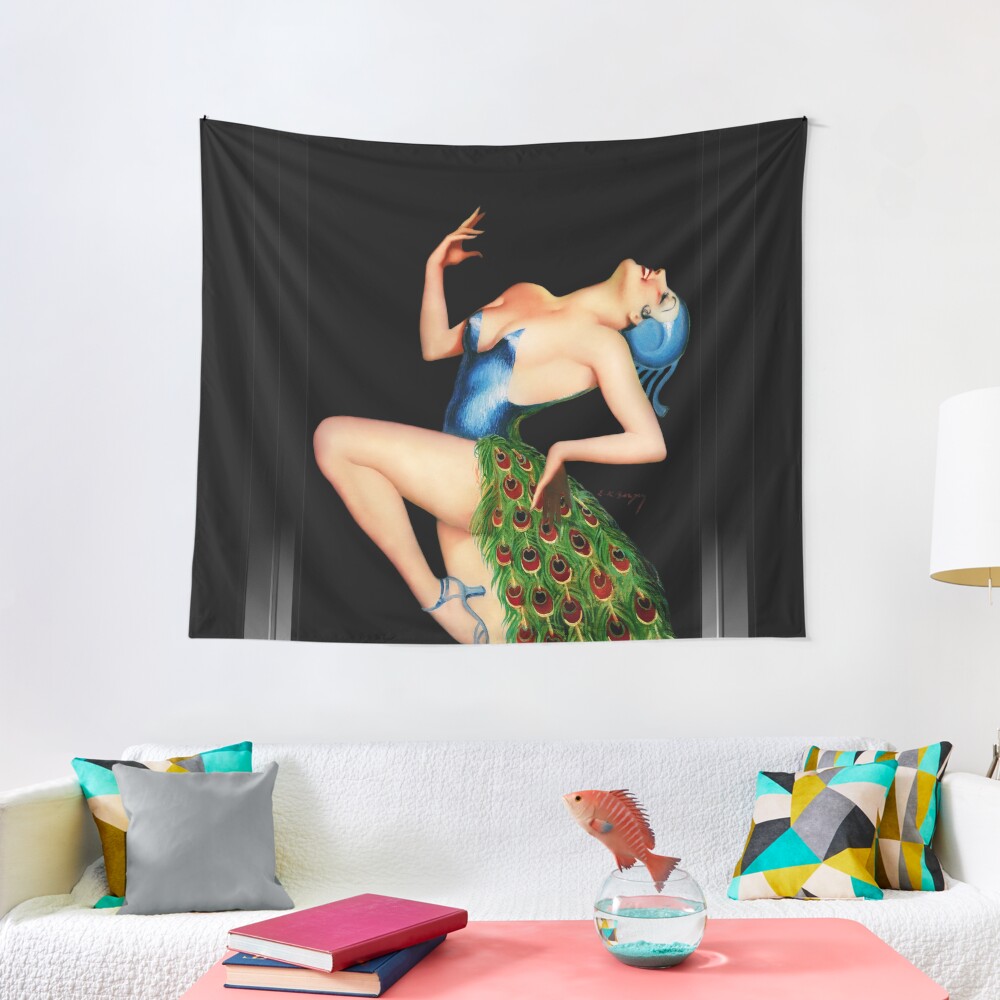
The Peacock Dancer és una reproducció retocada d'art digital d'antics mestres d'una imatge de domini públic que podeu comprar com a decoració de paret d'art.
A sota de la informació derivada de Wikipedia.org
Earle K. Bergey (Agost 26, 1901 – Setembre 30, 1952) was an American artist and illustrator who painted cover art for thousands of pulp fiction magazines and paperback books. One of the most prolific pulp fiction artists of the 20th century, Bergey és reconegut per haver creat la portada icònica de Gentlemen Prefer Blondes per a la Biblioteca Popular a l’altura de la seva carrera a 1948.
Marcant l’inici de la gran influència de Bergey com a il·lustrador de butxaca nord-americà, aquesta pintura bomba va fer la tapa massiva de butxaca de la superproducció d’Anita Loos, Els senyors prefereixen les rosses (publicat com a Biblioteca Popular #221).
Earle K. Pintura de portada de Bergey per a Gentlemen Prefer Blondes, cap a 1948.
Bergey va néixer a Filadèlfia, Pennsylvania a A. Frank i Ella Kulp Bergey. He attended Pennsylvania Academy of the Fine Arts from 1921 a 1926, finishing formal Academy studies in the spring of 1926. He initially went to work in the art departments of Philadelphia newspapers including Public Ledger, and he drew the comic strip Deb Days in 1927. Early in his career, Bergey contributed many covers to the pulp magazines of publisher Fiction House.
By the mid-1930s, Bergey made a home and studio in Bucks County, Pennsylvania, and he married in 1935.
Throughout the 1930s, Bergey worked freelance for a number of publishing houses.
His eye-catching paintings were predominantly featured as covers on a wide array of pulp magazines, including romance (Thrilling Love, Popular Love, Love Romances) as well as detective, adventure, aviation, and Westerns. Bergey illustrated mainstream publications, such as The Saturday Evening Post, during this time.
During the 1940s, Bergey continued to paint covers for romance, sports, and detective pulp magazines, and he began working on a number of science fiction magazines, including Standard Publications’ Strange Stories, Startling Stories, and Captain Future, and later for Fantastic Story Magazine.
Bergey’s fine art training and salient gift for depicting anatomy made him a go-to artist across a diversity of genres that required scenes with dramatic movement, from photo-realistic sports portraits of famous athletes including Mickey Cochrane, Lou Gehrig, and Jim Thorpe to his signature Bergey Girls that appeared on risque pulps throughout the Depression and in science fiction scenarios from World War II.
The artist’s illustrations of scantily-clad women surviving in outer space served as an inspiration for Princess Leia’s slave-girl outfit in Return of the Jedi, even its color and cut, and Madonna’s conical brass brassiere. Bergey’s science fiction covers, sometimes described as “Bim, BEM, Bum,” usually featured a woman being menaced by a Bug-Eyed Monster, alien, or robot, with an heroic male astronaut coming to her assistance.
Bikini-tops worn by Bergey girls often resembled coppery metal, giving rise to the phrase “the girl in the brass bra,” used in reference to this sort of art. Els visionaris de la televisió i el cinema han estat influenciats pel treball de Bergey; Gene Roddenberry, per exemple, va proporcionar al seu dissenyador de producció per a Star Trek exemples de les cobertes de polpa futuristes de Bergey.
En 1948, Bergey va fer la transició a la indústria del llibre de rústica en ràpida expansió juntament amb artistes de pasta especialitzats com Rudolph Belarski., l'obra del qual sovint es confon amb la de Bergey. Mentre continuava pintant cobertes de pasta fins a la seva mort.